Cemex Rethinks the Water Behind Concrete
Concrete plants do not need drinking-quality water for every part of their operation. Cemex is putting that principle into practice at scale in Mexico, where its ready-mix business says alternative water sources replaced 67% of the freshwater it would otherwise have consumed during 2025.
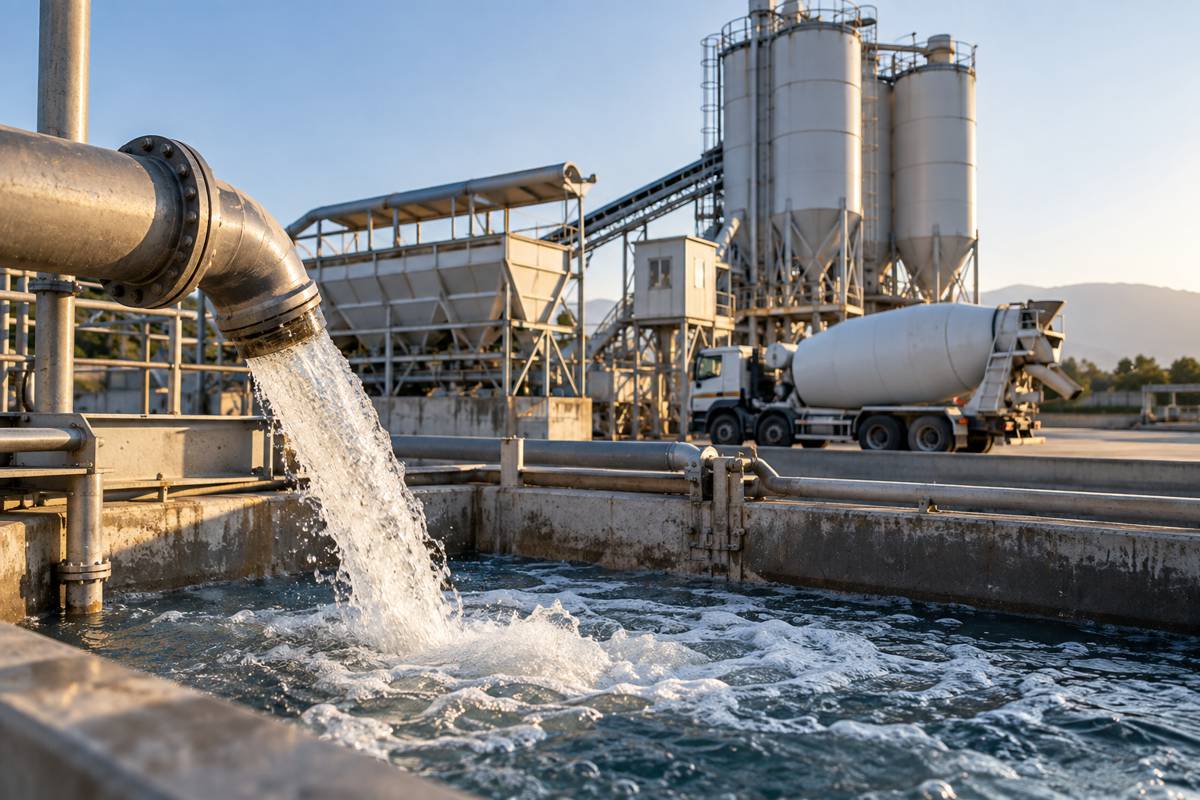
The programme uses water unsuitable for human consumption or agriculture, including treated wastewater, recycled process water, industrial water and rainwater. Rather than treating these sources as peripheral conservation measures, Cemex is integrating them into concrete production while maintaining the required product quality and operational controls.
The work has now brought Cemex onto Fortune’s 2026 Change the World list, its fifth appearance on the annual ranking. Concrete production takes place close to the markets it serves, frequently in large urban areas where industrial users, households and agriculture can be drawing on the same water resources. Reducing the amount of freshwater entering ready-mix plants addresses one of the less visible resource demands associated with producing the world’s most widely used construction material.
Briefing
- Cemex says alternative sources replaced 67% of freshwater across its Mexican ready-mix operations in 2025.
- The programme uses water unsuitable for human consumption or agriculture in place of freshwater.
- Alternative supplies can include treated wastewater, recycled process water, industrial water and rainwater.
- Thirty-one Cemex concrete plants in Mexico have been certified under AENOR’s Zero Freshwater and Zero Discharge Framework.
- Cemex says the approach is beginning to be replicated in France, Spain and the United States.
Water Inside the Concrete Plant
Water in concrete has a deceptively complicated job. It is needed for cement hydration and affects workability, consistency and ultimately the properties of the hardened material. Ready-mix operations also consume water elsewhere around the plant, including equipment cleaning and process activities.
Replacing freshwater requires more than connecting a plant to whatever alternative supply happens to be available. Water chemistry and consistency have to remain compatible with concrete production, while the plant must control collection, treatment, storage and reuse without compromising the finished material.
Cemex’s approach in Mexico is based on identifying water that has little or no competing value as a potable or agricultural resource and bringing it into a controlled industrial water system. AENOR describes the sources used under the company’s Zero Fresh Water programme as recycled water, process rejects, treated wastewater and rainwater. The certification body’s framework evaluates operations that exclude the extraction of freshwater or potable water for the relevant processes.
In water-stressed regions, the source matters as much as the quantity consumed. Where treated wastewater can perform the required industrial function, using potable water instead places demand on a higher-quality resource that also serves communities and agriculture.
Moving Beyond Freshwater
The 67% substitution rate reported across Cemex’s Mexican ready-mix operations in 2025 suggests the programme has moved beyond isolated demonstration plants. Thirty-one concrete plants in Mexico have also been certified under AENOR’s Zero Freshwater and Zero Discharge Framework.
AENOR has separately confirmed its assessment of Cemex Concretos under the Zero Fresh Water protocol, alongside ISO 9001 quality management and ISO 14001 environmental management certification. A 67% substitution rate across the Mexican ready-mix business, together with 31 certified plants, puts the programme on a different scale from a small group of trials.
Water quality remains part of the production equation. Alternative supplies vary according to their source, treatment and local conditions, while concrete specifications, quality assurance and applicable standards still govern the finished product. Water management therefore sits alongside aggregate grading, cementitious materials, admixtures and batching accuracy as another controlled element of ready-mix production.
A Local Resource Problem
Ready-mix concrete has an unusually local supply chain. Fresh concrete cannot conveniently be transported over very long distances, so batching plants tend to operate close to construction markets. That can put concrete production inside or around rapidly growing cities where pressure on water infrastructure is already increasing.
Alternative water sources can also be local. Municipal wastewater treatment plants, industrial facilities, recovered process water and rainfall capture can potentially provide supplies that would otherwise be discharged, treated as waste or used for lower-value purposes.
The practical configuration will vary considerably between plants. A site with access to reliable treated municipal wastewater faces a different engineering problem from one relying heavily on captured rainwater or internally recycled process water. Water of different qualities can instead be matched to the industrial tasks for which it is suitable.
Operational Resilience
Cemex describes the programme partly in terms of water conservation and partly as an operational resilience measure. A plant that depends almost entirely on freshwater remains exposed to restrictions, shortages, infrastructure constraints and competition for supply. Developing alternative sources can diversify that dependency, particularly where water stress is persistent rather than exceptional.
There are costs and operational complications. Alternative supplies may require treatment, storage, pumping, monitoring and additional quality controls, and the economics will vary according to local water prices, infrastructure and the distance between the source and the concrete plant.
The scale reached in Mexico shows that freshwater substitution can be incorporated into normal ready-mix operations across a sizeable network. Cemex says the model has begun to move beyond Mexico, with similar practices being introduced in France, Spain and the United States, where different water regulations, concrete standards, climates and wastewater infrastructure will shape how the approach develops.
Concrete’s Other Resource Question
Much of the environmental discussion surrounding concrete understandably concentrates on carbon dioxide, particularly emissions associated with clinker production in cement manufacturing. Water presents a different problem because its availability and value are intensely local.
A tonne of carbon dioxide has essentially the same climatic relevance wherever it is emitted. The consequences of consuming water depend heavily on where that water comes from, the condition of the local watershed, competing demand and what alternative sources are available. Water management is consequently shaped by conditions around individual plants as much as by corporate targets.
Cemex’s programme does not remove water from concrete production. It attempts to reserve higher-quality freshwater for uses that genuinely require it while directing other water streams towards an industrial process capable of using them safely.
Fortune’s 2026 Change the World recognition gives the programme greater visibility, but the more interesting development is happening inside the batching plants themselves. Water that might once have been regarded as wastewater is increasingly being treated as an industrial raw material.
Key Industry Questions
- Why does ready-mix concrete production need water? Water is required for cement hydration and concrete workability, while batching plants also use water for cleaning and other operational processes. Its quality and quantity therefore have to be controlled.
- Can wastewater really be used to make concrete? Suitable treated or recovered water can be used where its characteristics meet the necessary production and quality requirements. Its suitability depends on composition, treatment, concrete specification and applicable standards.
- What types of alternative water is Cemex using? The programme includes sources such as treated wastewater, recycled process water, industrial water and rainwater rather than relying solely on potable or freshwater supplies.
- How much freshwater has Cemex replaced in Mexico? Cemex reported a 67% freshwater substitution rate across its Mexican ready-mix operations during 2025.
- Does freshwater-free mean concrete contains no water? No. Concrete still requires water. The term refers to avoiding freshwater as the source and replacing it with suitable alternative water streams.
- Why is water scarcity particularly relevant to ready-mix plants? Ready-mix plants operate relatively close to construction markets and therefore often share local water resources and infrastructure with surrounding communities, businesses and agriculture.
- Are alternative water sources automatically cheaper? No. Treatment, testing, storage, pumping and distribution can create additional costs. The economics depend on local freshwater prices, wastewater availability, regulation and infrastructure.
- Can the Mexican model simply be copied elsewhere? Not necessarily. Available water sources, climate, regulations, concrete standards and treatment infrastructure differ considerably between locations. Cemex has nevertheless begun introducing the approach in France, Spain and the United States.
Strategic Takeaways
- Alternative water can become a controlled concrete-production input rather than simply a waste stream requiring disposal.
- A 67% substitution rate across Mexican ready-mix operations indicates that freshwater replacement can move beyond individual demonstration projects.
- Water resilience is highly local, making plant location, wastewater infrastructure and regional scarcity central to the economics.
- Certification provides an independent framework for verifying how plants manage freshwater substitution rather than relying solely on corporate environmental targets.
- Expansion into France, Spain and the United States will test how readily the Mexican operating model can be adapted to different regulatory and water environments.