Redwire Secures $40m NASA Award for Lunar Solar Power
NASA has selected Redwire Corporation for an approximately $40 million award to develop an integrated solar power generation system for its future Moon Base programme. The project will adapt technology already operating aboard the International Space Station to address a distinctly different engineering problem: generating reliable electricity near the lunar south pole, where the Sun remains close to the horizon and surrounding terrain can cast shadows across the surface for extended periods.
The proposed system will use Redwire’s Roll-Out Solar Array (ROSA) technology, adapted for vertical deployment and autonomous operation under lunar gravity. It forms part of NASA’s work to establish the infrastructure needed for future habitats, robotic vehicles, scientific equipment and resource-processing facilities, beginning with demonstrations of technologies that can operate without continuous human intervention.
The award follows the installation of the eighth and final Redwire-built roll-out solar array aboard the International Space Station on 5 November 2026. That deployment completed a five-year power modernisation programme, giving Redwire an established orbital platform from which to develop a new generation of lunar surface equipment.
Briefing
- Redwire has been selected for an approximately $40 million NASA lunar power generation project using its established ROSA technology.
- Eight roll-out arrays now support the ISS, increasing its power generation capacity from approximately 160 kW to 215 kW.
- Vertical solar installations could improve exposure to low-angle sunlight near the lunar south pole.
- NASA’s miniCAST programme includes separate commercial contributions covering solar generation, energy storage and wireless power transfer.
- The demonstration will inform future lunar power infrastructure, with NASA planning a separate solicitation for fully integrated systems in early 2027.
From Orbital Solar Arrays to Lunar Infrastructure
Redwire’s Roll-Out Solar Array technology was developed to solve a familiar spacecraft engineering problem: transporting a large electricity-generating surface within the restricted volume and mass allowances of a launch vehicle.
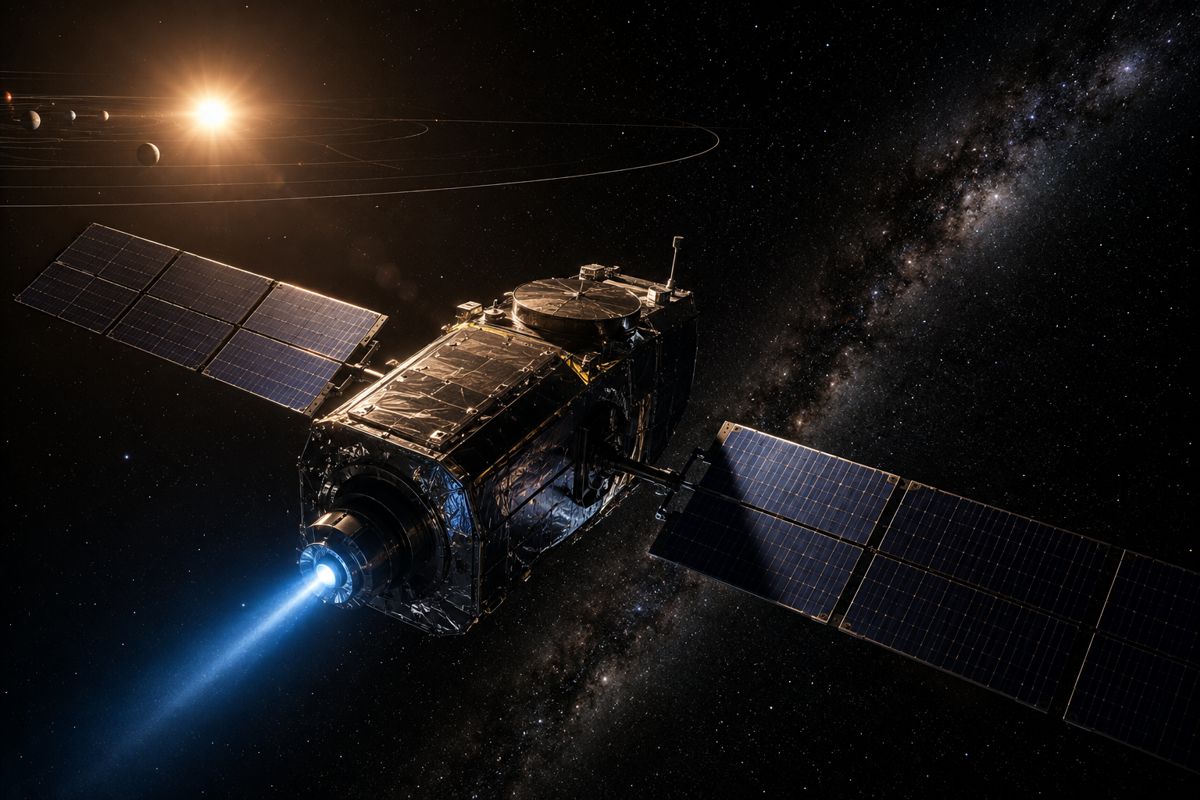
Instead of relying on conventional rigid panels connected by numerous mechanical hinges, ROSA uses flexible photovoltaic blankets supported by deployable composite booms. The arrays are packaged in a compact rolled configuration and extended after reaching their operating location, providing substantial generating area without the mechanical complexity of traditional articulated structures.
The technology has accumulated operational experience across several spacecraft missions, including NASA’s Double Asteroid Redirection Test and commercial telecommunications satellites. Its most visible application is the International Space Station, where eight upgraded arrays now supplement the station’s original solar power system.
According to NASA’s confirmation of the final installation, the completed upgrade increases the station’s total power generation capacity from approximately 160 kW to 215 kW. The programme began in 2021 and required 18 spacewalks to prepare the electrical systems and install the eight arrays.
Those deployments provide useful evidence of the technology’s maturity, although operating on the lunar surface introduces an entirely different set of structural and environmental requirements.
An orbital solar array is supported by a spacecraft and deployed in microgravity. A lunar installation must stand on the surface, accommodate local terrain, operate under gravity and maintain its mechanical integrity through demanding thermal conditions. Its foundations, electrical connections and deployment mechanisms must also function in an environment where maintenance crews are not readily available.
Redwire has already investigated these requirements through NASA’s Vertical Solar Array Technology programme, which examined the deployment and retraction of ROSA-based equipment in lunar gravity. The new award extends that development towards a practical surface power generation demonstration.
Engineering Around the Lunar South Pole
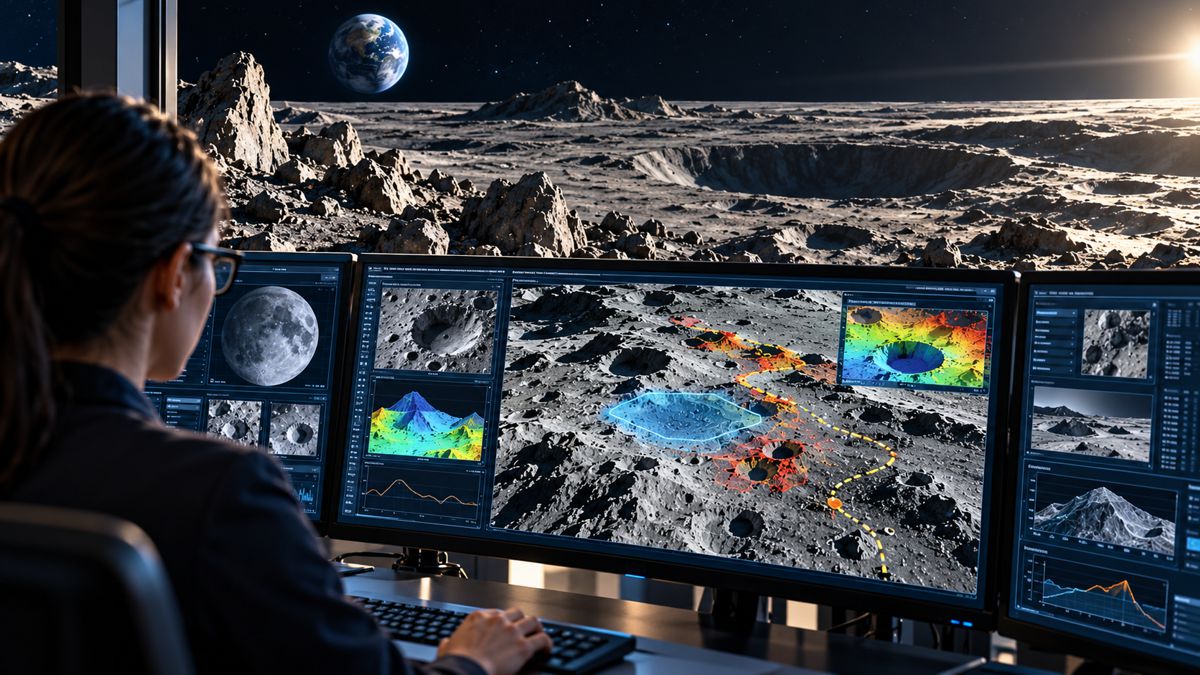
The lunar south pole presents an unusual challenge for photovoltaic generation. Unlike locations on Earth where the Sun typically rises well above the horizon during daylight hours, the Sun remains at a very low elevation in the Moon’s polar regions.
As a result, relatively modest changes in topography can have a substantial effect on local illumination. Crater rims, rocky ridges and other surface features cast exceptionally long shadows, leaving some locations exposed to prolonged sunlight while nearby depressions remain in permanent darkness.
NASA’s lunar south pole research illustrates the extent of these illumination differences. For an electrical installation intended to operate over long periods, selecting the correct location and elevation can be as important as the performance of the photovoltaic equipment itself.
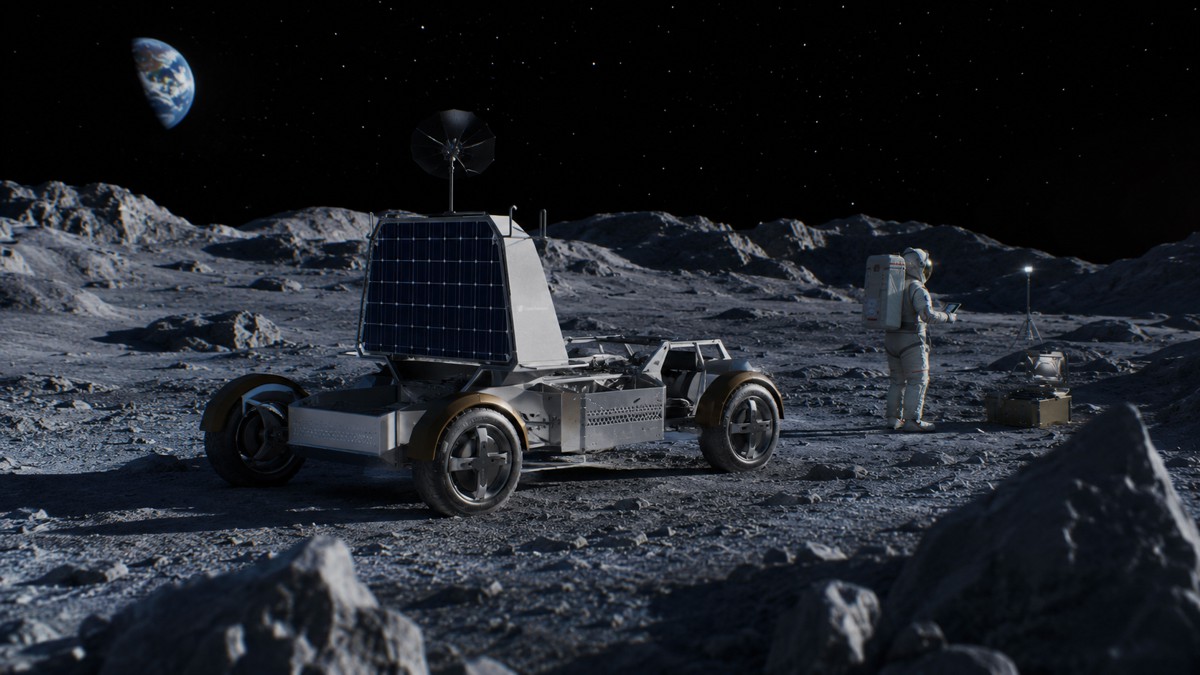
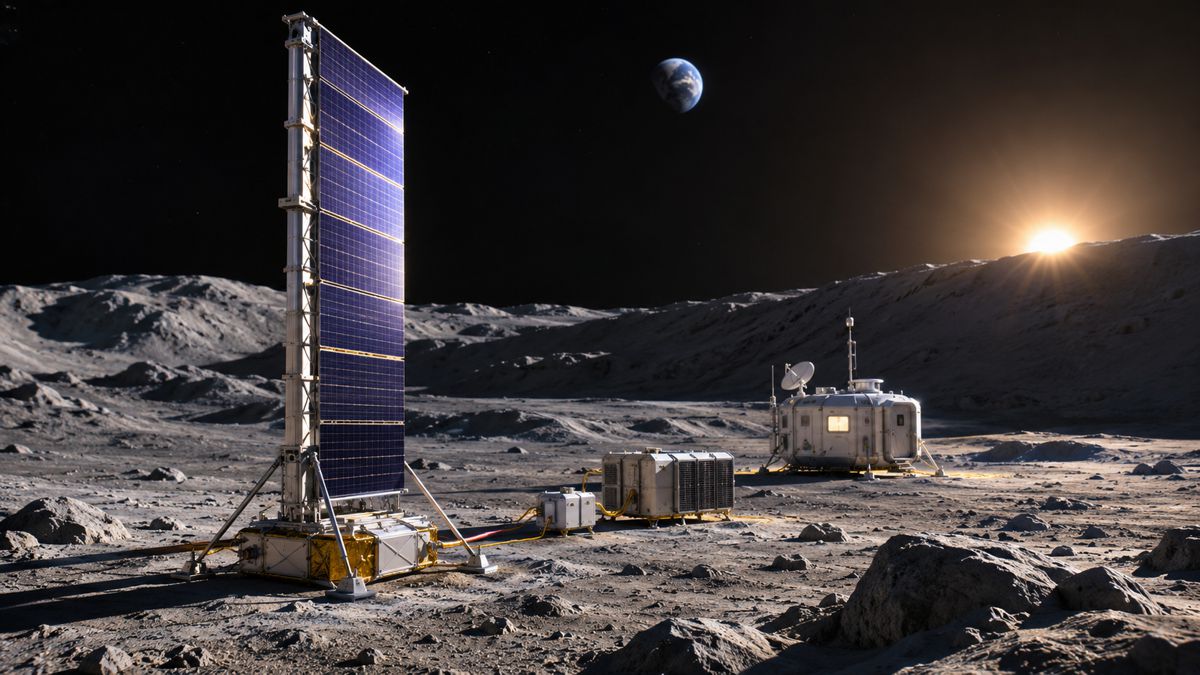
Raising arrays above the surface offers one possible solution. A mast-mounted system may reach sunlight that would otherwise be obstructed by surrounding terrain, while its vertical orientation can be better suited to the shallow angle of incoming solar radiation.
The approach brings its own engineering demands. A tall, relatively lightweight structure must be transported in a compact configuration, erected on uneven ground and stabilised against gravitational loads. The design must also accommodate mechanical movement, differential thermal expansion and the possibility of deployment irregularities.
NASA’s earlier Vertical Solar Array Technology programme investigated autonomously deployable systems with masts extending up to 20 metres. The research examined ways of providing continuous or near-continuous solar generation without requiring astronauts to assemble large structures on the surface.
The NASA TechPort project record describes the development of prototype vertical arrays and subsequent work towards identifying requirements for a lunar technology demonstration. These earlier designs provide a technical foundation for the Redwire project, although the mast height, generating capacity and final configuration of the newly selected system have not been disclosed.
Surface conditions will influence the eventual design. A foundation suitable for compacted regolith may behave differently from one installed on fragmented rock, while a mast’s exposure to shadows will depend on its precise position relative to the surrounding terrain.
The deployment mechanism must therefore provide more than a reliable means of extending the solar array. It must establish a stable working structure capable of maintaining its electrical and mechanical performance after installation.
NASA’s miniCAST Power and Communications Demonstration
Redwire’s selection forms part of NASA’s wider Mini-Communications and Solar Tower initiative, known as miniCAST, which is intended to investigate technologies for future electrical and communications infrastructure on the Moon.
In its November 2026 Moon Base awards announcement, NASA identified three commercial suppliers supporting the initiative. Redwire was selected for power generation, Honeybee Robotics, a Blue Origin company, for energy storage, and Yank Technologies for wireless power transfer.
Although Redwire describes its award as supporting an integrated power generation system, NASA has clarified that the initial miniCAST effort will involve commercial components rather than the delivery of a complete large-scale integrated installation. Engineers at NASA’s Marshall Space Flight Center in Huntsville, Alabama, will assemble and test the systems before their eventual delivery to the lunar surface.
The distinction reflects the developmental nature of the programme. Solar generation, storage and electrical distribution must eventually operate together, but each technology requires evaluation before larger installations can be designed and commissioned.
For the generating equipment, the demonstration will investigate vertically deployed arrays and the operation of payloads mounted on elevated structures. The wider programme will examine how the resulting electrical supply can be managed and used by equipment operating in the lunar environment.
Wireless power transfer is one of the technologies being explored. It could potentially provide electricity to compatible equipment without a continuous physical cable connection, although its practical operating range, transfer efficiency and suitability for particular applications will depend on the hardware and operating conditions.
Electrical interfaces present another consideration. Equipment supplied by different manufacturers must operate within compatible voltage, control and protection requirements, particularly where batteries, generating arrays and connected payloads are expected to function autonomously.
NASA expects the initial work to begin within months and anticipates a separate solicitation for fully integrated power systems in early 2027. The miniCAST activities are intended to provide technical evidence that can inform those later developments rather than establish a complete operational lunar electrical network at this stage.
Energy Storage and Lunar Night Survival
Solar generation alone cannot guarantee an uninterrupted electricity supply, even in the comparatively well-illuminated locations being investigated near the lunar south pole.
The amount of available sunlight varies with local topography and the changing position of the Sun. Unlike the familiar terrestrial day-night cycle, the duration and frequency of darkness at a polar lunar installation depend heavily on its precise location.
Energy storage must therefore be considered alongside generating capacity and the expected electrical demand. Batteries can support communications, control systems and other essential equipment when solar output falls, but their capacity and operating characteristics must be matched to the anticipated periods without sufficient illumination.
Thermal management adds another complication. With virtually no atmosphere to redistribute heat, exposed and shaded surfaces can experience markedly different temperatures. Batteries, electrical converters and mechanical components must remain within their permitted operating ranges, potentially requiring dedicated heating, insulation or thermal-control equipment.
Lunar dust also presents maintenance concerns. The fine, abrasive particles can interfere with moving components and electrical connections, while repeated thermal cycling can place stress on structural materials and mechanical assemblies.
These conditions make autonomous fault detection and recovery particularly valuable. An installation may need to recognise a deployment problem, isolate an electrical fault or preserve battery reserves without immediate intervention from astronauts.
The ability to survive periods of darkness is among the objectives identified for the proposed demonstration. Achieving that capability will require the generating, storage and control elements to function as a coordinated system, with performance ultimately determined by the equipment configuration and conditions at the selected site.
Developing Power Infrastructure for a Permanent Lunar Presence
NASA’s longer-term lunar plans envisage a growing range of electrical loads, from scientific instruments and communications equipment to crew accommodation, autonomous vehicles and resource-processing machinery.
The requirements will vary considerably. A communications relay may need relatively modest but continuous power, while excavation equipment, material handling systems or processes requiring substantial heating could impose much higher demands during particular operating periods.
Future installations will need to accommodate these different load profiles, either through dedicated generating systems or arrangements that allow electricity to be distributed between connected facilities.
The separation of generation, storage and distribution also raises practical questions about equipment positioning. A solar array may achieve its best performance on elevated terrain, while a habitat, processing facility or vehicle operating area may need to occupy a different location. Electrical distribution arrangements must accommodate those distances and the physical conditions between installations.
These are familiar considerations in remote industrial development, where generating equipment is frequently located away from the machinery and facilities it serves. On the Moon, however, every component must be transported from Earth or eventually manufactured using local resources, while conventional maintenance and replacement procedures remain extremely difficult.
Common electrical interfaces and modular equipment could reduce some of the complexity as lunar operations expand. The immediate priority remains establishing which technologies can be deployed successfully and operated for useful periods in the actual surface environment.
NASA’s decision to obtain specialised equipment from commercial suppliers offers a route towards evaluating those capabilities. Redwire brings spacecraft power-generation experience, including expertise associated with Rocketdyne, while the wider miniCAST programme draws on companies developing complementary energy technologies.
The results should help establish realistic engineering requirements for subsequent installations without assuming that the first demonstration will resolve every aspect of sustained lunar power generation.
Building the Foundations of Lunar Construction
Developing a functioning lunar base will require a sequence of construction and commissioning activities that extends well beyond delivering habitats and scientific equipment.
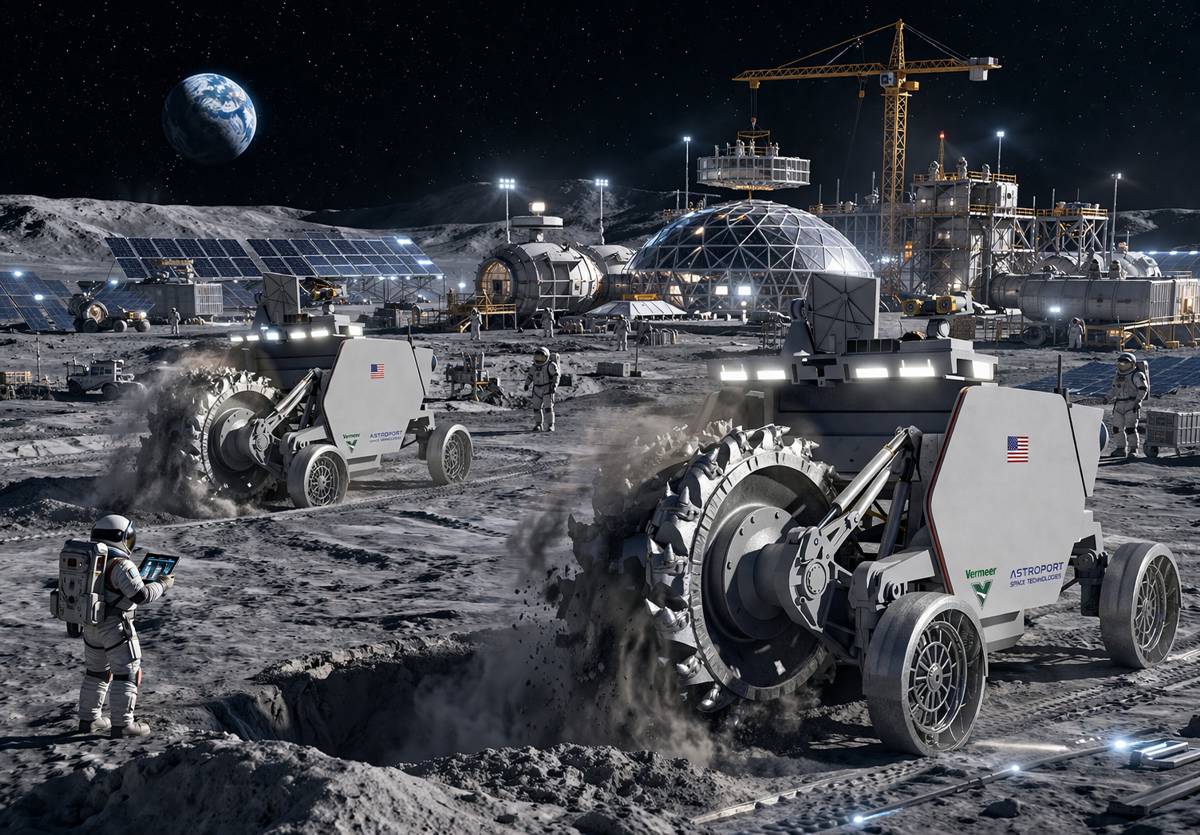
Machinery must reach its operating location, structures need to be deployed or assembled, and electrical and communications systems must be established before many subsequent activities can begin. Equipment will need to work on terrain that has not been prepared to terrestrial construction standards, often with limited human supervision.
There are useful parallels with remote mining developments, isolated research stations and autonomous industrial facilities. Each involves coordinating power, communications, equipment installation and maintenance under difficult operating conditions, although the logistical constraints of working on the Moon are considerably more demanding.
Redwire’s solar installation will contribute to that process by testing whether a deployable power system can be transported, erected and operated in the lunar polar environment. NASA will be able to use the resulting technical evidence when assessing larger installations and the infrastructure needed to support extended surface operations.
The approximately $40 million award also extends an established commercial spacecraft technology into a different engineering market, where successful deployment may depend as much on structural design, foundations and autonomous control as on photovoltaic performance.
For future lunar construction projects, electricity will be among the first essential services that must be established. Excavators, robotic assembly equipment, communications towers and processing machinery cannot begin useful work until their power requirements have been addressed.
The engineering challenge is therefore a practical one: delivering a compact structure to unfamiliar ground, deploying it without a construction crew and keeping it operating long enough to support the next stage of development.
Key Industry Questions
- What has NASA awarded Redwire? Redwire has been selected for an approximately $40 million project to develop an integrated solar power generation system supporting NASA’s future Moon Base infrastructure programme.
- What is Roll-Out Solar Array technology? ROSA uses flexible photovoltaic blankets and deployable composite structures to provide large solar generating surfaces that can be packaged compactly for launch.
- Why are vertical solar arrays being developed for the Moon? Near the lunar poles, sunlight arrives at a shallow angle and terrain produces long shadows. Elevated solar arrays can improve exposure to available sunlight, depending on their location and height.
- What is NASA’s miniCAST programme? The Mini-Communications and Solar Tower initiative is examining commercial technologies for lunar electricity generation, storage, wireless power transfer and communications infrastructure.
- Which companies are involved in miniCAST? NASA has selected Redwire for power generation, Honeybee Robotics for energy storage and Yank Technologies for wireless power transfer. NASA Marshall will assemble and test the systems.
- How much electricity will Redwire’s lunar system generate? The generating capacity of the newly selected system has not been disclosed. NASA’s earlier vertical solar array research examined different configurations, but those specifications should not be attributed to this project.
- Will the lunar solar installation operate through darkness? The demonstration will investigate survival during periods without sufficient sunlight. Actual operating endurance will depend on battery capacity, electrical demand, system configuration and conditions at the selected location.
- When will the lunar demonstration take place? A confirmed lunar deployment date has not been announced. NASA expects the initial miniCAST work to begin within months and plans a separate solicitation for fully integrated systems in early 2027.
- How could this technology support lunar construction? Deployable solar infrastructure could provide electricity for communications, autonomous vehicles, scientific equipment and eventually excavation and resource-processing operations, subject to the capacity of future installations.
Strategic Takeaways
- Proven orbital technology provides a foundation for lunar development, but surface foundations, gravity and deployment requirements demand separate engineering validation.
- Terrain elevation and the local illumination profile will influence solar installation design and site selection near the lunar south pole.
- Energy storage, thermal management and autonomous fault recovery are essential considerations for equipment expected to operate without regular human maintenance.
- NASA’s component-based procurement approach allows specialised commercial technologies to be tested before committing to larger integrated systems.
- Early lunar power demonstrations will establish engineering evidence for subsequent construction, equipment deployment and resource-processing infrastructure.