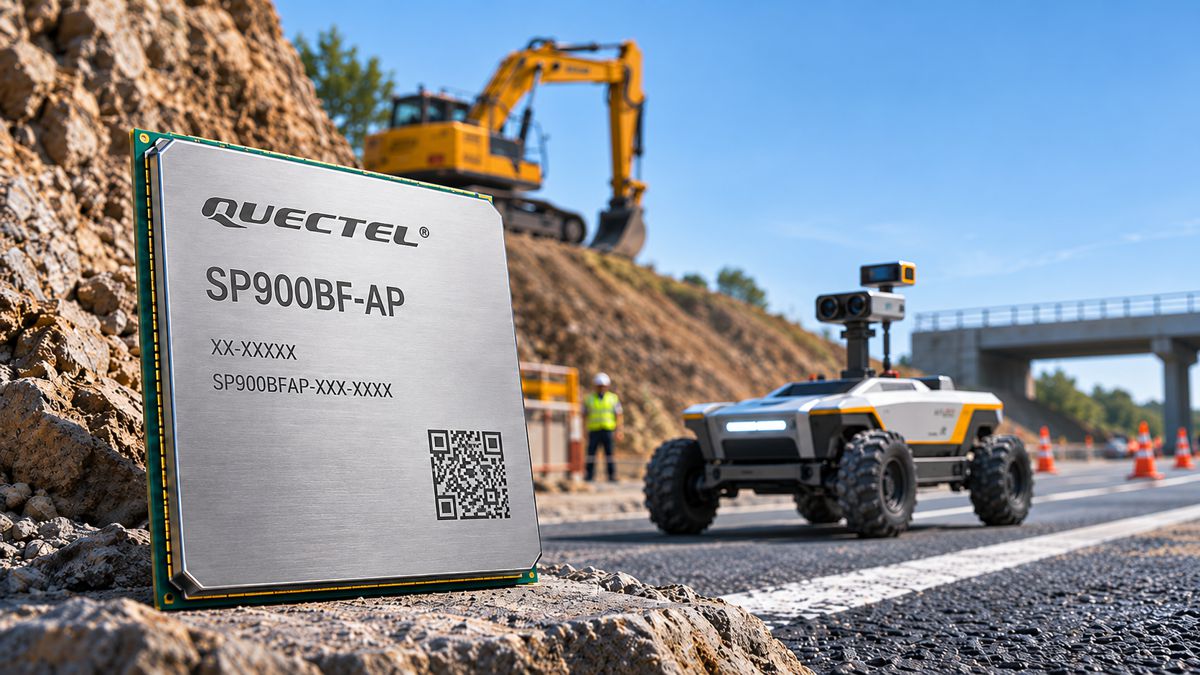







Phison Takes Data Storage into Orbit with New Space-Grade SSD Technology
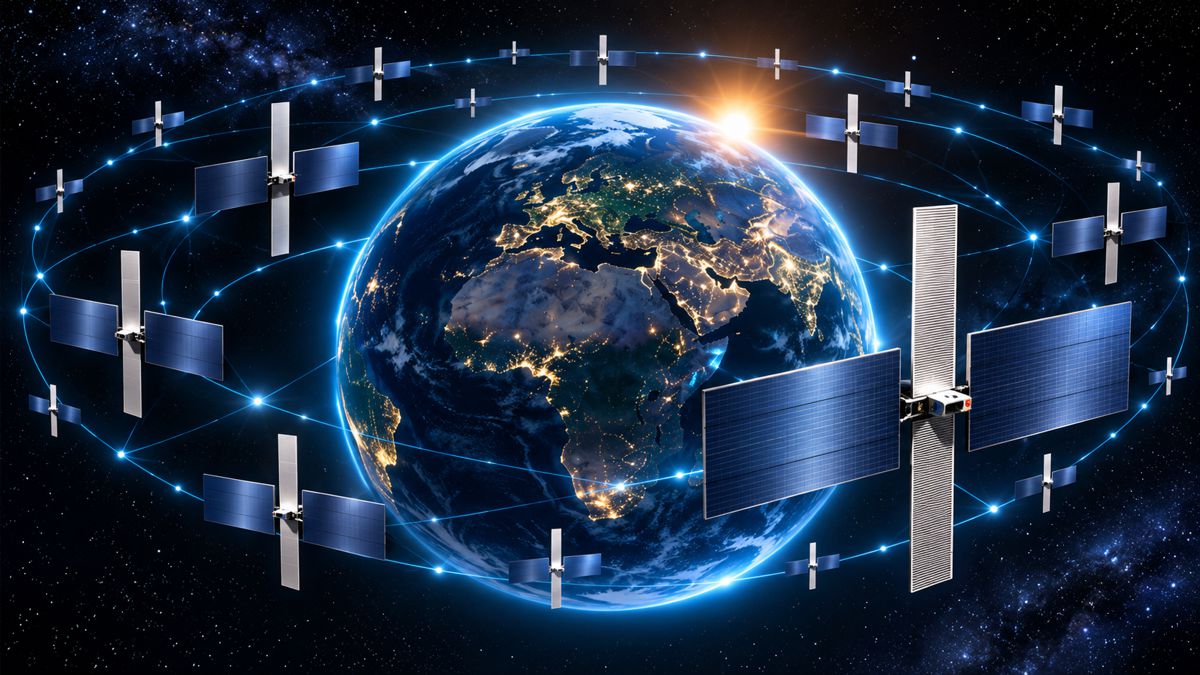
A commercial data storage facility carrying 488 terabytes of solid-state memory is scheduled to enter low Earth orbit in the first half of 2027, as Taiwanese semiconductor specialist Phison Electronics prepares to supply the hardware for one of the first purpose-built orbital data centres.
The planned StarVault-001 mission, developed by US-based Lonestar Data Holdings, will provide approximately 370 TB of usable storage capacity as part of a proposed network of space-based data facilities. To support the deployment, Phison has introduced Pascari Space, a dedicated portfolio of solid-state drives engineered for spacecraft, satellites and orbital computing infrastructure.
Unveiled at the SC26 supercomputing conference in Chicago on 17 November 2026, the new storage systems address an engineering problem that conventional terrestrial data centres rarely encounter. Semiconductor memory operating hundreds of kilometres above Earth must withstand radiation exposure, considerable temperature variations and prolonged periods without physical maintenance, while continuing to protect information that may be impossible to recover if the hardware fails.
Briefing
- Phison has launched Pascari Space, a configurable SSD portfolio for spacecraft and orbital infrastructure.
- Lonestar’s StarVault-001 mission will carry 488 TB of installed storage, providing approximately 370 TB of usable capacity.
- The first StarVault orbital node is anticipated to launch during the first half of 2027.
- Three product families address flight-critical systems, onboard computing and high-capacity orbital storage.
- Radiation testing, advanced error correction and configurable flash endurance are central to the technology.
Engineering Reliable Storage Beyond Earth
Solid-state drives offer several advantages for space applications, particularly their compact dimensions, relatively low weight and absence of moving mechanical components. They can accommodate substantial quantities of information without the mechanical vulnerabilities associated with traditional hard disk drives, although semiconductor memory introduces its own challenges when exposed to the space environment.
Energetic particles can interfere with electronic circuits and stored information, producing effects that range from recoverable data errors to permanent component damage. Total ionising dose describes the cumulative radiation absorbed by components throughout a mission, while single-event effects occur when individual particles disrupt electronic operation. The consequences depend on the semiconductor technology, spacecraft shielding, orbital conditions and duration of exposure.
NASA’s research into radiation effects on spacecraft electronics has established the need to evaluate components against their intended operating environments. Commercial semiconductor devices can be suitable for certain missions, but their reliability must be assessed against the radiation levels and operating conditions they are likely to encounter.
Phison has structured its Pascari Space portfolio around three distinct applications, allowing storage performance and reliability characteristics to be configured according to the role of the hardware aboard a spacecraft.
The Flight Critical range uses wide-temperature, DRAM-less architecture for systems where dependable operation takes precedence over maximum data throughput. Main Storage products provide higher performance for general spacecraft systems and onboard computing, while the Orbital Data Center range concentrates on the larger capacities required for commercial storage services and substantial datasets generated in space.
A spacecraft control system may need reliable access to a relatively modest quantity of essential information throughout a mission lasting several years. An Earth observation satellite, by comparison, can produce extensive volumes of imagery and sensor data that must be processed, stored or transmitted to ground stations. Providing identical storage specifications for both applications would introduce unnecessary compromises in capacity, performance or endurance.
Radiation Protection and Flash Memory Endurance
Much of the engineering behind Pascari Space resides in its controllers and firmware, which determine how information is written, distributed, checked and recovered within the flash memory.
Through its IMAGIN+ customisation programme, Phison can adjust storage configurations to meet individual mission requirements, including data retention, error handling, endurance and component selection. The company also offers radiation characterisation covering total ionising dose and single-event effects, supported by heavy-ion testing and post-manufacturing lot screening where required.
The storage architecture incorporates low-density parity-check error correction, alongside Phison’s SmartECC and SmartRefresh technologies, SRAM interleaving, data scrubbing and randomised RAID mapping. These mechanisms help identify and correct data errors, manage the distribution of stored information and improve resilience against certain memory faults.
Radiation tolerance, write endurance and data retention remain separate engineering considerations, however. A drive capable of surviving extensive write cycles is not necessarily qualified to withstand a particular radiation environment, while reliable long-term data retention depends on additional factors, including flash memory characteristics, operating temperature and the system’s error-management processes.
Phison also advertises endurance improvements of up to 60 times for selected configurations, although the comparison requires qualification. The claimed improvement relates to drives operating in pseudo-single-level-cell mode rather than their native triple-level-cell configuration. By using fewer programmed states within each memory cell, pseudo-SLC operation can substantially increase write endurance, but reduces effective storage capacity.
The maximum improvement applies to the Flight Critical and Main Storage product families, with actual endurance depending on capacity, configuration and workload. It is an established engineering trade-off rather than a general 60-fold improvement across every product in the portfolio.
Such compromises become particularly demanding once hardware has been launched. A defective storage device aboard a conventional data centre server can normally be replaced during scheduled maintenance. Reaching an orbital satellite to perform an equivalent repair is generally impractical, while transporting replacement equipment to the Moon would involve additional launch expenditure, spacecraft integration and mission planning.
From Mars Exploration to Lunar Storage
Phison’s involvement in spacecraft storage predates the introduction of Pascari Space. Its technology has already been deployed aboard NASA’s Perseverance Mars rover, while a collaboration with Lonestar placed solid-state storage hardware on the Intuitive Machines IM-2 lunar mission in February 2025.
The lunar project, known as Freedom, incorporated an 8 TB SSD and supporting computing equipment intended to demonstrate digital storage operations during the journey to the Moon and on its surface. The hardware was integrated into the Athena lunar lander, which launched aboard a SpaceX Falcon 9 rocket on 26 February 2025.
Lonestar reported successful data operations during the flight and in lunar orbit, providing an opportunity to evaluate storage hardware under actual mission conditions. The surface demonstration proved considerably shorter than originally intended.
Athena reached the Moon in March 2025 but came to rest on its side, restricting the lander’s ability to generate electrical power. Lonestar reported that its storage equipment operated during the journey and briefly on the lunar surface before the available power was exhausted.
Independent reporting by Data Center Dynamics confirmed the landing difficulties and limited operating period. The mission demonstrated that the storage hardware could function during spaceflight and lunar operations, although it did not provide evidence of sustained lunar data centre performance over an extended period.
The experience also exposed a practical dependency affecting future orbital and lunar infrastructure. Storage hardware can perform as designed and still become unavailable if another spacecraft system fails. Electrical generation, power distribution, thermal control and communications are integral to the reliability of any space-based data service.
Phison cites its previous deployments as supporting the flight heritage of its storage technology, including a Technology Readiness Level 9 achievement. That experience provides a foundation for subsequent development, but readiness established for earlier hardware does not automatically qualify every configuration within a new product portfolio. Individual systems still require evaluation against their intended mission environments and operational requirements.
Building the First StarVault Orbital Node
Lonestar is developing its StarVault network around secure digital storage outside conventional terrestrial facilities, targeting applications that may benefit from physical separation, specialised data protection arrangements and access to space-based computing infrastructure.
The company has already expanded its satellite manufacturing relationship with Sidus Space. In April 2026, Sidus announced an additional orbital storage payload, extending an existing agreement intended to support the StarVault network.
Earlier programme announcements had indicated a launch during autumn 2026, but the latest Phison announcement places the anticipated StarVault-001 deployment in the first half of 2027. The revised timetable remains a target rather than a confirmed launch date.
With 488 TB of installed storage and approximately 370 TB available for operational use, the proposed orbital node represents a substantial increase in capacity compared with the earlier lunar demonstration. The difference between installed and usable capacity amounts to approximately 118 TB, although the companies have not published a detailed breakdown of the storage architecture or how that capacity is allocated.
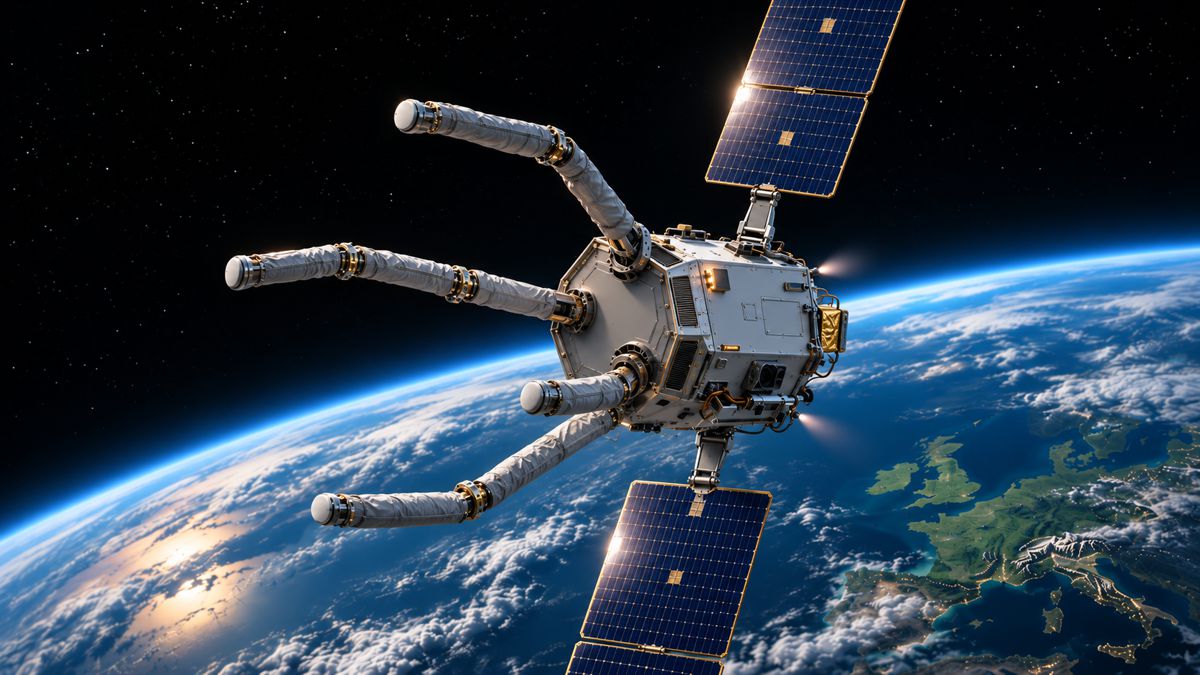
The storage devices themselves are only part of the facility. An orbital data centre also requires electrical generation and distribution, thermal management, secure communications and spacecraft control systems capable of maintaining operation throughout its intended mission life.
Thermal management presents a particularly interesting challenge. Space may be extremely cold, but the absence of atmospheric convection prevents equipment from rejecting heat in the same manner as a terrestrial installation. Electronic components continue to generate waste heat, which must be transferred through the spacecraft and ultimately rejected through radiating surfaces.
Solar power also introduces operational considerations. Electricity generation depends on spacecraft orientation, solar array performance and orbital conditions, while satellites passing through Earth’s shadow require stored energy or other means of maintaining essential systems.
These engineering requirements affect the mass, complexity and cost of the spacecraft, as well as the quantity of storage and computing equipment that can be operated within its available power and thermal capacity.
The Commercial Case for Off-Planet Data
Lonestar’s proposed services include secure data storage and cryptographic key management, with potential applications among government organisations, financial institutions and operators of critical infrastructure. Physical separation from terrestrial facilities offers a different form of resilience, particularly where customers are concerned about natural disasters, infrastructure disruption or the concentration of sensitive information in conventional locations.
A facility in orbit would not be exposed directly to terrestrial flooding, earthquakes or physical attacks against individual buildings. Nevertheless, it would depend on functioning spacecraft, communications networks and ground stations, with launch failure, orbital debris, radiation and equipment degradation introducing additional risks.
Cybersecurity requirements would remain substantial. Encryption, authentication, access controls and secure key management would still be necessary, while the location of stored information beyond Earth’s surface would not automatically exempt a service from national jurisdiction, contractual obligations or data protection requirements.
Commercial economics present another challenge. Terrestrial cloud infrastructure benefits from established manufacturing and maintenance supply chains, extensive fibre-optic communications networks and the ability to expand or replace equipment without launching it into orbit. Space-based facilities must recover launch, spacecraft development, integration, ground operations and eventual replacement costs, alongside the expense of qualifying hardware for demanding operating environments.
These costs are likely to favour specialist applications during the early stages of commercial development. Secure archival storage, selected resilience services and information generated or processed directly in space present more plausible initial opportunities than attempts to compete with conventional terrestrial cloud providers on the price of routine bulk storage.
For information originating aboard satellites or scientific spacecraft, processing and storing data closer to its source could also reduce the need to transmit every raw dataset immediately to Earth. The operational value would depend on the particular mission, available communications bandwidth and the amount of processing that can be performed within the spacecraft’s power and thermal limits.
Phison’s role in this emerging market is primarily that of a specialist technology supplier. By adapting its established NAND controller and firmware expertise to space applications, the company can offer customised storage systems without having to manufacture complete spacecraft or operate orbital facilities itself. Its commercial opportunity will depend on the extent to which satellite manufacturers and mission operators adopt such configurations, together with the evidence accumulated through actual deployments.
Establishing a Commercial Record in Orbit
The StarVault-001 mission will bring together several technologies that have already been demonstrated individually, but their operation as a sustained commercial storage service remains to be established. Radiation protection, memory endurance, electrical reliability, thermal control and communications performance will all contribute to the outcome, alongside the ability to maintain secure access to stored information.
For Phison, the deployment offers an opportunity to demonstrate its latest storage configurations under operational conditions. Lonestar, meanwhile, will be seeking to establish whether an orbital facility can deliver a dependable service that customers are prepared to use and pay for.
The first-half 2027 launch target leaves several questions unresolved, including the final spacecraft configuration, operational lifetime, service availability and commercial pricing. The planned 370 TB of usable capacity provides a tangible starting point, but installed hardware alone cannot establish whether the business model is viable.
That assessment will emerge from the operating record of StarVault-001 and subsequent deployments. Hundreds of terabytes of storage can now be packaged for an orbital mission; the next challenge is keeping that information accessible, protected and commercially useful throughout the life of a spacecraft.
Key Industry Questions
- What is Pascari Space? Pascari Space is Phison Electronics’ portfolio of configurable solid-state storage solutions for spacecraft, satellites and orbital data centres. It includes specialised products for flight-critical systems, general onboard computing and high-capacity data storage.
- How much information will StarVault-001 be able to store? The planned mission will carry 488 TB of installed Phison storage, providing approximately 370 TB of usable capacity. The precise allocation of the remaining capacity has not been publicly detailed.
- When is StarVault-001 expected to launch? Phison anticipates a launch during the first half of 2027. The final date remains subject to spacecraft development, integration and launch scheduling.
- Why does SSD technology require modification for space? Radiation exposure, temperature variation and limited maintenance opportunities can affect semiconductor reliability. Space-oriented SSDs use suitable components, error correction, firmware configurations and mission-specific testing to reduce operational risks.
- What does Phison’s 60-times endurance claim mean? The maximum improvement compares selected drives operating in pseudo-SLC mode with the same hardware operating in native TLC mode. Higher write endurance is achieved at the expense of effective storage capacity.
- Has Phison’s storage technology already operated beyond Earth? Yes. Phison technology has been deployed aboard the Perseverance Mars rover and within Lonestar’s 2025 lunar demonstration. These deployments provide relevant flight experience, although they do not qualify every new Pascari Space configuration automatically.
- Could orbital data centres replace conventional terrestrial facilities? There is currently insufficient evidence that orbital storage can compete economically with mainstream terrestrial data centres. Specialist applications involving resilience, secure archival storage and space-based data processing provide more plausible initial markets.
- What are the main engineering obstacles to commercial orbital storage? The principal challenges include radiation exposure, thermal management, electrical power, communications availability, hardware endurance, launch costs and the difficulty of replacing or repairing equipment once deployed.
Strategic Takeaways
- Storage qualification must be matched to the radiation, temperature and operating conditions of each mission rather than relying solely on previous flight experience.
- Increasing flash memory endurance through pseudo-SLC operation reduces usable capacity, requiring careful assessment of mission storage requirements.
- Orbital infrastructure depends on complete spacecraft reliability, with failures in power generation, thermal management or communications potentially rendering functioning storage equipment inaccessible.
- Physical separation from terrestrial facilities offers particular resilience advantages, but does not eliminate cybersecurity, jurisdictional or communications dependencies.
- The commercial viability of orbital storage will depend on sustained operational performance, service availability and cost recovery rather than installed storage capacity alone.