






Six Gulf Nations Sign Agreement to Complete GCC Railway by 2030
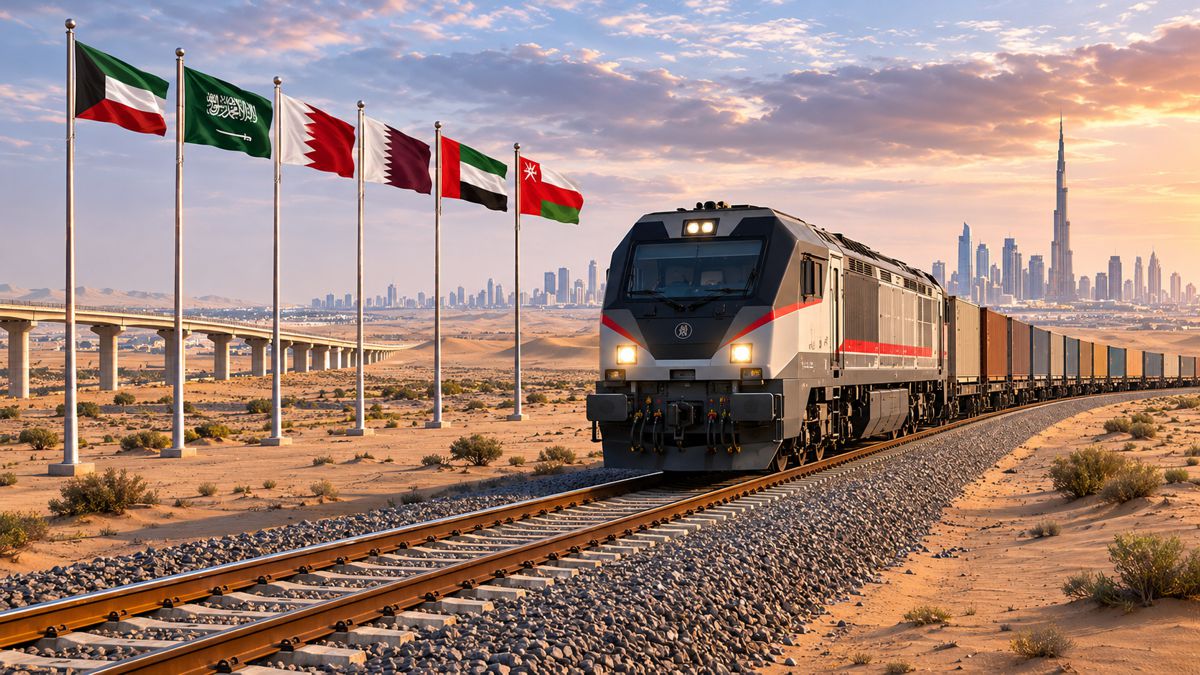
Six Gulf Cooperation Council countries have signed a new agreement to coordinate the completion and operation of a regional railway network linking Kuwait, Saudi Arabia, Bahrain, Qatar, the United Arab Emirates and Oman. Signed in Bahrain on 8 November 2026, the agreement establishes a common framework for delivering one of the Middle East’s largest cross-border transport programmes, with full operations targeted for December 2030.
The GCC Railways Authority reports that the project has reached 55.92% overall completion, although progress varies considerably between participating countries. The United Arab Emirates already operates an extensive national freight railway, construction is advancing on the UAE–Oman connection, and several other international links remain at different stages of engineering design, procurement and preparation.
Signed during the 31st meeting of the GCC Ministerial Committee for Transport and Communications in Manama, the agreement establishes arrangements for coordinating national railway developments and preparing the infrastructure for international services. It follows more than 15 years of planning, changing delivery schedules and efforts to bring six independently managed railway programmes into a connected transport system.
Briefing
- Regional agreement: Six GCC countries signed a common railway development and operating framework on 8 November 2026.
- Network scale: The GCC Railways Authority identifies a 1,768 km core route, although earlier published plans refer to approximately 2,117 km.
- Reported progress: Overall programme completion has reached 55.92%, a figure that does not represent the proportion of railway track installed.
- Construction activity: The UAE–Oman Hafeet Rail project is advancing, while major connections involving Saudi Arabia, Bahrain, Kuwait and Qatar remain under development.
- Completion target: Full regional railway operations are officially scheduled for December 2030.
A Regional Railway More Than 15 Years in Development
The GCC Railway Project was approved by Gulf leaders in December 2009 to connect their national transport networks and improve the movement of passengers and freight across the Arabian Peninsula.
The original programme envisaged a railway extending from Kuwait through Saudi Arabia, with connections to Bahrain and Qatar before continuing through the UAE towards Oman. Existing national networks would provide part of the infrastructure, supplemented by new international sections serving population centres, industrial areas, seaports and logistics facilities.
Early proposals anticipated completion around 2018, but the programme encountered repeated delays as member states pursued different infrastructure priorities, financing arrangements and construction schedules. Some countries made substantial investments in domestic railways, while others concentrated on highway expansion, urban transport or the preparation of new railway corridors.
A more coordinated approach emerged in December 2021, when GCC leaders approved the establishment of the GCC Railways Authority. The organisation was given responsibility for overseeing implementation, developing common technical requirements and ensuring that the individual national networks could eventually function as an integrated regional railway.
In December 2023, GCC transport ministers adopted December 2030 as the target for complete operation, while allowing services to begin earlier between neighbouring countries where the connecting infrastructure had been completed.
The latest agreement formalises the framework for pursuing those objectives. According to Oman’s Ministry of Foreign Affairs, the six countries signed the General Agreement for the GCC Railway Project during the November ministerial meeting, strengthening the arrangements for coordinated development and future operation.
Each country remains responsible for financing and constructing its own railway infrastructure. The GCC Railways Authority provides the regional coordination needed to establish common standards, manage interfaces between national networks and prepare the railway for cross-border services.
Understanding the Reported 55.92% Completion
The GCC Railways Authority’s latest monitoring figures put overall project progress at 55.92%, a figure widely reported following the November agreement. However, this represents progress across the wider programme rather than confirmation that more than half of the planned railway track has been physically constructed.
The distinction is particularly relevant because the six national sections are at markedly different stages. Some countries have operational railway infrastructure that can support future international services, while others are still developing engineering designs, obtaining approvals or preparing construction procurement.
The published completion figure does not provide a sufficiently detailed breakdown to establish how much progress represents completed civil engineering, installed railway systems, design work, land acquisition or other implementation activities. It should therefore be treated as the authority’s reported measure of programme advancement rather than a direct indication of construction readiness.
There is also some variation in the published length of the railway. The GCC Railways Authority’s official project description identifies a 1,768 km core network, while earlier announcements and industry publications have referred to a route of approximately 2,117 km. The shorter figure is used in current official project information, although the published material does not fully reconcile the different measurements.
Both the progress percentage and the route length require careful interpretation when assessing how much construction remains before a continuous international railway can begin operating.
The UAE and Oman Advance Cross-Border Construction
The most substantial international railway construction activity currently under way is between the United Arab Emirates and Oman, where the Hafeet Rail project is developing a direct connection between the UAE’s national network and Sohar.
The UAE entered a new phase of railway development in 2023 when Etihad Rail launched operations across its expanded national freight network. The infrastructure connects major industrial and logistics locations across the Emirates and provides an established railway system to which international routes can be linked.
The approximately 238 km Hafeet Rail corridor is being delivered through a joint venture involving Etihad Rail, Oman Rail and Mubadala Investment Company. Running through Al Ain and Al Buraimi towards Sohar, the route will connect Oman’s port and industrial facilities with railway infrastructure in the UAE.
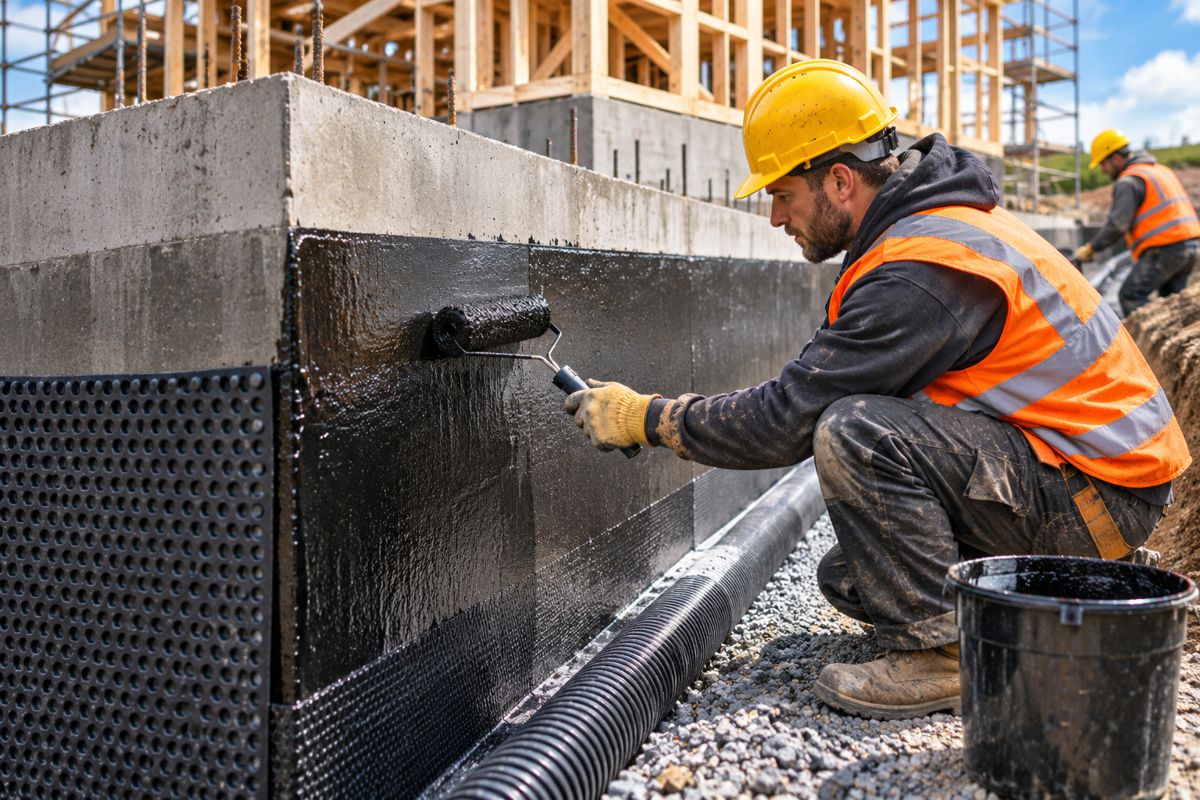
Construction involves substantial earthworks, tunnels, bridges and drainage infrastructure, with sections passing through mountainous terrain and areas where seasonal flooding presents additional engineering challenges.
In April 2026, Hafeet Rail announced that the project had reached 40% completion. More than 27 million cubic metres of earthworks had been undertaken, alongside over 100,000 cubic metres of concrete construction, while approximately 80 major structures were under development.
The programme also reported the completion of approximately 900 concrete piles and 130 box culverts, reflecting the scale of the foundation and drainage works required across the route.
Sections around Al Buraimi and Wadi Al Jizzi demand careful treatment of ground conditions and water movement. Railway embankments, cuttings and bridge approaches must accommodate rapid runoff during heavy rainfall, particularly where the alignment intersects natural drainage channels descending from the surrounding mountains.
Tunnel excavation and bridge construction are proceeding alongside track and railway systems development. Track installation began during 2026, with the project working towards trial operations in the fourth quarter of 2027, subject to construction progress and the relevant operational approvals.
The line will establish a direct rail connection between Sohar Port and the UAE’s industrial and logistics network, creating opportunities for freight services that currently depend heavily on road transport. Passenger operations are also planned, although the final service arrangements and commercial timetable will be determined as the infrastructure approaches completion.
Saudi Arabia Provides the Central Railway Connection
Saudi Arabia forms the principal land connection between Kuwait, Bahrain, Qatar and the UAE, placing its railway development programme at the centre of the regional network.
The kingdom already operates extensive freight and passenger railway infrastructure through Saudi Arabia Railways, including corridors serving industrial areas, mineral production facilities and major population centres. Completing the GCC network will require further connections linking this existing infrastructure to neighbouring countries.
Approximately 672 km of the core GCC railway route is planned within Saudi Arabia, with engineering design and procurement preparation continuing during 2026. The programme includes routes towards Kuwait, Qatar, Bahrain and the UAE, each requiring coordination with national infrastructure plans and the technical specifications adopted across the region.
Saudi Arabia Railways has been progressing consultancy procurement for the design and review of its proposed GCC connections. During 2026, the organisation issued tenders covering engineering development and design review services, laying the groundwork for subsequent construction packages.
The physical connections will involve new railway corridors, structures, track infrastructure and supporting facilities, although the extent of work required will vary according to the existing network and the alignment selected for each international link.
International freight movements will also depend on the operating arrangements established between Saudi Arabia and neighbouring railway authorities. Services crossing multiple borders require coordinated train scheduling, infrastructure access, customs procedures and arrangements for handling rolling stock and cargo.
With several countries relying on Saudi sections to reach the wider network, the timing of their design, financing and construction will influence when continuous railway services can operate across the Arabian Peninsula.
Bahrain’s Railway Depends on a New Causeway
Bahrain’s connection to the GCC Railway depends on the proposed King Hamad Causeway, a combined road and rail crossing that would provide a second fixed link with Saudi Arabia alongside the existing King Fahd Causeway.
The proposed project would establish Bahrain’s direct railway connection to the Saudi network, allowing future international passenger and freight services to reach the island kingdom.
Its construction presents substantial marine and structural engineering requirements. The crossing must accommodate foundations, bridge structures, coastal approaches and railway infrastructure, while accounting for navigation, environmental conditions and connections with existing highway and urban transport networks.
The proposed railway component also requires suitable approaches on both sides of the crossing, together with the infrastructure needed to connect the new line to Saudi Arabia’s railway system and Bahrain’s planned domestic facilities.
Although Bahrain and Saudi Arabia have continued discussions and cooperation arrangements relating to the project, the principal infrastructure required to establish the rail connection remains outstanding.
The causeway’s financing, procurement and construction programme will therefore be central to Bahrain’s participation in the proposed regional network. Its delivery must eventually be coordinated with the Saudi railway sections that will provide access to the other GCC countries.
Kuwait and Qatar Develop Their International Links
At the northern end of the regional railway, Kuwait is preparing its connection with Saudi Arabia through a new railway corridor forming part of the GCC programme.
The country’s current core railway component is approximately 111 km long, with design consultancy work progressing under Turkish engineering company Proyapi. The detailed design programme began in May 2025, following the signing of a consultancy agreement the previous month.
The proposed infrastructure must establish a suitable connection with the Saudi network while accommodating Kuwait’s wider transport and logistics plans. Engineering work includes the development of the alignment, railway infrastructure requirements and the documentation needed to support future construction.
Kuwait has also been involved in proposals for a separate high-speed passenger railway connection with Riyadh. Although such a project could contribute to regional transport connectivity, it should be distinguished from the conventional GCC passenger and freight railway.
Qatar has already developed extensive urban passenger railway infrastructure through the Doha Metro, but its connection to the GCC network requires a separate international corridor.
The proposed railway would connect Qatar with Saudi Arabia, supporting passenger and freight services across the border and providing access to the wider regional system. Engineering development must address the railway alignment, connections to national transport facilities and the operating requirements for international trains.
Saudi Arabia and Qatar are also advancing a separate proposal for a high-speed passenger railway linking Doha and Riyadh. The approximately 785 km scheme is intended to support operations at speeds exceeding 300 km/h, considerably faster than the published specification for the conventional GCC Railway.
The two projects have different technical and operational objectives, and their respective infrastructure requirements, financing arrangements and construction programmes should be assessed separately.
Establishing Common Railway Standards
The regional railway is intended to carry both passengers and freight, with the published core specification providing for passenger speeds of up to 200 km/h and freight services operating at approximately 80–120 km/h.
The GCC Railways Authority identifies diesel traction and the European Train Control System (ETCS) Level 2 as technical parameters for the common network. Individual national railways may have additional operating requirements, making compatibility between neighbouring systems an essential consideration as connections are developed.
International services will need consistent signalling, telecommunications, safety procedures and operating rules. Rolling stock authorised to operate in one country must be able to use neighbouring infrastructure without unnecessary technical restrictions or repeated changes to equipment and procedures.
ETCS Level 2 provides a common signalling framework, but interoperability also depends on the implementation of train control systems, communications, driver qualifications and maintenance arrangements. Equipment compatibility must be supported by agreed responsibilities for operating trains across national boundaries.
Freight operations introduce additional requirements involving customs clearance, border inspections, railway access charges, terminal handling and the transfer of operational responsibilities between national networks.
A train carrying containers from an Omani port to an inland destination in Saudi Arabia, for example, would need a continuous route, coordinated operating permissions and commercially workable arrangements for infrastructure access and cargo handling.
The GCC Railways Authority’s coordination programme is intended to address these requirements alongside the physical development of the railway, allowing international services to begin as neighbouring sections become operational.
Connecting Gulf Ports and Industrial Centres
The planned railway would establish new freight corridors between industrial areas, logistics facilities and seaports across the Gulf, providing an alternative to long-distance road haulage for suitable cargo movements.
Saudi Arabia and the UAE already use railway freight services for industrial and logistics transport, while the Hafeet Rail project will provide a direct connection between Sohar Port and the UAE’s national railway network.
Further links could extend these services across national borders, allowing containers, construction materials, petrochemicals and bulk commodities to move between production centres, distribution facilities and ports without relying entirely on highway transport.
Rail freight is particularly suited to regular movements of large volumes over long distances, although its commercial performance depends on the availability of efficient terminals, reliable timetables and competitive access charges. Road transport will continue to provide flexibility for shorter journeys and movements requiring direct delivery to individual customers.
The wider logistics potential has also attracted attention in discussions about international trade corridors connecting the Gulf with Asia and Europe.
A November 2026 OECD study of the India–Middle East–Europe Economic Corridor identifies regional railway infrastructure as part of the transport connectivity needed to support more integrated international freight operations. The research also points to incomplete cross-border railway links, capacity constraints and border procedures as obstacles to developing continuous multimodal services.
For Gulf ports located on different coastlines, additional railway connections could expand the options available to freight operators and shippers. Their commercial value will ultimately depend on whether the completed network can provide reliable services at costs that compare favourably with existing road and maritime arrangements.
Construction and Procurement Across Six National Programmes
The remaining GCC railway programme involves substantial civil engineering and railway systems work, but procurement will take place through separate national projects rather than a single regional construction contract.
Saudi Arabia is preparing engineering and design packages for its international connections, while Kuwait and Qatar must progress their proposed routes through the necessary design approvals, financing arrangements and construction procurement. Bahrain’s King Hamad Causeway introduces a particularly specialised requirement for marine structures and associated railway infrastructure.
The UAE and Oman are already demonstrating the scale of physical works involved through Hafeet Rail, where major earthworks, tunnelling, bridges and drainage construction are advancing alongside railway installation.
The different projects will require varying combinations of construction machinery, track materials, foundations, structural works, stations, freight terminals and supporting infrastructure. Railway systems packages will cover signalling, communications, train control and maintenance facilities, with technical compatibility becoming increasingly important as national sections approach completion.
International contractors and equipment suppliers will need to follow individual national procurement authorities, since tender schedules, contract structures and qualification requirements will differ between countries.
The requirements will also extend beyond initial construction. As railway sections enter operation, infrastructure owners will need maintenance equipment, inspection systems, asset management capabilities and the technical resources to support safe and reliable services in demanding climatic conditions.
A continuous GCC railway would eventually create opportunities for international freight operators, terminal developers and logistics businesses, although the commercial arrangements governing access to the network have yet to be fully established.
Delivering a Connected Railway by 2030
The November agreement provides a common framework for completing the GCC Railway, but the six-country programme still has substantial engineering and construction work ahead.
The UAE’s operating national network and the progress of Hafeet Rail show how parts of the regional railway can advance independently. Elsewhere, new infrastructure must still move through design, financing and procurement before construction can establish the missing cross-border connections. The December 2030 target will require those national programmes to progress on sufficiently compatible schedules, with the railway systems and operating arrangements prepared alongside the physical works.
Neighbouring countries may begin international services before the entire regional network is completed, as permitted under the GCC’s implementation strategy. Full connectivity, however, will depend on the completion of the remaining links and the ability to operate trains consistently across national boundaries, bringing together railway construction, logistics infrastructure and common technical standards developed over more than 15 years of regional planning.
Key Industry Questions
- What is the GCC Railway Project? The GCC Railway is a proposed regional passenger and freight network connecting Kuwait, Saudi Arabia, Bahrain, Qatar, the UAE and Oman through national railway infrastructure and new international links.
- What agreement was signed in November 2026? The six GCC countries signed the General Agreement for the GCC Railway Project on 8 November 2026, establishing a framework for coordinated development and operation.
- How long will the GCC Railway be? The GCC Railways Authority currently identifies a 1,768 km core network, although earlier published project descriptions have referred to approximately 2,117 km.
- Is the GCC Railway already under construction? Yes. The UAE operates a national freight network, and construction is advancing on the 238 km Hafeet Rail connection between the UAE and Oman. Several other cross-border sections remain at earlier stages.
- What does the 55.92% completion figure represent? It is the authority’s reported overall programme progress figure for 2026, rather than a measurement of the percentage of physical railway track completed.
- When will the GCC Railway be operational? December 2030 is the official target for full regional operations. Services could begin earlier between neighbouring countries where railway connections have been completed.
- How fast will GCC Railway trains operate? The published core specification provides for passenger services operating at up to 200 km/h and freight trains travelling at approximately 80–120 km/h.
- Who is responsible for constructing the railway? Each GCC member state is responsible for financing and delivering its own railway infrastructure, while the GCC Railways Authority coordinates technical requirements and regional interoperability.
- What construction opportunities remain? Potential work includes railway earthworks, bridges, tunnels, track installation, stations, freight terminals, signalling, communications and supporting infrastructure. Procurement will follow individual national programmes.
Strategic Takeaways
- Cross-border infrastructure remains the critical dependency: Operational national railways cannot provide continuous GCC services until the missing international connections are completed.
- Hafeet Rail provides an established construction programme: The UAE–Oman project combines major civil engineering works with coordinated cross-border investment and railway development.
- Interoperability requires more than common signalling: International operations will depend on compatible equipment, operating rules, customs procedures and commercially workable infrastructure access arrangements.
- Freight demand will influence long-term viability: Competitive terminal handling, reliable journey times and efficient border crossings will determine the railway’s ability to attract cargo from established road routes.
- National procurement will generate different opportunities: Contractors and suppliers will face separate tender schedules, technical requirements and qualification procedures across the six participating countries.