






Turkish-Qatari Consortium Selected for $300 Million Bukhara Airport Development
A Turkish-Qatari consortium comprising Limak İnşaat and Hamad Bin Khalid Contracting has been selected to develop and operate a new international airport in Bukhara, Uzbekistan, under a long-term public-private partnership. The greenfield development, valued by the Uzbek government at approximately US$300 million, will include a new passenger terminal, runway infrastructure and improved highway connections serving one of Central Asia’s most established cultural tourism destinations.
The consortium was named the winner of an international tender on 12 November 2026, following a competitive procurement process launched earlier in the year. Its responsibilities will cover construction and long-term management of the passenger terminal and associated landside facilities, while the state retains responsibility for the runway, taxiways, apron and aerodrome operations.
The proposed concession runs for 23 years, including a construction period of up to three years. Government officials have also been working towards an accelerated development schedule, with September 2027 previously identified as a target for completion of the airport complex. The relationship between that objective and the newly awarded concession timetable has yet to be clarified.
Briefing
- International tender: Turkey’s Limak İnşaat and Qatar’s HBK Contracting selected for the New Bukhara International Airport PPP.
- Project investment: Uzbekistan’s latest overall airport development estimate is approximately US$300 million.
- Terminal capacity: A 48,500 m² passenger terminal designed for 1,200 international and 400 domestic passengers per hour.
- PPP structure: A 23-year Build-Transfer-Operate concession, including up to three years for construction.
- Infrastructure programme: A new airfield, supporting facilities and approximately 23.5 km of improved road connections will complement the privately developed terminal.
International Contractors Secure the Airport Concession
The winning consortium combines the airport development and operating experience of Turkey’s Limak with the large-scale construction capabilities of Qatar’s Hamad Bin Khalid Contracting.
Limak has participated in the development and operation of Pristina International Airport in Kosovo and Blaise Diagne International Airport near Dakar, Senegal. Its aviation portfolio also includes major terminal construction programmes, notably the development of Kuwait International Airport’s new Terminal 2, alongside other international airport infrastructure projects.
HBK Contracting has delivered substantial building and infrastructure projects across the Gulf, including participation in the construction of Lusail Stadium, which hosted the 2022 FIFA World Cup final. The stadium’s main construction works were undertaken through a joint venture with China Railway Construction Corporation, bringing together international engineering and regional construction expertise.
The Bukhara tender was conducted by Uzbekistan Airports in cooperation with the country’s Ministry of Transport and Ministry of Economy and Finance. Launched on 12 March 2026, the two-stage procurement process attracted expressions of interest from 51 companies representing Uzbekistan and 23 other countries.
Six bidders or bidding groups progressed through the qualification process before the final proposals were evaluated by an interdepartmental tender commission. The Limak–HBK consortium was subsequently selected as the winning bidder, although the authorities have not published a detailed comparison of the final financial proposals.
According to the Uzbekistan Ministry of Transport’s announcement, the next stage involves finalising and signing the PPP agreement. The award establishes the preferred private development partner, but the published announcement does not confirm that the concession has reached financial close.
Dividing Construction and Operational Responsibilities
The New Bukhara International Airport will be developed under a Build-Transfer-Operate arrangement, with responsibility for the passenger terminal and landside facilities allocated to the private consortium and the airfield remaining under public control.
Limak and HBK will develop the terminal, forecourt, parking areas and associated infrastructure before assuming long-term responsibility for operating the facilities covered by the concession. The public partner will construct and manage the runway, taxiways, aircraft parking apron and wider aerodrome infrastructure.
The terminal will require passenger processing areas, baggage handling systems, security infrastructure, mechanical and electrical services and connections to the surrounding transport network. These facilities must be coordinated with the publicly developed airfield, particularly where aircraft stands, passenger boarding arrangements, utilities and operational access cross the boundary between the two construction programmes.
Aircraft parking positions and apron layouts must accommodate the terminal’s planned passenger flows, while emergency access, security systems and servicing infrastructure will need to operate consistently across both areas. The construction and commissioning programmes will also have to account for the installation and testing of systems supplied under separate contracts.
The proposed 23-year concession includes a construction allowance of up to three years, followed by approximately 20 years of operations if the full construction period is used. The final agreement will establish the investment responsibilities, delivery milestones and commercial arrangements governing the private facilities.
Although the government’s latest overall airport investment estimate is approximately US$300 million, the financial value of the winning concession has not been disclosed. Published information does not identify the consortium’s committed capital contribution, financing structure, concession payments or revenue-sharing arrangements, making it inappropriate to describe the total project estimate as the value of the private contract.
A New Terminal for Bukhara’s International Services
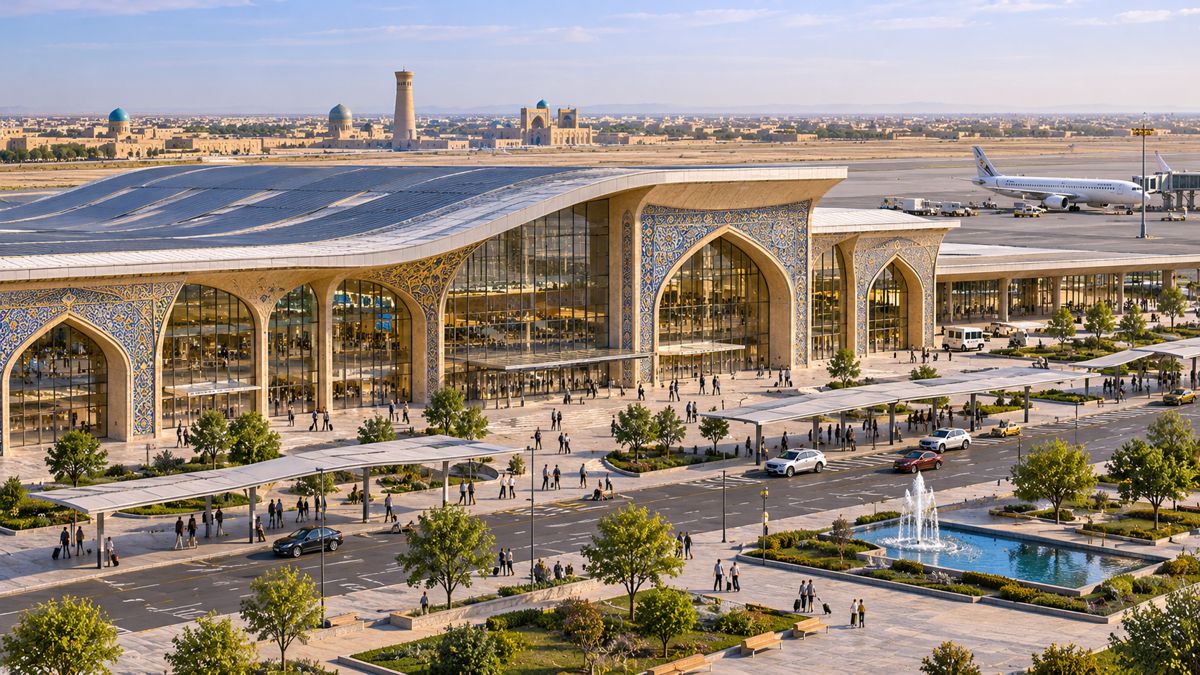
The airport is planned for the Qumsulton area of Bukhara district, outside the existing airport site, with a passenger terminal covering approximately 48,500 m².
The March 2026 tender documentation specifies capacity for 1,200 international passengers per hour and a further 400 domestic passengers per hour. The facilities are intended to accommodate increased airline activity, including international scheduled flights and charter services serving Bukhara’s tourism market.
The wider development includes cargo handling facilities, catering infrastructure, parking, landscaping and a fuel storage complex with a proposed capacity of 8,000 m³. Plans also identify a runway of approximately 3,300 metres and an overall airport development area of around 370 hectares.
These specifications would provide considerably more operational flexibility than the existing facilities, although final aircraft handling capabilities will depend on the approved runway and apron designs, pavement strength and supporting aviation systems.
The proposed hourly terminal capacity establishes requirements for check-in, security screening, immigration, baggage handling and passenger circulation during periods of concentrated arrivals and departures. International services will also require suitable facilities for customs inspections and border-control operations.
Actual annual passenger volumes will depend on airline schedules, aircraft capacity and the development of international routes. The planned capacity provides room for growth, but it should not be interpreted as a forecast of passenger demand.
Cargo facilities and supporting logistics infrastructure could also broaden the airport’s commercial role, particularly for businesses requiring reliable connections to international markets. Their eventual utilisation will depend on the development of air freight services and the airport’s ability to attract suitable operators.
Public Airfield Construction Already Under Way
Work on the publicly controlled aerodrome infrastructure was progressing before the private terminal consortium had been selected.
During a September 2026 review of national transport infrastructure, the Uzbek presidency confirmed that construction of the new Bukhara airport’s airfield facilities was under way, while procurement of the terminal development partner continued.
The planned airfield will require a new runway, taxiways, aircraft parking areas and associated operational infrastructure. The published award does not disclose the final pavement specifications or detailed construction methods, but the works will involve specialist airfield construction and the installation of systems needed for international aviation operations.
Runway pavement design must accommodate the anticipated aircraft fleet and traffic levels, taking account of ground conditions, aircraft loading and long-term maintenance requirements. Taxiway layouts and apron geometry will determine how aircraft move between the runway and terminal, with suitable clearances and operating arrangements required throughout the airside area.
Bukhara’s continental climate also influences construction planning. Hot summers, cold winter conditions and windblown dust place demands on pavement materials, surface durability and maintenance, while drainage must be incorporated across extensive paved areas.
The terminal and airfield programmes will eventually converge around the apron and passenger boarding facilities. As the public works advance, the private developer will need sufficiently defined interfaces to complete its terminal design without requiring substantial alterations to infrastructure already constructed.
The published information does not establish that Limak and HBK have commenced physical terminal construction. Their immediate responsibilities remain associated with finalising the concession and preparing the privately delivered works.
An Accelerated Construction Timetable
The development schedule has changed considerably since the new Bukhara airport was first proposed.
Earlier plans anticipated completion during 2026 or early 2027, before the government proceeded with the international PPP tender launched in March 2026. The procurement process subsequently ran through qualification and proposal evaluation, culminating in the consortium’s selection in November.
On 3 November 2026, President Shavkat Mirziyoyev reviewed infrastructure preparations in Bukhara, including the new airport, road connections and facilities associated with forthcoming international events.
The presidential development review described an airport investment of approximately US$300 million, alongside a 23.5 km road connection and improvements to the surrounding transport infrastructure. Local reporting following the review indicated that officials had been instructed to work towards completion of the airport complex by 1 September 2027.
That objective sits alongside a PPP structure allowing up to three years for construction after the agreement takes effect. If the full allowance were used following a late-2026 signature, the private development programme could extend into 2029.
There are possible explanations for the differing schedules, including phased commissioning, earlier completion of the public airfield or a shorter construction programme agreed with the winning consortium. However, the available government announcements do not establish which arrangements will apply.
Following the award, Minister of Transport Ilkhom Makhkamov and Uzbekistan Airports chairman Javlonbek Umarkhodjayev met representatives of Limak on 19 November to discuss the implementation programme and outstanding contractual arrangements.
The Ministry of Transport’s subsequent report confirmed that the parties intended to accelerate negotiations, organise working groups and conclude the PPP agreement as quickly as possible.
The next contractual milestones should provide greater clarity on the construction start date, delivery of individual infrastructure components and the commissioning sequence. Until that programme is formally established, September 2027 remains an accelerated government objective rather than a confirmed opening date for the completed airport.
A Major Road Infrastructure Programme
The new airport will be supported by approximately 23.5 km of improved road connections linking the development with Bukhara and the surrounding transport network.
Government plans include upgrading existing roads and constructing new sections to accommodate airport traffic, public transport services and the movement of goods and personnel associated with the development.
Local reporting has described a route of approximately 23.8 km incorporating two overpasses, nine underpasses and eight bridges, although the detailed scope and distribution of these structures should be confirmed against the final road construction documentation.
The programme will involve highway earthworks, junction development, drainage, pavement construction and supporting utilities, with road lighting and landscaping incorporated into the wider infrastructure plans.
Traffic arrangements around the terminal must accommodate passengers arriving by private vehicle, taxi and bus, alongside airport servicing operations and commercial deliveries. Parking, access roads and forecourt circulation will form part of the privately developed landside facilities, while the larger external road programme remains a separate public infrastructure responsibility.
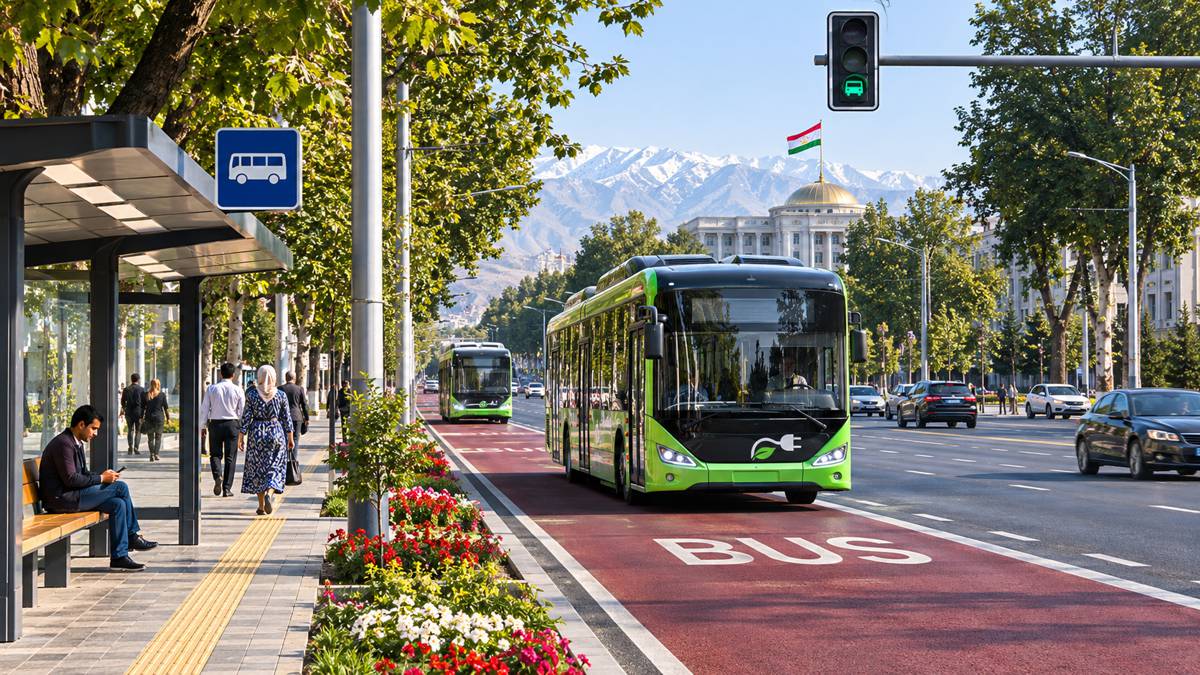
The government has also outlined improvements to local public transport, including additional bus services for Bukhara and neighbouring districts. These investments are intended to improve access to the new terminal and support broader transport development across the region.
The scale of the road programme gives the project a substantial highway engineering component alongside the airport construction works, with several major structures and new connections needed to integrate the greenfield site into the existing transport network.
Expanding Bukhara’s Tourism and Aviation Capacity
Bukhara is one of Central Asia’s most established cultural destinations, with a historic centre recognised by UNESCO as a World Heritage Site in 1993.
Its architectural heritage, traditional urban fabric and position along the historic Silk Road have made it a major destination for international visitors travelling through Uzbekistan. The government is seeking to support that market by improving direct air connectivity and reducing reliance on transfers through larger national aviation hubs.
The existing Bukhara International Airport handled 574,036 passengers in 2025, with international travel accounting for the majority of traffic, according to figures published during the airport development process.
The proposed new terminal would provide substantial additional passenger processing capacity, allowing airlines greater flexibility to introduce services and manage seasonal peaks. Its success will depend on sustained demand, airline participation and the ability to develop routes that attract passengers throughout the year.
International airline services have been discussed for destinations including Malaysia, Indonesia, Kuwait, Bahrain and Egypt, although these should be treated as prospective connections rather than confirmed operating routes.
Commercial revenues from retail, food and beverage facilities, parking and other passenger services could complement aeronautical income under the eventual concession arrangements. The financial importance of these activities will depend on the contract terms and the number of passengers using the airport.
Beyond tourism, improved air connectivity could benefit regional businesses and support further investment in hotels, transport services and commercial infrastructure. Cargo handling facilities may also create opportunities for specialist logistics operations, provided sufficient freight demand develops.
From Earlier Proposals to International Procurement
The Bukhara development has undergone changes in both its reported investment scale and proposed delivery arrangements.
Earlier project proposals were associated with an estimated investment of approximately US$226 million and private-sector development discussions involving Ark Port. The government subsequently launched the international PPP tender that resulted in the selection of Limak and HBK.
The latest US$300 million estimate represents a higher reported investment figure, but the available documentation does not establish whether the original and revised amounts cover identical infrastructure, construction responsibilities or financing arrangements. A direct comparison would therefore risk overstating the extent of any cost increase.
Uzbekistan has been seeking greater private participation in aviation infrastructure, with concession agreements providing a mechanism for combining international airport development expertise with continued public ownership and oversight of strategic assets.
In Bukhara, the selected consortium will bring construction and airport operating experience to the passenger terminal, while the state continues developing the airfield and external infrastructure. The next stage will establish the final commercial and technical responsibilities through the concession agreement.
Preparing Bukhara’s New International Gateway
With the winning consortium selected and public airfield works already progressing, the New Bukhara International Airport is moving towards a more clearly defined construction programme. The immediate priorities are finalising the PPP agreement, establishing the investment and delivery obligations, and coordinating the remaining design work between the private terminal developer and the public infrastructure authorities.
The government’s accelerated timetable will require particular attention to construction sequencing and commissioning, especially where the terminal, apron, utilities and road connections must become operational together. The final concession arrangements should establish whether the airport will open in phases or proceed towards a single coordinated completion milestone.
For Uzbekistan, the development offers an opportunity to expand Bukhara’s international aviation capacity while bringing additional private investment and operational expertise into the country’s airport infrastructure. Its delivery will depend on converting the tender award into an executable construction programme that brings the publicly funded airfield and privately operated terminal together.
Key Industry Questions
- Who has won the New Bukhara International Airport tender? A consortium comprising Turkey’s Limak İnşaat Sanayi ve Ticaret A.Ş. and Qatar’s Hamad Bin Khalid Contracting Company W.L.L. was selected in November 2026.
- How much will the new airport cost? Uzbekistan’s latest overall project estimate is approximately US$300 million. The financial value of the private terminal concession has not been publicly disclosed.
- What will the private consortium build and operate? The consortium will develop and manage the passenger terminal, forecourt, parking and associated landside facilities. The state will retain responsibility for the runway, taxiways, apron and aerodrome operations.
- How long will the PPP concession last? The proposed Build-Transfer-Operate agreement runs for 23 years, including a construction period of up to three years.
- What capacity will the new terminal provide? The approximately 48,500 m² terminal is designed for 1,200 international passengers and 400 domestic passengers per hour.
- When will the airport open? The government has pursued a September 2027 completion objective, but the PPP allows up to three years for construction. A confirmed operational opening date has not yet been established.
- Has construction already started? Yes. Government statements confirmed that publicly controlled airfield construction was under way in September 2026. The private terminal concession was still being finalised following the November award.
- What road infrastructure is included in the project? The wider development includes approximately 23.5 km of improved road connections, with new and upgraded highway infrastructure intended to link the airport with Bukhara.
- Why is Uzbekistan developing a new airport in Bukhara? The development is intended to accommodate growing international passenger demand, attract additional airline services and support tourism, trade and wider regional economic activity.
Strategic Takeaways
- Public and private construction programmes must converge: Terminal interfaces with aircraft stands, utilities, passenger systems and commissioning will require coordinated technical specifications and delivery schedules.
- The construction timetable remains unresolved: The September 2027 government objective has not been reconciled publicly with the concession’s three-year construction allowance.
- The overall investment estimate is distinct from the concession value: Final contractual arrangements will establish the consortium’s capital commitments, financing responsibilities and commercial obligations.
- Highway infrastructure forms a major part of the development: The external road programme includes new and improved connections, potentially involving substantial bridge, junction and pavement construction.
- Long-term returns depend on airline and passenger growth: Terminal capacity alone will not establish commercial viability without sustained international routes, competitive services and sufficient passenger demand.