Hyundai and TVS Accelerate India’s Electric Three Wheeler Transition
India’s urban transport systems are at a turning point. Rapid population growth, dense city layouts and rising demand for affordable mobility are forcing a rethink of how people and goods move across short distances.
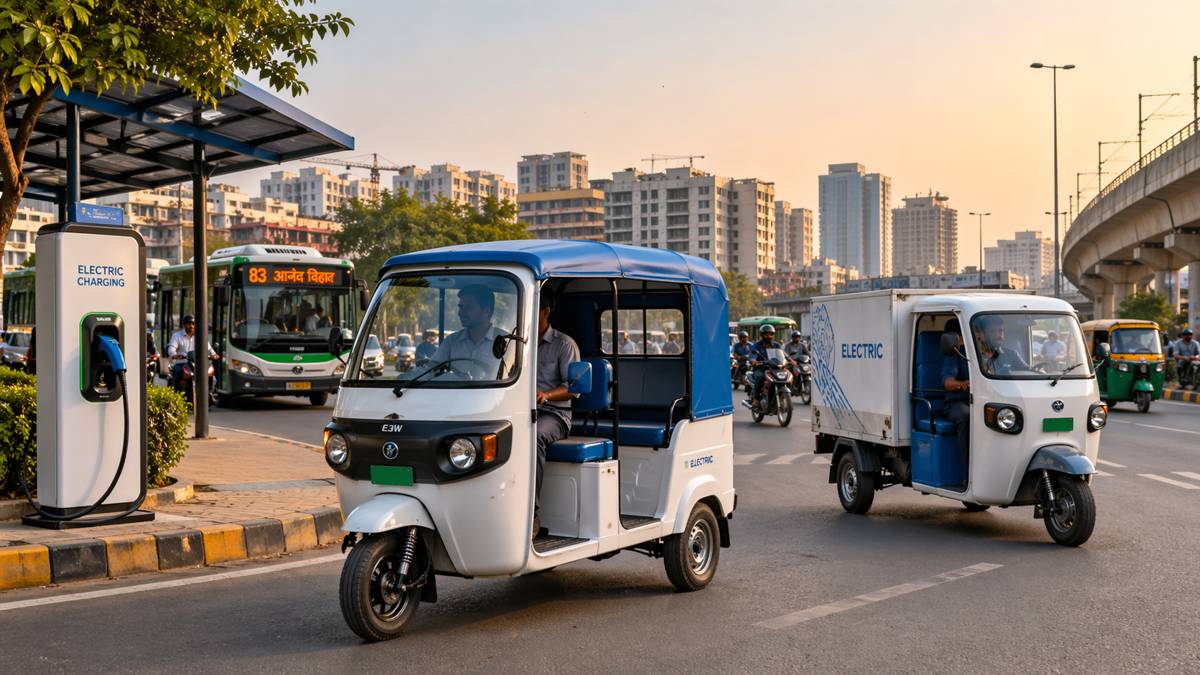
Hyundai Motor Company and TVS Motor Company have formalised a Joint Development Agreement to co-develop electric three-wheelers tailored for India’s last-mile transport ecosystem.
The move follows the unveiling of an electric three-wheeler concept at the Bharat Mobility Global Expo 2025, signalling intent to transition from concept to commercial deployment. This is not merely a product announcement. It reflects a broader shift in how global and domestic manufacturers are aligning capabilities to address one of the world’s most complex and high-volume urban mobility challenges.
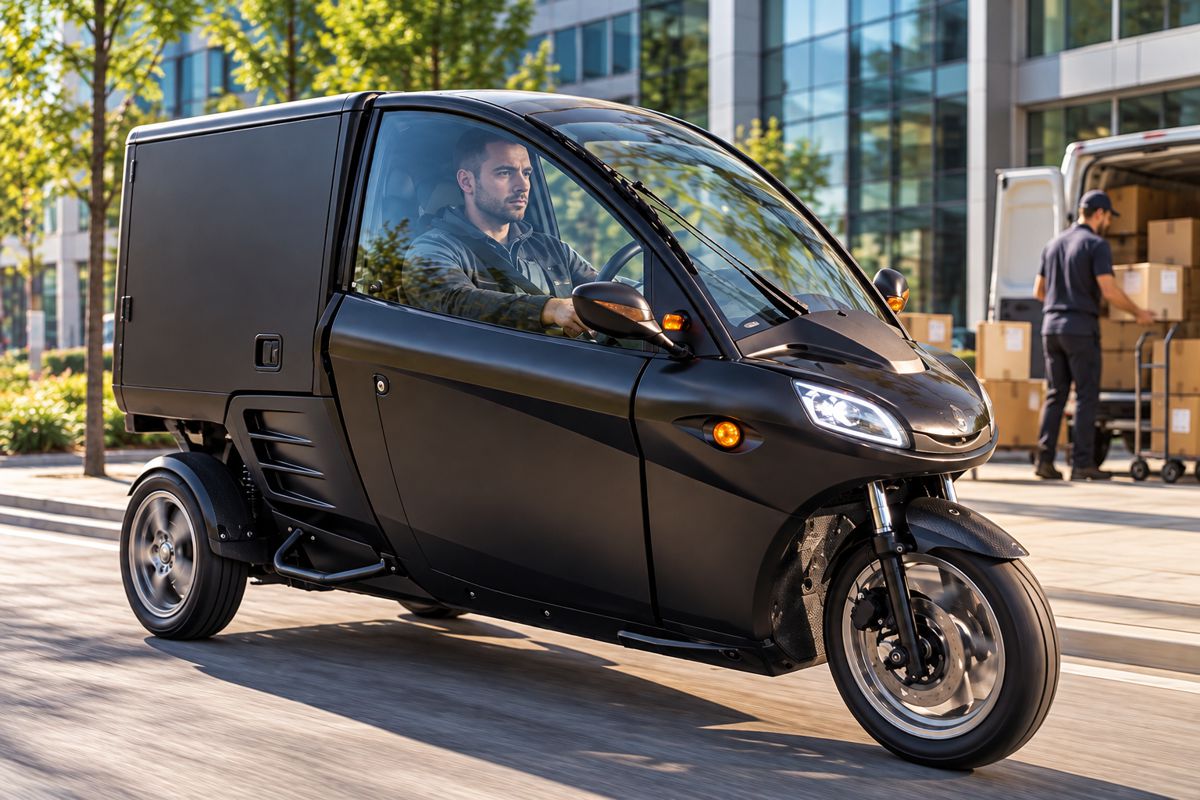
Three-wheelers already form the backbone of India’s last-mile transport network, with millions of vehicles supporting passenger travel and small-scale logistics. Electrification in this segment is gaining traction, driven by lower operating costs, government incentives and growing pressure to reduce urban air pollution. By combining global design expertise with local engineering and manufacturing depth, the partnership aims to deliver solutions that are not only cleaner but also commercially viable at scale.
Briefing
- Hyundai and TVS have signed a Joint Development Agreement to co-develop electric three-wheelers for India
- The partnership builds on a concept revealed at the Bharat Mobility Global Expo 2025
- Hyundai will lead design and advanced mobility integration, while TVS focuses on engineering, manufacturing and sales
- The initiative targets India’s rapidly expanding last-mile mobility sector
- The collaboration supports wider electrification goals across urban transport and logistics
Combining global engineering with local market intelligence
The agreement draws a clear line between the strengths of each partner. Hyundai brings extensive research and development capability, along with a track record in electric mobility platforms and human-centric vehicle design. TVS contributes deep expertise in lightweight vehicle engineering, established production infrastructure and an intimate understanding of Indian consumer behaviour.
That combination matters. Designing a vehicle for India’s last-mile environment involves far more than electrifying an existing platform. Vehicles must operate reliably in extreme heat, navigate congested urban streets and remain affordable for operators whose margins are often razor thin. Battery performance, charging accessibility and maintenance costs all play a decisive role in adoption.
Hyundai’s role in leading design suggests a focus on optimising ergonomics, safety and efficiency, while integrating technologies that improve vehicle lifecycle performance. TVS, meanwhile, is positioned to ensure that these innovations translate into practical, serviceable products that can be produced at scale and supported across a vast distribution network.
Joongsun Ko, Senior Vice President of Corporate Strategy and Planning at Hyundai Motor Company, highlighted the strategic importance of the collaboration, stating: “Hyundai Motor Company has long explored ways to contribute to improving India’s transportation environment as a key market, and our collaboration with TVS Motor is a strategic decision rooted in that effort. We hope the co-developed E3W enables broader access to safer and more sustainable transportation for people across the country.”
A fast evolving three wheeler market
India’s three-wheeler market is already undergoing rapid transformation. According to data from the Society of Indian Automobile Manufacturers, electric three-wheelers have seen strong year-on-year growth, supported by policy frameworks such as the FAME India Scheme. These incentives have helped lower upfront costs and encourage fleet operators to transition away from internal combustion engines.
Yet challenges remain. Range anxiety, charging infrastructure gaps and inconsistent product quality across the market have slowed widespread adoption. Many early entrants have struggled to deliver vehicles that meet durability expectations in real-world conditions, particularly in high-utilisation environments such as ride-hailing and urban freight.
This is where the Hyundai and TVS collaboration could prove influential. By focusing on purpose-built design rather than retrofitted solutions, the partnership aims to address structural weaknesses in the current market. Improved battery integration, optimised chassis design and enhanced safety features could help raise industry standards while building confidence among operators.
Sharad Mishra, President of Group Strategy at TVS Motor Company, emphasised the broader ambition behind the initiative: “At TVS Motor Company, we aim to transform quality of life through sustainable and accessible mobility. The Joint Development Agreement marks an important step in our partnership with Hyundai Motor Company and advances our shared ambition to develop electric three-wheeler solutions. By bringing together complementary strengths – including our electric three-wheeler platform, engineering expertise, and deep understanding of customer needs – we are well-positioned to deliver purpose-built products for India and additional markets. This collaboration reinforces our commitment to scalable, sustainable last-mile mobility while setting new benchmarks in technology, quality, customer experience, and a legacy of trust.”
Infrastructure and urban planning implications
The implications extend beyond vehicle manufacturing. Electric three-wheelers play a critical role in connecting larger transport networks, including metro systems, bus corridors and rail hubs. As cities expand, efficient last-mile connectivity becomes essential to maintaining accessibility and reducing congestion.
Electrification in this segment also aligns with India’s broader infrastructure goals. The government has committed to reducing emissions intensity and improving air quality in major urban centres. Transport accounts for a significant share of urban pollution, and small commercial vehicles contribute disproportionately due to high daily usage.
Integrating electric three-wheelers into urban transport systems can help reduce both emissions and noise pollution, while supporting more efficient logistics networks. For infrastructure planners, this creates opportunities to rethink charging networks, parking design and traffic management systems. Dedicated charging hubs, for instance, could be integrated into transport interchanges, enabling seamless transitions between different modes of travel.
Manufacturing scale and export potential
One of the more significant aspects of the agreement is the decision to base manufacturing in India, with TVS leading production. This aligns with the country’s push to become a global hub for electric vehicle manufacturing. India’s cost advantages, combined with an expanding supplier ecosystem, make it an attractive base for both domestic consumption and export markets.
Electric three-wheelers have growing relevance beyond India, particularly in Southeast Asia, Africa and parts of Latin America where similar mobility patterns exist. Affordable, durable and efficient vehicles could find strong demand in these regions, especially as governments introduce emissions regulations and incentives for cleaner transport.
By positioning the product for both domestic and international markets, Hyundai and TVS are effectively building a platform that can scale across multiple geographies. This approach reflects a broader trend in the automotive industry, where modular electric platforms are adapted to meet diverse regional requirements.
Technology integration and future mobility pathways
While the current focus is on electric propulsion, the collaboration also opens the door to broader technological integration. Features such as telematics, fleet management systems and predictive maintenance tools are becoming increasingly important in commercial vehicle segments.
Digital connectivity can significantly improve operational efficiency for fleet operators, enabling route optimisation, real-time monitoring and reduced downtime. As urban logistics become more data-driven, vehicles that can integrate seamlessly into digital ecosystems will hold a competitive advantage.
Hyundai’s experience in connected mobility and TVS’s understanding of local usage patterns could create opportunities to embed these capabilities from the outset. Over time, this could transform three-wheelers from simple transport tools into intelligent nodes within a wider mobility network.
Raising the bar for safety and user experience
Safety remains a critical concern in India’s three-wheeler segment. Many existing vehicles lack advanced safety features, and accident rates remain a challenge in densely populated urban areas. Improving safety standards is not only a regulatory priority but also a commercial differentiator.
A design-led approach offers scope to address this issue. Enhanced structural integrity, better visibility, improved braking systems and ergonomic driver layouts can all contribute to safer operation. For passengers, improved comfort and ride quality can elevate the overall experience, making electric three-wheelers a more attractive option compared to traditional alternatives.
By focusing on human-centric design, the partnership signals an intention to move beyond basic functionality towards a more refined and reliable product offering. This could help reshape perceptions of three-wheelers, positioning them as modern, efficient and sustainable transport solutions.
A decisive step in India’s mobility evolution
The collaboration between Hyundai and TVS reflects a pragmatic approach to one of the most pressing challenges in urban transport. Rather than competing in isolation, the two companies are combining expertise to accelerate development and reduce time to market.
As electrification gathers pace, partnerships like this are likely to become more common. The complexity of modern mobility systems demands collaboration across design, engineering, manufacturing and digital integration. By aligning their capabilities, Hyundai and TVS are positioning themselves to play a meaningful role in shaping the future of last-mile transport.
India’s mobility landscape is evolving quickly, and the success of this initiative will depend on execution as much as intent. If the partnership delivers on its promise of reliable, affordable and scalable electric three-wheelers, it could set a new benchmark for the industry and influence how similar markets approach electrification.