Ghana to Turns its Growth Story into Bankable Projects at GITW 2026
For three days in July, The Palms Convention Center in Accra becomes the point where West Africa’s investment narrative is meant to stop being a pitch and start becoming paper. The seventh Ghana Investment & Trade Week (GITW), running from 7 to 9 July 2026 under the patronage of the Government of Ghana, is co-located with the fourth Africa Build Show and the third MEGAWATT Africa, folding construction, energy, trade and investment into a single trading floor.
For contractors, EPC firms, equipment suppliers, utilities and the investors who bankroll them, the significance is less about the exhibition stands than about who is standing behind them: cabinet ministers, development-finance institutions, procurement teams and a government actively marketing a pipeline.
The timing is deliberate. Ghana has spent the past three years climbing out of a sovereign debt crisis that cost it international market access, and it is now presenting itself to global capital as a stabilised, reforming economy with a credible list of things to build. That combination — recovery plus a defined project pipeline — is what turns a trade show into a procurement event.
Organised by MIE Groups, which claims 25 years of exhibitions experience and connections to more than 120,000 companies across the Middle East and Africa, GITW is being positioned around business outcomes rather than conference panels, with structured matchmaking, hosted buyer programmes and memorandum-of-understanding signings built into the format. For an infrastructure and construction audience, the event is worth reading not as an isolated fixture but as a barometer of where Ghana wants private money to flow over the next decade.
Briefing
- Format and scale: The seventh GITW is co-located with the fourth Africa Build Show and third MEGAWATT Africa at The Palms Convention Center, Accra, from 7–9 July 2026, drawing exhibitors from more than 30 countries and building on a 2025 edition that reported over 2,500 delegates and more than 200 structured B2B meetings.
- The policy anchor: The event is built around financing Ghana’s 24-Hour Economy and Accelerated Export Development Programme, a private-sector-led agenda targeting roughly 1.7 million jobs over four years and a shift from import dependence to export-led production.
- The pipeline on offer: Flagship programmes span the multi-phase National Petroleum Hub at Jomoro, a national railway master plan, the Volta Economic Corridor, renewable and grid-resilience plans, and a Smart Cities and Digital Ghana agenda.
- The macro backdrop: Ghana’s economy grew close to 6% in 2025 — its fastest since 2019 — with inflation back in single digits and debt restructuring largely complete; the IMF and World Bank project 2026 growth of roughly 4.8% to 5.1%.
- The trade architecture: Participation by China’s Ministry of Commerce and the presence of AfCFTA Secretary General Wamkele Mene frame the event as a gateway into a continental market, reinforced by the International Trade Council’s launch of a new Centre for Africa in Tema.
Why the timing carries weight
The investment case being made in Accra rests on a genuine turnaround rather than aspiration. After the 2022 default drove debt-to-GDP above 90% and forced a domestic and external restructuring under an IMF Extended Credit Facility, Ghana has clawed back macroeconomic stability with a speed that has surprised many observers.
The economy expanded by around 6% in 2025 on World Bank figures, its strongest performance since 2019, and first-quarter data for 2026 pointed to growth above 6% again. Inflation, which sat above 22% at the depth of the crisis, had fallen into low single digits by early 2026, and the cedi strengthened on the back of robust gold and oil exports that pushed the current account into surplus. The fiscal picture has tightened too, with the government reporting a primary surplus that exceeded programme targets.
None of this erases the strain. Poverty remains close to 30%, youth unemployment is high, and the government has deliberately throttled externally financed capital spending to hit fiscal targets, which has slowed disbursement on donor-backed projects and left large infrastructure needs unmet. That tension is precisely why an event like GITW matters commercially.
With the public purse constrained by IMF discipline, Ghana is leaning on private capital, public-private partnerships and blended finance to deliver the roads, power and industrial capacity its recovery now demands. The pitch to exhibitors and investors is that the macro risk has come down while the project backlog has not, creating a window in which well-structured private deals can move faster than treasury-funded ones.
The policy engine behind the pipeline
Almost every conversation on the exhibition floor traces back to a single policy: Ghana’s 24-Hour Economy and Accelerated Export Development Programme, launched by President John Dramani Mahama in July 2025 and given statutory force in early 2026. The programme, branded “24H+”, is structured around eight thematic strands, Grow24, Make24, Build24, Show24, Connect24, Fund24, Aspire24 and Go24, and aims to push manufacturing, agribusiness, logistics and services onto round-the-clock, three-shift operations.
The stated ambition is to create roughly 1.7 million jobs over four years while reducing the country’s heavy reliance on imports. Mahama has described it as “the boldest economic transformation initiative in Ghana’s recent history”, and in his 2026 State of the Nation Address he confirmed the passage of the 24-Hour Economy Authority Bill and a GHS110 million budget allocation to operationalise the new authority.
For construction and infrastructure firms, the Build24 and Connect24 strands are the ones to watch, because a shift-based industrial economy implies sustained demand for factory space, industrial parks, logistics corridors, cold-chain facilities and the power to run them at night. The government has framed the programme as private-sector-led, with the state facilitating rather than dominating and financing routed through commercial banks, development-finance institutions, blended-finance instruments, the Development Bank Ghana and the Ghana Investment Infrastructure Fund.
That financing architecture is central to GITW’s proposition: the event is designed to connect the developers and equipment suppliers who can build 24H+ capacity with the institutions expected to fund it. Presidential Advisor on the 24-Hour Economy, Augustus Goosie Tanoh, sits on the programme, signalling that the policy’s designers intend to court international partners directly rather than through intermediaries.
Where the capital is meant to go
The programme that gives GITW its clearest infrastructure narrative is the National Petroleum Hub at Jomoro in the Western Region, a project whose scale reframes what Ghana is asking investors to consider. The integrated petroleum and petrochemical complex carries a headline estimate of around $60 billion across its full multi-phase build, with a first phase valued near $12 billion that broke ground in 2024.
At completion the hub is designed to house three refineries with a combined capacity of roughly 900,000 barrels per day, five petrochemical plants and around 10 million cubic metres of storage, alongside jetty and port infrastructure, executed by a consortium that includes Touchstone Capital, UIC Energy Ghana and two major Chinese engineering contractors. The commercial logic is straightforward: Ghana and West Africa import more than 80% of their refined products, and Ghana alone spends an estimated $3 billion a year buying refined petroleum despite producing crude. Domestic refining is being sold as an import-substitution and price-stability play as much as an energy one.
Beyond Jomoro, the pipeline broadens into transport, power and urban systems that speak directly to the Highways.Today readership. A national railway master plan envisages expanded corridors linking ports, mining regions and industrial zones, addressing a rail network that has long lagged the country’s freight ambitions. The Volta Economic Corridor programme aims to unlock the development potential around Lake Volta, one of the world’s largest man-made reservoirs, through integrated regional planning and logistics enterprises.
Renewable-energy and power master plans target generation, transmission, grid resilience and energy security, while the Smart Cities and Digital Ghana agenda folds in digital infrastructure, smart urban planning and AI-enabled public services. Taken together, these programmes represent the kind of long-cycle, capital-intensive work that suits EPC contractors, plant and equipment suppliers, and infrastructure funds — provided the financing and payment discipline hold.
Energy security moves to the centre of the conversation
MEGAWATT Africa, the smallest of the three co-located platforms by history but arguably the most timely, arrives at a moment when energy security has stopped being an abstraction. The February 2026 escalation of tensions in the Middle East and the resulting disruption around the Strait of Hormuz sent oil and gas prices sharply higher and exposed how vulnerable import-dependent economies remain to distant shocks.
Ghana’s Petroleum Hub Development Corporation has openly reframed the Jomoro project as an “economic shield” in that context, arguing that countries controlling their own refining, storage and distribution are far better insulated than those reliant on external supply chains. For a construction and infrastructure audience, the practical read is that energy resilience has become a procurement priority, pulling forward investment in refining, storage, transmission and backup generation.
The exhibition side of MEGAWATT reflects that shift, gathering suppliers across power generation, renewables, electrical systems, grid modernisation and lighting. Ghana’s own power sector carries a difficult legacy of tariff pressure, legacy debt in the energy value chain and periodic supply reliability concerns, all of which raise the stakes for the grid-resilience and renewable programmes on the government’s list.
The country’s ability to sustain a round-the-clock economy depends on affordable, dependable electricity at night, which makes power the binding constraint on the entire 24H+ vision. For utilities, independent power producers and electrical contractors, the commercial opportunity lies precisely in closing that gap, and MEGAWATT is being positioned as the meeting point for the technology providers who can.
A construction marketplace with regional reach
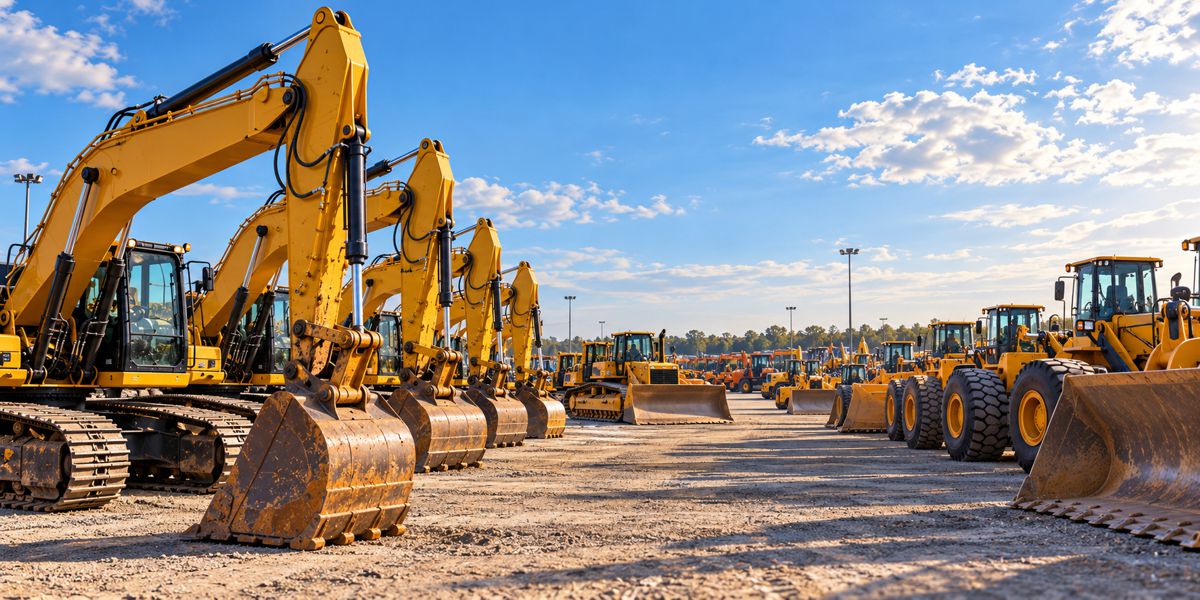
Africa Build Show is the platform most directly aligned with the trade’s core interests, presenting itself as West Africa’s dedicated construction marketplace for building technologies, materials, heavy equipment, engineering solutions and smart infrastructure. With confirmed exhibitors drawn from more than 30 countries, the show spans steel, machinery, building materials, water solutions, lighting, sanitaryware and industrial manufacturing, and its value proposition is access to a buying audience of government ministries, EPC contractors, engineers, property developers and procurement teams. For international suppliers, the appeal is a concentrated route into a market that is difficult to reach cold, and where relationships and local partnerships carry disproportionate weight.
The Ghanaian construction sector that these exhibitors are courting is substantial but demanding. It supports thousands of active contractors ranging from micro-enterprises to multinational civil-engineering firms, and it has historically contributed a meaningful share of national output, though services rather than construction dominate the economy overall.
The sector’s chronic weak point is payment: delayed government settlement, particularly in the road sector, has long strained contractors’ cash flow and shaped how firms price and structure work. That reality tempers the optimism of a busy exhibition hall. The presence of the Ghana Chamber of Construction Industry as a strategic partner, alongside professional bodies including the Chartered Institute of Building and the Institution of Engineering and Technology, signals an attempt to pair the commercial energy of the show with the standards and advocacy needed to make projects bankable and payment more reliable.
The China dimension and the geopolitics of the floor
One of the more strategically loaded features of GITW 2026 is the formal participation of China’s Ministry of Commerce, including opening remarks, alongside the Chinese Ambassador to Ghana. As Beijing’s principal authority for trade and outbound investment, MOFCOM’s presence lends the event government-to-government weight and signals continued Chinese appetite for infrastructure and industrial partnerships in West Africa.
That interest is not theoretical: Chinese engineering contractors are already embedded in the Petroleum Hub consortium, and Chinese capital and construction capacity have shaped a large share of Ghana’s recent infrastructure. For Western suppliers and investors reading the room, MOFCOM’s prominence is a reminder of the competitive landscape they are entering.
The geopolitics cut in more than one direction. Ghana’s government has been careful to diversify its partnerships, courting the Gulf, Asia and multilateral institutions rather than leaning on any single bloc, and the co-location of a Western-oriented body such as the International Trade Council with MOFCOM at the same event captures that balancing act.
For construction and infrastructure firms, the practical implication is that market entry increasingly runs through consortia and blended arrangements that mix Chinese, regional and international players, and that the ability to partner across those lines is becoming a commercial competency in its own right. The event’s framing as a gateway is, in that sense, as much about navigating a multipolar investment environment as it is about accessing a single country.
Turning introductions into contracts
What distinguishes GITW from a conventional exhibition is the machinery built around dealmaking. The programme combines an investment summit, structured B2B matchmaking, a VIP buyers club, CEO roundtables, hosted buyer meetings, technical tours and an awards dinner, all engineered to move participants from conversation to commitment.
The organisers openly position the event as a venue for memorandum-of-understanding signings, with several participating organisations expected to formalise collaborations across construction, energy, manufacturing, technology transfer and market entry. For exhibitors, the metric that matters is not footfall but qualified meetings, and the matchmaking format is designed to put suppliers in front of procurement teams and developers who arrive with mandates rather than curiosity.
That deal architecture extends beyond the exhibition hall. The International Trade Council, acting as honorary supporting partner and representing a global membership across scores of countries, is using the week to launch a Centre for Africa in the port and industrial hub of Tema, intended to provide market-entry support, regulatory guidance and cross-border matchmaking.
On the innovation side, the Pegasus Tech Ventures Startup World Cup brings its Ghana regional heat to Accra, offering local founders a live pitch for a place at the Silicon Valley grand finale and its $1 million investment prize, while the E4Impact Foundation contributes an entrepreneurship and investment-readiness agenda. The effect is to layer venture capital and enterprise development onto the heavy-infrastructure narrative, broadening the audience GITW can credibly claim to serve.
Beyond the three days
The larger bet behind GITW 2026 is geographic. Accra already hosts the Secretariat of the African Continental Free Trade Area, and the presence of AfCFTA Secretary General Wamkele Mene on the programme reinforces the pitch that Ghana is not merely a national market but a launchpad into a continental one.
For manufacturers weighing where to base African production, or for logistics and construction firms mapping regional corridors, that gateway logic is the quiet through-line connecting the petroleum hub, the rail plan, the Volta corridor and the 24-Hour Economy’s export ambitions. The country is selling proximity to a market of more than a billion people as much as it is selling its own pipeline.
Whether the week delivers on that promise will be measured after the stands come down. The test is not the number of MoUs signed in Accra but how many survive contact with financing, procurement and the payment discipline that has historically tripped up Ghanaian projects. The macro recovery is real, the pipeline is credible, and the political will behind the 24-Hour Economy is evident in legislation and budget lines rather than rhetoric alone.
What remains to be proven is execution at scale under fiscal constraint. For construction professionals, investors and policymakers, GITW 2026 is best treated as a reading of intent — a chance to see, in one room, exactly where a recovering economy wants private capital to go, and to judge for themselves how much of it will actually move.
Key Industry Questions
- What is Ghana’s 24-Hour Economy programme and why does it matter to construction and infrastructure firms? It is a private-sector-led national programme, launched in 2025 and given statutory backing in 2026, that incentivises businesses to run three shifts and operate around the clock across manufacturing, agribusiness, logistics and services. The government targets roughly 1.7 million jobs over four years and a shift from import dependence toward export-led production. For construction and infrastructure firms, the programme implies sustained demand for industrial parks, factory space, logistics corridors, cold-chain facilities and, critically, the power infrastructure to run operations at night. Its Build24 and Connect24 strands are the most relevant, and financing is routed through commercial banks, development-finance institutions, blended finance and state vehicles including the Ghana Investment Infrastructure Fund.
- How large is Ghana’s National Petroleum Hub and what does it involve? The integrated petroleum and petrochemical complex at Jomoro in the Western Region carries a full-build estimate of around $60 billion across multiple phases, with a first phase valued near $12 billion that broke ground in 2024. Fully developed, it is designed to house three refineries with a combined capacity of roughly 900,000 barrels per day, five petrochemical plants and around 10 million cubic metres of storage, plus jetty and port infrastructure. It is being delivered by a consortium including Touchstone Capital, UIC Energy Ghana and two major Chinese engineering contractors. The commercial rationale is import substitution: West Africa imports more than 80% of its refined products, and domestic refining is positioned as an energy-security and price-stability measure as much as an industrial one.
- Is Ghana a financially stable place to invest after its 2022 debt crisis? Ghana has recovered markedly from the 2022 default that pushed debt-to-GDP above 90%. Under an IMF Extended Credit Facility, it completed most of its domestic and external debt restructuring, and by early 2026 inflation had fallen into single digits from a peak above 22%, while the cedi strengthened on strong gold and oil exports. The economy grew close to 6% in 2025, its fastest since 2019, and the government reported a primary surplus above target. Risks remain, including high poverty, constrained public capital spending under fiscal targets, energy-sector legacy debt and exposure to commodity and geopolitical shocks. Investors should treat the macro recovery as genuine but pair it with careful due diligence on payment discipline and project structuring.
- Why is China’s Ministry of Commerce participating, and what does it signal? MOFCOM is China’s principal authority for international trade and outbound investment, and its formal participation, including opening remarks, signals continued Chinese appetite for infrastructure and industrial partnerships in West Africa. That interest is already visible on the ground, with Chinese engineering firms embedded in the Petroleum Hub consortium and Chinese capital shaping much of Ghana’s recent infrastructure. For international and Western suppliers, MOFCOM’s prominence is a marker of the competitive landscape and a reminder that market entry increasingly runs through consortia mixing Chinese, regional and other partners. Ghana has simultaneously courted Gulf, Asian and multilateral partners, so the event reflects a deliberate balancing of investment relationships rather than alignment with any single bloc.
- What is the realistic risk around getting paid on Ghanaian construction projects? Payment delay is the sector’s best-documented weakness, particularly on government road contracts, and it has historically strained contractors’ cash flow and shaped how firms price and structure work. The government’s decision to limit externally financed capital spending to meet IMF fiscal targets has also slowed disbursement on some donor-backed projects. For contractors and suppliers, this means the enthusiasm of a busy exhibition hall should be weighed against settlement risk. Structures that mitigate exposure — public-private partnerships, blended finance, milestone-linked payment terms and multilateral guarantees — are increasingly important. The involvement of the Ghana Chamber of Construction Industry and professional institutions in GITW is partly an effort to improve project bankability and payment reliability across the sector.
- How significant is the co-location of Africa Build Show and MEGAWATT Africa with GITW? The co-location is strategically important because it links investment capital directly to the sectors that absorb it. GITW brings ministers, investors and development-finance institutions; Africa Build Show brings construction technology, materials and heavy equipment from more than 30 countries; and MEGAWATT Africa brings power generation, renewables and grid solutions. Placing them under one roof allows a developer or contractor to move from financing conversations to supplier selection to procurement introductions within a single event. For an economy trying to deliver an ambitious project pipeline under fiscal constraint, that integration matters: energy is the binding constraint on the 24-Hour Economy, and construction is how the pipeline gets built, so pairing both with the capital that funds them is the event’s core logic.
- What does the AfCFTA angle mean for firms considering Ghana as a base? Accra hosts the Secretariat of the African Continental Free Trade Area, and the presence of AfCFTA Secretary General Wamkele Mene reinforces Ghana’s pitch as a gateway rather than a single national market. For manufacturers deciding where to base African production, or for logistics and construction firms mapping regional corridors, proximity to continental trade governance and preferential market access is a genuine draw. It underpins the export ambitions of the 24-Hour Economy and gives added rationale to investments such as the rail master plan and the Volta Economic Corridor. The practical benefit depends on how quickly AfCFTA’s tariff and trade-facilitation provisions are implemented in practice, so firms should treat continental access as a medium-term structural advantage rather than an immediate one.
- What should international exhibitors realistically expect to gain from attending? The event is engineered around qualified engagement rather than raw footfall, so the meaningful returns are structured B2B meetings, hosted buyer introductions, CEO roundtables and the potential to sign memoranda of understanding with government procurement teams, developers and distributors. The 2025 edition reported over 2,500 delegates and more than 200 structured meetings, giving a sense of the deal density on offer. For firms new to West Africa, the value lies in compressing months of relationship-building into three days and in gaining access to decision-makers who are difficult to reach cold. The realistic expectation is a pipeline of leads and partnerships that require follow-through after the event, rather than contracts signed on the floor, with success measured by how many introductions survive financing and procurement.
Strategic Takeaways
- Ghana is deliberately pairing a credible macroeconomic recovery with a defined, government-backed project pipeline, using events like GITW to route private capital and blended finance toward infrastructure that the fiscally constrained public purse can no longer fund alone.
- The 24-Hour Economy is the policy engine that gives the pipeline coherence, and its dependence on affordable night-time power makes energy generation and grid resilience the binding constraint that infrastructure investors should watch most closely.
- The National Petroleum Hub reframes Ghana’s ambition from national market to regional energy corridor, and its import-substitution logic has strengthened as Middle East disruption pushes energy security up the procurement agenda across West Africa.
- Payment discipline, not deal volume, is the real test of Ghana’s project pipeline, so contractors and suppliers should prioritise structures — PPPs, milestone-linked terms and multilateral guarantees — that mitigate the sector’s well-documented settlement risk.
- Market entry in Ghana increasingly runs through cross-border consortia blending Chinese, regional and international players, making partnership capability a commercial competency and positioning Accra, as AfCFTA’s host, as a launchpad into a continental market rather than a single-country play.