Low Bridge Alerts and Weight Limit Routing: What CDL Drivers Need in a GPS App
Commercial trucks are the lifelines of modern economies, hauling everything from concrete and steel to consumer goods. The sheer scale and mass of these vehicles provide significant advantages over other transportation modes for freight movement, but they also pose unique challenges.
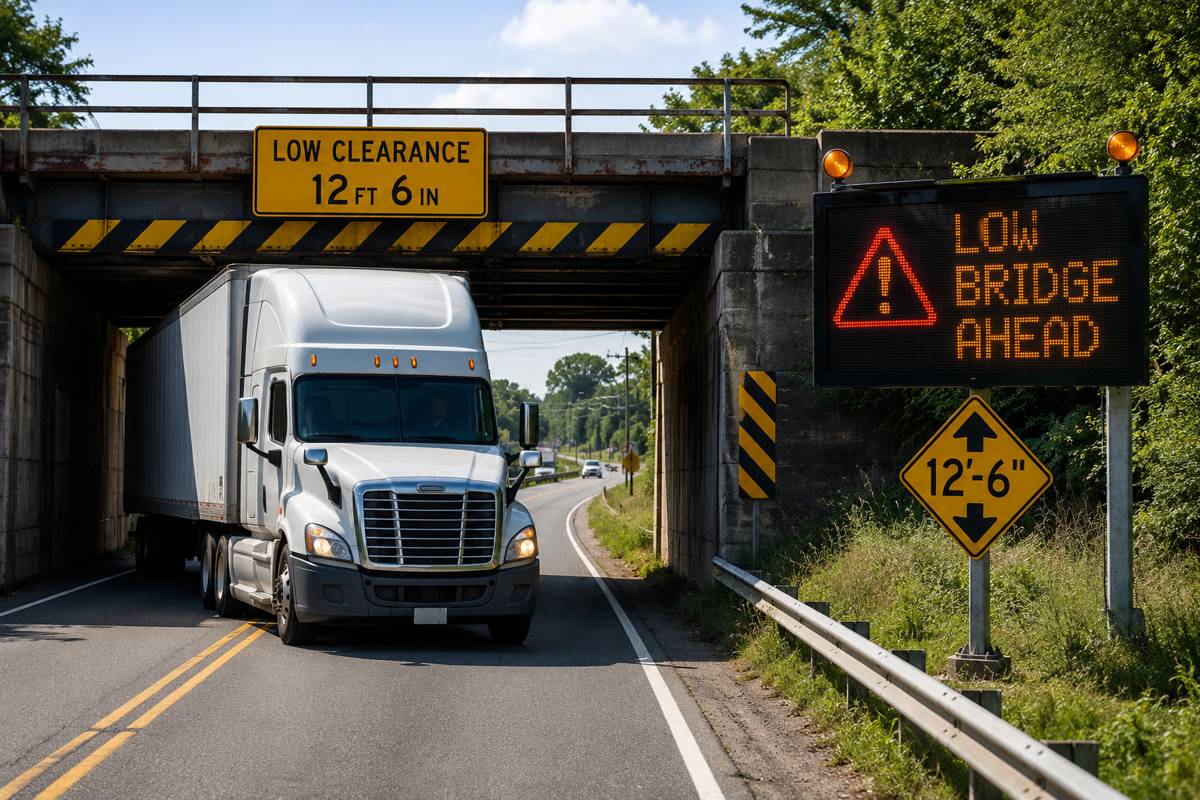
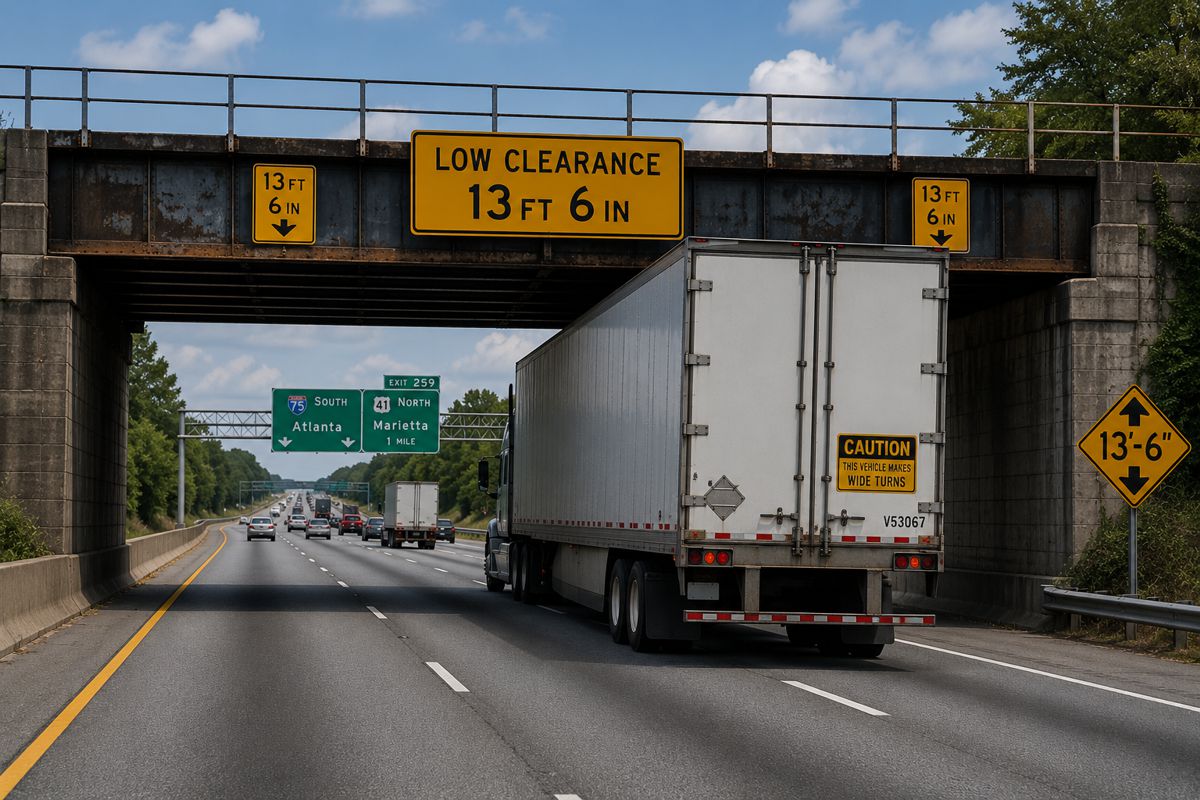
One of the most preventable risks in commercial trucking operations is the low bridge strike.
According to FMCSA research, bridge strikes in the United States averaged 6,000 incidents per year, making it challenging to find compatible infrastructure for commercial vehicles.
A bridge strike can quickly become more than an inconvenient accident, causing damage to both the vehicle and infrastructure, traffic issues, and high financial costs for both the carrier and community.
The issue is exacerbated by the fact that traditional GPS technology is designed with ordinary motorists and their cars in mind.
While a standard navigation system can provide helpful driving instructions, commercial trucking requires a drastically different set of route planning considerations, including:
- Bridge clearances
- Vehicle weight limits
- Roads closed to trucks
- Rules governing hazardous materials
- Unique commercial vehicle regulations
Commercial trucking needs intelligent route planning that takes these additional factors into account. In fact, in 2026 and beyond, connected vehicle technology will be instrumental in promoting transportation safety.
Why Regular GPS Technology is a Hazard for CDL Drivers
A road that seems fine for an average passenger vehicle may be completely inappropriate for a commercial truck.
Heavy vehicles have unique physical and regulatory requirements that must be taken into account when choosing a route.
Consumer-focused GPS platforms, such as Google Maps and Waze, are valuable tools for everyday drivers but are not designed to incorporate the full range of vehicle-specific restrictions required for commercial transportation.
Before starting a route, a tractor-trailer operator must consider several critical questions:
- Is this road suitable for my vehicle class?
- Are there any weight restrictions?
- Are there any restrictions for commercial vehicles?
- Are there any additional requirements due to my cargo?
A route optimized for an average passenger vehicle may lead a commercial trucker into an entirely inappropriate route that places them at risk of being involved in a low bridge strike, or force them to make complicated driving manoeuvres to avoid an improperly planned bridge.
It is for this reason that commercial navigation is trending toward being more than just driving guidance.
From Route Planning to Safer Technology
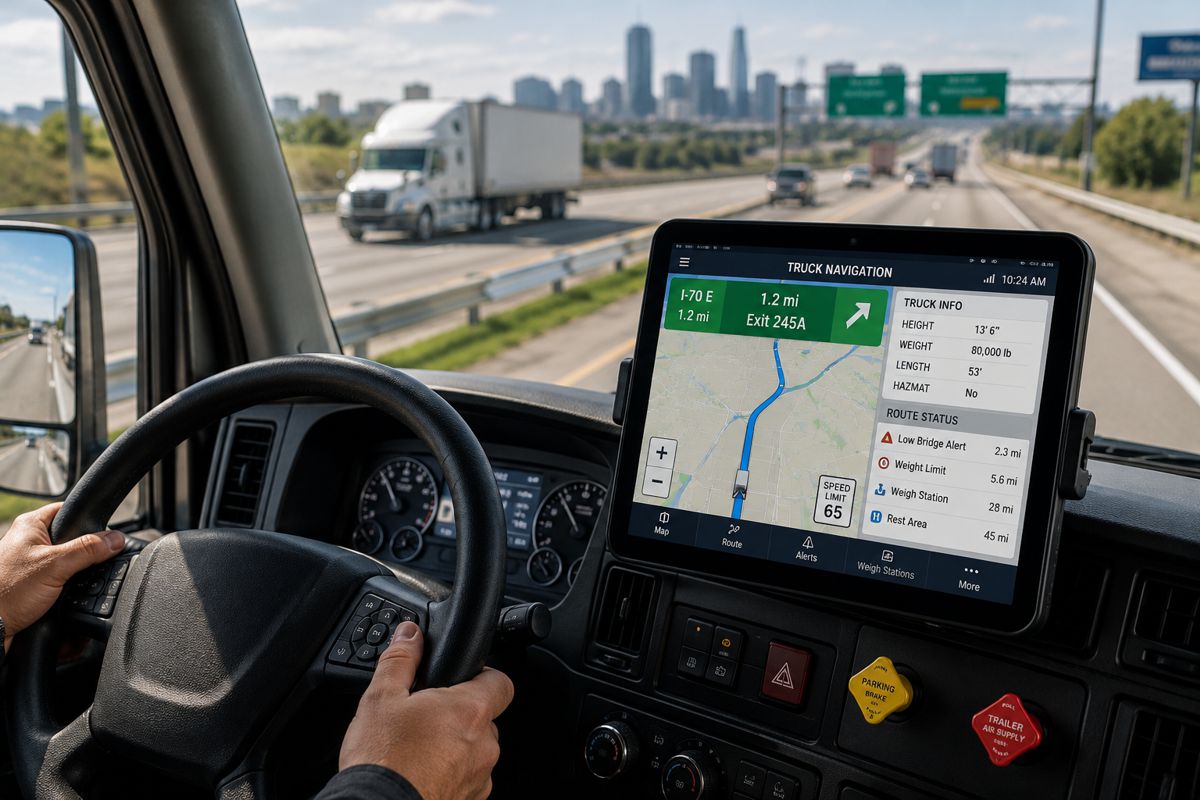
The next generation of truck navigation systems is designed around prevention.
Instead of simply calculating the shortest distance, commercial routing technology considers the characteristics of the vehicle itself.
| Navigation Capability | Transportation Challenge | Safety Benefit |
|---|---|---|
| Bridge clearance alerts | Low bridge and over-height risks | Helps prevent collisions with unsuitable structures |
| Weight-aware routing | Restricted bridges and roads | Reduces exposure to weight violations |
| Hazmat routing | Cargo-specific restrictions | Supports safer regulated transport |
| Weigh station information | Compliance planning | Improves operational predictability |
| Offline navigation | Limited connectivity areas | Maintains access to route information |
How Commercial Navigation Differs from Regular GPS Technology
The significant difference between regular GPS technology and commercial-grade navigation comes down to the ability to make routing decisions based on the characteristics of the vehicle rather than simply the destination.
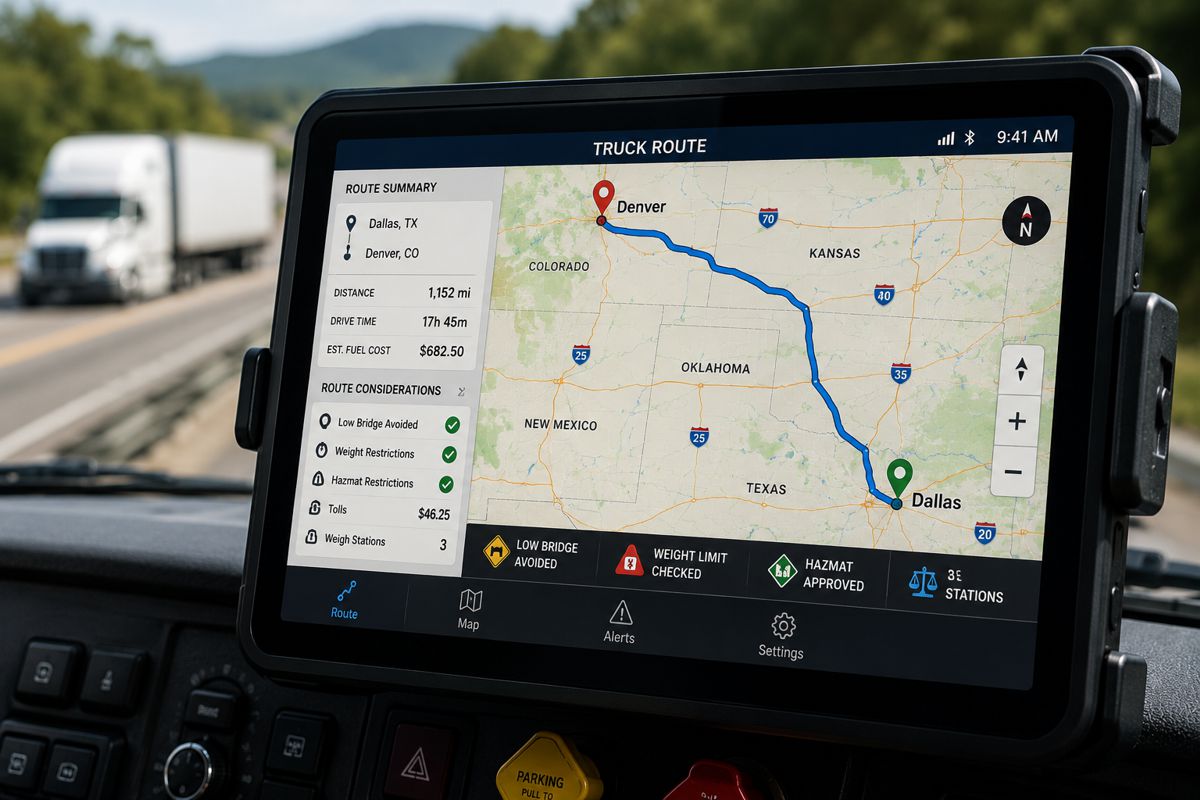
An operator of a commercial vehicle has a specific set of requirements at the beginning of each trip, including the height and weight of their vehicle. Intelligent commercial navigation makes decisions based on this information in addition to the road network and traffic data. This allows a trucking company to avoid unnecessary detours due to infrastructure incompatibility with their vehicle.
For instance, a tractor-trailer operator looking to maximize their fuel efficiency and trip time may have selected what seems to be the fastest route when using a regular GPS app. However, their commercial truck navigation may alert them to a low bridge ahead, a weight restriction further down the road, or another infrastructure hazard that would be incompatible with a commercial vehicle.
This is where specialized truck route planning applications, like Trucker Guide, illustrate the difference between regular GPS technology and commercial navigation.
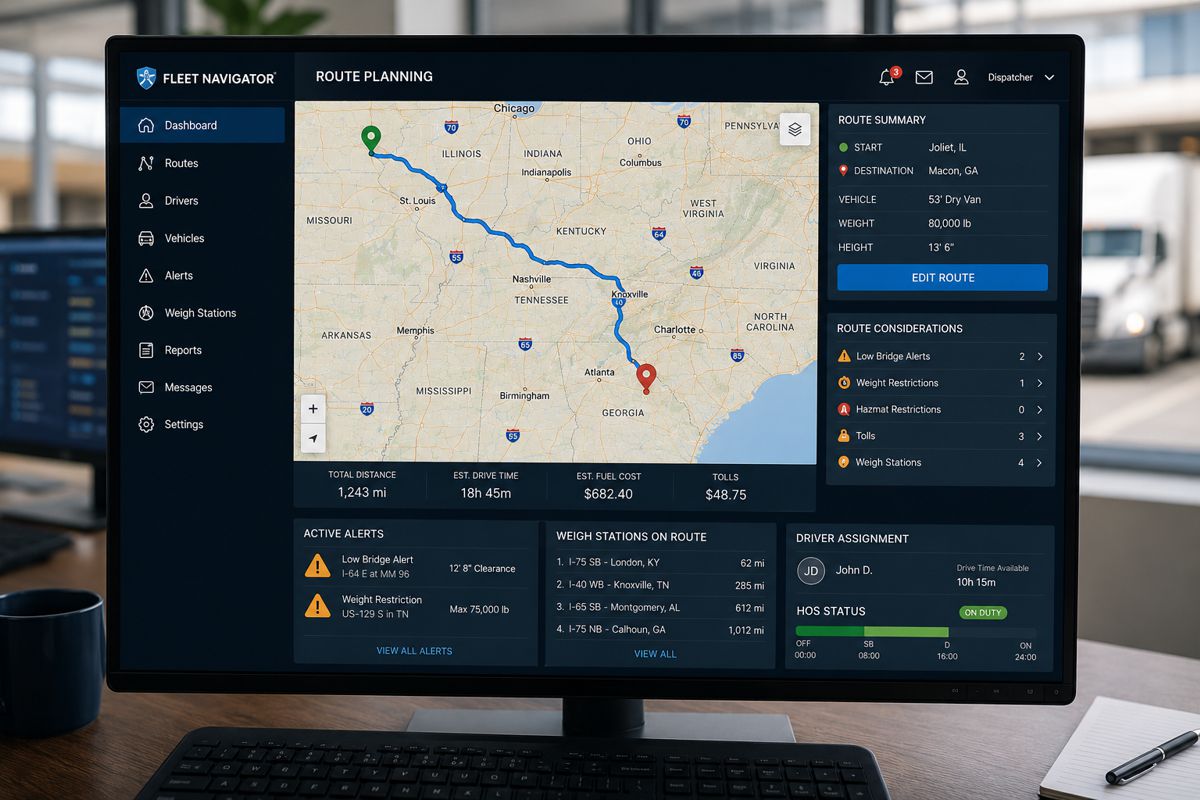
A low clearance map for trucks is an important example of how commercial navigation technology is evolving. Instead of relying only on general road information, truck-specific mapping solutions can highlight clearance restrictions and help operators plan routes around infrastructure that may not safely accommodate their vehicles.
An app that avoids low bridges is a proactive safety measure. Rather than simply notifying a driver after a problem appears, commercial-grade navigation systems consider road safety requirements before the trip begins and incorporate those factors into route planning.
The same principles apply to weight-aware routing and other commercial vehicle safety tools. Unlike regular GPS technology, these commercial trucking apps plan routes by bridge clearances, based on whether they are even legal and safe to travel on the road ahead.
In this way, a good commercial route planning application can promote safety by ensuring fleets only travel on appropriate roads, helping avoid unnecessary traffic delays, and preparing drivers for weigh station stops along their route.
What Fleet Operators Should Consider When Selecting Commercial GPS Technology
When evaluating navigation solutions, operators should consider whether the system provides:
- Vehicle-specific routing based on height and weight
- Real-time weigh station information
- Hazmat routing capability
- Offline navigation support
- Coverage across the United States and Canada
- Purpose-built commercial truck functionality rather than consumer navigation adaptation
The difference between consumer navigation and commercial navigation is not simply the number of features available. It is the ability to understand the operational reality of heavy vehicles.
As commercial transportation continues to adopt connected technologies, intelligent routing will play an increasingly important role in protecting infrastructure, improving fleet efficiency, and supporting safer movement of freight across North American highways.