When Construction Starts Learning
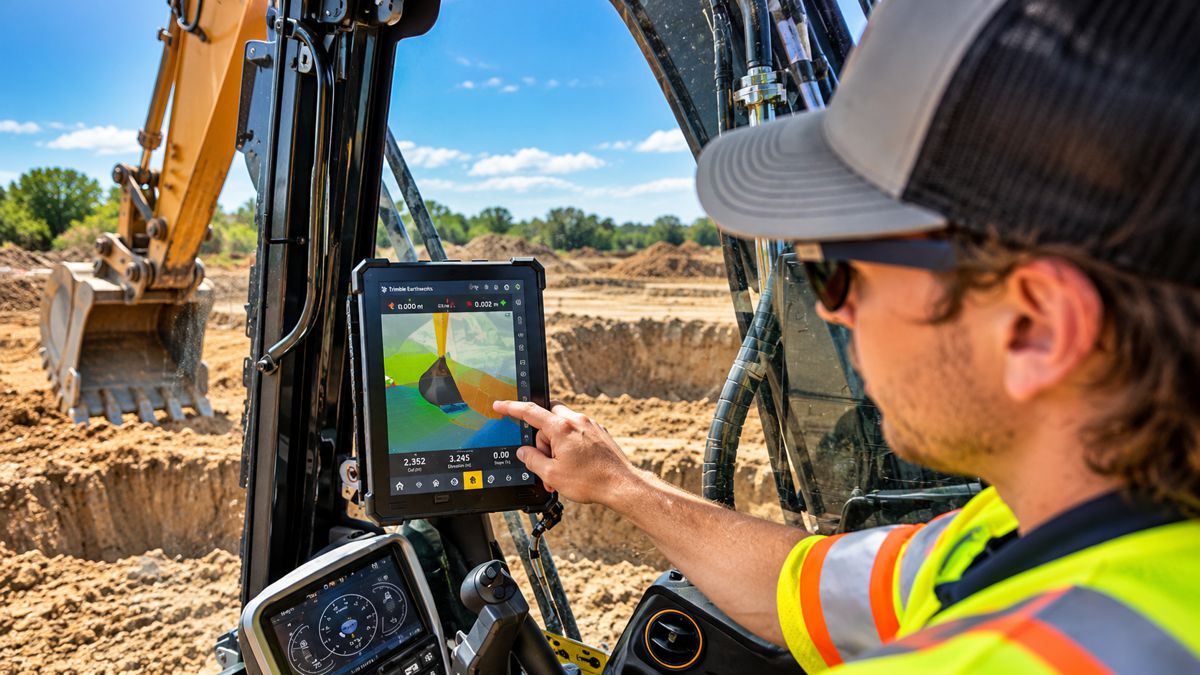
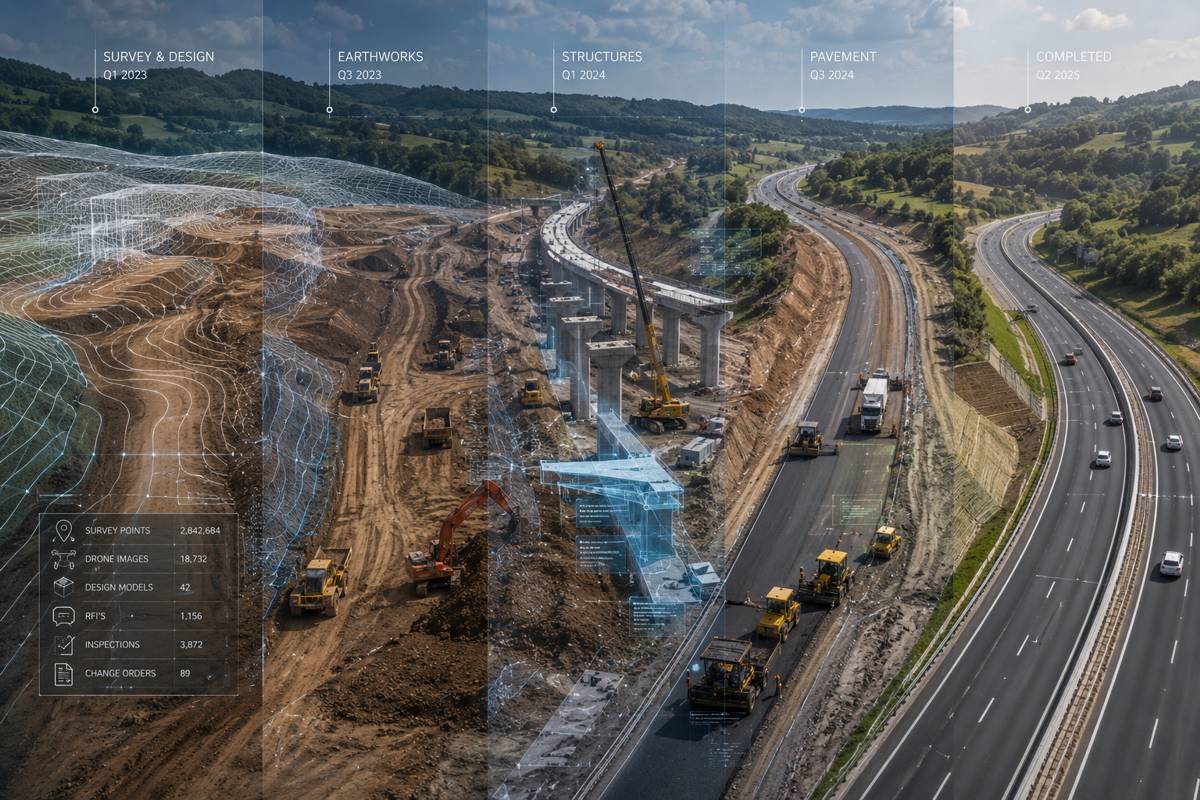
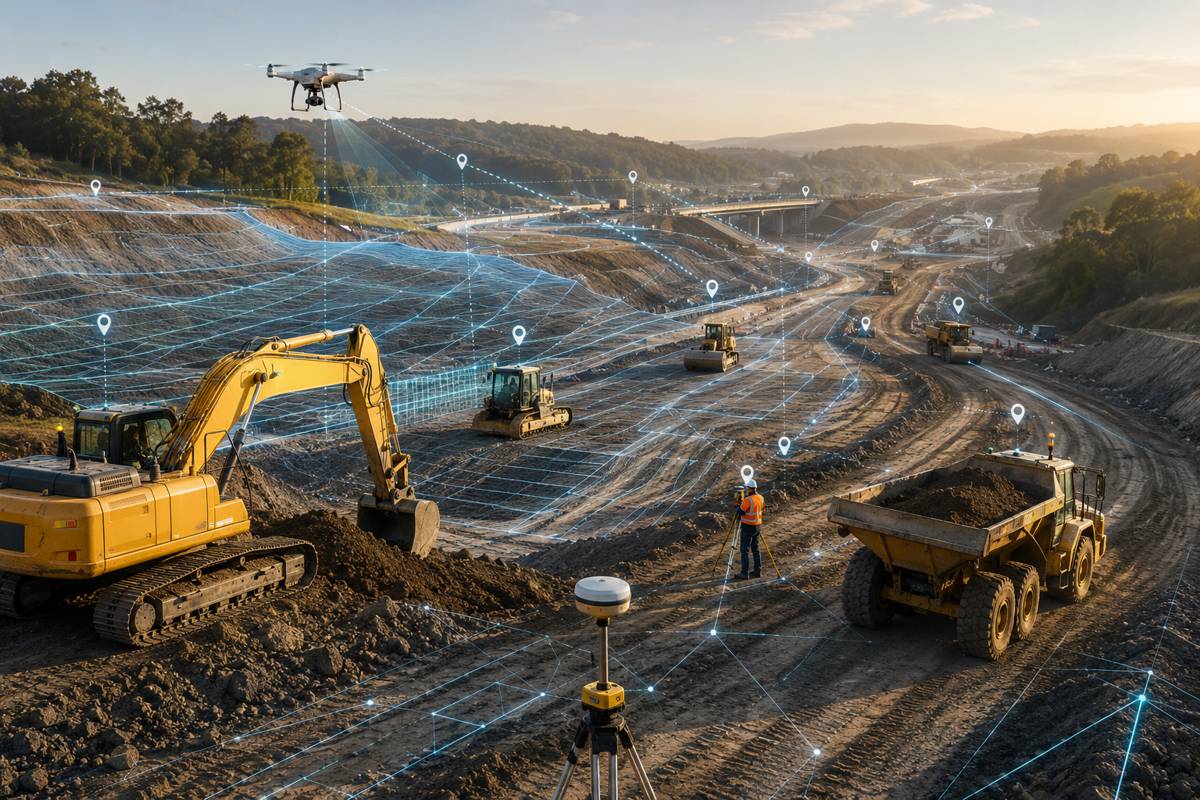
An excavator working to a 3D model can leave behind far more than the finished formation. Machine control records where it worked, while telematics can provide another history of utilisation, idling, operating hours and faults. Around it, survey flights measure changing ground, progress cameras accumulate thousands of images, drawings move through revisions and approvals, site teams file inspections and commercial systems record changes in cost. A modern project consequently leaves a remarkably detailed digital account of how it was built, although there is already far more information than most companies can use.
Research by Deloitte Access Economics for Autodesk, based on 1,275 construction leaders across 12 countries, found that 62% of data collected and analysed was not being used to make business decisions. Four out of five organisations surveyed were not classed as data leaders. The problem itself is much older than digital construction: researchers were writing in 1996 about construction lessons failing to pass systematically from one project to another, and subsequent work has repeatedly returned to the difficulty of collecting experience, finding it again and putting it in front of somebody when it is useful.
A large contractor may have completed thousands of projects and encountered almost every variation of difficult ground, late design information, troublesome interfaces, optimistic production assumptions and unreliable supply. Much of that experience still resides with the people who were there, but the project files now know considerably more than they used to.
Briefing
- Deloitte and Autodesk research found 62% of construction data collected and analysed was not being used to make business decisions.
- Construction knowledge-management research has been trying to solve the reuse of project experience for at least three decades.
- Machine data, digital project systems and richer site records are preserving far more of the circumstances surrounding project decisions and outcomes.
- Recent research is applying retrieval-augmented generation and knowledge graphs to construction records, including meeting histories and fragmented planning information.
- Proprietary project history could become increasingly useful in estimating, planning, fleet management and risk, provided contractors retain sufficient context, data quality and usage rights.
Project Knowledge
Construction projects assemble people, equipment, designers, subcontractors and suppliers around a particular piece of work. When it finishes, much of that organisation disperses, taking a considerable amount of accumulated experience with it.
Companies have long tried to prevent that through project reviews, lessons-learned databases, standard procedures and informal transfer between experienced and younger staff. The persistence of the research around the subject suggests how difficult it has proved. A 2009 study of lessons-learned programmes described institutional memory as particularly important because normal staff turnover and retirement remove years of experience from construction organisations. Research published in 2018 was still dealing with inefficient retrieval of context-specific lessons and proposed linking them directly to BIM objects and project tasks.
The weakness is not necessarily the lesson itself. It is everything stripped away when experience is condensed into a short entry in a database. Consider an earthworks package that finished three weeks behind programme. Recording the delay creates a useful benchmark, but very little understanding. The next estimator or project manager needs to know what was being excavated, the ground encountered, haul distances, weather, available plant, working hours, design changes and perhaps whether the operation was constrained by another contractor. Change two or three of those conditions and the historical production rate may cease to be a sensible comparison.
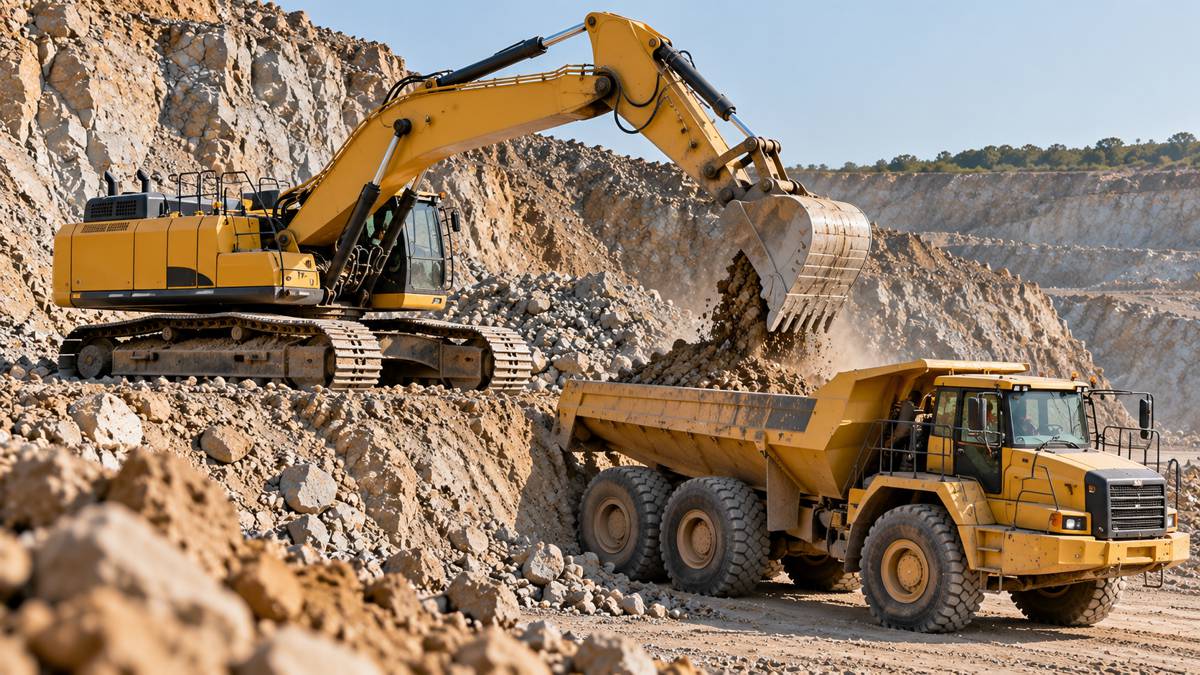
Construction knowledge is full of these dependencies. A concrete operation that performed exceptionally well in one location may have benefited from easy truck access and a batching plant nearby. An excavator that proved expensive to operate may have spent months in an application for which it was poorly suited. A subcontractor’s apparent delay may have started with information that arrived late from somewhere else. Older knowledge systems struggled to retain these relationships economically; the growing digital record of construction provides considerably more material to work with.
The Digital Project Record
Many of the technologies introduced to improve today’s project are simultaneously creating tomorrow’s historical evidence. Machine control and telematics provide operational records. Drone and conventional surveys document physical progress. Common data environments preserve drawings, models, revisions and approvals. Digital quality systems record inspections and defects, while planning and commercial platforms maintain their own histories of programmes, costs and changes.
Meetings contain another layer. A set of minutes may show an issue appearing, being discussed, changing over several months and eventually being resolved. Later decisions can supersede earlier ones, making the final document a poor guide to how the project arrived there.
Researchers in Belgium have been testing retrieval-augmented generation against exactly this problem. Work published in 2025 and expanded in 2026 used an anonymised dataset of meeting minutes from a completed large construction project, allowing natural-language searches while preserving the chronology of decisions. Rather than retrieving an isolated passage because it contains similar words, the approach is intended to reconstruct how a subject developed through time.
Elsewhere, research published in June 2026 combined a construction constraint knowledge graph with retrieval-augmented generation to address planning information scattered across different sources. The knowledge graph was used to organise relationships between constraints and BIM objects before the language model was asked to retrieve information.
These are research projects, not evidence that contractors can feed every corporate archive into an AI platform and expect reliable answers. They do show how quickly the retrieval problem is changing. A conventional archive generally expects the user to know roughly what they are seeking: someone looking for an earlier geotechnical problem needs to identify the project, folder, report or useful search term. More sophisticated retrieval allows the search to begin with the problem itself, potentially allowing an estimator pricing excavation in a particular geological condition to find comparable work, or a plant manager investigating repeated failures to retrieve the circumstances surrounding similar events.
Putting Previous Projects to Work
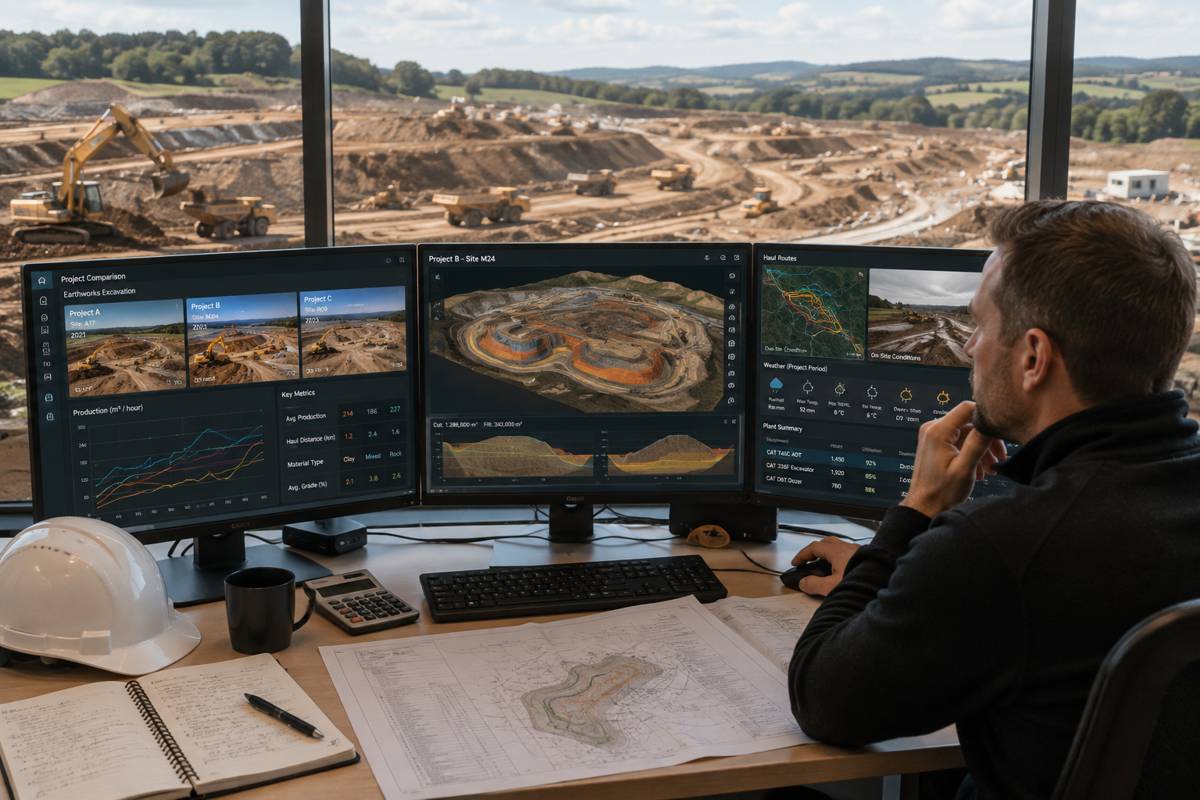
Estimating is probably where the commercial value becomes easiest to see. Construction companies already retain historical costs and production rates, formally or informally, while experienced estimators know that those figures need interpretation. Two apparently similar drainage jobs can produce very different outputs once depth, trench support, groundwater, utilities, disposal distances and access are considered.
A richer project history gives that judgement more evidence. Instead of finding an average production rate across a category of work, the more useful search is for projects that shared the conditions affecting the operation and then for the reasons actual performance departed from the estimate.
Planning has much the same problem. A programme contains activities and dependencies, but previous programmes contain histories of what actually interrupted them. Commercial records hold evidence of assumptions, contract wording, variations and disputes, while fleet systems contain operating and maintenance histories accumulated across different applications. Better retrieval allows an estimator, planner, commercial manager or fleet engineer to reach further into the company’s previous experience than personal memory permits.
A general-purpose AI model may know a great deal about construction in broad terms. It does not know why one contractor repeatedly lost production on a particular type of retaining structure, which machine configuration worked best in its own quarry operations or what happened the previous four times it accepted a particular interface risk. Where those answers have been preserved, they sit within the company’s own history.
Preserving Human Experience
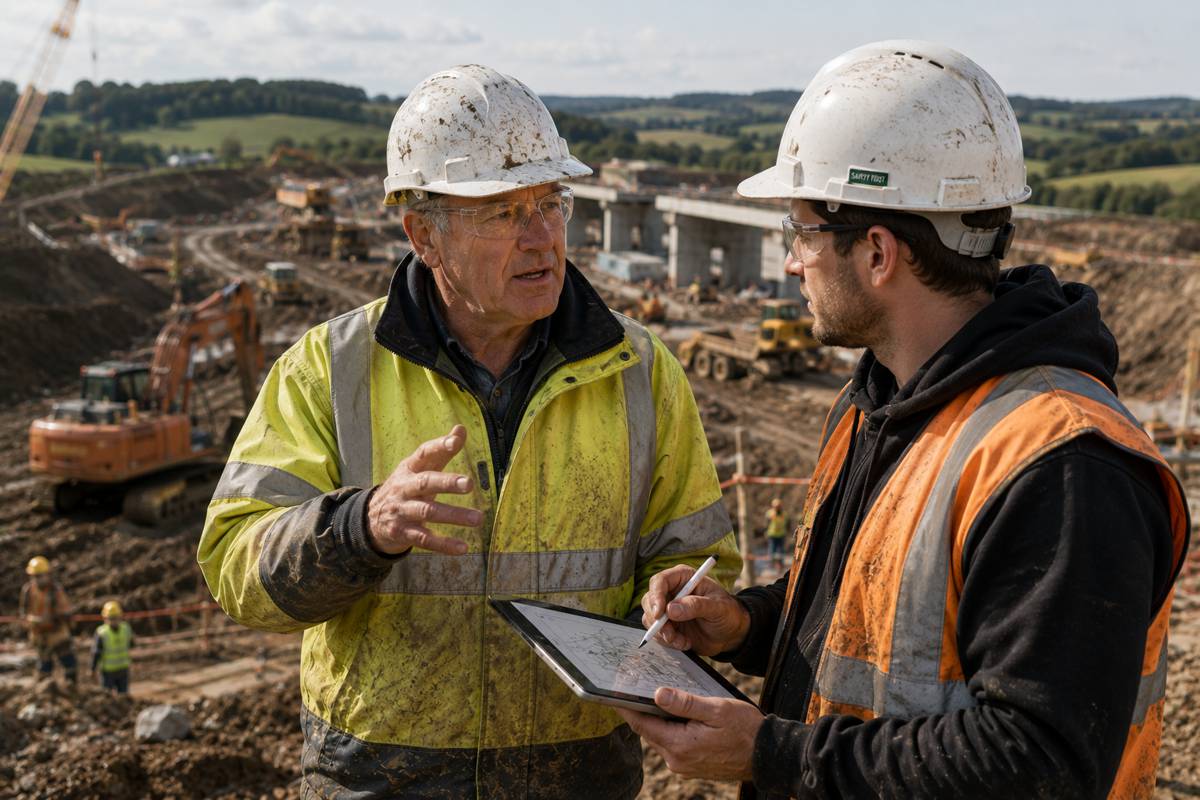
Project files contain only part of that history. Construction still relies heavily on experience that people find difficult to articulate. A site manager may be uncomfortable with a sequence before being able to explain precisely why. An engineer recognises a combination of circumstances encountered on another project years earlier. A commercial manager remembers that seemingly harmless wording caused a problem once the job reached final account.
Tacit knowledge has consequently become another active area of construction research. A study published in February 2026 examined storytelling as a formal method of capturing experience, using case studies involving a major bridge project and an engineering consultancy facing significant retirements. Rather than asking experienced staff to reduce what they know to a set of rules, the method captured accounts of real events, including their context, cues, decisions and consequences, before structuring and tagging the narratives for later retrieval.
That approach is particularly interesting now because transcription, indexing and retrieval have become relatively easy. An experienced project director can talk through an unexpected foundation problem: what the team initially believed, what appeared on site, which alternatives were considered, why one was chosen and what happened afterwards. The resulting recording can be transcribed and linked with project reports, photographs, design information and other contemporary evidence. The recollection remains subjective and hindsight may alter how events are remembered, but placing it alongside the formal record preserves something a close-out spreadsheet cannot.
There is some urgency around that knowledge. RICS’ global skills research found 87% of respondents regarded skills shortages as having an impact on the profession, while UK government figures show around 15% of the engineering construction workforce is over 60, with older age profiles particularly pronounced in several craft occupations. Recruitment can replace headcount, but it cannot immediately reproduce the judgement accumulated over decades of projects.
Data Quality and Ownership
Historical records bring their own risks. A production rate from 2014 may describe machinery no longer used, a method since replaced or a regulatory environment that has changed. An apparently successful procurement decision may have transferred costs elsewhere in the project. An old design solution may now be prohibited, while records themselves can be incomplete, inconsistent or wrong.
Finding weak historical information more quickly does not make it stronger. Useful organisational memory needs to preserve the circumstances in which information was created, including dates, units, source records, project conditions and whether a document or standard was subsequently superseded. Even chronology can be critical. A drawing may have been correct when issued and wrong for the question being asked because a later revision replaced it. The Belgian meeting-minutes research addresses this problem directly by retaining the time dimension when retrieving project information.
The same discipline applies to human knowledge. A project manager’s recollection is evidence of what that person remembers and believes, rather than necessarily an objective account. It becomes more useful when the organisation can place it beside records created at the time. A dependable corporate memory therefore needs boundaries, permissions, provenance and access to the evidence behind an answer, rather than a conversational interface sitting indiscriminately over every file a company owns.
The commercial argument becomes more interesting once that record can be used across the business. Access to capable AI is spreading quickly, while machinery, sensors and digital project tools can all be bought by competitors. A contractor’s own twenty years of project experience is rather harder to reproduce.
A company that has completed thousands of projects may hold its own evidence of actual productivity, machine performance, supplier behaviour, estimating assumptions, programme disruption and commercial outcomes. There is no guarantee that this creates an advantage. Information may be fragmented between legacy systems, inconsistent across business units, discarded at project close or contractually unavailable for reuse. Where the record is usable, however, it provides a proprietary layer around technology that is increasingly available to everyone.
Ownership is complicated because construction information is rarely produced by one organisation in isolation. Clients, designers, contractors, subcontractors, consultants, equipment manufacturers and software providers can all create or hold parts of the record. Machine information may pass through an OEM platform, project documents may sit inside a client’s information environment, a subcontractor may have generated valuable production knowledge and long-term asset data is likely to be controlled by the owner.
As companies begin using historical records to support internal AI and analytics, contract terms covering data retention, intellectual property, confidentiality and permitted use acquire another commercial dimension. Before a contractor can build a corporate memory, it needs to establish which parts of that memory it is entitled to keep.
Learning Beyond Handover
Construction’s historical record has traditionally weakened sharply at practical completion, when the contractor leaves and the asset begins producing some of its most useful evidence.
Pavement deteriorates under real axle loads and weather. Drainage meets actual storms. Structures move and age. Mechanical systems consume energy, fail and receive maintenance. Components reach the end of their useful lives at different rates. Design and construction decisions that looked sensible at handover may take years to prove themselves.
Connected assets and digital twins can extend that record into operation, although access depends on the commercial relationship with the owner. Contractors involved in maintenance, performance contracts or long-term digital services are in a particularly interesting position because they can remain close to the asset after construction.
This connects naturally with the recurring-revenue model explored earlier in Smart Construction Month. Continuing services can create income after practical completion while also returning operational evidence to the organisations responsible for delivery. A contractor able to compare how different construction choices performed after five, ten or twenty years has a different quality of historical evidence from one whose records end when the final account is settled.
For roads and infrastructure, where whole-life cost and durability frequently matter more than the condition of the asset on opening day, that feedback can be particularly valuable. The best construction decision is not always identifiable at handover. Sometimes the asset needs years to provide the answer.
The Learning Contractor
Construction has been trying to preserve project knowledge since long before BIM, cloud platforms or generative AI. Companies have always wanted to repeat what worked, avoid repeating what failed and retain some of the experience accumulated by people and projects. What is changing is the machinery available to do it.
Projects are leaving richer records through ordinary digital working. AI is improving access to unstructured material that was previously difficult to search, while knowledge graphs offer ways to retain relationships between events and objects. Speech transcription makes experienced people’s accounts easier to capture, and connected assets can extend the evidence beyond handover. There remains a considerable distance between possessing these technologies and becoming an organisation that genuinely learns from its own history. The 62% of analysed data left unused in the Deloitte and Autodesk research is a useful measure of that gap.
Nor should every old project become a template for the next. Construction remains too dependent on place, design, people, contracts and physical conditions for that. Previous experience is most valuable when it is available to professional judgement with enough context to understand why the earlier project behaved as it did.
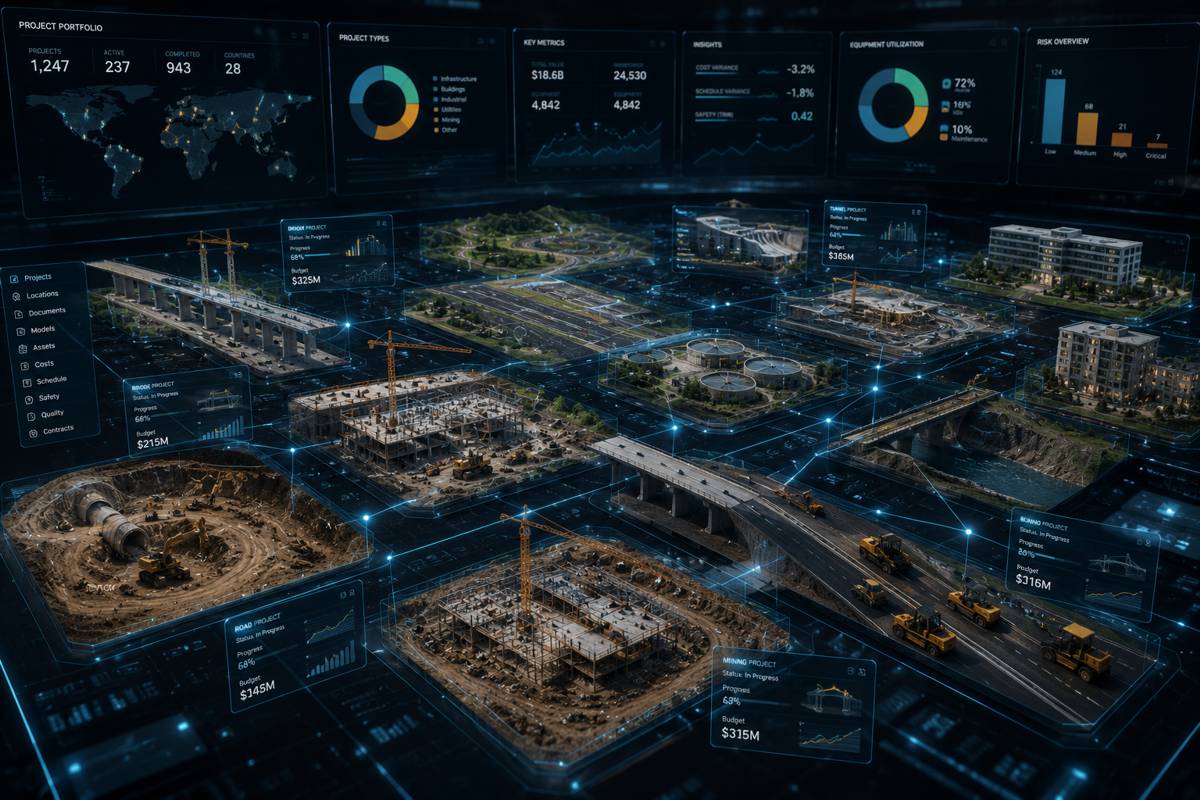
A road, bridge, tunnel or building is the obvious product left behind when a project finishes. Alongside it sits another asset assembled during delivery: the record of assumptions made, conditions encountered, decisions taken and consequences that followed. For most of construction history, much of that second asset has faded into archives, incompatible systems and individual memory.
A contractor completing project number 10,001 should know more because it delivered the previous 10,000. Smart construction is beginning to provide the means to make sure it does.
Key Industry Questions
- What is organisational memory in construction? It is the knowledge retained from previous projects, including formal project records, operational data, technical decisions, commercial outcomes and experience held by employees.
- Why have lessons-learned systems struggled in construction? Capturing a lesson is only part of the process. It also needs sufficient context, must remain accessible and has to reach another project team when comparable circumstances arise. Research has identified this retrieval problem for decades.
- How can AI help contractors reuse previous project knowledge? Retrieval-augmented systems can search approved corporate records and return relevant source material through natural-language queries. Recent construction research has applied the approach to meeting histories and planning constraints.
- What is the difference between project data and useful project knowledge? A figure such as cost, productivity or delay records an outcome. Useful knowledge also retains enough context to explain the conditions and decisions surrounding that outcome.
- Could historical project information improve estimating? Yes, where reliable records allow estimators to compare actual performance from genuinely similar work. Professional judgement remains necessary because apparently similar projects can differ materially in site conditions, design and delivery constraints.
- Can experienced workers’ tacit knowledge be preserved digitally? Only partly. Research suggests structured narratives and storytelling can capture contextual experience that conventional databases often miss. Transcription and retrieval technology can make those accounts easier to retain and find.
- Why is data provenance important? Historical information can become outdated or misleading. Provenance identifies where information came from, when it applied and the source evidence behind it.
- Who owns the data generated on a construction project? There is no universal answer. Rights depend on contracts, intellectual property, confidentiality, privacy, platform agreements and the organisations that created or control the information.
- How can digital twins contribute to organisational learning? Where access continues after handover, digital twins and connected asset systems can preserve operational information that allows earlier design and construction decisions to be compared with long-term asset performance.
- Is a learning contractor the same as an autonomous contractor? No. Organisational learning concerns retaining and reusing experience. That knowledge could support automated systems, but it is equally useful to estimators, engineers, planners, commercial managers and other construction professionals.
Strategic Takeaways
- Historical construction information becomes more useful when the conditions surrounding an outcome remain attached to the record.
- Better retrieval could allow project teams to draw on decades of previous work without knowing in advance where the relevant information was stored.
- Experienced staff hold contextual knowledge that formal project records capture only partly.
- Data quality, provenance and contractual usage rights will determine how much historical information can safely become part of a contractor’s corporate knowledge.
- Long-term involvement with completed assets can provide evidence about construction decisions that is unavailable at practical completion.