Volkswagen’s Hanover Plant Celebrates 70 Years of Industrial Innovation
The Hanover production facility operated by Volkswagen Commercial Vehicles has long stood as one of Europe’s most important industrial automotive sites. As the plant marks its 70th anniversary, the story unfolding there is no longer simply about vans and transporters rolling off an assembly line. Instead, it has become a case study in how legacy manufacturing infrastructure can reinvent itself for the era of electrification, automation and digital mobility.
Founded in 1956 to produce the original Volkswagen Transporter, the Hanover plant has evolved into one of the most advanced automotive production facilities on the continent. The factory is now central to Volkswagen’s strategy for electric commercial vehicles and autonomous mobility. With production of the fully autonomous ID. Buzz AD expected to begin in 2027 and battery manufacturing expanding onsite, the plant is moving beyond traditional vehicle assembly and into the next phase of industrial mobility.
This transformation matters well beyond the automotive sector. Commercial vehicles sit at the heart of global logistics, construction supply chains, urban delivery networks and public transport systems. The technologies developed and manufactured in facilities such as Hanover will shape how goods, workers and materials move through cities and infrastructure projects over the coming decades.
From Transporter Icon to Industrial Powerhouse
When the Hanover plant first opened its doors in March 1956, it was designed to meet surging demand for the Volkswagen Transporter, better known to many as the VW Bus. Production of the T1 generation had previously taken place in Wolfsburg alongside the Beetle, but demand quickly exceeded capacity.
The decision by Volkswagen leadership to establish a dedicated facility in Hanover reflected the rapid expansion of post-war European manufacturing and logistics networks. The plant was constructed at remarkable speed, and within a year the first Transporter rolled off the assembly line.
Since then, the facility has built nearly eleven million vehicles across seven generations of the iconic VW Bus platform. From the early T1 and T2 models through to the modern T6.1, Hanover has remained closely tied to one of the most recognisable vehicle families in automotive history.
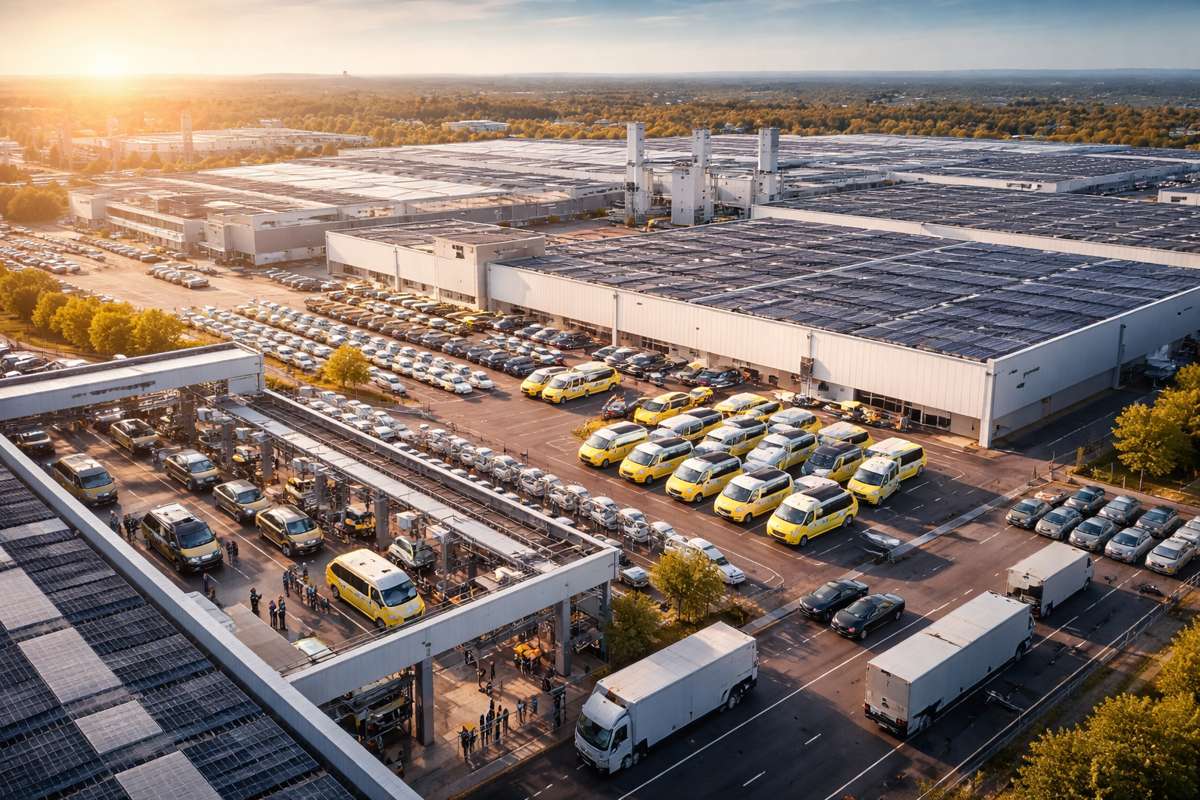
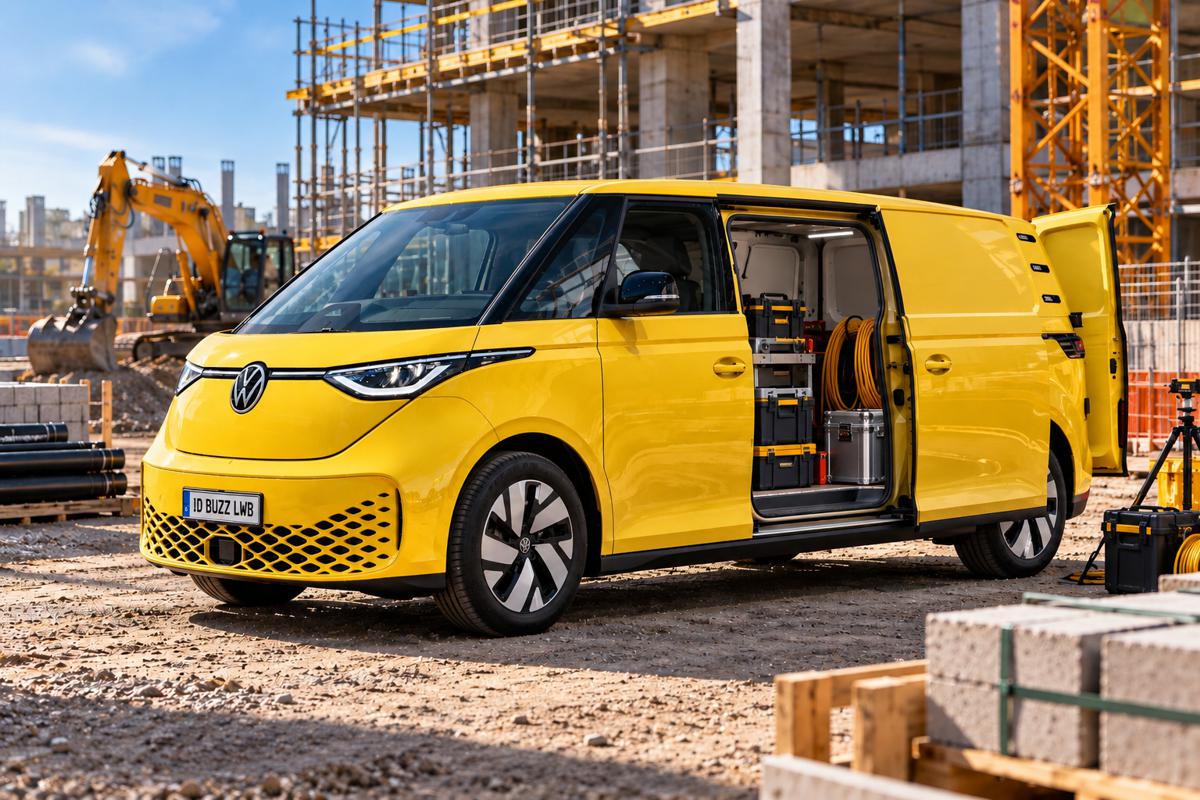
Over the decades, the site expanded in both scale and capability. Today it covers approximately 1.1 million square metres and employs around 13,000 people working across Volkswagen Commercial Vehicles and Volkswagen Group Components. The plant remains the central manufacturing hub for several key models including the Multivan, ID. Buzz and ID. Buzz Cargo.
Oliver Blume, Chair of the Board of Management of Volkswagen AG, highlighted the significance of the site during the anniversary celebrations: “The plant in Hanover represents a long-standing tradition combined with technological progress. It has successfully established itself as a centre for electric mobility while at the same time supporting all types of powertrains. Founded in 1956, the plant will produce its eleven millionth vehicle this year. In 2027, the team in Hanover will begin series production of the ID. Buzz AD – the first fully autonomous series-production vehicle in Europe.”
Electrification Reshaping Commercial Vehicle Manufacturing
The automotive industry’s transition toward electrification has forced manufacturers to rethink their production strategies. Commercial vehicles, in particular, face increasing regulatory pressure as cities across Europe introduce stricter emissions standards and low-emission zones.
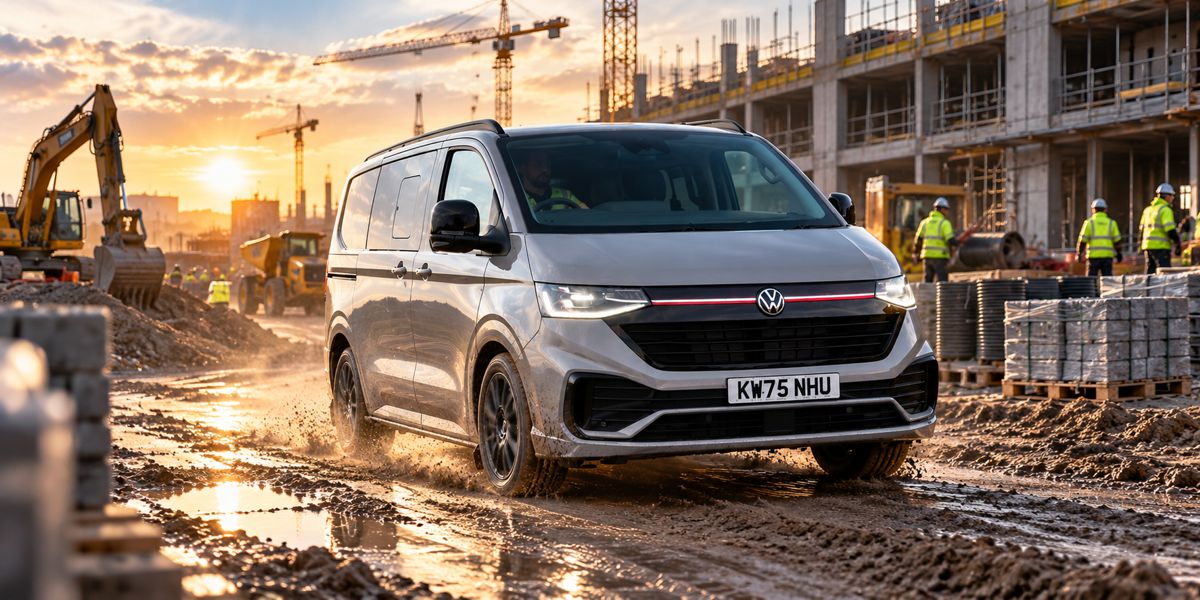
Volkswagen has responded by positioning the Hanover plant as a key electric mobility centre within the group’s global production network. The facility now produces the fully electric ID. Buzz and ID. Buzz Cargo alongside the Multivan range, which is available with diesel and plug-in hybrid powertrains.
This mix of propulsion technologies reflects a broader industry trend. While electric vehicles are gaining ground rapidly, commercial fleets often require a gradual transition due to infrastructure, range and operational requirements. By producing multiple drivetrain options on the same site, Volkswagen can respond more flexibly to shifting market demand.
Stefan Mecha, Chair of the Board of Management of Volkswagen Commercial Vehicles, described the strategic role of the factory: “The Hanover plant is a key location for our transformation. Here, we produce the Multivan with efficient diesel and plug-in hybrid powertrains, alongside the all-electric ID. Buzz and ID. Buzz Cargo. Vehicles built in Hanover have long set benchmarks in their segment and are a hallmark of the Volkswagen Commercial Vehicles brand. Today, we are laying the foundation for climate-friendly mobility in the future.”
The electric ID. Buzz has already demonstrated strong market traction. In 2025, deliveries more than doubled compared with the previous year, highlighting the growing demand for electric vans and people movers in both private and commercial markets.
Industrialising Autonomous Mobility in Europe
Perhaps the most significant development at the Hanover plant is the start of pre-series production for the autonomous ID. Buzz AD. This vehicle represents Volkswagen’s attempt to bring large-scale autonomous mobility services to European and global cities.
The vehicle will form part of the MOIA Turnkey Solution, an integrated mobility platform developed by Volkswagen Group subsidiary MOIA. The system combines autonomous vehicles, fleet management software, operator services and ride pooling infrastructure designed for urban transport networks.
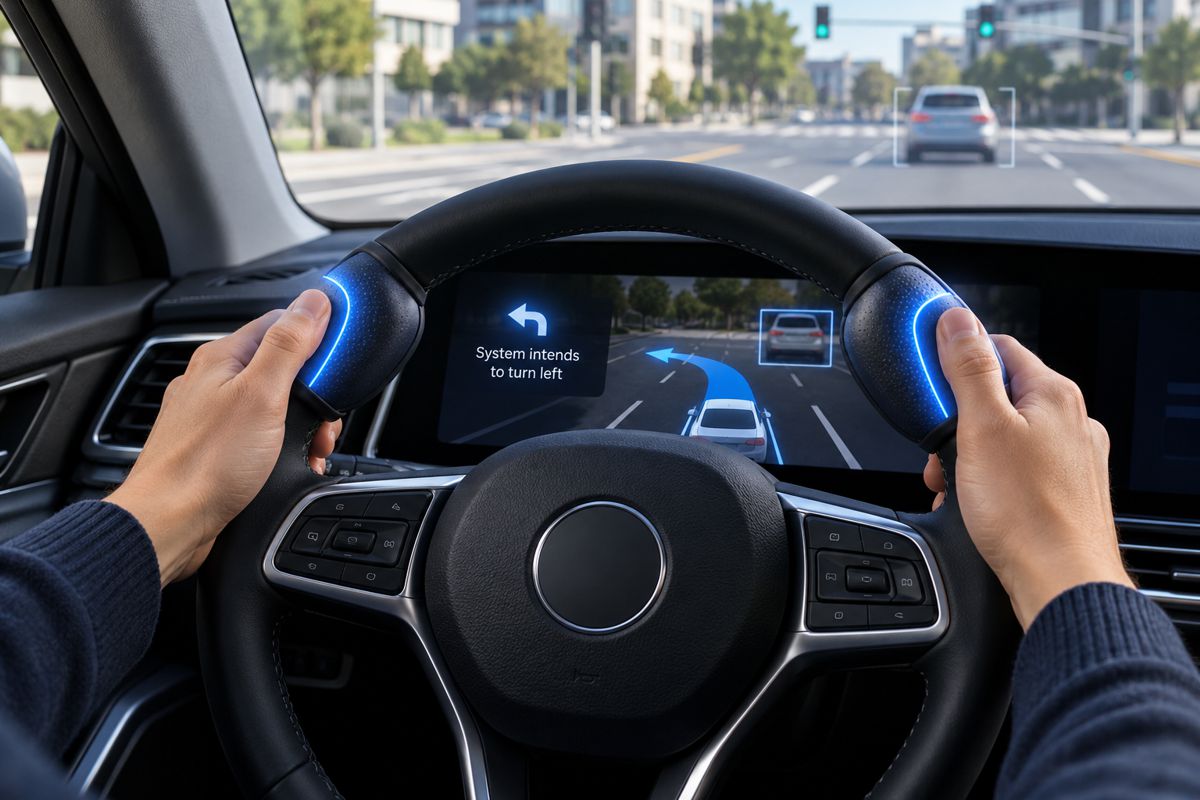
Autonomous driving systems are developed in partnership with Mobileye, one of the world’s leading developers of vision-based driver assistance and autonomous technologies. The ID. Buzz AD integrates advanced sensor arrays including cameras, radar and lidar along with a high-performance onboard computer.
Pre-series production will initially ramp up to around 500 vehicles destined for pilot projects in Europe and the United States. Interestingly, the autonomous versions pass through the same production lines as conventional ID. Buzz vehicles. Only an additional manufacturing loop is required to install the specialised sensor roof modules and computing systems before final calibration.
Embedding autonomous vehicles within standard manufacturing processes represents a major milestone for the industry. Rather than producing niche prototypes in small volumes, Volkswagen aims to industrialise self-driving vehicles using conventional mass production methods.
If successful, this approach could dramatically lower the cost of autonomous mobility services and accelerate their adoption in cities worldwide.
Battery Systems and Vertical Integration
Electric vehicle production increasingly depends on battery manufacturing capabilities. Recognising this, Volkswagen has expanded battery system production at the Hanover site as part of its broader electrification strategy.
Volkswagen Group Components plays a central role in this process. The unit produces battery systems that are delivered directly to vehicle assembly lines within the factory, reducing logistical complexity and transportation costs.
The next stage of development involves upgrading battery production to incorporate the Cell-to-Pack architecture and Volkswagen’s unified cell design. These technologies simplify battery structure by eliminating intermediate modules and standardising cell formats across multiple vehicle platforms.
The expansion will also increase production capacity by approximately 50 percent and allow the factory to support multiple battery chemistries including lithium iron phosphate and nickel manganese cobalt systems. In future, the Hanover facility will supply battery systems to four Volkswagen Group brands across seven production locations.
Vertical integration of battery manufacturing is becoming increasingly important as automakers attempt to secure supply chains and reduce dependence on external suppliers. For large industrial fleets and commercial vehicles, battery cost and availability will remain key factors influencing the pace of electrification.
Sustainability and Climate Neutral Production
Alongside electrification, automotive manufacturers face growing pressure to reduce emissions across their entire production footprint. Vehicle manufacturing is energy intensive, particularly when large metal structures and high-temperature processes are involved.
Volkswagen has committed to achieving climate neutral production across all sites by 2040. At the Hanover plant, several steps have already been taken to move in that direction.
The factory currently operates using renewable electricity and is supported by a biomass-fuelled combined heat and power plant that provides sustainable energy for manufacturing operations. These initiatives form part of a broader effort to decarbonise industrial production while maintaining regional employment and economic activity.
Steffen Reiche, Member of the Brand Board of Management responsible for Production and Logistics, explained the approach: “At our Hanover site, we rely exclusively on green electricity and a biomass-fired combined heat and power plant. Our goal is climate-neutral production at all locations by 2040 – including Hanover – while creating regional value, securing jobs and actively contributing to climate protection.”
A Workforce at the Heart of Transformation
While much of the attention surrounding automotive transformation focuses on software, batteries and automation, large industrial plants still rely heavily on human expertise.
The Hanover facility’s workforce remains central to its evolution from conventional van manufacturing into a hub for advanced electric and autonomous vehicles.
Richard Slovak, Plant Manager in Hanover, emphasised the role played by employees in maintaining the plant’s competitiveness: “All of this is made possible by our employees at our Hanover site – with great commitment and outstanding expertise, they ensure that high-tech models such as the ID. Buzz and the new Multivan eHybrid 4MOTION are built here.”
For many workers and families in the region, the plant has become part of local identity. Stavros Christidis, Chairman of the Works Council, reflected on this legacy: “Nearly eleven million vehicles have been built here over the past 70 years, by great people who bring this plant to life day after day. The pressure on the automotive industry is immense. But the Hanover plant is not just a factory – it is a community. A part of Hanover’s family history for tens of thousands of people, in some cases across three generations. Every hall, every assembly line at this site tells stories of people who achieve extraordinary things and who stand together – in good times and in challenging ones. This attitude is what defines Volkswagen Commercial Vehicles. We can be proud of this success story, and it is also a mandate for our future.”
Strategic Logistics and Global Market Reach
The location of the Hanover plant was never accidental. Situated close to Volkswagen’s headquarters in Wolfsburg, the site benefits from access to Germany’s dense transport infrastructure.
Motorways connect the factory to major European road networks, while a dedicated railway link integrates it directly with the national rail system. The adjacent Mittelland Canal provides access to inland waterways and maritime trade routes.
These logistics advantages have allowed the plant to serve global markets for decades. Vehicles produced in Hanover are exported worldwide, including markets in North America where the ID. Buzz has reintroduced the Volkswagen Bus brand to a new generation of customers.
From the summer of 2026, production of the California camper van will also be integrated into the main Hanover facility, consolidating operations previously carried out at an external location in the Limmer district.
An Industrial Site Shaping the Next Mobility Era
Seventy years after the first Transporter rolled off its assembly line, the Hanover plant stands at another turning point in automotive history.
Electrification, digitalisation and automation are reshaping how vehicles are designed, manufactured and operated. For commercial vehicles, the stakes are particularly high because these platforms underpin logistics networks, construction projects, service industries and urban mobility systems.
By combining battery manufacturing, electric vehicle assembly and autonomous mobility development within a single industrial site, Volkswagen is attempting to build a model for the future of large-scale automotive production.
The Hanover plant may have begun life as a factory for a humble delivery van. Today it is evolving into something far more significant: a proving ground for the technologies that will define how cities move, build and operate in the decades ahead.