Argonne Opens Heavy Duty Test Centre to Accelerate Cleaner Freight Innovation
Developing the next generation of medium and heavy-duty vehicles has become one of the transport sector’s toughest engineering challenges. Truck manufacturers, logistics operators and technology suppliers are being asked to deliver lower emissions, better fuel economy, stronger uptime and smarter automation, all while navigating tightening regulations and razor-thin operating margins. It’s a tall order, especially when proving new systems on public roads can be expensive, slow and operationally disruptive.
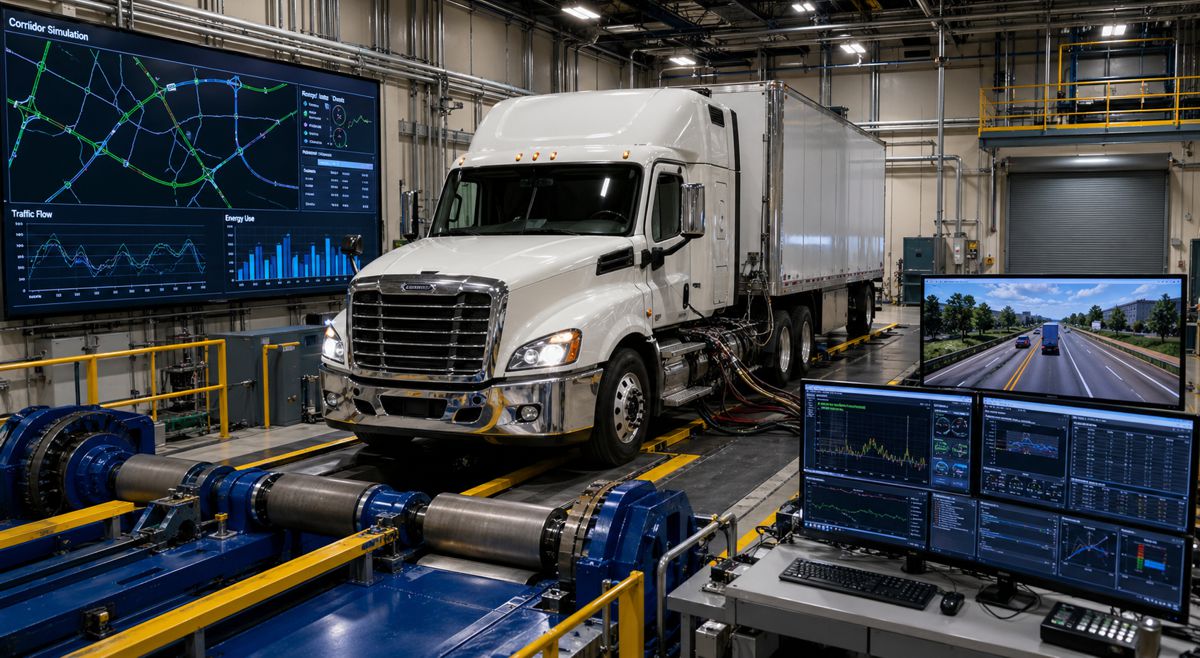
That is where Argonne National Laboratory is stepping in. The research institution has launched a new Heavy-Duty Dynamometer Test Facility designed to help industry and government validate advanced truck technologies in a faster, safer and more cost-effective way. Backed by the U.S. Department of Energy, the site gives manufacturers a controlled environment where real-world freight conditions can be recreated indoors, allowing rapid testing of propulsion systems, fuels, connectivity tools and automation platforms.
For the construction, infrastructure and transport sectors, the implications stretch well beyond trucking. Heavy-duty vehicles underpin roadbuilding, aggregates supply, machinery haulage, municipal services and national logistics networks. Any improvement in freight efficiency ripples across project costs, material availability and wider economic productivity. When truck fleets become cleaner, smarter and cheaper to run, construction supply chains benefit almost immediately.
The facility also arrives at a pivotal time. Governments across North America, Europe and Asia are pushing cleaner commercial transport through emissions rules, incentives and public procurement policies. Fleet owners, meanwhile, need hard evidence before committing capital to battery-electric trucks, hydrogen systems, advanced diesel hybrids or autonomous technologies. Independent validation can make the difference between cautious delay and confident investment.
Briefing
- Argonne National Laboratory has opened a Heavy-Duty Dynamometer Test Facility for medium and heavy trucks.
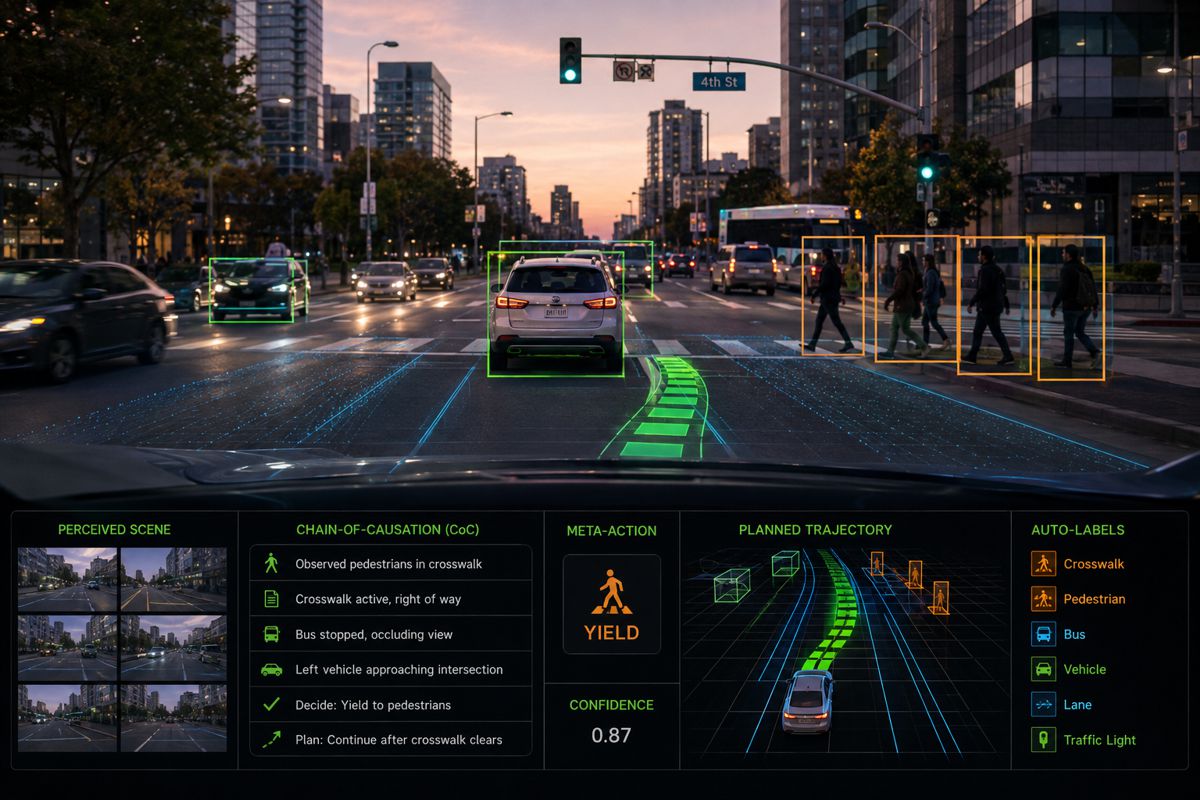
- The centre allows realistic indoor testing of propulsion, fuel, automation and connected vehicle technologies.
- It aims to reduce development time, technical risk and investment uncertainty for manufacturers and fleets.
- Freight efficiency gains of even 2% to 3% could generate major long-term economic savings.
- The facility strengthens national efforts to modernise logistics and decarbonise freight transport.
A New Benchmark for Freight Vehicle Validation
Traditional vehicle development often relies on a mix of modelling, track trials and road testing. While valuable, these methods can be costly and difficult to repeat precisely. Weather changes, traffic conditions vary, drivers behave differently and public road access can create delays. For engineers trying to compare one battery system, software update or drivetrain setting against another, inconsistency can muddy the waters.
Argonne’s new facility tackles that problem head-on. Using a chassis dynamometer, trucks operate on rollers while the system applies the same resistance forces they would encounter on the road. That means gradients, payload demands, acceleration patterns and duty cycles can be simulated with scientific repeatability. Researchers can run the same route again and again, isolating exactly what changed and why.
That level of control matters enormously for fleet buyers. Before investing millions in new vehicles, operators want credible performance data. They need to know how a truck behaves under load, how energy use changes across routes, and how software responds in congestion or long-haul operation. A facility built for objective analysis helps answer those questions with far greater confidence.
Combining Physical Testing with Digital Simulation
One of the most notable aspects of the site is its integration of physical hardware with real-time digital modelling. Argonne describes this as an “Anything-in-the-Loop” workflow, allowing simulation tools and real vehicle systems to interact continuously during testing.
In practical terms, that means researchers can evaluate not only a truck, but also the wider system around it. Traffic flow, connected infrastructure, fleet coordination software, route conditions and corridor operations can all be layered into the test environment. Rather than examining a truck in isolation, the facility studies how it behaves within a functioning logistics ecosystem.
That systems-level approach mirrors the future of freight transport. Commercial vehicles are becoming rolling data platforms linked to depots, charging hubs, traffic systems and cloud analytics. A powertrain alone no longer defines performance. Software integration, communication reliability and route intelligence are increasingly part of the commercial equation.
Why Construction and Infrastructure Firms Should Pay Attention
Heavy-duty transport is the bloodstream of the construction industry. Cement, asphalt, steel, plant equipment, aggregates and precast components all depend on reliable truck movements. Delays, fuel spikes or vehicle downtime can quickly erode margins on major projects.
If next-generation truck systems improve fuel use by even modest margins, savings can be significant across national supply chains. The source material notes that a 2% to 3% gain in freight efficiency could create hundreds of millions of dollars in savings over a decade. For sectors handling bulk materials and time-sensitive deliveries, that is no small change.
There is also a planning angle. Infrastructure developers are increasingly designing depots, industrial parks, logistics hubs and highways around future freight needs. Better evidence on electric truck range, charging behaviour, automated platooning or hydrogen refuelling demand can help shape smarter capital investment decisions.
Technical Capability Built for Modern Fleets
The centre is equipped with a Burke Porter Model 4701 system in a 4×2 configuration, using four rollers and two centrally located electric machines. It supports Class 3 to Class 8 vehicles, covering a broad range of commercial trucks from medium-duty delivery fleets to heavy articulated freight vehicles.
Vehicle layouts including rear-wheel drive, front-wheel drive and all-wheel drive can be accommodated, with adjustable wheelbases from 100 to 280 inches. Test weights span from 10,001 to 82,000 pounds, enabling assessment across multiple use cases and loading conditions.
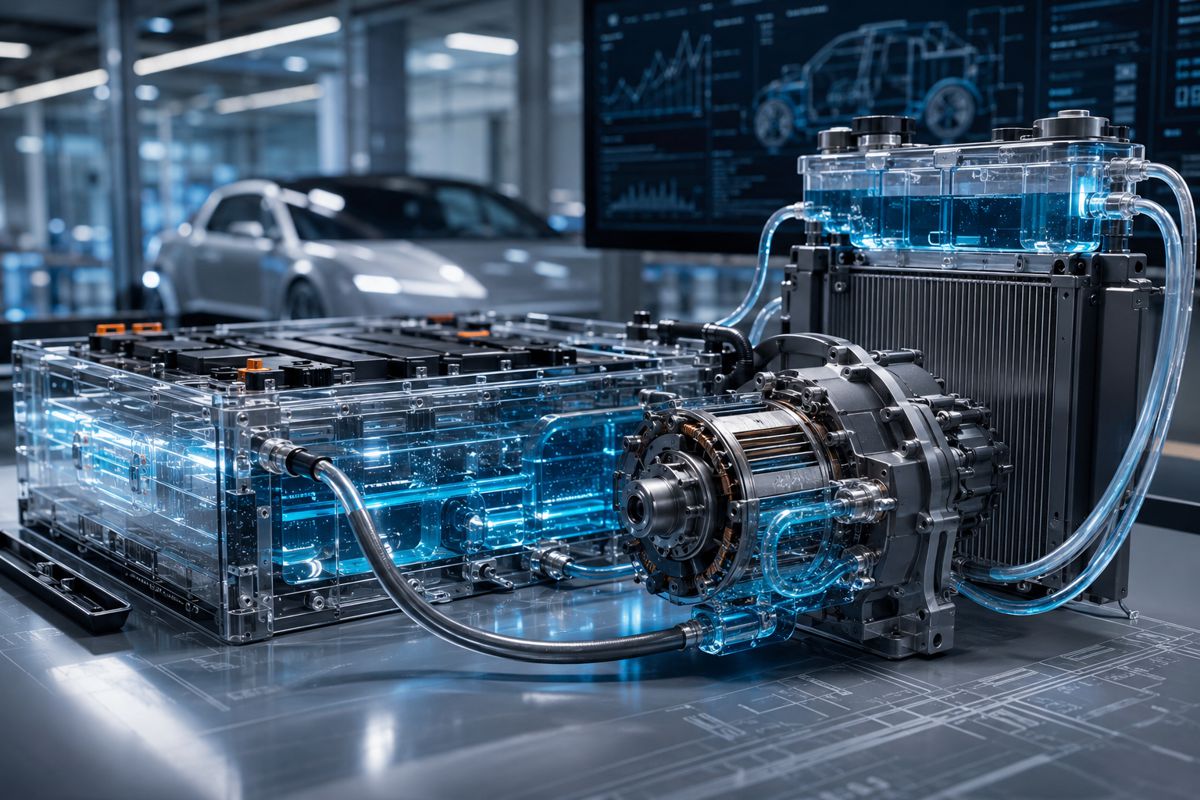
Equally important is future readiness. Argonne says the site has scalable electrical, mechanical and data systems to support emerging propulsion technologies and higher levels of automation. That suggests the facility is not being built for yesterday’s diesel fleet, but for tomorrow’s mixed-energy transport landscape.
Public Research Supporting Private Innovation
Independent national laboratories often play a quiet but crucial role in industrial progress. They provide neutral ground where companies, regulators and policymakers can test ideas without commercial bias. In sectors undergoing rapid change, that can accelerate consensus and lower market friction.
Argonne is inviting industry partners to use the facility for pilot technologies, co-develop testing protocols and help shape national validation pathways for emerging freight solutions. That collaborative model could prove especially useful as standards evolve for autonomous trucks, connected freight corridors and zero-emission heavy vehicles.
The commercial transport market rarely moves on hype alone. Operators buy what works, what pays back and what regulators accept. Facilities that generate trusted evidence help markets move from theory to deployment.
Freight Efficiency Moves the Wider Economy
As Claus Daniel of Argonne noted: “Medium- and heavy-duty trucks move our economy.” That statement may sound simple, but it captures a strategic truth. Nearly every industrial supply chain depends on trucks somewhere in the process, whether moving raw materials to factories, goods to warehouses or machinery to job sites.
When trucks become more efficient, resilient and lower cost to operate, the benefits spread across manufacturing, retail, construction and public services. Reduced fuel consumption lowers exposure to volatile energy prices. Smarter routing cuts congestion. Better automation can ease driver workload and improve safety outcomes.
For policymakers seeking productivity gains without waiting years for mega-project delivery, freight modernisation can offer faster returns. It is often one of the quickest levers available to improve national competitiveness.
Building the Road to Smarter Logistics
The launch of Argonne’s Heavy-Duty Dynamometer Test Facility signals a broader shift in how commercial transport innovation is being delivered. Instead of relying solely on long road trials and fragmented pilot schemes, the industry is moving toward integrated validation environments where hardware, software and infrastructure can be tested together.
That should shorten development cycles, reduce failed investments and give fleet operators better evidence when making procurement decisions. It also provides a clearer route for regulators tasked with approving unfamiliar technologies.
For the construction and infrastructure world, smarter freight means lower delivered costs, stronger supply resilience and more predictable project execution. In the years ahead, those gains may prove just as valuable as any new highway or rail link.