Netherlands Tightens Enforcement Ahead of National Truck Toll Rollout
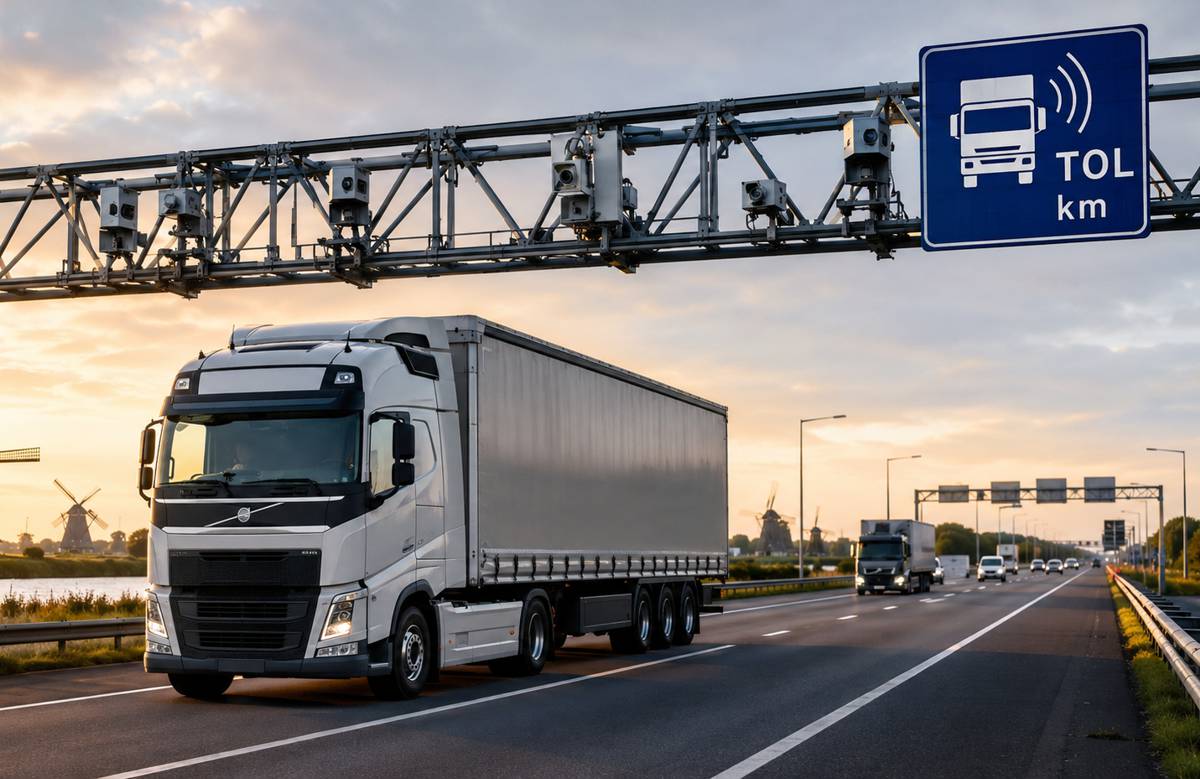
The Netherlands is preparing for one of the most significant changes to its freight transport system in decades, with the national truck toll scheme set to begin on 1 July 2026. The move places the country alongside a growing number of European nations adopting kilometre-based road charging systems designed to modernise freight taxation, reduce congestion and accelerate investment into cleaner transport infrastructure.
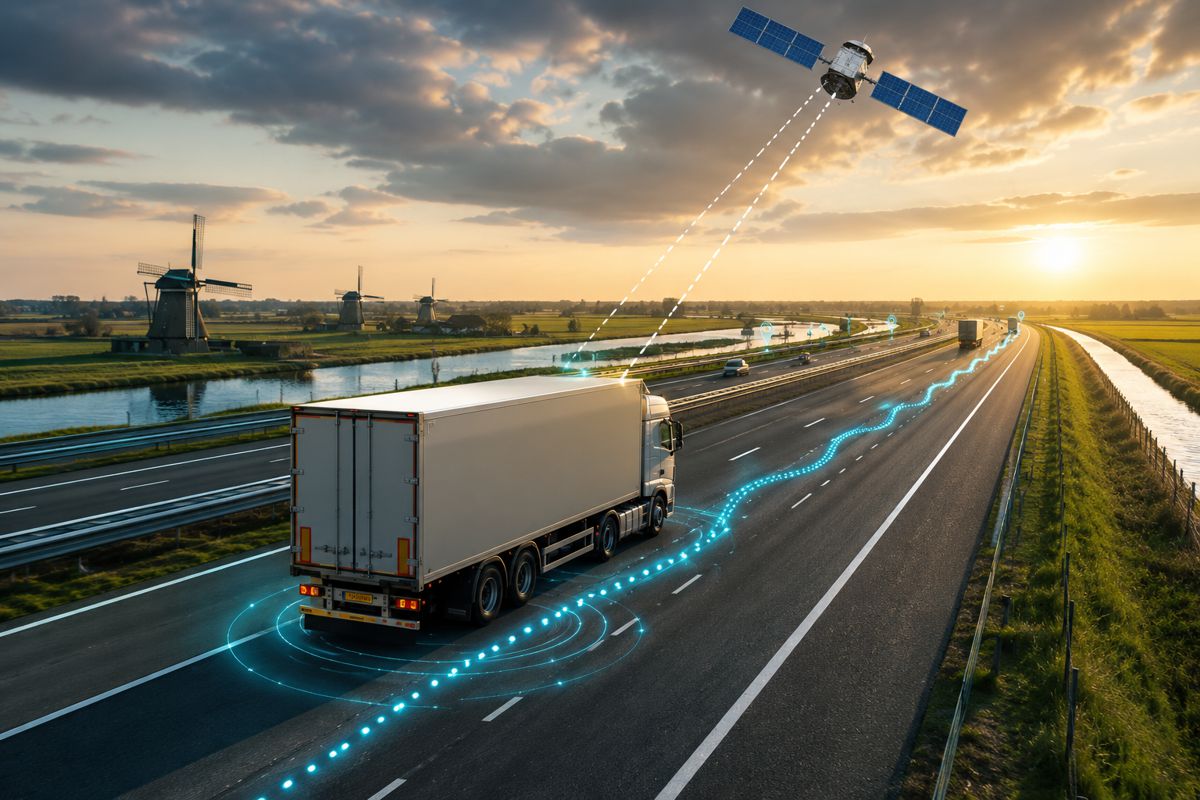
Unlike traditional road taxes, the Dutch system introduces a direct pay-per-kilometre model for heavy goods vehicles operating on designated toll roads. Central to the programme is the mandatory use of an on-board unit, or OBU, which records distance travelled and communicates with the national toll infrastructure. Yet the Dutch authorities have made one point abundantly clear before launch day arrives. The OBU must remain switched on at all times while the vehicle is operating in the Netherlands, even when travelling on roads where the toll itself does not apply.
That requirement may sound straightforward, but it signals a broader operational shift for freight operators moving across Europe. Road charging systems have historically varied considerably between countries, creating a patchwork of technical standards, exemptions and enforcement procedures. The Netherlands is attempting to reduce confusion early by outlining precisely how enforcement will work, where liabilities sit and how international operators must prepare before crossing the border.
For transport companies already navigating rising fuel prices, emissions legislation, driver shortages and growing digital compliance obligations, the introduction of another national tolling regime adds further operational complexity. Still, Dutch authorities argue the new framework has been deliberately structured to combine strict enforcement with practical flexibility during the early months of implementation.
Briefing
- The Netherlands introduces a national truck toll system on 1 July 2026
- All N2 and N3 trucks entering the country must carry a functioning OBU
- The OBU must remain switched on continuously while driving
- Enforcement combines fixed roadside systems with human verification
- Fine levels are temporarily reduced until January 2027 during the transition phase
Europe Continues the Shift Towards Distance Based Freight Charging
The Dutch truck toll scheme reflects a wider European transition away from flat ownership taxes and towards usage-based charging systems. Germany, Belgium, Austria, Switzerland, the Czech Republic and several Scandinavian countries already operate extensive heavy vehicle tolling systems, many of which are tied to emissions categories and distance travelled.
This wider transformation is being driven by several pressures converging at once. Governments are facing mounting infrastructure maintenance costs while simultaneously attempting to decarbonise freight transport and reduce congestion on major logistics corridors. Distance-based charging creates a mechanism that links road usage directly to infrastructure funding while also encouraging fleet modernisation through emissions-linked pricing structures.
The Netherlands occupies a strategically important position within Europe’s freight network. Rotterdam remains Europe’s largest seaport, while the country acts as a vital logistics gateway linking continental Europe with the UK, Germany and Scandinavia. As a result, the new tolling framework will affect not only Dutch operators but also thousands of international carriers moving goods through Western Europe every day.
For cross-border fleets, interoperability becomes critical. Many transport companies already use European Electronic Toll Service providers, commonly known as EETS providers, to simplify tolling across multiple jurisdictions. Dutch authorities are therefore urging carriers to verify whether their existing contracts and OBUs are compatible with the Netherlands before July 2026 arrives.
The OBU Requirement Is Broader Than Many Operators Expect
One of the most important aspects of the Dutch system is the requirement that the OBU remains operational at all times while driving within the country. This applies even when travelling on roads exempt from the toll itself.
That distinction matters because it differs from assumptions some operators may have formed based on other European tolling systems. According to the RDW, misunderstandings regarding exemptions and foreign dispensations are already emerging as a potential compliance problem. The agency warns that exemptions granted elsewhere in Europe do not automatically apply in the Netherlands.
From an enforcement perspective, continuous OBU operation provides authorities with greater certainty regarding vehicle compliance and operational integrity. It also reduces the potential for deliberate circumvention by selectively activating devices only on toll roads.
The policy, however, introduces additional operational responsibilities for fleet managers and drivers. Transport operators must ensure that devices are correctly linked to vehicle registration numbers, remain powered throughout journeys and are replaced rapidly in the event of technical failures.
The requirement for fault resolution is particularly strict. If an OBU fails, operators must immediately notify their service provider and arrange for a replacement functioning device within three hours. For international hauliers operating tight delivery schedules, that creates a potentially significant logistical challenge.
Enforcement Strategy Focuses on Compliance Rather Than Punishment
Dutch authorities appear keen to avoid perceptions that the truck toll scheme is merely a revenue-generating exercise. The RDW has repeatedly emphasised that enforcement is intended to support fair competition and encourage correct system use rather than punish operators unnecessarily.
That approach is reflected in the temporary reduction of fine levels during the first six months of operation. Until 1 January 2027, penalties will be reduced by 50 percent while operators adapt to the new system.
The structure of the fines nevertheless demonstrates the seriousness with which compliance failures will be treated. Carriers operating without a truck toll contract face fines of €800, reduced to €400 during the transition phase. Operating with switched-off, malfunctioning or incorrectly assigned OBUs carries penalties of €500, temporarily reduced to €250.
Interestingly, the Dutch system incorporates safeguards against disproportionate punishment. Authorities will issue a maximum of one fine per vehicle within any 24-hour period, with only the highest applicable offence being enforced during that timeframe.
That policy acknowledges the operational realities facing freight operators while still maintaining a credible enforcement structure.
Technology and Human Oversight Work Together
The enforcement model itself combines automated monitoring with human review. Fixed roadside infrastructure and mobile roadside inspection systems will monitor compliance across the network.
Yet unlike fully automated penalty systems seen elsewhere, Dutch authorities state that every potential violation will undergo human assessment before a fine is issued. That element is likely designed to reduce disputes arising from technical errors, data inconsistencies or exceptional circumstances.
Enforcement also extends beyond automated correspondence. If authorities cannot identify an address for the vehicle owner or if collection proves unsuccessful, enforcement agencies may physically stop vehicles and require immediate payment.
This reflects a broader European trend towards increasingly sophisticated roadside freight enforcement. Across the EU, digital tachographs, emissions compliance monitoring, low emission zones and electronic tolling systems are gradually merging into interconnected regulatory ecosystems.
For fleet operators, compliance is no longer simply a paperwork exercise. It increasingly depends on reliable digital infrastructure operating continuously across multiple jurisdictions.
Logistics Operators Face a Growing Compliance Burden
The Dutch toll rollout arrives at a time when European freight operators are already under considerable pressure. Transport companies are simultaneously dealing with decarbonisation targets, evolving emissions regulations, urban access restrictions and rising technology investment requirements.
Many fleets now operate multiple telematics platforms alongside tachographs, fuel monitoring systems, route optimisation software and electronic tolling devices. The addition of another national tolling requirement reinforces the growing dependence of the logistics sector on interoperable digital systems.
Smaller carriers may face the greatest challenges. Large multinational logistics firms typically already maintain relationships with EETS providers and possess internal compliance departments capable of managing cross-border tolling obligations. Smaller operators, particularly those entering the Netherlands occasionally rather than routinely, may find the transition more demanding.
At the same time, proponents argue that modern tolling systems create longer-term benefits by delivering more sustainable infrastructure funding mechanisms. Revenue generated through kilometre-based charging can help finance road maintenance, network upgrades and cleaner mobility initiatives without relying solely on general taxation.
The Dutch government has also linked the wider truck toll programme to broader sustainability objectives, including reducing emissions from heavy freight transport and encouraging adoption of cleaner vehicle technologies.
Digital Freight Infrastructure Is Becoming Standard Across Europe
The Dutch truck toll rollout ultimately represents more than a national policy adjustment. It highlights how freight transport across Europe is becoming increasingly digitised, regulated and data-driven.
For decades, road freight remained comparatively fragmented in terms of technology adoption. Today, however, electronic tolling, real-time telematics, smart enforcement infrastructure and digital compliance systems are rapidly becoming standard operating conditions across the industry.
As governments continue investing in intelligent transport infrastructure, the role of connected devices such as OBUs will likely expand further. Future systems may integrate emissions monitoring, congestion management, low emission zone access and even dynamic pricing models linked to traffic conditions or environmental performance.
For freight operators, adapting early will be essential. The Dutch system offers a glimpse into the operational expectations likely to define European road transport throughout the next decade.
Carriers entering the Netherlands after July 2026 will need more than paperwork. They will need functioning digital infrastructure operating seamlessly in the background of every journey.