The Biggest Change in Construction is Not AI, It’s Recurring Revenue
The industry has already published thousands of features on artificial intelligence, building information modelling, drones, robotics and the internet of things. A more consequential commercial question has gone largely unasked, which is how a construction company earns money a decade after the building is finished. That question matters because the answer is beginning to change, and with it the entire economic logic of the sector.
The physical asset is no longer the only thing a contractor can sell, and the moment of practical completion is starting to look less like the end of a transaction and more like the start of a relationship.
For more than two thousand years, the construction industry’s business model barely changed. The rhythm was always the same, to design, build, handover and walk away, recognising revenue during delivery, banking the margin at completion and moving to the next site. Smart construction may represent the first time that finishing a project marks the beginning of a commercial relationship rather than the end of one.
A growing group of contractors, integrators and building-technology firms is now discovering that the data a project produces, and the responsibility for keeping a building performing, can be sold for years after the last invoice on the build itself. That shift turns a completed project into three assets at once: a physical building, a customer relationship and a continuously replenished data set. Understanding how those second and third assets are monetised is the difference between a business that ends at handover and one that is only just beginning.
Briefing
- The unasked commercial question in construction is how a firm makes money ten years after completion, and the emerging answer is that practical completion is becoming a service-activation event rather than a finish line.
- Every building is turning into a commercial data asset, as digital handover, living asset registers, maintained twins, sensor feeds and operational history become the raw material for recurring revenue.
- Construction firms are starting to resemble software businesses, selling subscriptions, managed services, optimisation, predictive maintenance and performance guarantees rather than one-off projects.
- Data ownership is becoming the next major commercial battleground, covering models, sensor data, maintenance history, analytics and performance records, and it is now a business issue rather than an IT or compliance one.
- The likely winners of the next decade are not the fastest builders but the firms that stay commercially connected to every asset they deliver, potentially for its entire operating life.
Construction Used to Sell Assets
The traditional engineering, procurement and construction model is built around a single transaction. A client commissions a building, a coalition of designers, contractors and suppliers assembles to deliver it, and revenue is recognised across design and construction before tailing off into a short defects-liability period. Once the account is settled, the relationship effectively ends. The delivery team disperses, the margin is booked, and the contractor’s commercial interest in that specific asset falls close to zero the moment the keys change hands. Everything of value, in this model, is captured before the building is even occupied.
That structure has an obvious commercial weakness, which is that it walks away from the asset at precisely the point where the client’s spending is about to begin. Over a building’s life, operating and maintenance costs dwarf the capital cost of construction, yet the contractor that designed and built the asset typically captures none of that downstream expenditure.
When a refurbishment, a major plant replacement or an energy upgrade is required years later, the owner often runs a fresh procurement, and the original builder competes for the work from scratch or not at all. The information that would make the original contractor the natural partner for that work, such as what was installed, how it was configured and how it has performed, was usually lost or handed over as static documents nobody maintained. The industry has, in effect, been giving away the most valuable part of the relationship.
Practical Completion Is No Longer the Finish Line
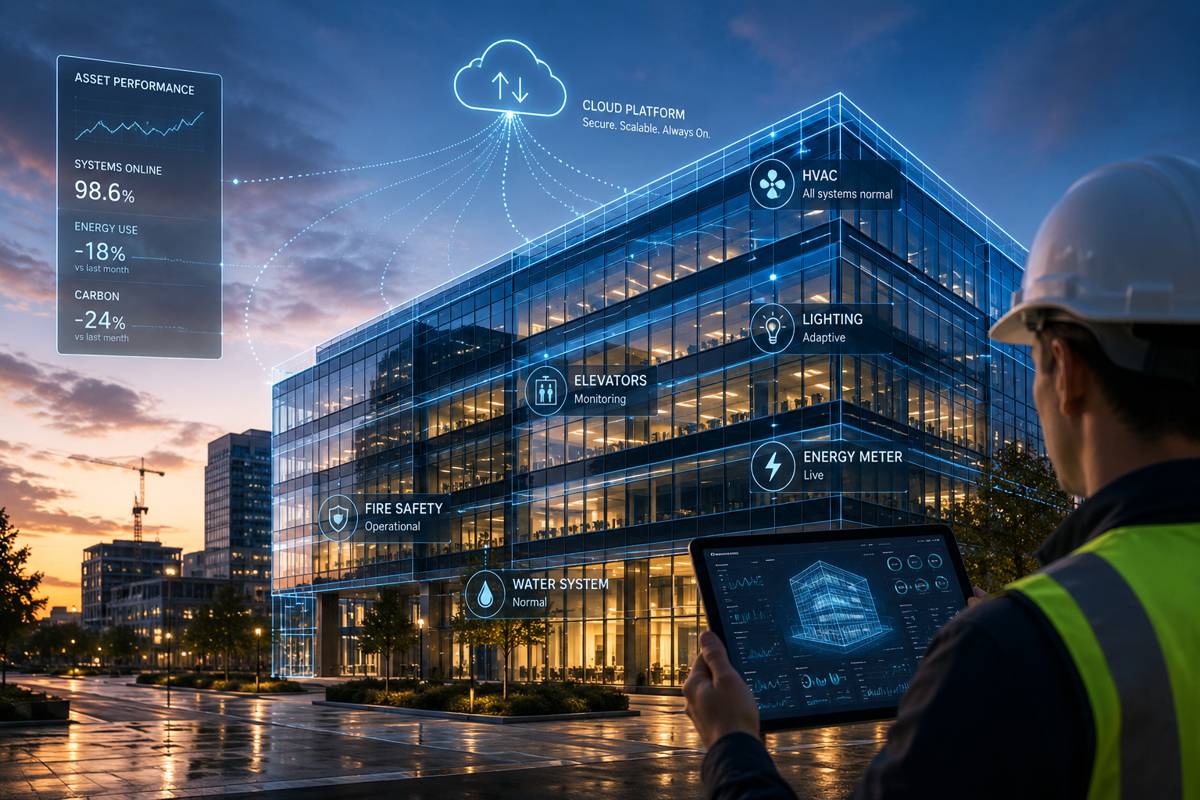
The most powerful idea emerging from this shift is that practical completion is becoming a service-activation event. In the old model, completion is a full stop. In the new one, it is closer to the moment a subscription switches on. The provider can charge an implementation fee for assembling a structured, validated operational data environment, then earn recurring revenue for hosting and maintaining it, professional-services revenue for analysis and integration, and outcome-based revenue for delivering energy, uptime, carbon or maintenance results. The building is finished, but the commercial engagement is only starting to generate value.
This reframing changes what the final deliverable actually is. A set of PDF operating manuals becomes searchable, structured asset information linked to locations and systems. An as-built model becomes a maintained record connected to live and historical data. A commissioning report becomes a continuous commissioning and fault-detection service, and a defects register becomes a persistent warranty and maintenance workflow.
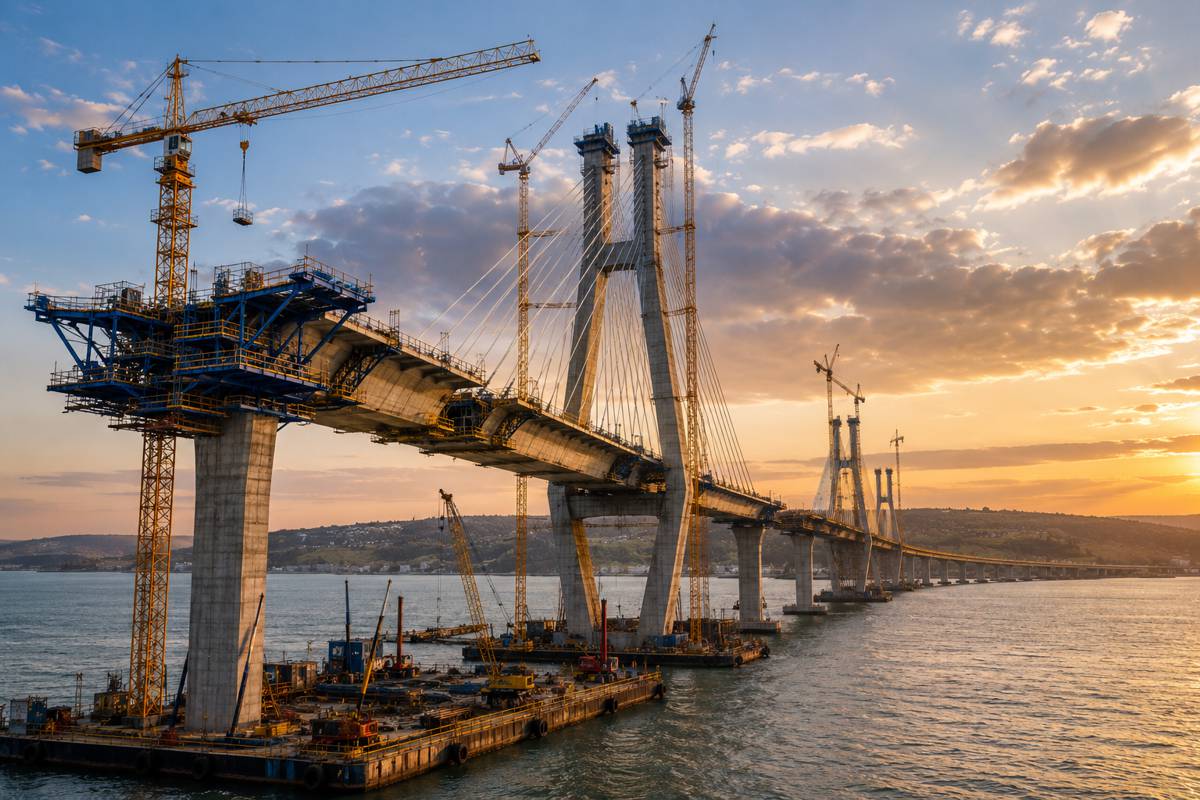
The through-line is that a static document is handed over once and forgotten, whereas a living service must be kept accurate, secured and supported as the building changes. Windover Construction captured the distinction when it began delivering handover twins that combine design and construction information with warranties, installation dates and manufacturer data, built to stay useful five to ten years after completion, describing the result as a “living digital document.” That phrase marks the exact point where a deliverable turns into a service.
Every Structure Is Becoming a Data Asset
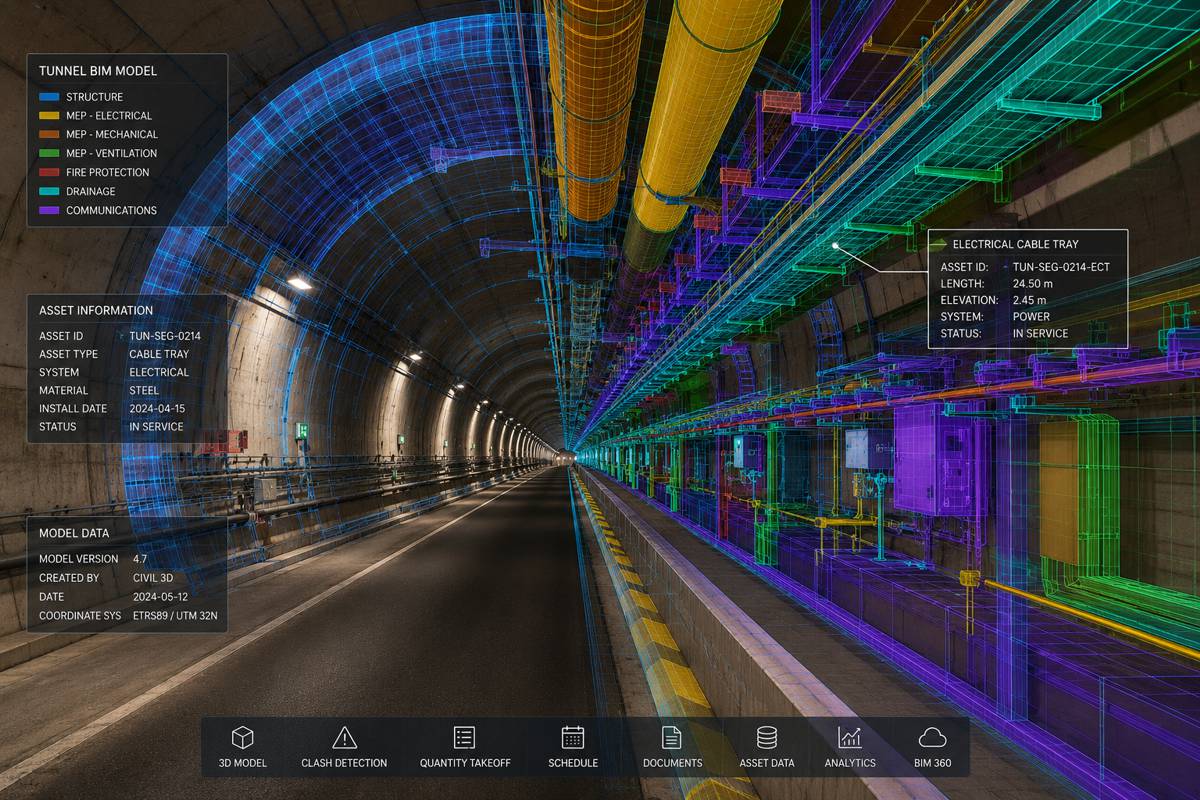
The material that makes this possible is not exotic. It is the digital handover, the living asset register, the maintained twin, the sensor feed and the accumulated operational history that a modern project already generates. The strategic move is to stop treating those as technical by-products and start treating them as commercial assets. A structured handover is an asset because it underpins every later service. A maintained twin is an asset because it stays synchronised with the physical building and supports decisions across its life. Sensor data and operational history are assets because they are the evidence base for optimisation, benchmarking and, eventually, guarantees. The value is not the technology itself but the durable, reusable information it leaves behind.
That value compounds with scale and quality. A single building holds enough information to support maintenance and energy optimisation, while a portfolio yields benchmarks a lone asset cannot produce, such as energy intensity by building type, recurring equipment faults, supplier performance and expected component life. The market is beginning to reflect where this value sits.
The broad construction and design software market is estimated at around US$11.0 billion in 2024, rising towards US$19.1 billion by 2030, but the narrower building-twin market is forecast to grow far faster, at roughly 27.5% a year to 2033, with facility management its largest application. Those figures come from commercial research and overlap, so they are directional rather than additive, yet the direction is clear: the faster growth is happening after handover, in the operational layer. The important caveat is that data is not automatically valuable. It depreciates quickly when asset identifiers drift, sensors fail, records are not updated or context is lost, which is precisely why maintaining it can be sold as an ongoing service rather than given away as a one-off file.
Construction Companies Are Becoming Service Providers
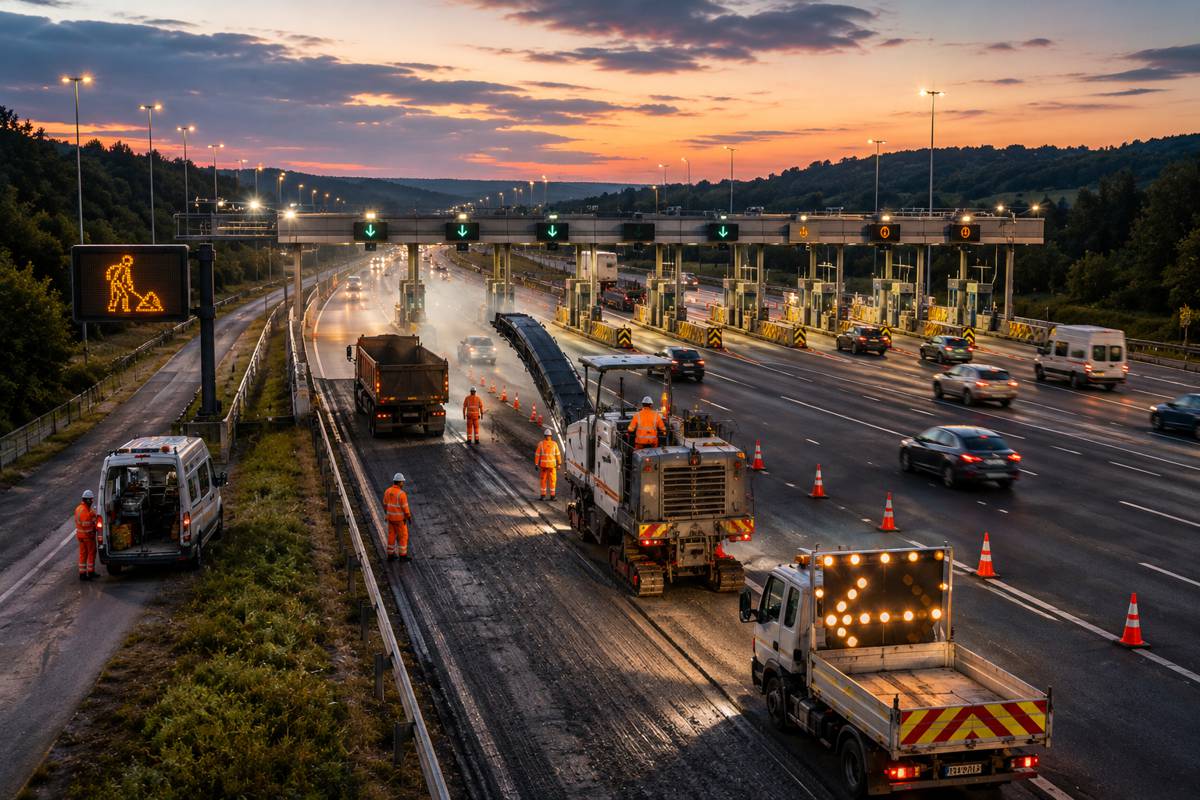
Once the data is treated as an asset, the revenue model starts to look remarkably like software. Instead of a single completion payment, the provider can sell subscription access to a hosted asset record, managed services that monitor and interpret the building, optimisation that tunes its performance, predictive maintenance that heads off failures, performance contracts that pay for verified results, energy guarantees and lifecycle consulting. Each layer sits on top of the last, and each deepens the relationship. The building-technology majors have already built businesses on this logic.
Schneider Electric’s EcoStruxure Building Advisor monitors more than 50,000 data points across the roughly four-million-square-foot Aspiria campus, and Johnson Controls reports that Standard Chartered, which operates more than 1,200 buildings, selected its OpenBlue connected solutions, with a pilot linking critical systems through cloud software. In both cases an installed control point became the entry route to a recurring, portfolio-wide relationship.
The scale this can reach is no longer speculative. Ameresco reported approximately US$1.4 billion of operations-and-maintenance backlog at the end of 2024, revenue it expects to earn from what the company describes as “signed, multi-year customer contracts,” some of which run for up to 25 years. That is the essential difference between the two business models. A one-off handover business starts every year from zero, dependent on winning fresh projects, whereas a subscription and services business accumulates a contracted base that compounds.
Modelled on illustrative assumptions rather than published benchmarks, a provider adding sites steadily at a reasonable price and retention rate can build towards several million pounds of annualised recurring revenue within a few years before counting that year’s new work. The discipline this demands is standardisation, because if every site requires bespoke engineering the apparent software margin quietly becomes consulting margin. Providers that succeed will track implementation hours per site, connector reuse and gross retention with the same rigour a software firm applies, which is why the sector is starting to behave, commercially, like SaaS.
Why Asset Owners Are Buying In
None of this would matter if owners did not want it, and the evidence is that they do. Rather than paying afresh for a new procurement at every refurbishment, an owner on a continuous-service arrangement receives ongoing optimisation, lower operating costs, verified carbon reductions, better-maintained equipment and simpler compliance. The value is measurable rather than abstract.
At the Aspiria campus, Schneider reports a 16% annual reduction in energy, a 36% cut in carbon footprint, US$1.5 million in energy savings, US$700,000 in labour savings and 65% fewer occupant temperature complaints, outcomes that touch cost, sustainability and tenant satisfaction at once. Aspiria’s Gary Schlotzhauer framed the benefit in operational terms, noting that “The conversion from manually analysing data to smart and automated EcoStruxure solutions is a big win.”
The pattern repeats across very different asset types. Johnson Controls’ Standard Chartered pilot reported cost savings of 13% and annual energy savings beyond a US$60,000 target, while the University of East London’s decarbonisation partnership with Siemens, which began in 2022, delivered a reported 10% carbon reduction before its 2025 expansion and now adds a Thames water-source heat-pump system forecast to cut annual emissions by 258 tonnes.
Even critical infrastructure benefits, as at New Bullards Bar Dam, where Yuba Water Agency’s connected system draws on 83 sensors and reportedly produces a thousand times more weekly monitoring points than the manual process it replaced, feeding Bentley’s cloud-based iTwin environment for monitoring and alerts. For owners, the appeal is that they are no longer buying a building and then managing its decline in isolation. They are buying a partner with a commercial incentive to keep the asset performing, and the evidence to prove that it does.

Data Ownership Will Become the Next Major Battleground
If the value now lives in a continuing relationship, the contract decides who captures it, and the terms are becoming a genuine commercial battleground. The contested territory is broad: who owns the building information model, the sensor data, the maintenance history, the trained analytical models, the performance record and the derived analytics built on top of all of them.
This is no longer an IT or compliance detail. It determines whether a contractor can keep selling lifecycle services, and whether an owner can switch providers without losing access to its own building’s history. A vendor comparison that asks only whether the customer owns the data is inadequate, because a robust agreement has to separate at least five distinct rights: raw equipment data, project and asset records, platform and analytical intellectual property, derived and aggregated data, and personal or security-sensitive information.
The way vendors treat these rights already varies. Siemens’ public Building X guidance states plainly that “The owner of the building data is always the owner of the building itself,” a clean owner-side principle, though it still leaves open who may operate the platform, benchmark the data or reuse it to improve products. Johnson Controls’ published terms move in the other direction, confirming customer ownership of data while granting the vendor a broad licence to use and create derivative works from it, which is a material point to negotiate rather than accept.
Regulation is sharpening the stakes. In England, the golden thread requires digital building-safety information for higher-risk buildings to be secure, available, usable, current and transferable, with control passing to the accountable party at completion. Across the European Economic Area, the Data Act, in force since 12 September 2025, unsettles any assumption that a manufacturer or platform holds exclusive control of connected-product data, while the General Data Protection Regulation continues to govern personal information.
Comparable regimes apply elsewhere, from California’s Consumer Privacy Act to Australia’s Privacy Act, Singapore’s Personal Data Protection Act and China’s Personal Information Protection Law. The workable commercial principle across all of them is owner control without service-provider exclusion, giving owners durable access and portability while granting providers a clearly defined licence to deliver the service.
The Rise of Construction-as-a-Service
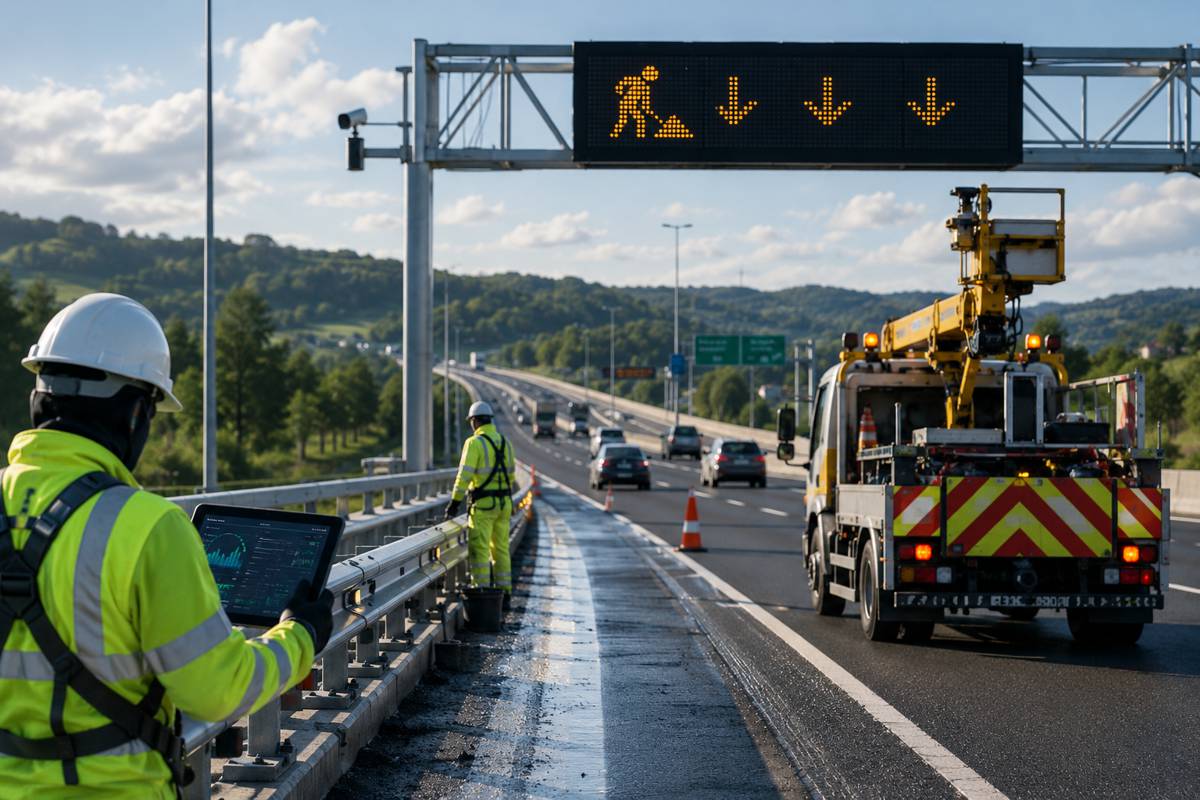
The clearest way to name this shift is by analogy to the models that reshaped other industries. Software became Software-as-a-Service, computing became Infrastructure-as-a-Service, and transport is becoming Mobility-as-a-Service, in each case moving customers from owning a product to buying a guaranteed outcome. Construction is beginning to follow the same path towards what can reasonably be called Construction-as-a-Service, in which a firm sells guaranteed building performance rather than a completed structure. Energy savings, occupancy optimisation, carbon performance, maintenance, availability, indoor air quality and digital compliance can each become a service contract with defined targets, measurement and payment. The building is still built, but what the client actually buys is the result it produces over time.
Performance contracting is where this is furthest advanced. The US General Services Administration modernised an Oklahoma City federal building in 2024 through a performance contract with Ameresco, and Ameresco’s contract with Warren Woods Public Schools is estimated by the company to deliver US$8.7 million in lifetime savings over 25 years, an arrangement in which the customer effectively procures a defined operational result rather than a list of equipment.
This is a more demanding business than one-off delivery, because guaranteeing an outcome transfers risk to the provider and requires a credible baseline, reliable instrumentation, agreed normalisation for weather and occupancy, and independent measurement and verification. For that reason the sensible progression is to move from digital handover to maintained subscription to managed operations and only then to guaranteed performance, with each stage generating the evidence needed to underwrite the next.
The strategic significance is hard to overstate. When performance becomes the product, construction stops competing purely on the price of building and starts competing on the value of operating, which is a fundamentally different and more durable basis for a business.

The Winners Will Not Be the Best Builders
Taken together, these developments point to a reordering of who leads the industry. The largest construction businesses of 2035 may not be the contractors who build the fastest or the cheapest. They are more likely to be the firms that remain commercially connected to every project they deliver, sometimes for the next thirty years, earning from the data, the optimisation and the guaranteed performance of assets long after the physical work is done.
That is not an incremental improvement on the current model. It is a different business, closer in shape to a software and services company than to a traditional contractor, and it rewards a different set of capabilities: information governance, standardised service delivery, analytics and the discipline to underwrite outcomes.
The industry has spent a decade learning to build more intelligently, and the more valuable lesson now on offer is how to stay connected to what it builds. The market figures, the live deployments and the multi-year backlogs all point the same way, towards a sector that can convert data it already produces into services that owners increasingly expect and value. The firms that master the handover, the governance and the repeatable service tiers will not simply hand over smarter buildings. They will build a recurring business on top of every building they complete, and give construction a steadier, higher-quality revenue base than the traditional project cycle has ever managed to provide.
The same commercial logic is already reaching beyond buildings, which matters for an infrastructure audience because that is where much of the asset base and the lifetime maintenance spending sits. Across highways, rail, bridges, ports, tunnels, airports and utilities, the recurring revenue is less likely to come from building management systems and more likely to come from predictive maintenance, digital asset management, performance monitoring, emissions optimisation and resilience services.
The New Bullards Bar Dam deployment is an early sign of the pattern, where continuous sensing and a maintained twin turned a fixed structure into a monitored, managed asset. The central test does not change with the asset type. Whether the asset is an office, a motorway or a water network, the firms that keep its information alive and stay accountable for its performance are the ones positioned to keep earning from it long after construction ends.

Key Industry Questions
- How does a construction company make money years after a building is finished? The emerging answer is that completion activates a series of services rather than closing the account. A contractor can charge an implementation fee to assemble a structured operational data environment, then earn recurring revenue for hosting and maintaining it, professional fees for analysis and integration, and outcome-based payments for delivering energy, carbon or uptime results. Over a building’s life, operating and maintenance spending far exceeds the original construction cost, so staying connected to the asset gives the builder access to a much larger and longer revenue pool. The commercial requirement is that the information produced during delivery is structured, maintained and contractually available, so that it can support paid services rather than being lost at handover.
- What does practical completion becoming a service-activation event actually mean? It means treating handover as the moment a service switches on rather than the point a relationship ends. In the traditional model, revenue stops shortly after completion and the delivery team disperses. In the service-activation model, completion is when the provider begins earning from hosting and maintaining the asset record, monitoring performance and delivering optimisation or guaranteed outcomes. The building is finished, but the commercial engagement continues. The practical test is whether the digital record survives handover, stays connected to the physical asset and underpins a continuing obligation. Where it does, the provider has a recurring business; where the record is a static file nobody maintains, the old full stop at completion still applies.
- Why should sensor data and asset records be treated as commercial assets rather than technical outputs? Because they are the raw material for every recurring service and the evidence base for guarantees. A structured handover underpins subscriptions and analytics, a maintained twin supports lifecycle decisions, and operational history enables benchmarking and performance contracts. Treated as by-products, these outputs are lost or handed over as unmaintained documents, and the downstream value disappears with them. Treated as assets, they can be governed, reused across many decisions and monetised over years. The important qualification is that this value depreciates quickly when identifiers drift, sensors fail or records are not updated, which is exactly why maintaining the data can be sold as an ongoing service rather than given away once.
- How similar is this really to a software business? Commercially, the resemblance is strong. Revenue shifts from a single completion payment to subscriptions, managed services, optimisation and performance fees, each layered on the last and each deepening the customer relationship. A subscription business accumulates a contracted base that compounds, in contrast to a one-off model that restarts every year. Ameresco’s reported US$1.4 billion of operations-and-maintenance backlog shows the scale such recurring contracts can reach. The critical discipline borrowed from software is standardisation. If each site needs bespoke engineering, the software margin becomes consulting margin, so providers must manage implementation hours per site, connector reuse and retention exactly as a SaaS company manages onboarding cost and churn.
- What is Construction-as-a-Service? Construction-as-a-Service applies the logic of Software-as-a-Service, Infrastructure-as-a-Service and Mobility-as-a-Service to the built environment. Instead of buying a completed building, the client buys guaranteed performance over time, so energy savings, occupancy optimisation, carbon performance, maintenance, availability, indoor air quality and digital compliance each become service contracts with defined targets, measurement and payment. Performance contracting is the most developed example, seen in public-sector energy deals where an owner procures a defined result rather than a list of equipment. It is more demanding than one-off delivery because guaranteeing an outcome transfers risk to the provider, requiring a reliable baseline, sound instrumentation, agreed normalisation and independent verification before any guarantee is offered.
- Why is data ownership becoming a commercial rather than a compliance issue? Because it decides who can capture the downstream value. If a provider cannot keep accessing project and operational data, it cannot sell lifecycle services, and if an owner cannot export its data, it risks dependence on a single contractor or platform. A sound agreement separates at least five rights: raw equipment data, project and asset records, platform and analytical intellectual property, derived and aggregated data, and personal or security-sensitive information. Vendors already differ, with some affirming that the building owner owns the data and others reserving broad licences to reuse it. Regulation including the golden thread, the EU Data Act and various privacy regimes is raising the stakes. The workable standard is owner control without service-provider exclusion.
- What do asset owners gain from continuous-service arrangements? Owners gain measurable operational benefits without commissioning a fresh procurement at every intervention. Continuous service typically delivers ongoing optimisation, lower operating costs, verified carbon reductions, better-maintained equipment and easier compliance. The reported outcomes are concrete: a 16% annual energy reduction and US$1.5 million in savings at the Aspiria campus, 13% cost savings in a Standard Chartered pilot, and a forecast 258-tonne annual emissions cut from a new heat-pump system at the University of East London. Owners also gain a partner with a commercial incentive to keep the asset performing, backed by evidence. The trade-off is a continuing contractual relationship and attention to data rights, which is why ownership and exit terms matter to owners as much as to providers.
- What has to be in place before a provider offers a performance guarantee? A provider should not guarantee energy or uptime until it holds a credible baseline, reliable instrumentation and genuine authority over the relevant operating decisions. The contract needs to fix the historical baseline and its adjustment method, normalise for weather and occupancy, define whether payment follows physical or financial savings, and set out how later refurbishments are treated. Independent measurement and verification, clear caps, floors and exclusions, and defined recommissioning arrangements are all essential. The rational route is sequential, moving from digital handover to subscription to managed operations before offering guarantees, so that each stage builds the data and operating evidence required to price the next. Guaranteeing outcomes without that foundation exposes the provider to losses and disputes.
Strategic Takeaways
- The largest commercial prize in construction is shifting from the moment of completion to the decades that follow it, so firms that stay connected to their assets can access operating and maintenance spending that dwarfs the original build cost.
- Practical completion is best understood as a service-activation event, and the firms that structure, maintain and contractually secure their handover data are the ones positioned to turn that moment into recurring revenue.
- Construction is beginning to resemble a software and services industry, which rewards standardised delivery, high retention and disciplined unit economics far more than one-off project throughput.
- Construction-as-a-Service, in which clients buy guaranteed performance rather than a finished structure, is the strategic frontier, and performance contracting shows it is already commercially viable at scale.
- Data ownership will decide who captures the value, so contractors and owners alike should treat models, sensor data, maintenance history and derived analytics as negotiated commercial assets rather than technical afterthoughts.