Liebherr Brings Electrified Quarrying and Heavy Machinery to steinexpo
A 130-tonne electric mining excavator connected directly to the grid will sit alongside a 564 kWh mobile battery system when Liebherr arrives at steinexpo in September. Around them will be more familiar quarry machinery: a 30-tonne articulated dump truck, large XPower wheel loaders, Generation 8 crawler dozers and a telescopic handler.
It makes for an interesting snapshot of heavy equipment development. Diesel remains firmly embedded in quarry production, but increasingly sophisticated machine control is changing what conventional equipment can do, while electrification is finding its way into applications where the duty cycle and available infrastructure suit it.
Liebherr will bring eight exhibits from its earthmoving, mining and components businesses to stand A27 at steinexpo 2026, occupying around 1,000 m² and promising an as-yet undisclosed world premiere. The exhibition runs from 2 to 5 September at the basalt quarry at Nieder-Ofleiden in central Germany, and the setting matters because machines at steinexpo can load, push, carry and excavate material under conditions much closer to their working lives than anything possible in an exhibition hall. This year Liebherr is using that environment to put established quarry equipment alongside some of the newer technology beginning to change how heavy machinery is powered and operated.
Briefing
- Liebherr will exhibit eight machines and systems at steinexpo 2026, including an undisclosed world premiere.
- The 130-tonne R 9150 E mining excavator uses a grid-connected electric drive rather than onboard diesel power.
- The LPO 600 mobile energy storage system provides 564 kWh of gross energy capacity and up to 540 kVA peak power.
- Two L 580 XPower wheel loaders and Generation 8 PR 726 and PR 756 crawler dozers demonstrate the continuing development of conventional machines through assistance and control systems.
- Liebherr will also present HVO-compatible combustion engines, hydrogen technology, electric drives, digital services, fleet management and remanufacturing.
Electrification at Quarry Scale
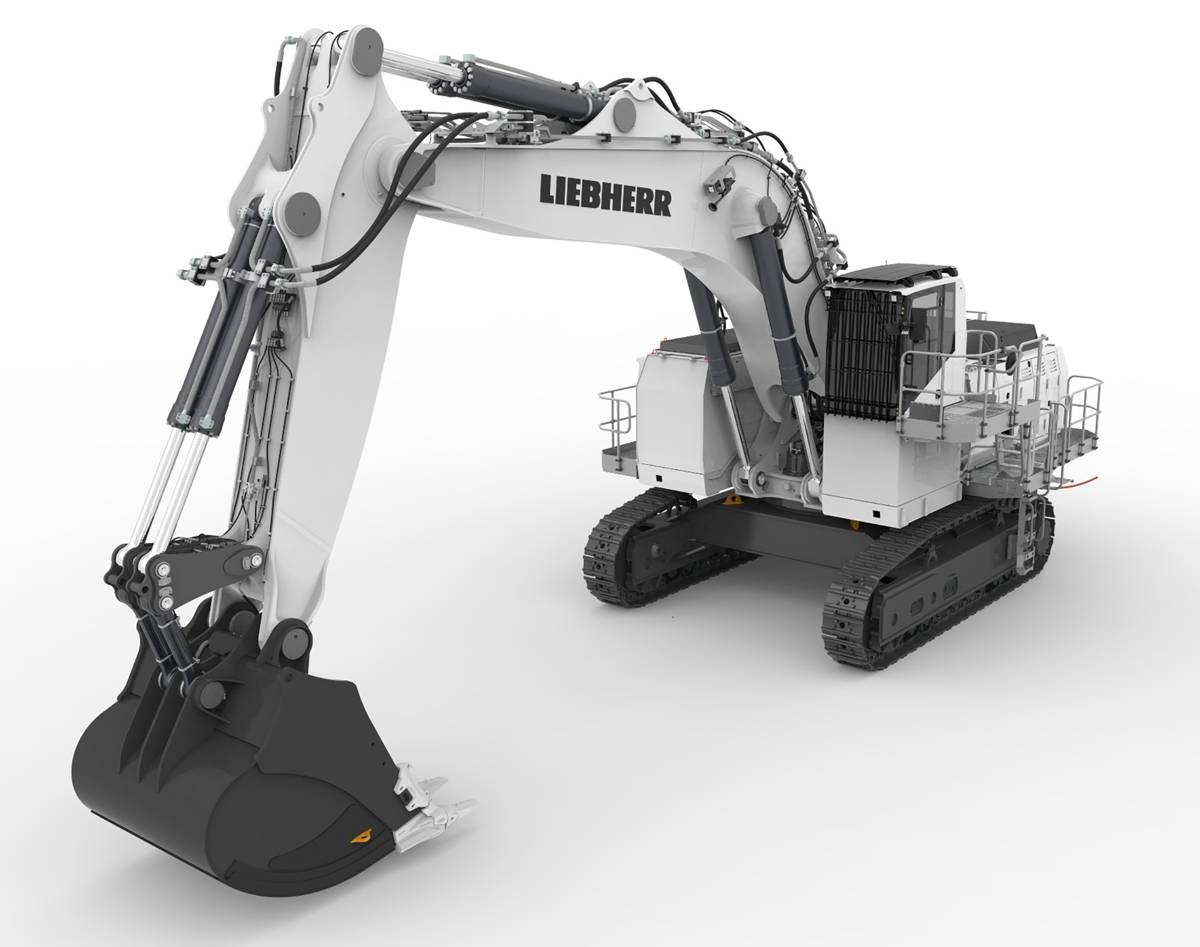
The R 9150 E is one of the more interesting machines in Liebherr’s announced line-up because its electrification takes a different route from the battery-electric architecture increasingly familiar in smaller construction equipment.
At around 130 tonnes, the excavator is based on Liebherr’s established R 9150 mining platform but replaces its conventional powertrain with a grid-connected electric drive. It retains the digging and lifting performance expected of a production mining excavator while eliminating exhaust emissions at the machine during operation. Liebherr says the electric drive also reduces noise and has fewer components than its diesel counterpart, lowering maintenance requirements and potentially increasing machine availability.
There is a practical logic to connecting a machine of this size directly to the grid. Large mining excavators can spend much of their working lives within a relatively constrained area rather than travelling continuously around a dispersed site, making electricity supplied by cable considerably more realistic than it would be for an articulated dump truck or wheel loader travelling long haul routes.
It also avoids putting an enormous traction battery aboard a machine whose main requirement is sustained power rather than mobility. The compromise is that some of the engineering moves beyond the excavator itself, with electrical supply, distribution and cable management becoming part of the production system.
Power Equipment Joins the Fleet
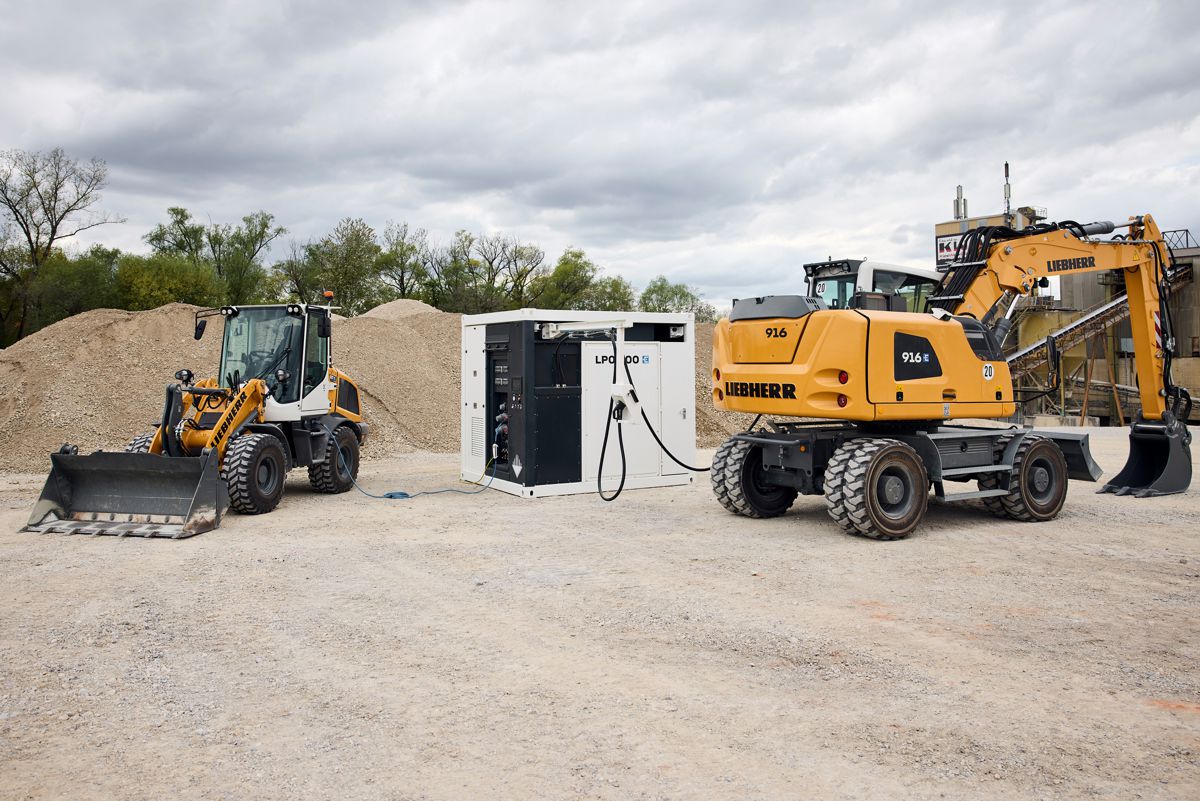
The other half of that equation is represented at steinexpo by the Liduro Power Port 600, a battery-based mobile energy storage system with 564 kWh of gross energy capacity and peak output of 540 kVA. Liebherr’s technical information specifies AC connections alongside CCS2 DC outputs, with two DC charging points capable of supplying up to 150 kW each.
Energy storage allows power to be accumulated rather than demanding the full charging load from the grid at the moment a machine plugs in. That can make electric equipment practical at locations where the available grid connection would otherwise be inadequate, while the unit can also move as the working area changes. The LPO 600 fits into the footprint of a 10-foot container and can supply both stationary and mobile equipment. Liebherr also provides remote monitoring of battery level, charging time, charging power, energy output and consumption.
Systems such as this are becoming part of the equipment decision itself. An electric machine cannot sensibly be considered separately from the infrastructure that supplies it, particularly on temporary or evolving sites where grid capacity may bear little relationship to the power demanded by heavy machinery. Liebherr currently expects the LPO 600 to become available in 2027.
For fixed and semi-fixed operations such as quarries, direct grid connection, mobile storage and conventional equipment can coexist quite naturally. There is little reason for a machine that spends most of its life in one working area to use the same energy architecture as one travelling continuously across a quarry.
The Conventional Fleet Is Still Moving Forward
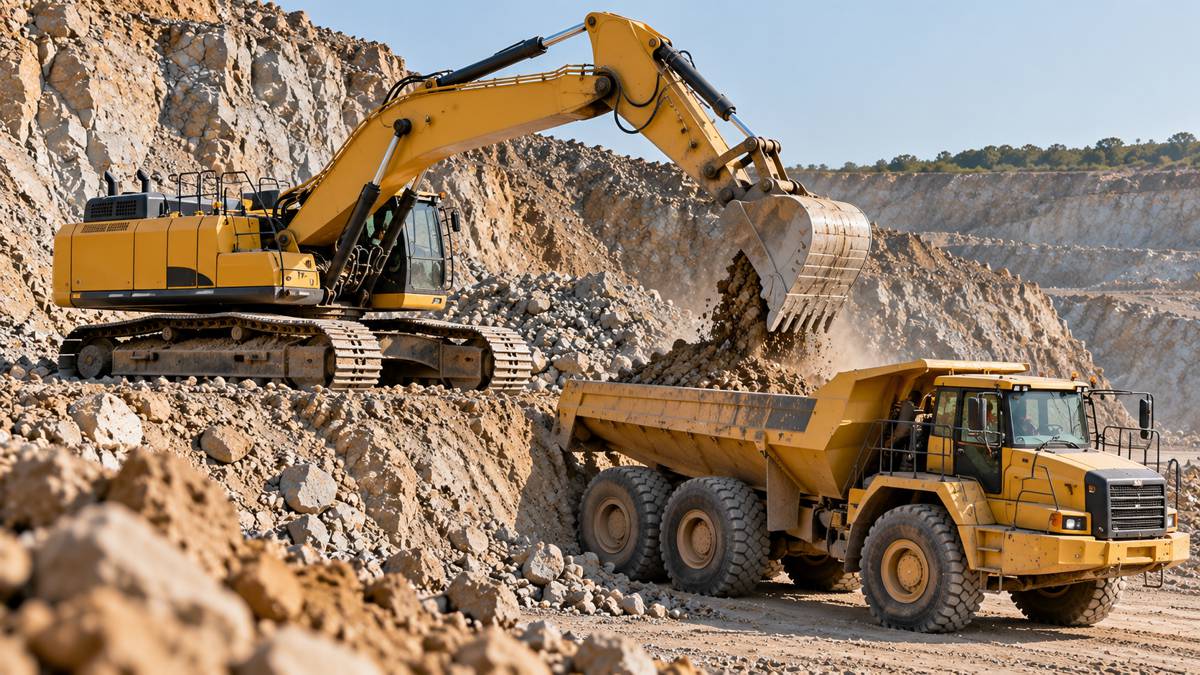
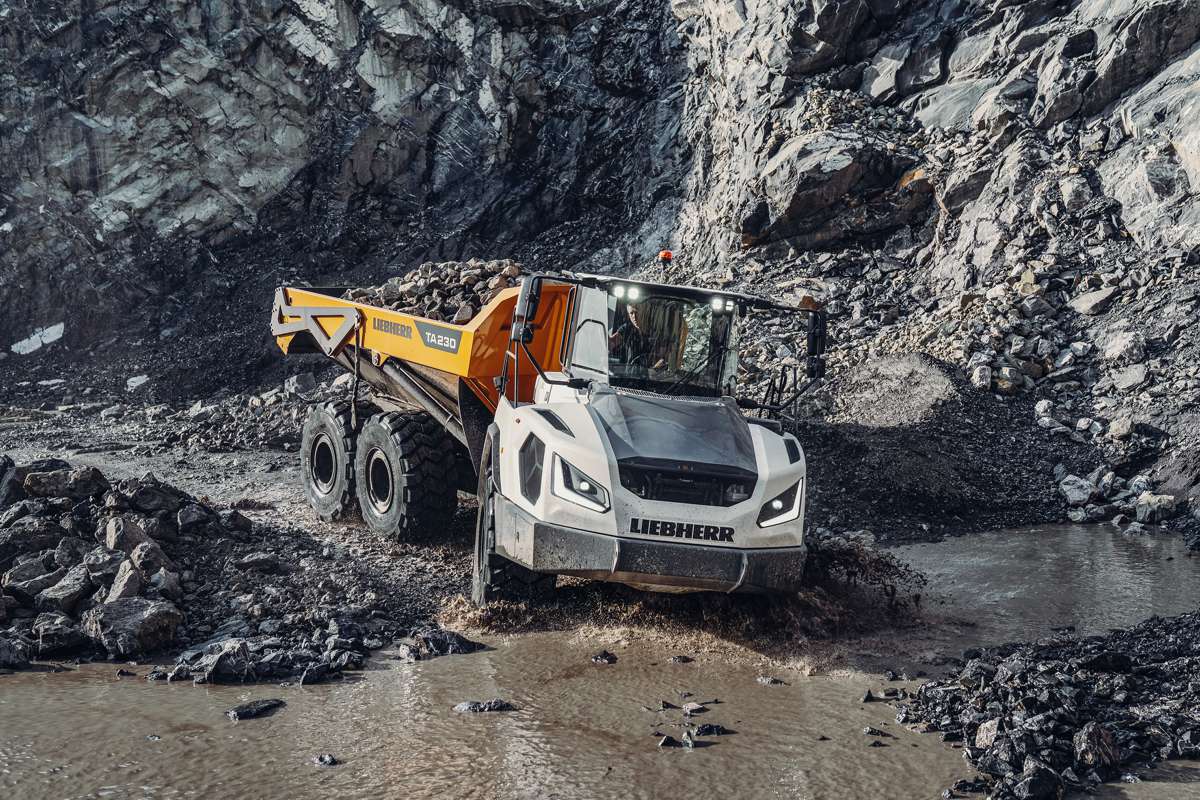
The TA 230 Litronic articulated dump truck has a payload of up to 28 tonnes and body capacity of up to 18.10 m³, with a 360 PS engine, permanent 6×6 drive, automatic differential locking and heavy-duty axle suspension. Optional wear protection is available for abrasive operating conditions, while the standard weighing system helps operators manage payload.
It is also the sort of machine that exposes the harder end of equipment electrification. An articulated dump truck repeatedly accelerates, climbs, tips and returns over haul routes that can change as an operation develops. Energy density, refuelling speed and freedom of movement remain difficult advantages to surrender.
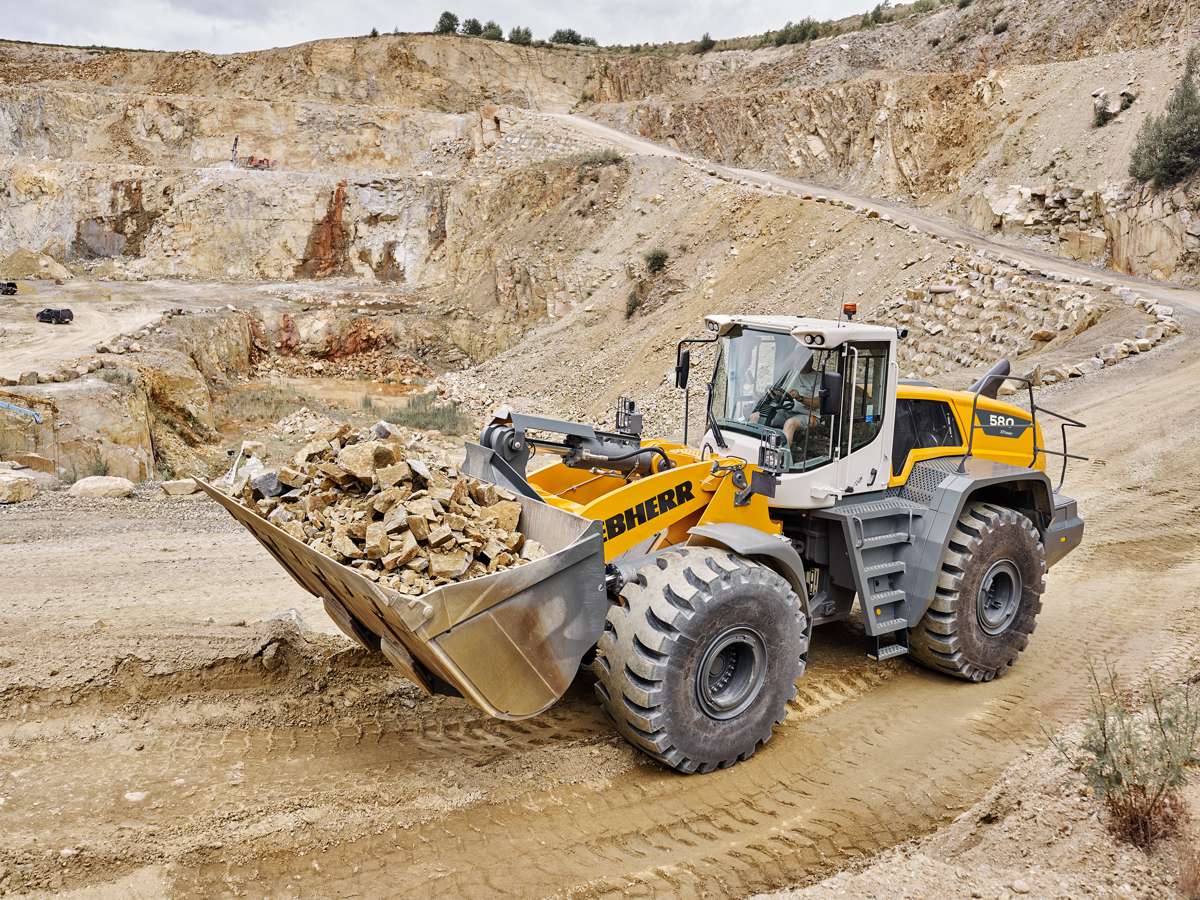
Liebherr’s L 580 XPower wheel loader approaches efficiency mechanically. Its XPower drivetrain continuously combines hydrostatic and mechanical transmission, using the characteristics of each according to the operating conditions. One L 580 XPower will be displayed on the stand and another put to work in the live demonstrations, equipped with tyre-protection chains and a rock bucket. Both have Liebherr’s weighing system with Truck Payload Assist to help operators optimise bucket filling and truck payloads.
For production machinery working cycle after cycle, consistency counts. A loader that repeatedly puts the right amount of material into a truck without unnecessary passes can earn its keep through thousands of otherwise unremarkable loading cycles.
Machine Control Moves Further into the Dozer
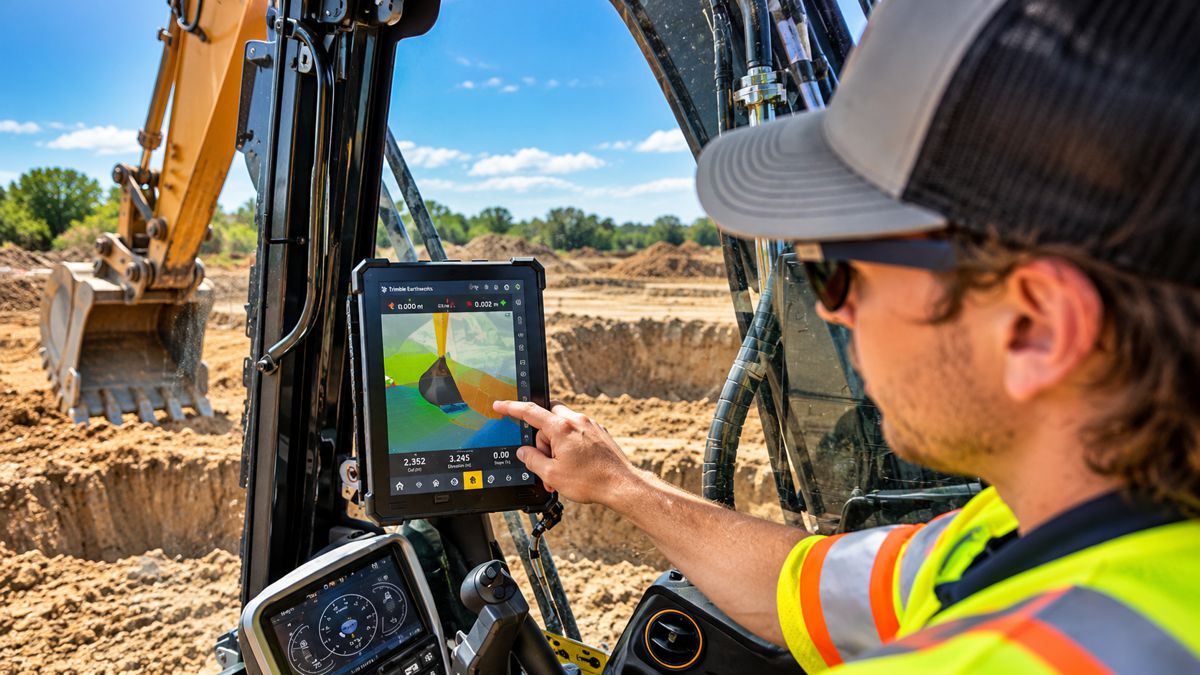
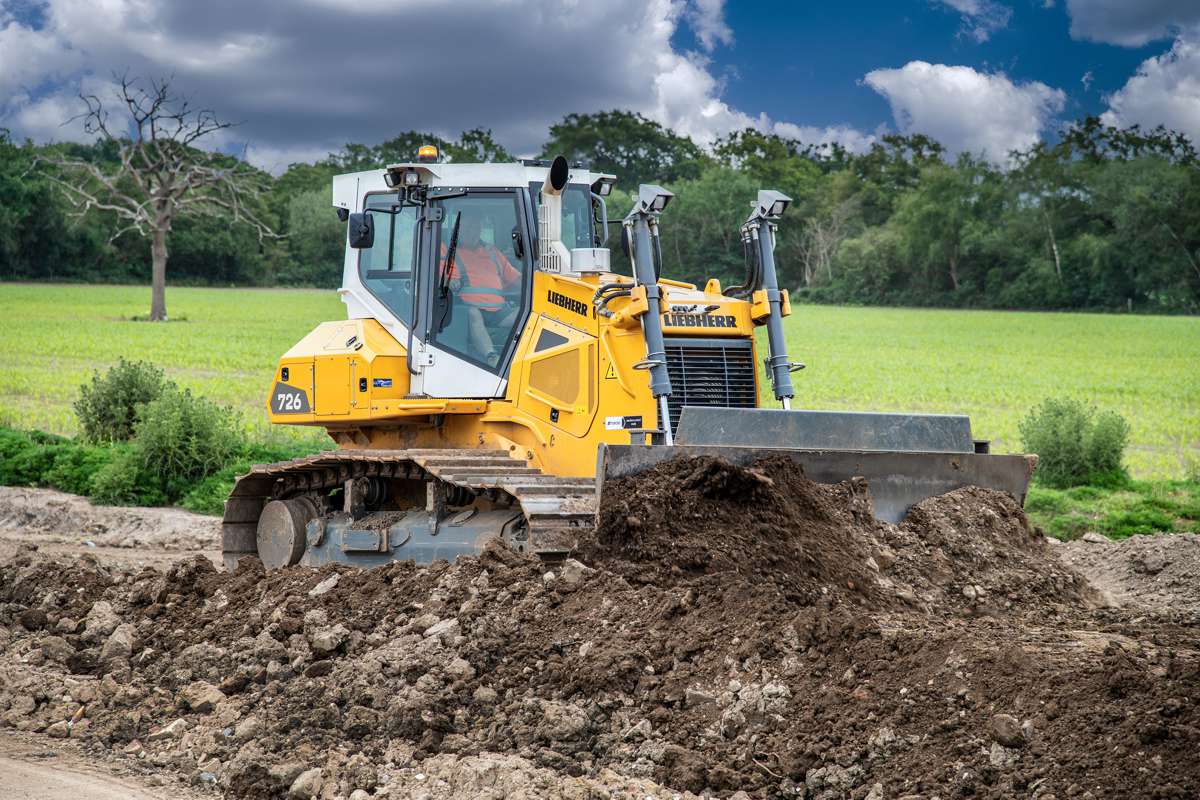
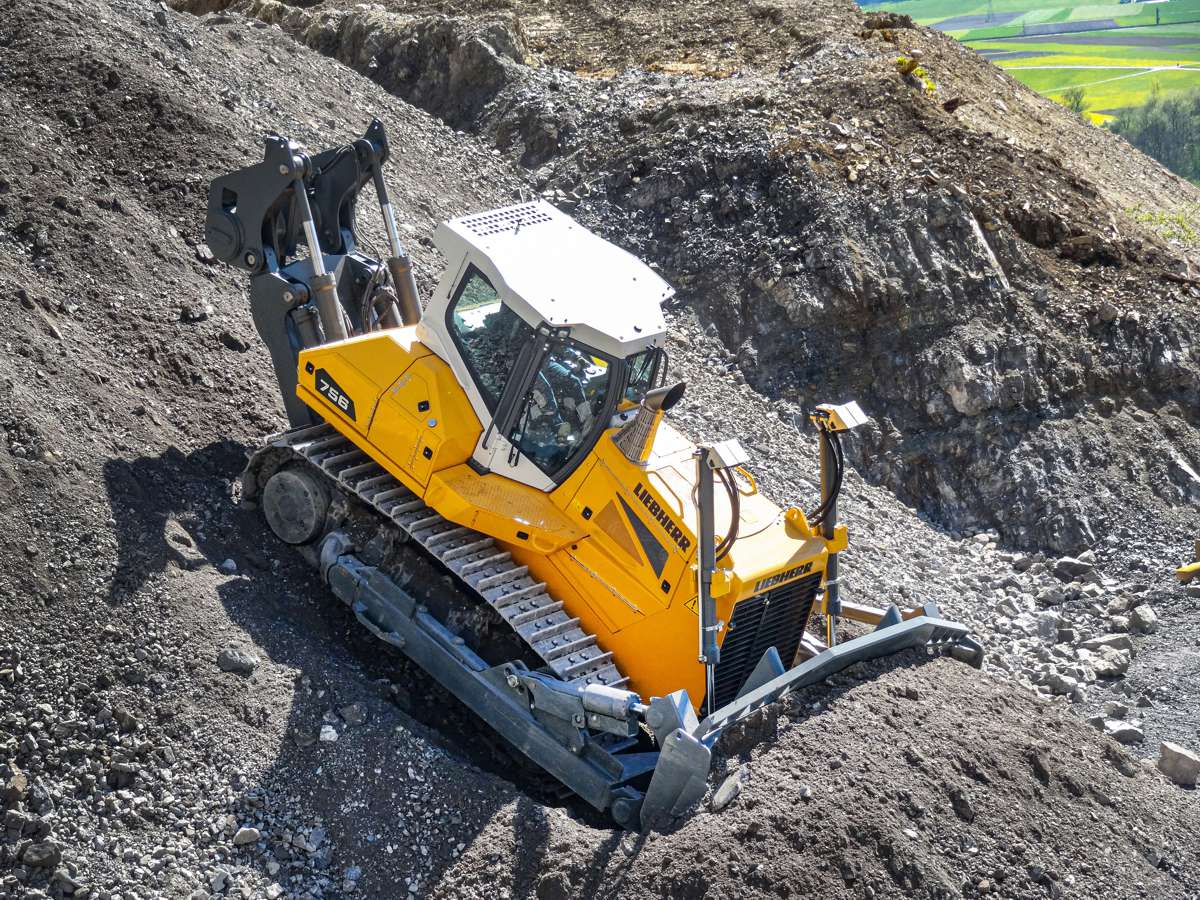
The PR 756 G8 Litronic demonstrates the other major direction in which conventional machinery is developing. At around 40 tonnes, it uses Liebherr’s electronically controlled hydrostatic travel drive and is intended for heavy earthmoving and material handling. During the steinexpo demonstrations it will also show Liebherr’s Operator Assistance System, including Free Grade, Definition Grade and 3D Grade.
These functions extend from assisted blade control through to grading against digital terrain models, taking some of the repetitive precision work away from the operator without removing the operator from the machine. The smaller PR 726 G8 Litronic will remain on the stand, where its increased blade capacity and standard assistance systems allow it to cover both fine grading and heavier pushing applications.
The boundary between the mechanical machine and its digital systems is becoming increasingly difficult to draw. Hydraulic response, positioning, blade control and operator input are now designed to work together, particularly in grading applications where centimetres and millimetres matter.
A Telescopic Handler That Has Already Been to Work
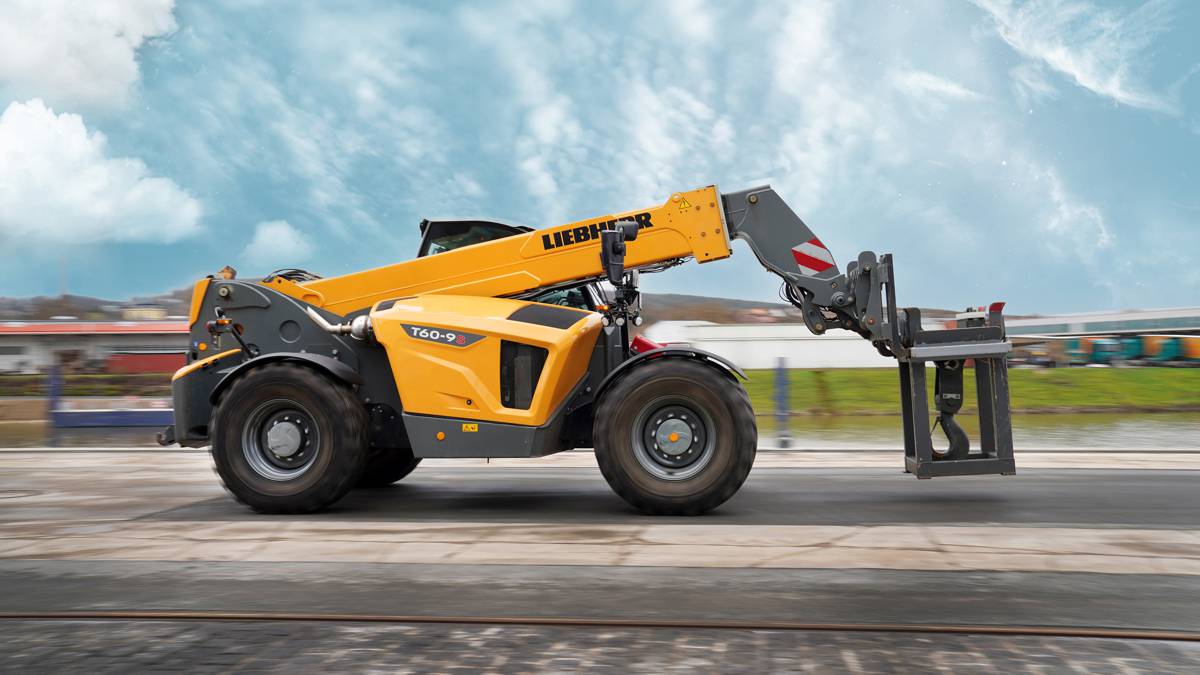
The T 60-9s telescopic handler will arrive on the Liebherr stand having already helped to build it. Liebherr is using the hydrostatically driven machine during the logistical set-up before the exhibition opens, moving materials around the site using its working hydraulics and material-handling capability. Once construction is finished, it will be moved onto the exhibition space.
There is something rather appropriate about exhibiting a construction machine that has already earned its place on the stand.
Several Powertrains, Different Jobs
The Technology Pavilion extends the machinery display into the technologies behind it. Liebherr plans to show conventional combustion engines operating with alternative fuels such as HVO alongside hydrogen and electric technologies, together with assistance systems, digital services and fleet-management tools.
Seen together, the equipment makes a strong case against expecting one powertrain to take over every category of heavy machinery. A compact machine working in a city, a 130-tonne excavator spending its life around one quarry bench, an articulated dump truck climbing haul roads and a wheel loader moving continuously between face and crusher are fundamentally different engineering problems.
Grid electricity works particularly well when movement is constrained. Batteries can store power where grid capacity is insufficient and provide energy to mobile equipment. Combustion engines continue to offer energy density and operating flexibility for machines that need to move continuously and work long shifts. Hydrogen potentially provides another route, although its viability remains closely tied to fuel availability and local infrastructure. The quarry fleet of the future may therefore look less uniform than the one it replaces.
Keeping Existing Machines Working
Liebherr will also use the Technology Pavilion to demonstrate its Reman programme, showing how components from two used engines can contribute to a remanufactured component returned to an as-new condition. It is far less conspicuous than a 130-tonne electric excavator, but arguably closer to the everyday economics of owning heavy equipment.
Quarry and mining machines routinely remain productive for many years, with major components rebuilt or replaced during their working lives. Remanufacturing preserves much of the material and manufacturing effort already embodied in those components while giving operators another route to extend machine life. It also makes manufacturer support increasingly relevant long after the original machine sale.
Putting the Technology into the Quarry
steinexpo returns to Nieder-Ofleiden for its twelfth edition, with the organisers reporting that the previous exhibition in 2023 attracted more than 61,500 visitors, over 90% of them trade visitors. More than 20 machines from ten manufacturers are scheduled to operate in the main demonstration area this year.
Liebherr’s stand should provide a particularly concentrated view of the choices now facing quarry and mining equipment manufacturers. There will be diesel machinery, hydrostatic transmission, digital machine control, grid-connected mining equipment, battery storage, alternative fuels and remanufacturing within roughly 1,000 m². They are not mutually exclusive technologies, and there is little evidence that they need to be.
Machine duty cycle, travel pattern, grid connection, charging opportunities and utilisation will determine which approach makes sense. A quarry may ultimately contain several of them at once, with grid-connected machines working alongside battery-supported equipment and combustion machinery where mobility and continuous utilisation remain paramount. steinexpo is a good place to see whether those ideas still look convincing once the machines are working in basalt rather than sitting under exhibition lights.
Key Industry Questions
- When is steinexpo 2026? steinexpo 2026 runs from 2 to 5 September 2026 at the basalt quarry in Nieder-Ofleiden, Germany.
- What is Liebherr exhibiting at steinexpo? The announced display includes the TA 230 articulated dump truck, two L 580 XPower wheel loaders, PR 726 and PR 756 Generation 8 crawler dozers, the R 9150 E electric mining excavator, T 60-9s telescopic handler and LPO 600 mobile energy storage system, alongside an undisclosed world premiere.
- Is the Liebherr R 9150 E battery powered? No. The R 9150 E uses a grid-connected electric drive, avoiding the need for a very large onboard traction battery but requiring suitable electrical infrastructure.
- How much energy can the LPO 600 store? The Liduro Power Port 600 has a gross energy capacity of 564 kWh and peak output of 540 kVA.
- Can the LPO 600 fast-charge construction equipment? Yes. Liebherr specifies two DC charging points capable of delivering up to 150 kW each, together with AC connections.
- When will the LPO 600 become available? Liebherr’s current product information states that the LPO 600 will become available in 2027.
- What is XPower on a Liebherr wheel loader? XPower is Liebherr’s drivetrain architecture combining hydrostatic and mechanical drive, continuously managing the two according to operating conditions.
- What assistance systems are available on Liebherr Generation 8 dozers? Liebherr’s Operator Assistance System includes Free Grade, Definition Grade and 3D Grade for assisted grading and work with digital terrain information.
- Is Liebherr moving entirely to electric construction equipment? No. Its steinexpo display includes combustion equipment, HVO-compatible engines, hydrogen technology, grid-connected electric machinery and battery energy storage.
Strategic Takeaways
- Grid connection is particularly well suited to very large machines working within relatively constrained areas.
- Electrification makes power supply and charging infrastructure part of the equipment decision.
- Highly mobile, high-utilisation quarry machinery remains considerably harder to move away from conventional fuels.
- Digital assistance is developing conventional machinery at the same time as alternative powertrains are emerging.
- Quarry fleets are likely to use several energy architectures according to the work each machine actually performs.