Forty Years of Cleaner Air Have Changed How Infrastructure Corrodes
At an industrial corrosion test site in Kopisty in the Czech Republic, researchers could scrape half a kilogram of rust from a single square metre of steel in 1987. Today, corrosion losses at industrial locations are typically between 100 and 150 grams of steel per square metre each year.
Four decades of falling atmospheric pollution have changed the environment in which bridges, buildings, roofs, railways and other exposed infrastructure are expected to survive. Long-running measurements by the International Co-operative Programme on Effects on Materials including Historic and Cultural Monuments, known as ICP Materials, show a substantial reduction in atmospheric corrosion since monitoring began in the 1980s.
The programme was established in 1985 under the UNECE Convention on Long-range Transboundary Air Pollution to quantify the effects of pollutants on materials and track how those effects change over time. Sulphur dioxide, once one of the dominant causes of atmospheric material degradation in industrial Europe, has fallen particularly sharply. Earlier ICP Materials work found corrosion reductions of around 30 to 70% for many materials between 1987 and 1995 as SO₂ concentrations declined, while longer-term assessments subsequently found corrosion at roughly half its original 1987 level.
With the overwhelming influence of sulphur pollution receding, researchers are now trying to understand a more complicated mixture of particulate matter, nitrogen oxides, ozone, volatile hydrocarbons, moisture and changing climatic conditions. For infrastructure intended to remain in service for decades, those relationships increasingly influence decisions about alloys, coatings, maintenance and replacement.
Briefing
- Long-term ICP Materials measurements show atmospheric corrosion has fallen substantially since monitoring began in the 1980s.
- At Kopisty, researchers could scrape around 500 g/m² of rust from exposed steel in 1987; modern industrial locations record markedly lower corrosion rates.
- SO₂ concentrations that once dominated atmospheric corrosion have fallen dramatically across Europe.
- Particulate matter, ozone, nitrogen oxides and changing climatic conditions are becoming more important research targets.
- Better corrosion prediction could extend component life and reduce repeated replacement of roofs, bridges and other exposed infrastructure.
Four Decades of Exposure
Atmospheric corrosion is unusually well suited to long-term study because the infrastructure affected by it is itself long-lived. A bridge, metal roof or historic building may experience decades of changing pollution, temperature, precipitation and maintenance conditions before replacement becomes necessary.
ICP Materials provides one of the longer datasets available for understanding those changes. Its monitoring encompasses metals, stone, coatings, glass and polymers, while measurements include sulphur dioxide, nitrogen dioxide and ozone as well as nitric acid, particulate deposition and rainwater chemistry. UNECE describes the programme’s purpose as quantifying material damage and developing dose-response relationships that can be used to estimate acceptable pollution levels and the economic cost of deterioration.
Switzerland contributes data through Empa, the Swiss Federal Laboratories for Materials Science and Technology, working with the Federal Office for the Environment. Standardised metal specimens are exposed under natural atmospheric conditions and their deterioration measured over time.
One of the most useful Swiss locations is Chaumont, above Neuchâtel. Its relatively clean environment provides something close to a natural corrosion baseline, where oxidation is driven principally by the interaction between metal, oxygen and water rather than heavy industrial pollution. The contrast with historically industrial locations is considerable. At Kopisty, researchers recorded approximately 500 grams of rust per square metre of exposed steel in 1987. Current industrial locations typically record steel losses of between 100 and 150 grams per square metre each year, while at Chaumont the figure is around 30 grams.
Zinc tells a similar story. Around 15 grams per square metre were lost annually at industrial sites four decades ago, compared with approximately 7 grams today across the monitored locations. The broader ICP Materials record supports the same direction of travel, although research covering 1987 to 2014 found that the rate of improvement slowed markedly after the late 1990s. Carbon steel and copper continued to show reductions after 1997, particularly in urban areas, while trends for several other materials became flatter.
The Retreat of Sulphur Dioxide
Sulphur dioxide was a defining pollutant of industrialised Europe during the twentieth century, produced in large quantities by the combustion of sulphur-containing fuels. Combined with atmospheric moisture, sulphur compounds contributed to acid deposition and accelerated deterioration of metals, stone and other exposed materials.
Historical ICP Materials analysis found average SO₂ concentrations across its original test network fell by almost 70% between the 1987/88 and 1997/98 exposure periods. Over roughly the same interval, corrosion losses for most materials fell by 30 to 50%, with zinc showing an even larger reduction.
The change is particularly stark in the Ruhr region, where sulphur dioxide concentrations once reached 460 micrograms per cubic metre during severe pollution episodes. Modern industrial-area concentrations cited by Empa are below 10 µg/m³, while Chaumont has remained between zero and 1 µg/m³ for the past 25 years. Cleaner fuels, industrial emission controls and the decline of highly polluting heating and combustion sources have substantially altered the atmospheric conditions against which contemporary structures are designed.
Corrosion, however, is affected by temperature, humidity, surface condition, deposition, material composition and interactions between pollutants as well as sulphur dioxide. Removing the dominant historical pollutant has made those relationships easier to see.
“Corrosion is a complex, multifactorial process that is not yet fully understood,” says Empa corrosion researcher Ulrik Hans. “We now need to identify other pollutants that will become more relevant in future.”
A More Complicated Atmosphere
Nitrogen oxides, particulate matter and ozone are among the substances now receiving greater attention. UNECE has previously noted that, as sulphur dioxide emissions declined, nitrogen oxides and particulate matter became relatively more important contributors to corrosion damage.
Researchers are also examining how high ozone concentrations affect modern polymers and how particulate matter can alter surface chemistry and moisture retention. Volatile hydrocarbons provide another variable, while atmospheric corrosion’s dependence on water means humidity, precipitation, temperature and the amount of time a surface remains wet can all influence deterioration.
Climate change therefore complicates predictions even where conventional air pollutants continue to decline. The challenge is no longer dominated by one aggressive pollutant, but by the interaction between materials and a changing atmospheric environment.
Designing for Longer Service Life
A component that survives twice as long postpones not only a maintenance intervention but also the extraction, manufacturing, transport and installation required for its replacement. Hans points to titanium-zinc roofing as an example.
“Titanium-zinc is popular in construction because it is fully recyclable. For building preservation, it makes a significant difference whether the metal roof and gutters need to be replaced after 40 years or only after 80,” he says.
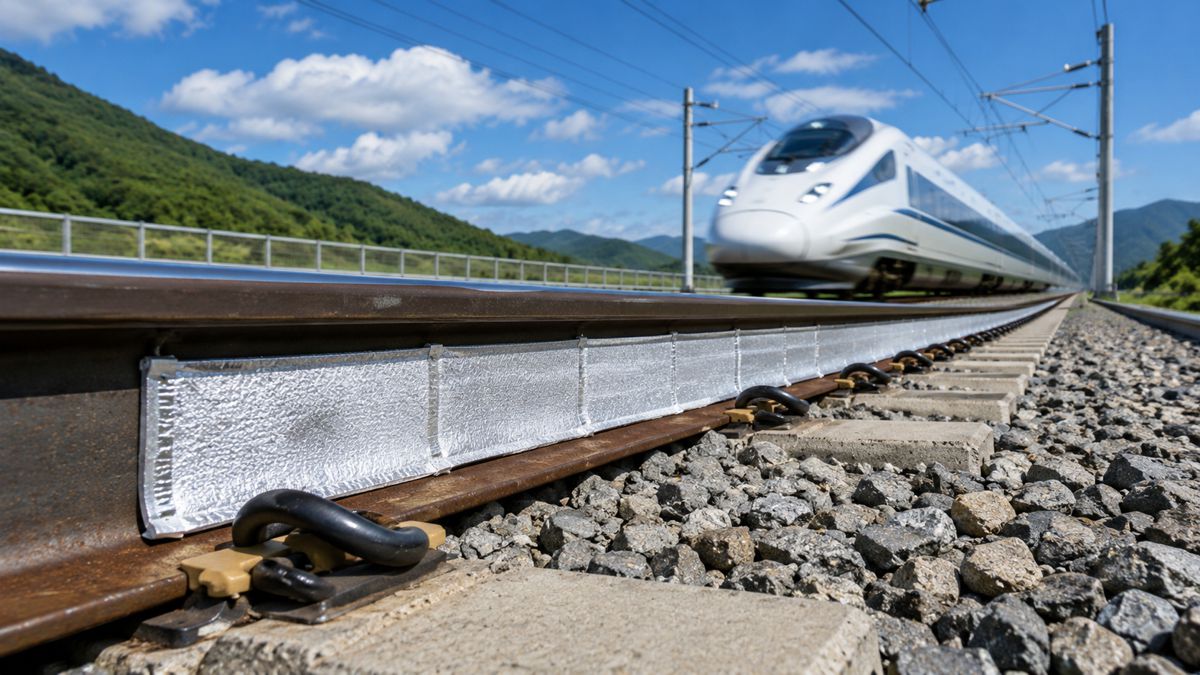
Applied across building envelopes, drainage systems, bridge components, rail infrastructure and the vast quantity of exposed metal incorporated into modern cities, the difference becomes substantial. Material selection increasingly depends on matching the surface, alloy and protection system to the actual exposure environment rather than relying simply on additional material or heavier protective coatings.
Empa is extending this work into the development stage of new materials. Its Joining Technologies and Corrosion laboratory uses advanced surface-analysis techniques including Kelvin probe force microscopy and hard X-ray photoelectron spectroscopy, or HAXPES. Higher-energy X-rays allow researchers to investigate chemical conditions beneath the immediate surface, providing information about passive layers and other characteristics that influence corrosion behaviour.
These techniques are particularly useful as manufacturing methods change. Additive manufacturing, laser structuring, advanced coatings and extremely thin passive layers can produce surfaces and microstructures that behave differently from conventional bulk metals, making corrosion assessment relevant while a material or component is still being developed.
“With the resulting meaningful corrosion predictions, durable structures can continue to be efficiently built and maintained in the future,” says Hans.
Corrosion in Historic Structures
The same science has a different application when the structure cannot simply be redesigned. Since 2010, ICP Materials has monitored environmental effects at 26 UNESCO World Heritage locations, including the Old Town of Bern and the Abbey District of St Gallen, combining information on material composition, atmospheric pollution, metal corrosion and stone weathering to distinguish manageable ageing from deterioration requiring intervention.
At St Gallen, corrosion modelling has identified risks to the copper roofs of the cathedral spires, while a more immediate problem lies beneath another part of the building. Nails within the approximately 100-metre-long roof structure have corroded, contributing to the need for a major restoration of the tiled roof at an estimated cost of just under CHF 8 million. Historic buildings make the consequences particularly visible because replacement is constrained by conservation requirements, but the underlying engineering problem is familiar: relatively small components can determine the condition and maintenance needs of much larger structures.
From Pollution Control to Asset Management
The corrosion record since 1987 provides a tangible measure of what cleaner air has delivered. Reductions in atmospheric pollution have altered the rate at which physical infrastructure deteriorates, although the dramatic early improvements have slowed as sulphur pollution has fallen towards comparatively low levels.
Further gains depend increasingly on understanding specific combinations of material, atmosphere, climate and surface chemistry. Better predictions can inform material specifications, inspection intervals and maintenance decisions before visible deterioration becomes structurally or economically significant.
Forty years of field measurements show how substantially the durability environment can change during the life of a structure. The next challenge is knowing precisely what that environment will do to the materials being installed today.
Key Industry Questions
- How much has atmospheric corrosion fallen since the 1980s? ICP Materials research has found substantial reductions since measurements began in 1987. Earlier UNECE assessments put corrosion at around half the original levels, although results vary by material and location.
- Why did corrosion rates fall? A major factor was the sharp reduction in atmospheric sulphur dioxide following cleaner fuels, industrial emission controls and changes in combustion practices.
- Which pollutants are now receiving greater attention? Researchers are studying particulate matter, nitrogen oxides, ozone and volatile hydrocarbons alongside environmental variables such as moisture and climate.
- Can corrosion behaviour be predicted before a structure is built? Exposure data, laboratory testing, surface analysis and dose-response models can help engineers assess material performance under anticipated environmental conditions, although long-term prediction still carries uncertainty.
- How can better corrosion prediction reduce infrastructure costs? It can support more appropriate material and coating selection, improve inspection and maintenance planning and potentially extend replacement intervals.
- Are modern manufacturing techniques creating different corrosion challenges? They can create different surfaces and microstructures. Components produced through additive manufacturing, laser processing and advanced coating techniques therefore need to be assessed under their actual material and exposure conditions.
- Why is long-term corrosion monitoring still necessary when air pollution has fallen? The atmospheric environment continues to change. Lower sulphur dioxide concentrations have reduced one major source of corrosion, but other pollutants, climate and material-specific effects remain relevant to long-lived infrastructure.
Strategic Takeaways
- Falling sulphur pollution has produced measurable improvements in the durability environment experienced by exposed European infrastructure.
- Corrosion modelling is becoming more complex as particulate matter, ozone, nitrogen compounds, climate and surface conditions account for a greater share of remaining deterioration.
- Longer component life can reduce maintenance expenditure as well as the material and energy consumed through repeated replacement.
- Corrosion protection is increasingly a whole-life specification question, including how often a component will need to be inspected, maintained or replaced.
- Long-term exposure datasets can support asset-management decisions by connecting environmental conditions with specification, inspection and maintenance planning.