Infrastructure as an Economic Catalyst
New roads through developing parts of Vietnam have often produced an effect that extends well beyond the carriageway. Once access improves, houses begin appearing beside the route. Shops, workshops and other small businesses follow. Development stretches along the road, sometimes joining previously distinct settlements into long, linear communities whose economic geography has been shaped by the transport connection running through them.
The road carries traffic, but its larger contribution is access. Land becomes easier to develop, businesses can reach customers further away, agricultural producers gain access to larger markets and materials can be moved more reliably. Where economic demand already exists but poor connectivity has constrained it, infrastructure can release activity that previously had nowhere practical to go.
That condition matters. Roads do not manufacture prosperity merely by being built. Infrastructure history contains projects whose costs exceeded expectations, whose demand disappointed and whose promised development never appeared. Transport connections can also redistribute economic activity rather than create it, strengthening major centres while leaving bypassed towns or weaker regions with less.
The more useful proposition is narrower than the familiar claim that infrastructure creates growth. Well-chosen infrastructure can unlock investability where productive potential exists but access, energy, logistics or market connectivity prevents it from being realised.
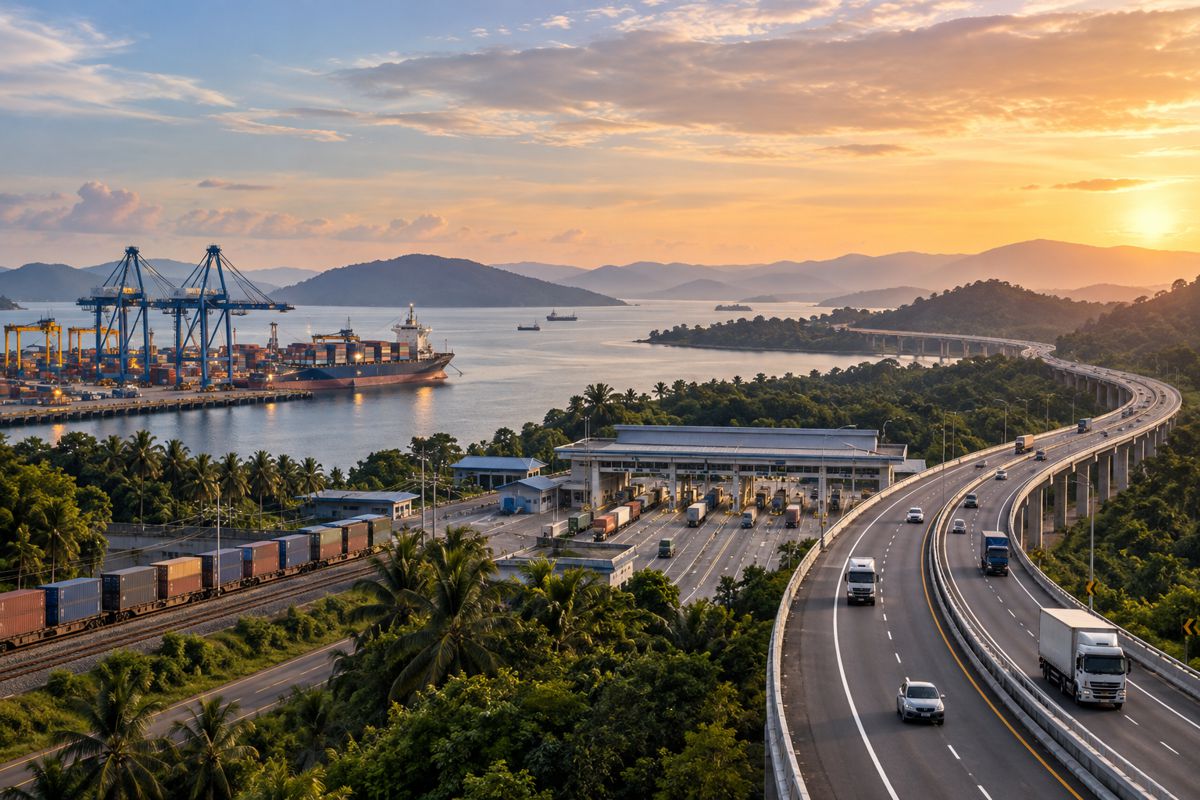
At sufficient scale, that process turns transport links into economic corridors. Ports become gateways to inland production, industrial centres gain access to international markets and isolated regions become commercially connected to neighbouring cities or countries. The physical infrastructure may be built once, but the economic corridor develops through everything that follows.
Briefing
- Infrastructure can improve the viability of private investment where genuine economic demand is constrained by poor connectivity, energy, logistics or market access.
- Transport corridors can create new activity but can also redistribute businesses, employment and investment towards already stronger economic centres.
- Multilateral development banks and development finance institutions mobilised US$278.5 billion of private finance in 2024, including US$108.7 billion for middle and low-income countries.
- Land-value capture offers governments and infrastructure owners mechanisms for recovering part of the economic uplift generated around transport investment.
- Blended finance can attract capital into difficult markets, but its value depends partly on additionality: whether public intervention genuinely mobilises investment that would not otherwise occur.
The Economics of Connectivity
Transport investment has traditionally been assessed through measurable improvements in movement. Journey times fall, freight becomes more reliable, vehicle operating costs change, safety can improve and congestion may be reduced. Where revenues are involved, tolls, fares or concession payments provide another set of numbers against which an asset can be judged.
Those measures capture only part of the economic activity that can follow, and establishing causation is difficult because infrastructure and economic growth influence each other. A successful region may grow because transport improved, but transport may also have been improved because businesses, population and freight demand were already growing. Separating those effects is considerably harder than demonstrating that a new road reduced a journey by twenty minutes.
The relationship becomes clearer where an identifiable constraint is removed. A farmer separated from a regional market by an unreliable road has a limited commercial radius. Perishable produce carries additional risk, transport costs consume margins and production beyond local demand may have little value. Improve the connection and a larger market becomes reachable, allowing greater production to support storage, processing, refrigeration and distribution.
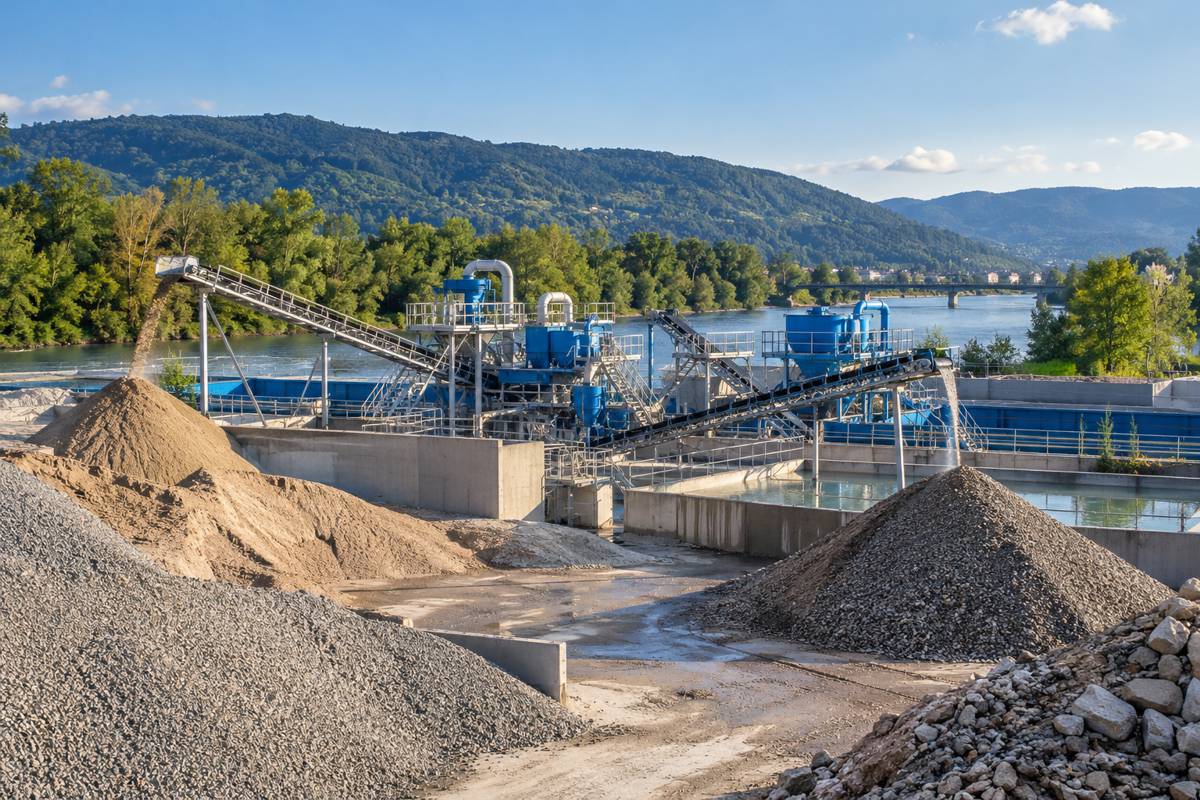
Manufacturing follows similar economics. A factory needs dependable access to materials and customers. A quarry may contain abundant reserves yet remain commercially constrained by the cost of moving heavy material. Infrastructure changes those calculations by reducing economic distance.
The strongest case for infrastructure-led development is therefore one in which the road, railway or power connection is not expected to conjure an economy from nothing. It removes a constraint from economic activity that already has a credible basis.
The Risk of Building the Wrong Thing
Infrastructure appraisal becomes much less comfortable when underlying demand is weak, exaggerated or misunderstood.
Bent Flyvbjerg’s work on major infrastructure projects has documented persistent problems with inaccurate estimates of costs, benefits and risks, including cost overruns and benefit shortfalls. The problem is especially serious for long-lived assets because a poor investment decision does not disappear when construction ends. Debt service, maintenance and operating liabilities can remain long after the original forecasts have been forgotten.
That puts a limit around the idea that infrastructure creates investability. A motorway through a productive region constrained by poor access can change the economics of businesses along its route. An expensive connection built in anticipation of industries, populations or trade flows that never emerge produces a very different outcome.
Infrastructure planning inevitably involves forecasts about future behaviour, and some successful investments may create activity that conventional demand models struggle to anticipate. The discipline lies in separating latent opportunity from speculative hope.
Traffic forecasts alone cannot do that. Land use, existing businesses, agricultural production, industrial capacity, labour markets, energy availability, demographics and connections to other networks all help establish whether improved access has something productive to unlock.
The engineering asset may be identical in both cases. The surrounding economy is not.
Corridors Create Winners and Losers
Even successful transport investment does not distribute its benefits evenly.
A new corridor can enlarge the market available to a regional business while exposing that business to stronger competitors. A bypass can improve freight movement and reduce congestion while removing passing trade from shops, filling stations and restaurants along the old route.
Economic geography has long recognised the effects of agglomeration. Research published through the OECD’s International Transport Forum has described the corresponding concept of an “agglomeration shadow”, where a dominant city can limit development opportunities in smaller neighbouring centres as economic activity concentrates at the stronger node.
The same research also discusses positive “borrowed size” effects, through which smaller centres can gain access to services, markets and functions that they could not sustain independently. Connectivity can pull regional economies in either direction, depending on the structure of the places being connected.
A corridor can create economic activity, but it can also rearrange it. Moving freight around a congested town may be the correct transport decision even if some roadside businesses lose trade. Aggregate economic growth consequently tells only part of the story. Where activity appears, where it disappears and who captures the increase in value are separate questions.
When Infrastructure Creates Investability
Where productive potential genuinely exists, improved infrastructure can materially alter the commercial case for subsequent private investment.
A manufacturing plant with poor access to a port may struggle to compete. Improve the corridor and its transport costs change. Agricultural processing becomes more attractive when producers can reliably deliver raw materials, while warehousing and logistics investment become easier to justify as freight volumes grow.
Infrastructure can, under those conditions, create investability.
Iraq’s Transport Economic Corridors programme provides a current example. The World Bank approved US$900 million for the programme in June 2026, concentrating initial investment on strategic north-south and east-west routes intended to improve connections between major population centres, industrial and agricultural areas and neighbouring markets.
Freight efficiency, trade, agriculture and regional connectivity form part of the economic case, with future phases intended to support greater private capital participation. Public infrastructure can reduce a constraint, but businesses still have to decide whether the resulting opportunity is strong enough to justify investment. Their decisions provide a far more demanding test of the economic proposition than completion of the civil works.
Better roads can attract logistics investment, which can support manufacturing. Manufacturing creates demand for power, water, warehousing and services, while employment creates housing and retail demand. When those later investments appear, the infrastructure has begun operating as productive capital rather than simply as a transport asset.
Enterprise Along the Corridor
Private businesses convert connectivity into economic activity.
IFC’s recent account of Sierra Leone entrepreneur Mohamed Salim Bangura traces the development of a childhood connection with baking into a growing food manufacturing business. The individual story is modest beside a billion-dollar road or power programme, but the economic relationships are similar. A successful manufacturer requires ingredients, machinery, packaging, employees, energy, transport, distributors and customers. Capital invested in one productive business can travel considerably further through an economy.
A local producer serving one town operates within a particular commercial boundary. Connect that producer reliably with several cities, a port or an international border and the addressable market changes. Greater scale may justify machinery, storage, distribution and additional employment. Suppliers gain customers and logistics companies gain freight.
Development around transport corridors can therefore become as important as the corridor itself. Roadside activity may begin with houses, shops, repair workshops and small trading businesses. Larger routes can support distribution centres, industrial estates, processing facilities, logistics parks and manufacturing plants.
Economic corridors are, in that sense, built twice. Civil engineering creates the physical connection. Enterprise builds the productive economy around it.
Governments can procure a bridge or railway against drawings and specifications. They cannot procure thousands of successful businesses into existence simply because transport capacity is available.
The Value Created Outside the Project
Much of the economic value produced by successful infrastructure appears outside the organisation that paid for it.
A road concessionaire does not own every business that opens beside the highway. A railway operator does not automatically participate in the factories established around its stations. A transport authority may spend billions improving accessibility while much of the resulting increase in value appears in privately owned land and property.
The financial return to the infrastructure owner and the economic return to the surrounding area can therefore diverge considerably.
Governments recover some of the difference indirectly through taxes and a broader fiscal base. Land-value capture goes further by attempting to recover part of the increase in land or development value attributable to public infrastructure.
Mechanisms include betterment levies, development charges, tax-increment financing, sales or leases of development rights, air rights and joint development around transport assets. The World Bank has examined these approaches particularly in transit-oriented development, where improved accessibility can create substantial increases in surrounding property values.
The principle is straightforward. If a publicly financed station causes nearby land to become substantially more valuable, capturing part of that uplift can help pay for the infrastructure responsible for creating it.
Implementation requires functioning land registries, credible valuations, suitable legislation and enough institutional capacity to administer the mechanism. Charges also have to leave sufficient value for development to remain commercially attractive.
Successful infrastructure can therefore generate part of the value needed to finance the next project, provided mechanisms exist to identify and capture a proportion of the uplift. The economic return created around the asset does not have to remain entirely outside the financing model.
Private Capital at Greater Scale
The scale of future infrastructure requirements makes private capital difficult to ignore. Public budgets face competing demands, while transport, energy, water and digital networks require investment over periods far longer than most government spending cycles.
Multilateral development banks and development finance institutions mobilised US$278.5 billion of private finance across all income levels in 2024, according to their latest joint reporting. US$108.7 billion went to middle and low-income economies, up 24% from the previous year, while infrastructure mobilisation in those economies increased by 10%.
Large pools of institutional capital exist, but many productive opportunities sit in markets where investors remain cautious about political risk, currency exposure, liquidity or long-term commitment. Development institutions have increasingly responded by altering how those risks are allocated.
Guarantees, junior equity, concessional capital and securitisation can make investments accessible to institutions whose mandates would otherwise exclude them. IFC’s Emerging Markets Securitization Program is one example. Its second collateralised loan obligation, completed in June 2026, packaged 62 IFC-originated loans into a US$509 million transaction with different tranches for different investor risk profiles.
The structure allows IFC to originate emerging-market loans and distribute part of that exposure to institutional investors, freeing capital for further investment. Together with its inaugural transaction in 2025, the programme has issued more than US$1 billion of securities.
The financial engineering is sophisticated, but the underlying problem is familiar. Productive opportunities exist in places where private investors are unwilling or unable to carry the associated risks within conventional mandates.
The Additionality Test
De-risking private investment introduces a harder question. Public or concessional capital is scarce, and improving the risk-return profile of a private investment is only defensible if the intervention produces something that the market would not have delivered on comparable terms.
This is the additionality problem.
OECD guidance makes additionality central to blended finance and distinguishes between financial, value and development additionality. It also acknowledges that establishing additionality, particularly financial additionality, remains difficult and that no common methodology is used across all blended-finance actors.
The problem is partly counterfactual. Once a project has been financed with a guarantee, concessional tranche or first-loss position, demonstrating conclusively that commercial capital would have stayed away without that intervention can be difficult.
De-risking is most persuasive when it changes the investment decision. Public money that allows a viable project to proceed in a market commercial lenders cannot yet support is doing something identifiable. Merely improving the economics of an investment that would have happened anyway is harder to defend.
OECD’s 2025 blended-finance guidance calls for additionality to be assessed, documented and disclosed, alongside safeguards against market distortion and the crowding out of commercial capital. It also treats commercial sustainability as an objective rather than assuming permanent dependence on concessional finance.
For development institutions, the stronger outcome is not simply mobilising more private money. It is establishing markets in which the same public protection is eventually no longer required.
Patient Capital and Long-Lived Assets
Infrastructure operates on a different clock from much of modern finance.
Roads, railways, ports and electricity networks remain productive for decades, while their wider economic effects can take years to accumulate as businesses respond, land uses change and supply chains develop. The economy around an asset may still be evolving long after construction expenditure has disappeared from the accounts.
Private investors cannot ignore returns while waiting for that development. Pension funds have liabilities, banks have capital requirements and investment managers are accountable for performance. Infrastructure instead creates value on several timelines, from construction and operation to later land development and enterprise formation. Different forms of capital can participate at different stages.
Research published by IFC in November 2025 examined six decades of its infrastructure equity investments in emerging and developing economies and found higher average returns than the publicly listed equity portfolios used for comparison. The authors also identified limited accessible historical performance information as one reason institutional investors may remain cautious.
The finding does not remove the political, currency, construction or regulatory risks of individual projects. It does show that long-term development impact and competitive financial returns can coexist.
Productive Capital
The quantity of private money entering an economy says relatively little about its lasting effect. The more useful test is what that capital leaves behind.
Productive capital expands capacity, improves logistics, builds useful infrastructure and supports companies capable of developing supply chains and employment. Its value lies in making further economic activity possible rather than merely changing ownership of an existing asset.
Institutions determine how much of that potential survives contact with reality. Contracts need to remain credible, procurement needs to withstand scrutiny and regulation needs enough stability for investors to price risk. Project preparation has to identify the economic constraint being addressed and establish whether credible demand exists behind the investment.
The same standard applies regardless of who provides the money. A publicly funded motorway with weak underlying demand does not become productive merely because the financing sits on a government balance sheet, any more than a privately financed project becomes productive because institutional investors were prepared to fund it.
Infrastructure should be judged by what it enables and what it costs to sustain.
When connectivity removes a genuine constraint, private activity can respond quickly. Land becomes useful, markets become reachable and investments that previously failed commercially can begin to work. Where that response does not come, debt service, maintenance and replacement obligations continue regardless.
Concrete is patient too. Infrastructure preserves good decisions and poor ones for a very long time.
The Economy Beyond the Asset
The economic life of infrastructure rarely respects sector boundaries.
A transport corridor needs electricity, telecommunications, maintenance and logistics. Manufacturing along the corridor needs water, energy, workers and finance. Agricultural producers may need feeder roads, storage and processing capacity before improved highway access delivers its full value.
Investment in one layer changes the economics of another.
This makes the development visible beside successful road corridors particularly instructive. Houses and shops appearing beside a new route are not proof that every road creates growth. They show what can happen when infrastructure releases demand that was already waiting for better access.
At regional scale, the same mechanism can connect agricultural production with processing, factories with ports and inland cities with international markets. At national scale, networks of corridors influence where businesses invest, where people live and which regions can participate competitively in the economy.
The party building the infrastructure rarely captures all of the value created around it, while planners have to estimate that value before committing capital. Governments must also decide how costs, risks and gains should be distributed between taxpayers, users, landowners and private investors. These are fundamental parts of the investment decision rather than complications to be dealt with afterwards.
Well-chosen infrastructure can unlock investability where genuine economic potential has been constrained by poor connectivity. Enterprise can build on the access created, while value-capture mechanisms can return part of the resulting uplift to the infrastructure system. Private capital can add scale where projects offer investable risks and returns, with public and development finance concentrated where their participation changes what the market can deliver.
The road, railway or port remains the physical beginning of that process. Its economic success depends on what follows, because infrastructure can be an economic catalyst only when the underlying ingredients are there.

Key Industry Questions
- Does infrastructure investment automatically create economic growth? No. Infrastructure can support growth where it removes genuine constraints on productive activity, but demand may be overestimated and economic benefits can be redistributed rather than newly created. Project selection and the surrounding economic conditions remain critical.
- What does it mean for infrastructure to create investability? Infrastructure can make a previously marginal private investment commercially viable by improving access to markets, lowering logistics costs or providing reliable energy and other essential services. The claim is strongest where identifiable economic activity already exists but is constrained.
- Can transport corridors harm local economies? They can redistribute activity as well as create it. Bypasses may reduce passing trade in towns, while improved links to stronger cities can allow large firms to serve peripheral markets more easily and draw activity towards established economic centres.
- What is land-value capture? Land-value capture uses mechanisms such as betterment levies, development charges, development rights and tax-increment financing to recover part of the increase in land or property value generated by public infrastructure investment.
- Why is land-value capture relevant to infrastructure finance? Much of the economic value created by infrastructure appears outside the infrastructure owner’s balance sheet. Capturing part of surrounding land-value uplift can provide an additional revenue source for construction, maintenance or further investment.
- What is additionality in blended finance? Additionality asks whether development or public finance enables investment or development outcomes that would not otherwise occur on comparable terms. It is intended to prevent scarce public resources from subsidising investments that commercial markets were already willing to finance.
- Can blended finance expose the public sector to excessive risk? It can if public guarantees, junior capital or concessional finance absorb risks without producing genuinely additional investment. Additionality testing, proportional concessionality, transparency and credible routes towards commercial finance help reduce this risk.
- Why does infrastructure require long-term capital? Infrastructure assets commonly operate for decades, while the wider development they enable may emerge gradually. Financing structures therefore have to accommodate construction, operating and economic-development timelines that can differ substantially.
- How can governments identify infrastructure capable of unlocking investment? Traffic demand alone is insufficient. Existing production, businesses, labour markets, land use, logistics constraints, energy availability and connections to wider transport networks can help establish whether genuine productive potential is being constrained.
Strategic Takeaways
- Infrastructure is most likely to create investability when it removes a demonstrable constraint from economic activity with underlying demand.
- Transport corridors can redistribute activity towards stronger economic centres as well as create new development.
- Land-value capture offers a route for narrowing the gap between an infrastructure asset’s financial return and the wider economic value it creates.
- Public de-risking is strongest when it mobilises investment that would not otherwise occur and helps establish a market capable of operating commercially later.
- Long asset lives magnify the consequences of project selection, making the quality of the underlying economic case as important as the ability to finance construction.