Robotaxis Are Becoming an Industrial Ecosystem
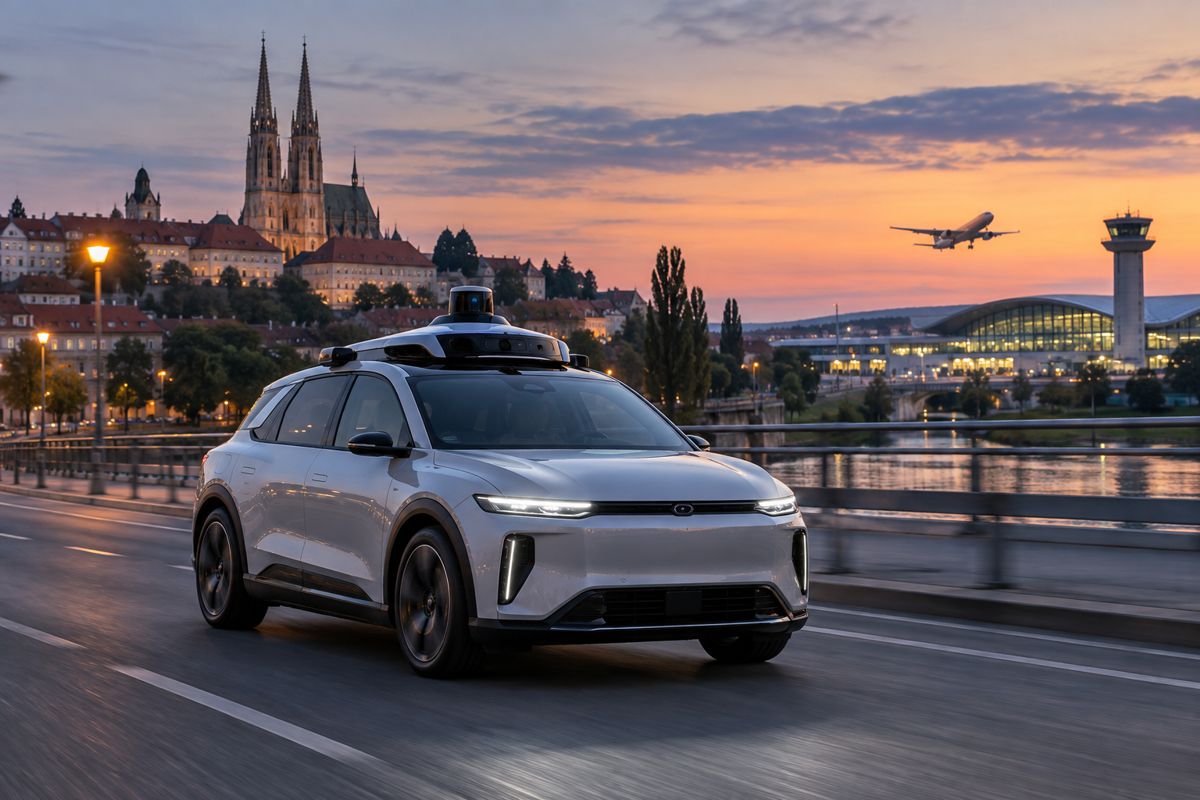
A driverless car carrying passengers between central Zagreb and the city’s airport might appear to be another autonomous vehicle trial. Look beneath the bodywork, however, and the arrangement is considerably more interesting.
The vehicles are supplied with autonomous driving technology by Pony.ai. Croatian company Verne operates the service, while Uber forms part of the wider passenger and deployment model. NVIDIA computing sits inside the autonomous driving system, and regulators define where and under what conditions the vehicles can operate. None of those organisations needs to own the entire system.
That division of labour is becoming one of the defining features of the emerging robotaxi industry. Pony.ai and Verne began fully driverless passenger test rides on public roads in Zagreb in September 2026, initially covering a 22-kilometre route connecting Verne’s headquarters and a major business district with Franjo Tuđman Airport. The companies intend to expand the operating area progressively across Zagreb.
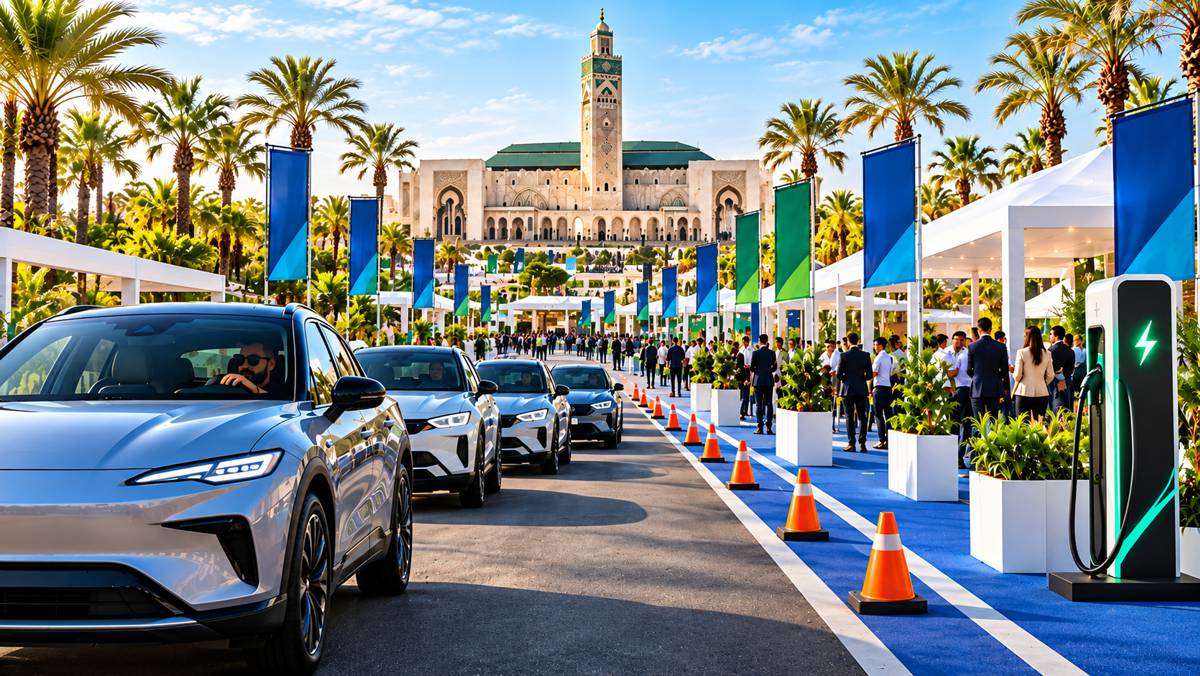
The development comes as NVIDIA assembles an increasingly broad ecosystem around its DRIVE architecture, spanning autonomous driving developers, vehicle manufacturers, mobility platforms and fleet operators. The challenge is no longer simply whether artificial intelligence can drive a car. The technology also has to be packaged, validated, manufactured, operated and deployed at commercial scale.
Briefing
- Pony.ai and Verne have begun fully driverless passenger test rides on a 22-kilometre public-road route in Zagreb.
- Pony.ai supplies the autonomous driving technology while Verne manages local service operations.
- Uber is part of the partners’ wider mobility and deployment model.
- Pony.ai’s seventh-generation robotaxi uses an L4 domain controller built on NVIDIA DRIVE AGX and the safety-certified DriveOS operating system.
- NVIDIA is positioning its DRIVE ecosystem across AI training, simulation, validation and in-vehicle computing rather than attempting to operate robotaxi services itself.
From Autonomous Car to Autonomous System
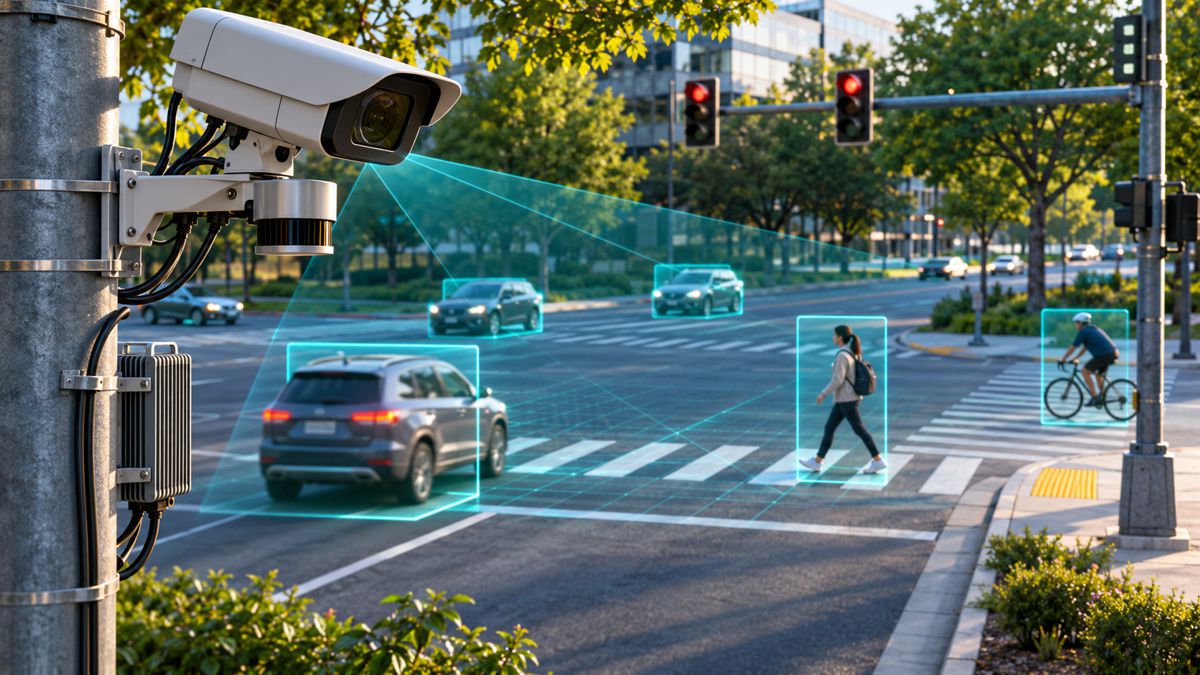
The architecture of a robotaxi business extends considerably beyond the computer installed in the vehicle. Autonomous driving models have to be trained on enormous quantities of data, while new software needs to be tested against unusual road situations before it reaches a vehicle. Simulation environments have to reproduce scenarios that are difficult, dangerous or impractical to create repeatedly on public roads. The vehicle then needs sufficient onboard computing power to process sensor information and make driving decisions in real time.
NVIDIA describes this as a three-computer architecture: one environment for model training, another for simulation and validation, and the in-vehicle computer responsible for executing the autonomous driving system. Different developers can use parts of that architecture while retaining their own perception, planning, reasoning and control technology.
Sharing computing infrastructure therefore does not mean sharing the same autonomous driving system. Competitive intellectual property can remain in the driving software even where much of the underlying computational infrastructure becomes standardised.
It is a familiar industrial pattern. Construction machinery manufacturers buy engines, hydraulic components, transmissions, sensors and control hardware from specialist suppliers while retaining responsibility for the performance and character of the finished machine. Autonomous vehicles may be moving towards a comparable model, albeit with software and computing taking the place of many traditional mechanical subsystems.
Zagreb Moves Beyond the Safety Driver
The Zagreb programme has already progressed through several operational stages. Pony.ai, Verne and Uber announced their partnership earlier in 2026, with testing and initial operations using an autonomous vehicle operator onboard before the latest phase removed the onboard operator entirely.
According to Pony.ai and Verne, the fleet has travelled more than 200,000 kilometres, completed several thousand customer journeys and received an average passenger rating of 4.7 out of five.
Pony.ai’s seventh-generation robotaxi uses a company-developed Level 4 domain controller based on NVIDIA DRIVE AGX and running DriveOS. The vehicle combines 360-degree sensing with redundant systems intended to maintain safe operation when individual components fail.
Pony.ai brings considerably more autonomous mileage from China to the project. The company says its systems have accumulated more than 100 million kilometres of autonomous operation worldwide, including over 40 million kilometres in fully driverless mode, while fully driverless commercial services are operating in four major Chinese cities.
Zagreb is therefore an attempt to transfer an autonomous driving system developed and operated at scale in China into a different road network, regulatory environment and commercial structure. A system that performs successfully in Guangzhou or Shenzhen still has to accommodate European road layouts, signs, driving behaviour, operating rules and regulatory requirements.
Regulation Becomes Part of the Architecture
Croatia has spent several years creating a legal framework for fully automated vehicles rather than treating them simply as experimental vehicles.
Changes to the country’s Road Traffic Safety Act established provisions governing fully automated vehicles, including approved operating areas and requirements applying to their use on public roads. Croatian technical regulations also address remote supervision, passenger interfaces and vehicle behaviour when communications are lost.
One particularly practical requirement concerns remote intervention. Croatian rules require passenger transport operators using fully automated vehicles to provide at least one remote intervention operator for every ten vehicles operating on public roads. During certain testing stages, an operator may instead be required inside the vehicle.
Technical rules also require an automated vehicle to maintain a suitable data connection allowing remote monitoring. If that connection is interrupted for more than 60 seconds, the vehicle must enter a minimum-risk condition.
The engineering boundary expands considerably once the driver disappears. Connectivity, fleet control rooms, communications resilience, passenger interfaces, incident handling and remote support become parts of the transport system alongside the vehicle itself.
European regulation provides another layer. EU Implementing Regulation 2022/1426 established procedures and technical requirements for type approval of automated driving systems for fully automated vehicles, with subsequent work by the European Commission and Joint Research Centre developing interpretation around safety management, remote management, testing and operational design domains.
Robotaxi deployment in Europe consequently involves two overlapping engineering problems: proving that the automated driving system satisfies vehicle requirements and building an operating service that complies with national transport and road rules.
The Platform Beneath the Fleet
NVIDIA’s opportunity lies further down the technology stack, where the computational requirements of autonomous driving are substantial and increasingly specialised.
DRIVE Hyperion provides a reference architecture combining sensors, DRIVE AGX computing and autonomous driving software. NVIDIA also supplies simulation technology, AI models, development tools and safety infrastructure, allowing developers to use different parts of the platform rather than adopting a single complete autonomous driving system.
The attraction of a reference architecture is partly economic. Every autonomous vehicle developer does not necessarily need to design an entire computing platform, sensor architecture and development environment independently. Standardised foundations can reduce duplicated engineering while allowing developers to concentrate resources on the parts of the autonomous system where they believe they possess an advantage.
They also create dependencies. A widely adopted computing architecture can become deeply embedded in vehicle programmes with long development cycles, while the processing demands associated with training and simulation extend the commercial relationship far beyond the hardware fitted to each car.
The resulting market could resemble other mature technology industries, where a relatively small number of infrastructure suppliers sit beneath a much larger population of competing products and services.
Different Companies, Different Roles
Recent robotaxi programmes are already dividing responsibilities between technology companies, vehicle manufacturers and mobility operators. Mercedes-Benz and NVIDIA are working with Uber around a robotaxi ecosystem based on the S-Class and NVIDIA’s DRIVE architecture. Stellantis, Wayve and Uber are developing Level 4 mobility services using DRIVE Hyperion computing technology, while Lucid, Nuro and Uber are pursuing another robotaxi programme using DRIVE AGX Thor.
That modularity could become commercially important as deployment spreads into new countries. A company with strong autonomous driving software does not necessarily possess local fleet infrastructure. A local fleet operator does not need to develop an autonomous driving system, while an established ride-hailing platform already has customers, payments, mapping interfaces and demand data without needing to manufacture vehicles.
The Zagreb arrangement divides those responsibilities between Pony.ai’s autonomous driving technology, Verne’s local operation and a wider partnership with Uber. It also offers Pony.ai a route to international expansion without recreating every part of its Chinese operation in each overseas market.
The company describes this as a joint deployment model and says its overseas pipeline now exceeds 4,000 robotaxis, including plans with Uber for more than 2,000 vehicles across Europe. Those remain deployment plans rather than an established European fleet at that scale, but they show how international expansion may depend on assembling networks of vehicle, technology, operating and distribution partners.
Scaling the Operating Machine
Autonomous driving has spent much of the past decade being judged through individual vehicles: whether a car could negotiate an intersection, identify a pedestrian or complete a journey without human intervention. Commercial robotaxis introduce a different test.
Thousands of vehicles have to be manufactured consistently, maintained, cleaned, charged or fuelled, remotely supervised, insured, dispatched and recovered when something goes wrong. Software updates need to reach entire fleets safely. Vehicles have to operate within defined geographic areas and regulatory conditions while remaining available often enough to justify their capital cost.
The autonomous driver is only one component of that machine. The partnerships now stretching across semiconductor companies, automakers, autonomous driving developers, fleet operators and ride-hailing platforms bring together industrial capabilities that would be expensive for any single participant to reproduce.
Zagreb is still a relatively small deployment, and fully driverless test rides along a defined 22-kilometre route are a long way from unrestricted autonomous operation across Europe’s road network. Yet the Croatian programme offers an early view of a transport system in which the vehicle, autonomous driver, computing platform, remote supervision, fleet operator and passenger service can be supplied by different organisations and still function as one operating network.
Key Industry Questions
- What is a Level 4 robotaxi? Level 4 automation allows a vehicle’s automated driving system to perform the complete driving task without a human driver within specified operating conditions or an operational design domain.
- Are the Zagreb robotaxis operating without anyone in the driver’s seat? Pony.ai and Verne began fully driverless passenger test rides in September 2026 without an onboard autonomous vehicle operator. These followed earlier operations using an onboard operator.
- How long is the initial driverless route in Zagreb? The initial route covers approximately 22 kilometres, linking Verne’s headquarters and a major business district with Franjo Tuđman Airport.
- What does NVIDIA provide to robotaxi developers? Its autonomous vehicle platform spans AI training, simulation and validation, in-vehicle computing, software, models and reference vehicle architectures. Individual developers can use different combinations of those technologies.
- Does using NVIDIA DRIVE mean companies use NVIDIA’s autonomous driving software? Not necessarily. NVIDIA’s architecture is modular, allowing autonomous driving developers to combine NVIDIA computing and development infrastructure with their own software and intellectual property.
- What roles do Pony.ai and Verne have in Zagreb? Pony.ai provides the autonomous driving technology while Verne handles the local service operation. Uber is part of the wider partnership and deployment model.
- How are driverless vehicles supervised remotely in Croatia? Croatian regulations provide for remote intervention operators and require appropriate data connectivity between fully automated vehicles and remote supervision. The rules specify at least one remote intervention operator for every ten vehicles operating on public roads.
- What happens if a Croatian fully automated vehicle loses its remote data connection? Croatian technical regulations require the vehicle to enter a minimum-risk condition if the relevant data connection is interrupted for more than 60 seconds.
- Can the Zagreb model be reproduced elsewhere in Europe? The partnership structure can potentially be replicated, but deployment remains subject to vehicle approval, national road and transport regulation, operating permissions and the ability of the autonomous driving system to function within each approved operational environment.
Strategic Takeaways
- Robotaxi competition is increasingly occurring across an industrial stack rather than between standalone autonomous vehicles.
- Common computing and development platforms can coexist with proprietary autonomous driving software.
- Local fleet operators and established mobility platforms offer autonomous driving developers a route into overseas markets without recreating every operational capability.
- Remote supervision, communications resilience and fleet operations become core infrastructure once the onboard driver is removed.
- The ability to transfer an autonomous driving system between regulatory and operating environments may become as important as accumulated autonomous mileage.