Documenting the Expertise Your CV Cannot Show
Put two civil engineers in the same room. Both have spent twenty years working on major infrastructure projects. Both have managed difficult jobs, solved problems that were never anticipated in the design office and accumulated the sort of judgement that only comes from seeing things go wrong as well as right.
On paper, they may look remarkably similar. Both have degrees and professional qualifications. Their CVs record increasingly senior positions, respected employers and an impressive collection of projects. Speak to former colleagues and both may be highly regarded.
Search for them from outside their immediate professional networks, however, and the picture can be very different. One engineer has a LinkedIn profile, a short corporate biography and a CV. The other has written several serious technical articles, presented at conferences, contributed to professional discussions, been interviewed about projects and helped produce guidance in a specialist area. Perhaps there is a case study explaining an unusual engineering problem they helped solve.
None of that makes the second engineer better. Visibility is not expertise, but it does make their expertise easier for somebody else to understand.
That distinction is becoming increasingly relevant to careers across construction and infrastructure. Qualifications, employers, job titles, references and experience remain important. The CV is not disappearing. Yet it now sits inside a much larger professional information environment in which people can be researched, discovered and understood through evidence accumulated throughout their working lives.
A CV records a career. A body of professional work can begin to reveal the knowledge behind it.
Briefing
- OECD research published in June 2026 describes a shift towards skills-first labour markets in which qualifications remain important but are increasingly complemented by more granular evidence of what people can do.
- LinkedIn Recruiter allows recruiters to describe candidates in natural language, with AI-assisted search translating those requirements into searches using criteria including skills, experience, job titles and location.
- Construction contains enormous stores of tacit knowledge accumulated through projects, machinery, materials, maintenance, design, management and practical problem-solving.
- Infrastructure Australia estimates the infrastructure workforce shortage could exceed 300,000 by mid-2027, while Britain’s CITB estimates construction will need an average 41,200 additional workers each year between 2026 and 2030.
- Capturing professional knowledge can preserve evidence of individual expertise while retaining experience that might otherwise disappear when people move between employers or leave the industry.

A Career is Bigger Than a CV
For much of the modern working era, professional reputation travelled primarily through people. A good engineer became known to clients, contractors and other engineers. A quarry manager built a reputation among suppliers and operators. Project directors were recommended from one major scheme to another, while equipment specialists became known within relatively small professional circles because people had seen what they could do.
References mattered because somebody trusted was prepared to put their reputation behind somebody else’s. Construction still works this way to a considerable extent. It remains an unusually human industry, built around relationships developed on projects that can last years and careers that frequently intersect again decades later.
What has changed is the distance professional reputation can travel. Publishing, professional networks, search engines, online archives, conference platforms and increasingly sophisticated recruitment tools allow evidence of someone’s work to travel well beyond the circle of people who personally know them.
The OECD’s 2026 A Skills-First Labour Market examines a labour market in which greater attention is being paid to what people can demonstrably do, while formal education, work experience and qualifications remain important signals. Skills-first approaches seek more granular information about capability rather than relying entirely on conventional credentials.
That is particularly interesting in construction because some of the industry’s most valuable knowledge has never fitted neatly onto a CV.
What Do You Know That Isn’t Written Down Anywhere?
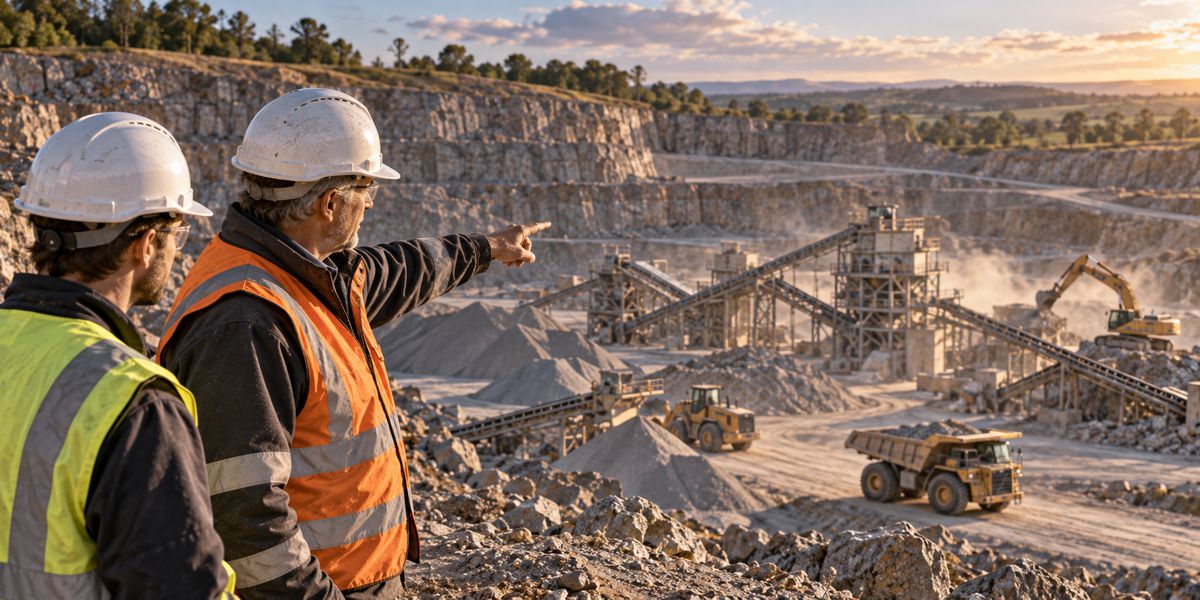
Consider someone who has run quarries for thirty years.
Their CV might record employers, positions, qualifications and responsibilities. It might mention crushing and screening, production management, maintenance, health and safety and responsibility for capital equipment.
What it cannot easily record are thirty years of accumulated judgement. They may recognise changes in crusher behaviour before instrumentation detects a developing problem. They may know how a particular aggregate behaves after prolonged wet weather, how production changes as faces move through different geology, which apparently minor maintenance shortcuts eventually become expensive ones, and how the behaviour of a loading shovel operator can affect an entire production cycle.
A pavement engineer develops another body of knowledge. Years of investigating failures can create an intuitive understanding of drainage, materials, compaction, traffic loading, climate and construction quality that cannot be reduced to “20 years’ experience in pavement engineering”.
Machine operators learn things about equipment that designers rarely experience. Surveyors have watched several generations of technology move from specialist equipment into routine site operations. Project managers accumulate lessons from difficult clients, contractual disputes, design changes, late utilities, weather, logistics, subcontractor failures and the thousand compromises required to turn drawings into physical infrastructure.
Technicians often develop highly specialised diagnostic knowledge that exists almost entirely inside their heads. Construction software specialists know why one apparently sophisticated implementation works while another collapses under the weight of poor processes and reluctant users. Safety professionals accumulate observations from thousands of hours spent watching real work being carried out by real people under imperfect conditions.
The question for any experienced construction professional is deceptively simple: What do you know that isn’t written down anywhere?
The answer may represent a substantial part of their professional value. It also exposes a problem extending well beyond individual careers. Construction has spent generations accumulating knowledge inside people without always developing particularly effective ways of retaining it. When those people change employer, change sector or retire, some of that knowledge leaves with them.

Showing the Knowledge Behind the Experience
A CV might state that someone has twenty years’ experience in pavement engineering. That is useful information, but imagine that the same engineer has also produced thoughtful work examining pavement failures, recycled asphalt, specifications, climate effects, maintenance strategies and lessons from unusual projects.
A potential employer can now see something different. So can a prospective client, conference organiser, university researcher, journalist, professional institution or engineering company looking for specialist advice. They can begin to understand how that engineer thinks.
The evidence does not have to take the form of constant publishing. Technical articles, conference papers, substantial project case studies, interviews, research, standards work, professional institution contributions, teaching, mentoring, patents, open-source work and serious technical discussions can all form part of a professional record.
A machine specialist who has spent twenty-five years working with excavators does not need fifty superficial social-media posts explaining excavators. One genuinely useful examination of why machines fail in a particular application may reveal far more.
An experienced project director might have encountered the same contractual problem across projects on three continents. A detailed discussion of what repeatedly causes that problem, and what project teams can do differently, may capture knowledge that would otherwise remain within a handful of former colleagues.
This is far removed from the superficial end of personal branding. Engineers do not need to become marketers, technicians do not need to become content creators, and project managers do not need to turn site meetings into material for their next post.
Publish when there is something worth adding to the industry’s knowledge. Do that occasionally over a long career and a useful professional record begins to accumulate.

Searching for Expertise Rather Than Names
The mechanisms used to find people are changing as well.
LinkedIn Recruiter already allows recruiters to describe the people they are looking for in ordinary language. Its AI-assisted search translates those requirements into structured searches using criteria including skills, locations and job titles, while its more advanced search can identify harder-to-define qualifications such as experience leading large cross-functional workstreams. LinkedIn says the technology supports candidate discovery rather than making hiring decisions itself.
The distinction is worth preserving. AI has not made CVs obsolete, nor has recruitment become an autonomous exercise in which an algorithm simply identifies the best engineer for a project.
What these systems demonstrate is a different way into the search.
Someone might be looking for experience delivering major road projects in emerging economies, practical knowledge of reclaimed asphalt, construction managers who have implemented autonomous equipment on operating sites, or specialists who understand both civil engineering and digital twins.
The technology does not establish who genuinely possesses those abilities, and publishing an article does not prove competence. It does, however, make it increasingly possible for professional discovery to begin with the capability being sought rather than a particular person’s name.
Somebody searching for expertise no longer necessarily needs to know your name before they start looking for you.

Building a Professional Record Before You Need It
A professional reputation should not be constructed solely around finding the next job. Careers are rarely that simple.
An engineer might eventually become a consultant. A technical specialist may be invited to contribute to a standards committee. An operations director could move into an advisory role. A construction executive may eventually join a board. Research collaborations, conference invitations, partnerships, mentoring and professional institution work can appear at different stages of a career.
None is guaranteed because somebody has published articles or spoken at conferences. A substantial professional record simply gives more people, in more circumstances, a way to understand what somebody knows and where that knowledge might be useful.
It can also travel internationally. A quarry specialist in Australia may possess operational experience applicable in Africa. An engineer in Greece may have worked on projects relevant to the Gulf. An Indian construction technology specialist may have implementation experience useful to contractors in Europe or North America.
Expertise has always travelled with people. Digital professional evidence allows some of it to travel ahead of them.
There is also an awkward moment to start establishing a professional reputation: immediately after discovering that you need one. A senior manager may lose a job after fifteen years with the same company and find that most of their professional identity was attached to their employer. An engineer deciding to become a consultant may realise that almost nothing publicly demonstrates the specialist knowledge clients are expected to buy. A retiring project director looking for advisory work after four decades delivering infrastructure may find that much of the accumulated experience exists primarily in memories, old project files and conversations with former colleagues.
Professional authority takes time to accumulate. An article written today may still explain someone’s expertise five years from now. A conference presentation becomes part of a professional record. A detailed project case study preserves evidence of a difficult problem solved, while an interview can capture insights developed across decades.
Five or ten serious contributions produced over several years may say considerably more about somebody than hundreds of routine posts. A professional career already produces the raw material: the difficult project, unusual failure, technical breakthrough, lesson learned repeatedly, technology understood unusually well or misconception encountered for the hundredth time.
Earlier in Construction Marketing Month, Highways.Today argued that reputation is infrastructure companies build in advance. Careers have their own version of the same problem. The evidence is most valuable when it has been accumulated before somebody needs it.

Construction’s Invisible Knowledge
Some of the industry’s most experienced people are almost invisible outside their immediate professional networks. They may have spent thirty or forty years designing bridges, maintaining heavy machinery, running asphalt plants, building roads, managing megaprojects, investigating geotechnical failures, commissioning processing equipment or developing construction materials.
Search for them and there may be little more than a job title. That does not diminish their expertise, but it can make the depth of that expertise difficult for outsiders to recognise. It can also make their accumulated knowledge harder to preserve.
Construction already faces substantial workforce pressures. Britain’s Construction Industry Training Board estimates that construction will need an average of 41,200 additional workers every year between 2026 and 2030, around 206,000 people over the five-year period. Infrastructure Australia’s 2025 market capacity analysis estimated a shortage of around 141,000 workers on public infrastructure in October 2025 and projected that the gap could exceed 300,000 by mid-2027.
Publishing cannot solve those shortages. It can, however, preserve some of the experience that otherwise disappears as people move between employers or leave the workforce.
Construction knowledge is unusually difficult to retain because so much of it is experiential. A specification can record how something should be built. A manual can explain how a machine should be operated. A project database can preserve drawings, measurements and decisions. None fully captures what an experienced professional notices.
Knowledge-management research commonly distinguishes explicit knowledge, which can be documented and transferred relatively easily, from tacit knowledge developed through experience, judgement and practice. Construction creates vast quantities of the latter.
Projects are temporary organisations. Teams assemble, deliver something and disperse. People move between employers. Contractors and consultants change between schemes. Lessons learned on one project may never reach the people beginning another, so the loss is not confined to retirement. Every career move can break part of the chain.
Much commercially sensitive or project-specific knowledge should never be made public, and professional publishing cannot capture everything. Yet there is an enormous middle ground that can be shared safely and usefully.
Why did a particular pavement treatment repeatedly fail? What did twenty years maintaining crushing equipment teach someone about preventative maintenance? Why do digital construction implementations struggle after apparently successful pilots? Which mistakes recur when contractors first introduce machine control? How does a project manager recognise that a programme is beginning to drift before the schedule formally shows it?
These are construction questions rather than marketing subjects. Once the answers are properly documented, they can outlive the project and sometimes the career that produced them.

Companies Need Visible Experts
There is a corporate dimension to this that construction companies should consider carefully. Businesses spend considerable sums establishing corporate expertise while sometimes keeping the people who possess that expertise almost completely invisible.
A consultancy claims expertise in bridges because its engineers understand bridges. A machinery manufacturer claims application knowledge because engineers, operators and product specialists have spent years understanding how machines behave. A construction technology company has authority because somewhere inside it are people who understand both the technology and the difficult reality of deploying it on projects.
The people are part of the evidence.
Companies therefore have two related questions to answer: What should the company be known for? And who inside the company should the industry know?
The second question does not require turning employees into corporate influencers. A company can support technical specialists who want to write, provide opportunities to speak at conferences, capture expert interviews, produce serious case studies, participate in research, contribute to professional institutions and explain difficult subjects through credible industry media.
That can produce better corporate communication as well. Instead of publishing another article claiming that Company X is a leader in Technology Y, the chief engineer might explain a difficult technical problem that Technology Y is intended to solve. An operations specialist might discuss lessons from real deployments. A researcher might examine where the technology works and where it does not.
The company gains credibility because the expertise behind it becomes visible, while the professional develops a durable record of their knowledge and the reader gets something worth reading. It is a healthier exchange than promotional thought leadership dressed up as expertise.

Putting Expertise on the Record
Nobody needs to document everything they know. Most working days do not contain an article. Most projects do not need public commentary, and much professional knowledge is confidential, commercially sensitive or simply too specific to be useful elsewhere.
Almost everybody who spends long enough in construction, however, eventually knows something worth preserving. Sometimes the person approaching retirement knows more about a particular corner of the industry than almost anybody entering it. That knowledge may be useful to colleagues, employers, younger professionals and people working thousands of miles away.
Highways.Today has spent years documenting companies, projects, machinery, technologies and infrastructure. There is a natural role in documenting the expertise of the people behind them as well.
A senior engineer with something important to explain does not need a personal-brand strategy. A technical director does not need to become a content creator. A retiring industry veteran certainly does not need to become an influencer. Sometimes they simply need somebody to recognise that what they know is worth recording, research it properly and help turn it into serious industry editorial.
Highways.Today’s Expert Article Writing & Publishing service can work with the people behind a business to research, develop and document genuine professional expertise as substantial industry editorial rather than promotional personal-brand content.
Editorial disclosure: Highways.Today provides paid Expert Article Writing & Publishing services to companies and industry professionals. The editorial arguments and external research in this feature remain independently determined.
For companies, some of the strongest evidence of an organisation’s expertise may already be walking around inside it. For individuals, the principle is simpler.
A CV can record where a professional has been. Their body of work can help the rest of the world understand what they learned along the way.
Make your expertise visible.

Key Industry Questions
- Is the CV becoming obsolete? No. Qualifications, employment history, experience and references remain important professional signals. The change is that they can increasingly be complemented by more detailed evidence of skills, knowledge and professional contribution.
- What does a skills-first labour market mean? Skills-first approaches place greater emphasis on identifying and demonstrating the skills people possess, while qualifications, experience and other conventional credentials remain useful signals.
- Is AI already being used to find professional candidates? Yes. LinkedIn Recruiter, for example, uses AI-assisted search to translate natural-language requirements into candidate searches using criteria including skills, titles and locations. LinkedIn states that its AI features support recruiters rather than making hiring decisions on their behalf.
- Does professional visibility prove expertise? No. A strong digital presence can exist without deep expertise, while highly experienced professionals can have almost no public profile. The objective is to make genuine expertise easier to understand.
- What forms of professional evidence are useful? Depending on the profession, these can include technical articles, case studies, research, conference papers, presentations, interviews, standards contributions, professional institution work, patents, teaching and substantial technical discussion. Quality and relevance matter more than volume.
- Why is tacit knowledge particularly important in construction? Construction depends heavily on experience accumulated through projects, operations and problem-solving. Much of that knowledge involves judgement and context that are difficult to capture completely in specifications, procedures or formal qualifications.
- Can publishing professional knowledge help with construction’s skills shortage? It cannot solve labour shortages, but documenting experienced professionals’ knowledge can help preserve expertise when people move employers or leave the workforce.
- Should construction companies encourage employees to develop professional reputations? There can be mutual benefits where it is handled intelligently. Visible technical expertise can strengthen corporate credibility while giving employees recognition for genuine professional knowledge. Confidentiality, client obligations and intellectual property still need to be respected.
- How much professional content does somebody need to publish? There is no useful numerical target. A small collection of substantial contributions accumulated over several years may provide stronger evidence of expertise than frequent superficial publishing.
Strategic Takeaways
- Professional credentials remain important, but employers increasingly have tools for examining skills and experience at greater depth.
- Construction companies possess significant intellectual capital inside employees whose expertise may be poorly documented outside immediate project teams.
- A professional record built gradually can broaden the circumstances in which an individual’s knowledge can be discovered and understood.
- Capturing expert knowledge can preserve professional evidence for the individual while retaining useful experience for companies and the wider industry.
- Corporate authority does not have to be expressed through corporate claims. Allowing knowledgeable people to explain subjects they genuinely understand can provide stronger evidence of organisational capability.