Starship Reaches Orbit as the Harder Work of Heavy-Lift Logistics Begins
SpaceX put 26 operational Starlink V3 satellites into orbit on 28 September aboard Starship Flight 14, giving the enormous launch system something it had not achieved during its previous development flights: an orbital destination and a working payload.
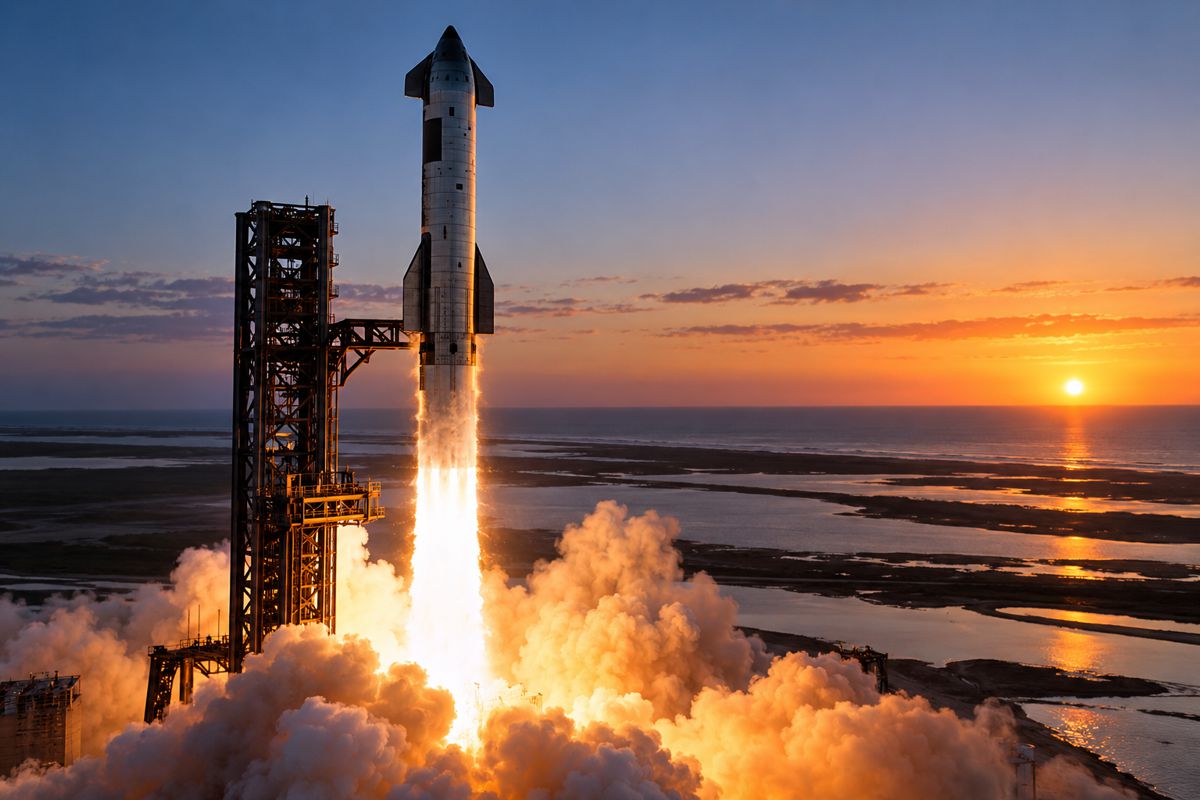
Starship lifted off from Starbase, Texas, at 07:48 Central Time and became the first Starship to enter Earth orbit. The flight did not proceed entirely to plan. An engine shut down during ascent and SpaceX abandoned the intended six-orbit, nearly ten-hour mission, returning the spacecraft after completing its principal deployment objective. The 26 satellites nevertheless reached orbit, turning what had previously been an experimental launch programme into the first demonstration of Starship performing useful orbital transport.
Starship has been designed around payload volumes and eventual launch frequencies that could alter the economics of deploying communications networks, large spacecraft, orbital infrastructure and, eventually, lunar cargo. SpaceX also owns one of the largest prospective sources of demand for that capacity through Starlink.
Briefing
- Starship Flight 14 reached orbit on 28 September 2026 and deployed 26 operational Starlink V3 satellites.
- SpaceX says each V3 satellite is designed to provide around 1 Tbps of downlink capacity, with future Starship missions potentially carrying as many as 60.
- The company estimates that a full V3 Starship deployment could deliver around 20 times the Starlink downlink capacity deployed by a Falcon 9 mission.
- Starship remains central to NASA’s Artemis lunar architecture, but orbital refuelling and an uncrewed lunar landing remain substantially harder demonstrations still to come.
- Rapid constellation deployment increases the importance of collision avoidance, end-of-life disposal and orbital debris management as low Earth orbit becomes increasingly congested.
Starlink Gives Starship Its First Cargo Market
The economics of a large launch vehicle depend on having enough payload to fill it. SpaceX has an unusual advantage because it can manufacture much of that demand internally.
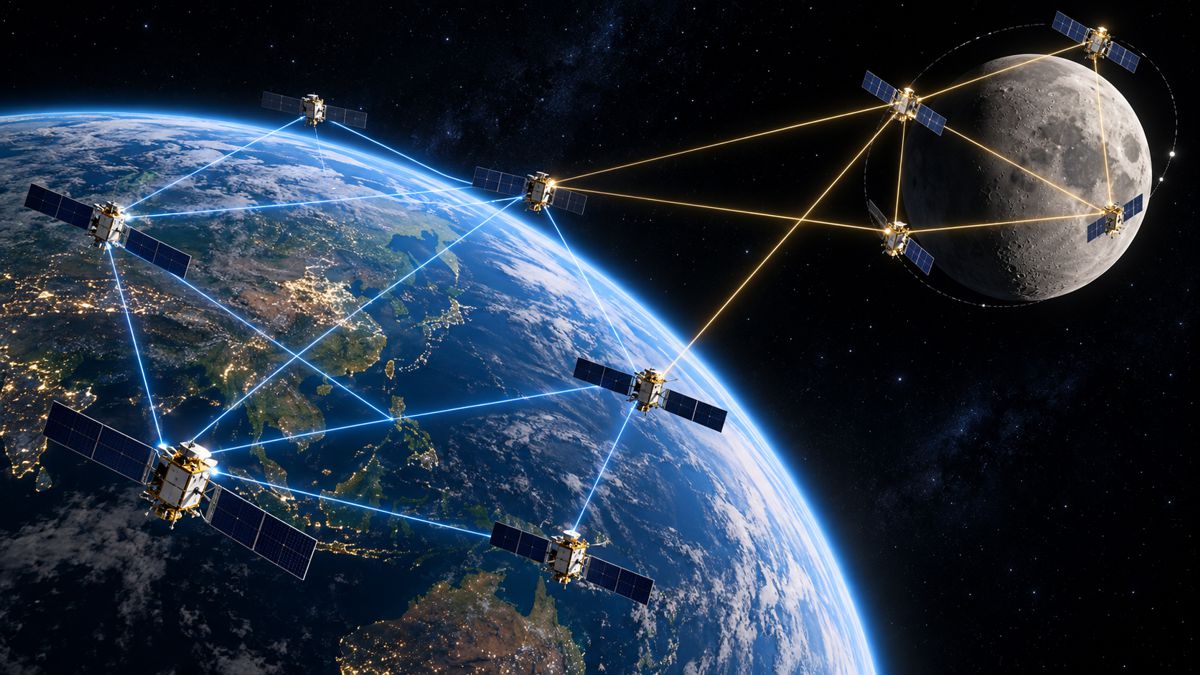
In a 2026 prospectus, the company said its Starlink network comprised approximately 9,600 broadband and mobile satellites as of 31 March, serving about 10.3 million subscribers. The next-generation V3 spacecraft are designed to provide about 1 Tbps of downlink capacity each, and SpaceX expects a Starship eventually to carry as many as 60 of them in a single mission. According to the company, such a launch could deploy around 20 times the Starlink downlink capacity of a Falcon 9 launch.
Flight 14 carried only 26, so it was well short of that prospective capacity. More immediately, it demonstrated the transport chain at all: launch a full-scale Starship into orbit, carry operational V3 spacecraft and release them successfully.
Jon Crocker, Assistant Dean for Executive Education at the University of Maryland’s Robert H. Smith School of Business, sees that payload capacity as the beginning of a potentially substantial change in orbital logistics.
“This was indeed a big day for SpaceX, and even though they decided to cut the mission short (after delivering the 26-satellite payload, but not the planned six complete orbits, likely due to partial engine failure, it revolutionizes the path to low Earth orbit. Some estimates have described the difference between a Falcon 9 payload and a Falcon Heavy/Starship payload as a factor of 20x. Meaning that once Starship is able to routinely achieve orbit and deliver payloads, it means that the cost per kilogram will see exponential reductions.”
The direction is plausible, although the eventual cost reduction cannot yet be established from one orbital flight. Starship’s economic proposition depends heavily on factors still being demonstrated, including vehicle reuse, turnaround time, launch cadence, refurbishment requirements and how much of its theoretical payload capacity can routinely be utilised. Payload capacity without flight frequency is simply a bigger rocket.
An Internal Customer Changes the Economics
Starlink gives SpaceX another advantage beyond filling early missions. The company does not have to wait for an independent satellite operator to design a spacecraft around a new launch vehicle, negotiate a contract and accept the risks of an immature rocket. SpaceX can develop the launcher and payload system together, using operational satellite deployments to mature Starship while simultaneously expanding a revenue-producing communications network.
Crocker expects Starlink, NASA and the US Space Force to be among the immediate beneficiaries, while third-party customers may face a more complicated market if capacity remains constrained. Lower launch costs do not necessarily translate directly into proportionately lower customer prices, particularly where equivalent heavy-lift capacity is scarce.
Competition will therefore matter alongside engineering. Blue Origin, Rocket Lab and other launch providers do not have to replicate Starship’s payload capacity to influence pricing or provide alternatives for spacecraft operators whose missions do not require it.
Greater available payload volume could eventually influence spacecraft design as well. Satellite engineering has long been constrained by launch mass, fairing dimensions and the cost of placing hardware in orbit. More generous mass and volume margins could relax some of those constraints, although manufacturers are unlikely to design heavily around Starship until its availability and economics become sufficiently predictable.
Artemis Requires Much More Than Orbit
Flight 14 also matters to NASA, although its significance for the Artemis programme is more measured than the orbital milestone might initially suggest.
NASA is working with SpaceX on a Starship Human Landing System that will carry astronauts between lunar orbit and the Moon’s surface. That architecture requires capabilities far beyond delivering satellites into low Earth orbit, including launches of propellant, orbital storage and transfer, rendezvous, docking and lunar operations. NASA also requires an uncrewed lunar landing demonstration before astronauts use the vehicle.
Crocker cautions against treating a successful orbital mission as evidence that those harder problems have been solved.
“A successful launch and equipment demonstration is undoubtedly good — just as the mishap during the recent New Glenn launch was not — but we should be cautious about letting a single data point define a trend. NASA has shown a willingness to adjust mission parameters in response to events, but it’s unlikely that Artemis III will be drastically altered based on one launch.”
NASA’s own oversight work supports that caution. Its Office of Inspector General has identified large-scale vehicle-to-vehicle cryogenic propellant transfer as one of the significant technical challenges facing the Starship HLS programme. The US Government Accountability Office also reported in July that SpaceX was more than a year behind its original schedule on several major HLS milestones, including long-duration and propellant-transfer demonstrations and the uncrewed lunar landing test.
Flight 14 removes one fundamental uncertainty without removing the others. Starship can reach orbit carrying a substantial operational payload. SpaceX must now demonstrate that it can do so repeatedly and master the operations required beyond launch itself.
From Launch Vehicle to Space Logistics
Orbital refuelling could eventually allow launch mass to be divided across several missions rather than requiring a spacecraft to carry everything needed for its complete journey from the Earth’s surface. A vehicle could reach low Earth orbit, take on additional propellant and continue towards the Moon or another destination.
NASA’s Starship HLS architecture already depends on this principle. A storage depot would be placed into Earth orbit and supplied by tanker Starships before the lunar lander rendezvous with it and receives the propellant required for its onward journey.
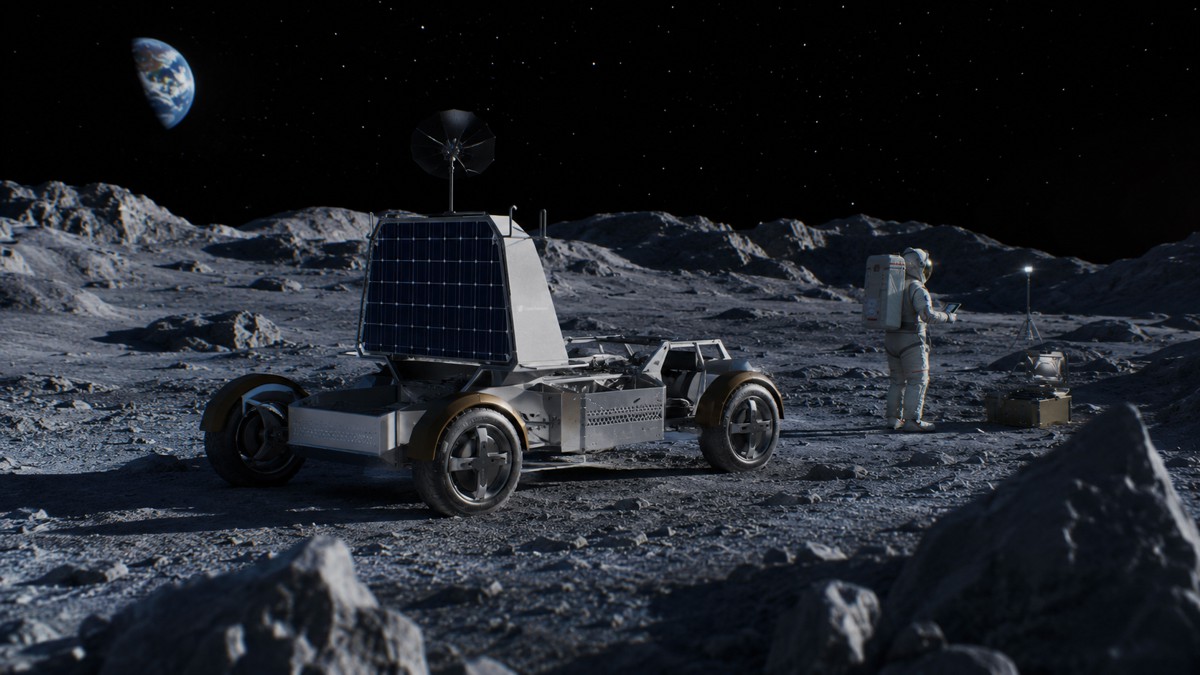
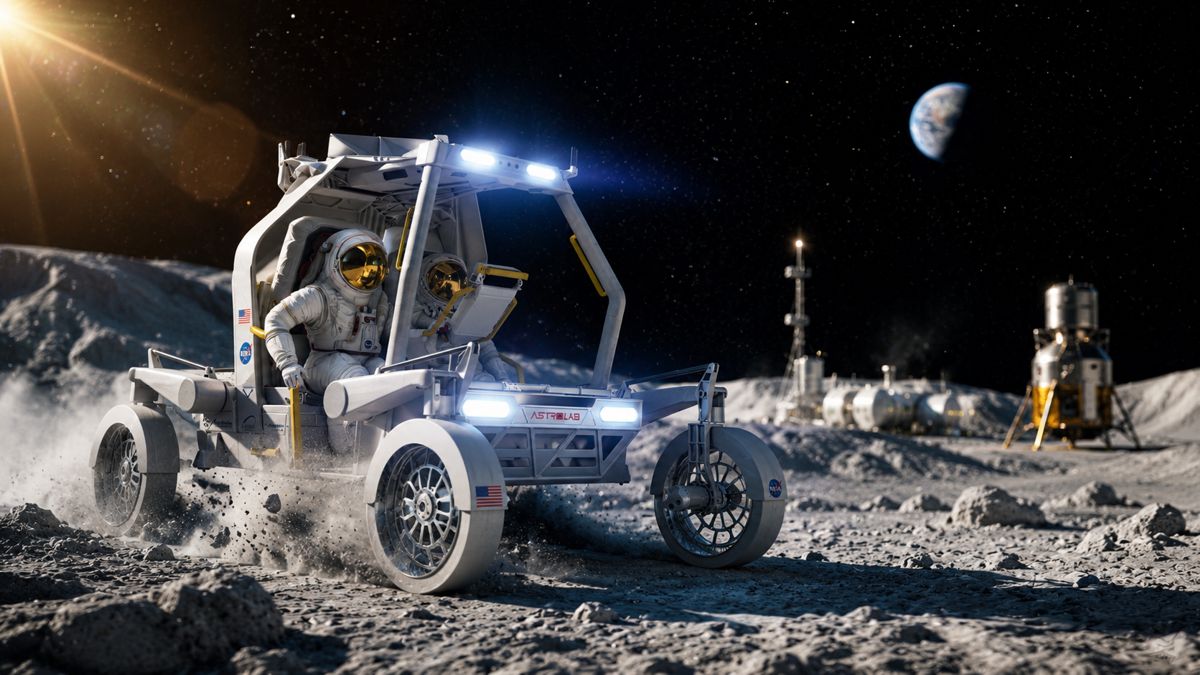
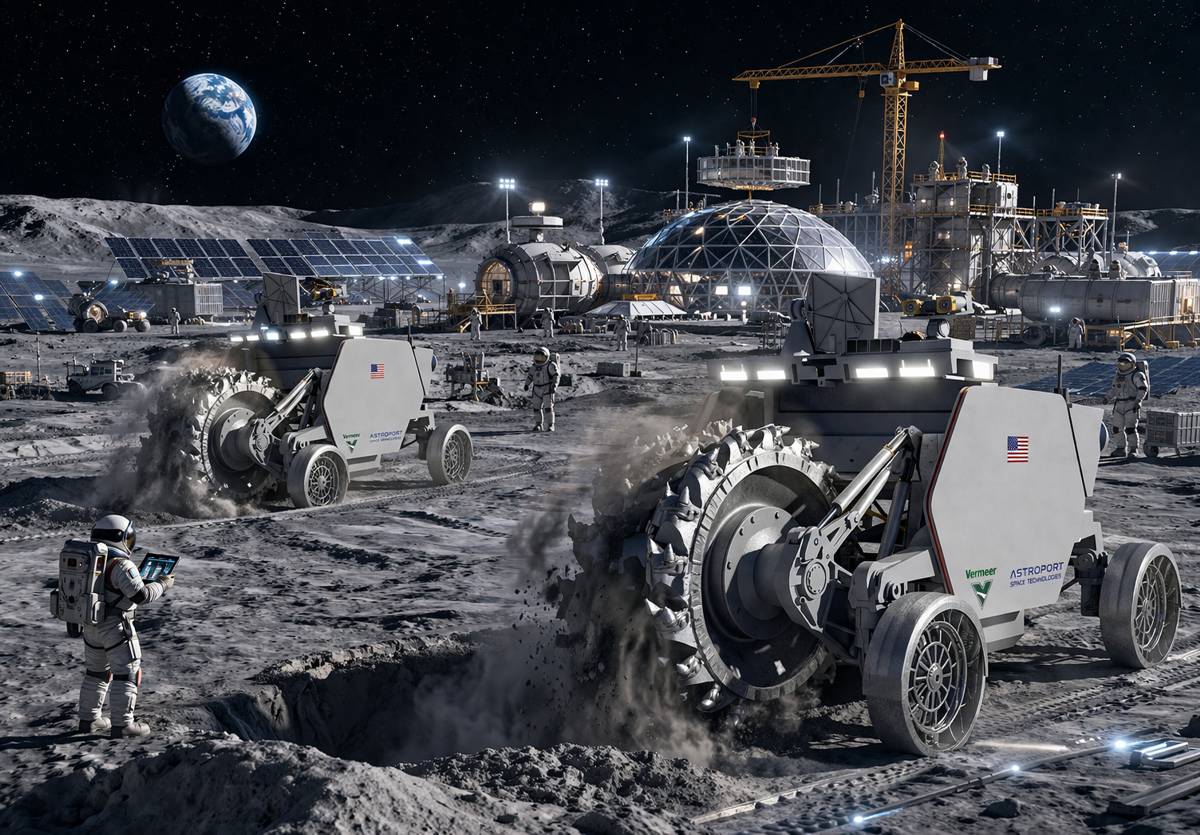
Routine operations of that kind would make Starship one component of a broader orbital logistics network rather than simply an exceptionally large conventional launcher. NASA’s longer-term HLS work already envisages large cargo deliveries to the Moon, including equipment such as rovers and habitats.
The engineering chain remains formidable. High flight frequency, reliable rendezvous, cryogenic propellant storage, spacecraft-to-spacecraft transfer and repeated operation of reusable vehicles all have to work together. Flight 14 demonstrated only one part of that system, but it was the part on which everything else depends: getting a large Starship and meaningful cargo into a stable orbit.
A More Crowded Low Earth Orbit
Greater launch capacity brings another constraint. Making satellites easier to deploy does not create more room in the orbital regions operators most want to use.
Crocker argues that the ability to deploy very large constellations rapidly could intensify competition for those orbital regions.
“While many companies and/or sponsoring nations may have plans for large satellite constellations, they may not have the capability to claim it as quickly as Starship may deliver payloads. In human history, competition for scarce resources has often resulted in conflict. While few will be better positioned than SpaceX to deliver payloads, one does not need to match Starship’s capacity to disrupt the environment: a single collision could create thousands of debris fragments and render LEO unusable for years. A cascade of collisions — accidental or deliberate — could make it unusable for centuries.”
The timescale in that final assessment is difficult to establish and the consequences would vary considerably between orbital regimes. The underlying collision problem, however, is well documented.
The European Space Agency’s 2026 Space Environment Report found that too few satellites are leaving heavily congested orbital regions at the end of their operational lives and warned that collision risk continues to grow. ESA modelling indicates that fragmentation can become self-sustaining, with collisions producing debris that causes further collisions even without additional launches.
Higher launch capacity consequently puts greater pressure on spacecraft manoeuvring, tracking, collision avoidance, end-of-life disposal, space traffic coordination and active debris removal. A high-frequency Starship programme capable of deploying dozens of large satellites at a time would make those systems part of the infrastructure required to support the expansion of orbital activity.
The Test Now Becomes Repetition
Starship’s fourteenth flight did not prove that launch costs will collapse, that Artemis schedules will be met or that very large spacecraft will immediately replace today’s mass-optimised satellites. It demonstrated something narrower and more concrete: SpaceX launched Starship into orbit and used it to deliver 26 operational satellites.
The company can now work on repeating that operation while increasing payload, demonstrating reuse and tackling the orbital propellant-transfer architecture required for missions beyond Earth orbit. For an experimental programme, reaching orbit is an engineering milestone. For a transport system, it is the beginning of operations.
Key Industry Questions
- How many Starlink V3 satellites did Starship Flight 14 deploy? Flight 14 deployed 26 operational Starlink V3 satellites after reaching Earth orbit.
- How powerful are the new Starlink V3 satellites? SpaceX says each V3 spacecraft is designed to provide approximately 1 Tbps of downlink capacity.
- How many V3 satellites could Starship eventually carry? SpaceX has said a single Starship mission could ultimately deploy as many as 60 V3 satellites, although Flight 14 carried 26.
- Will Starship automatically make satellite launches much cheaper? Not necessarily. Greater payload capacity can reduce cost per kilogram, but actual economics will depend on launch frequency, reuse, refurbishment, reliability, utilisation and competition. Customer pricing may also differ substantially from SpaceX’s underlying launch cost.
- Why is Starlink important to Starship’s development? Starlink provides SpaceX with a large internal source of payload demand, allowing operational satellite deployments to contribute to the development and scaling of the launch system.
- Does reaching orbit mean Starship is ready for Artemis? No. The lunar Starship requires additional capabilities including orbital propellant transfer, long-duration operations and an uncrewed lunar landing demonstration before a crewed mission.
- Why does Starship need orbital refuelling for lunar missions? NASA’s HLS architecture requires propellant to be accumulated in Earth orbit and transferred to the lunar Starship before it departs for the Moon.
- Could Starship change satellite design? Potentially. Greater payload mass and volume could reduce some of the pressure to minimise every kilogram and cubic metre, although manufacturers will only design around that capability once launch availability and economics become sufficiently predictable.
- Does greater launch capacity increase the space debris problem? It can increase the number of spacecraft that can be deployed rapidly. ESA already identifies congestion, inadequate end-of-life disposal and collision-generated debris as long-term threats to the sustainable use of some orbital regions.
Strategic Takeaways
- Starlink gives SpaceX an unusually large captive payload market with which to mature Starship before relying heavily on third-party commercial demand.
- Payload capacity alone will not determine Starship’s economics. Reuse, turnaround time, reliability and launch cadence remain central.
- Lower launch costs and lower customer prices are not necessarily the same thing, particularly while comparable heavy-lift capacity remains scarce.
- NASA’s lunar architecture requires Starship to master an operational chain considerably more complicated than reaching low Earth orbit.
- If heavy-lift launch becomes routine, orbital traffic management and debris mitigation will increasingly become infrastructure constraints on the growth of the space economy.