Cowboy Space Puts Orbital Power Beaming to the Test with Reason-1
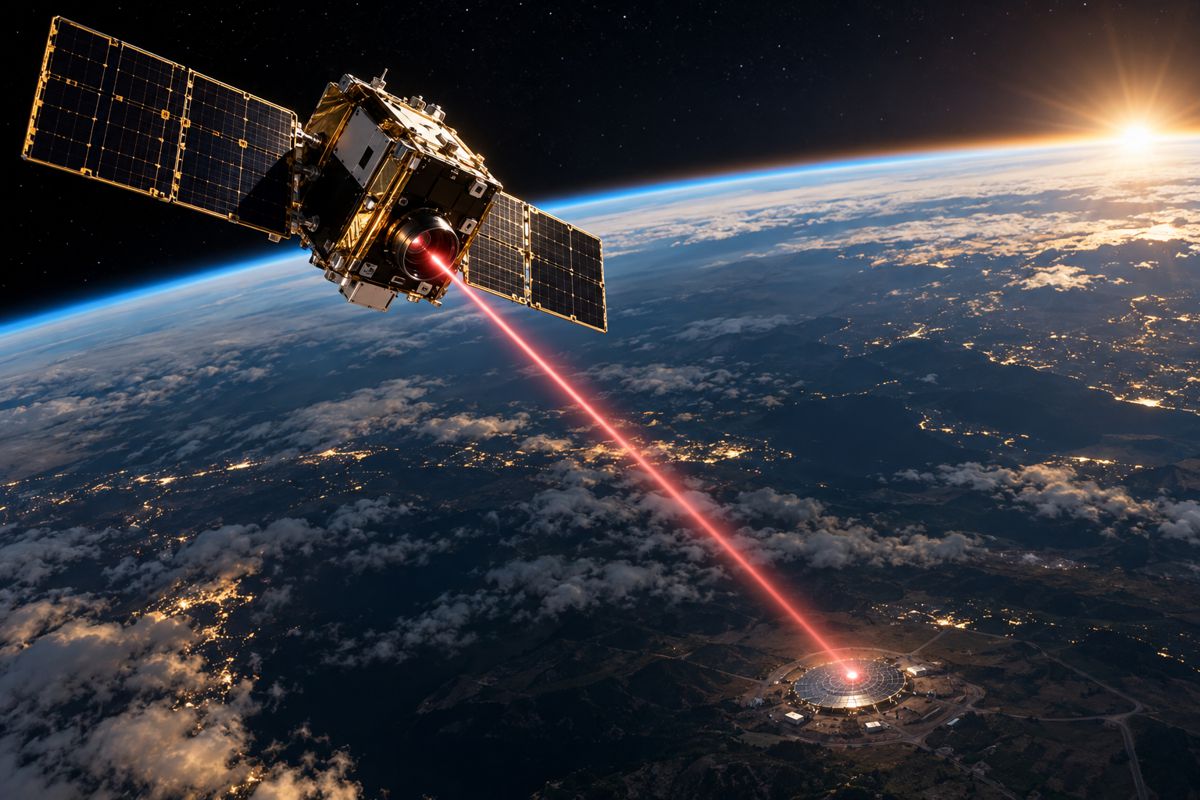
Cowboy Space has placed its first satellite into low Earth orbit, beginning an experiment that will attempt to collect solar energy in space and deliver some of it to a receiver on Earth through an infrared laser.
Reason-1 deployed from SpaceX’s Transporter-18 rideshare mission on 1 October 2026. SpaceX’s deployment sequence records the Cowboy Space spacecraft separating approximately 63 minutes after launch, alongside a varied manifest that included Google’s Project Suncatcher M1 and Star Catcher’s Protostar.
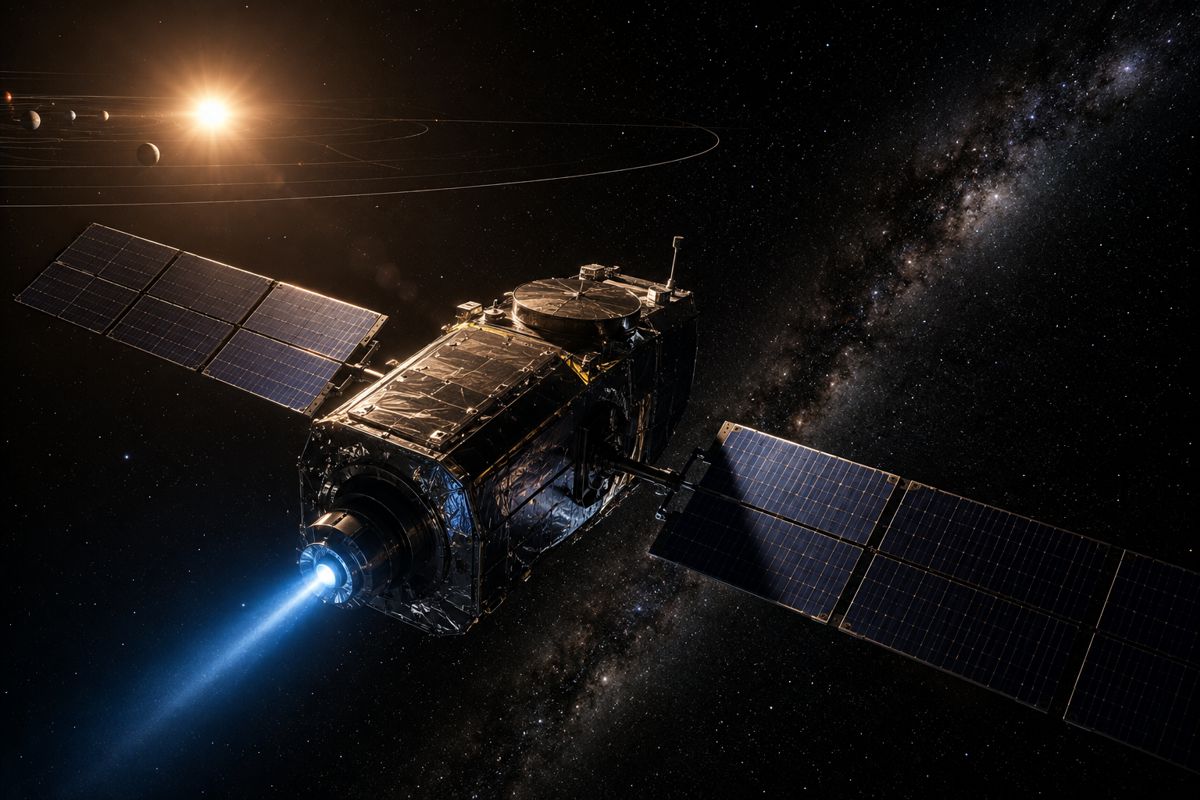
Getting the satellite into orbit is only the beginning of the experiment. Reason-1 carries a kilowatt-class laser, large-aperture optical telescope and beam-steering system designed and built by Cowboy Space. The planned demonstration will require the spacecraft to acquire a ground receiver during an orbital pass, maintain sufficiently accurate pointing and transfer measurable energy through the atmosphere.
The company describes the mission as an attempt at the first laser power beaming from orbit to Earth. Independent reporting indicates Cowboy Space expects to attempt the transmission as early as late October, targeting a ground spot around 10 to 20 metres across and aiming to deliver approximately 30 to 100 W. Until that experiment is completed and its results are available, Reason-1 remains a power-beaming test rather than a demonstrated orbital energy system.
Behind it sits a considerably larger engineering proposition. Cowboy Space intends to use solar power, optical communications and high-performance computing as parts of the same orbital infrastructure, ultimately developing launch vehicles whose upper stages remain in space as megawatt-scale data centres.
Briefing
- Reason-1 deployed into orbit from SpaceX’s Transporter-18 mission on 1 October 2026.
- The satellite will attempt to transmit solar-derived energy to a ground receiver using a kilowatt-class infrared laser.
- Cowboy Space is reportedly targeting approximately 30 to 100 W at the receiver during the demonstration.
- Optical hardware tested aboard Reason-1 is intended to inform future high-speed communications and orbital computing systems.
- Reason-2 is planned for 2027, while Cowboy Space’s longer-term architecture envisages rocket upper stages operating as 1 MW orbital data centres.
Moving Power Through the Atmosphere
Laser power beaming is an old engineering idea confronting some very practical problems. Electrical energy is converted into optical energy at the transmitter, directed towards a receiver and converted back into usable electricity, normally through photovoltaic cells matched to the laser wavelength. Between those conversions are losses associated with the laser itself, atmospheric propagation, diffraction, pointing accuracy and receiver performance.
In 2025, DARPA’s Persistent Optical Wireless Energy Relay programme transmitted more than 800 W over 8.6 km during a 30-second test in New Mexico, transferring more than one megajoule over the wider test campaign. Its receiver used a parabolic mirror to direct incoming laser energy onto photovoltaic cells.
Reason-1 takes the experiment into orbital geometry. A receiver on Earth has a relatively short opportunity to acquire a spacecraft passing overhead, while the transmitting optics must keep the beam accurately directed as the relative position of spacecraft and receiver changes continuously.
Beam divergence becomes particularly unforgiving over orbital distances. NASA-funded research into laser power-beaming receivers identifies diffraction and overall system efficiency among the fundamental constraints, noting that realised total efficiencies in existing systems have generally remained below levels required for many practical applications. Performance varies considerably with wavelength, transmitter, receiver and operating environment.
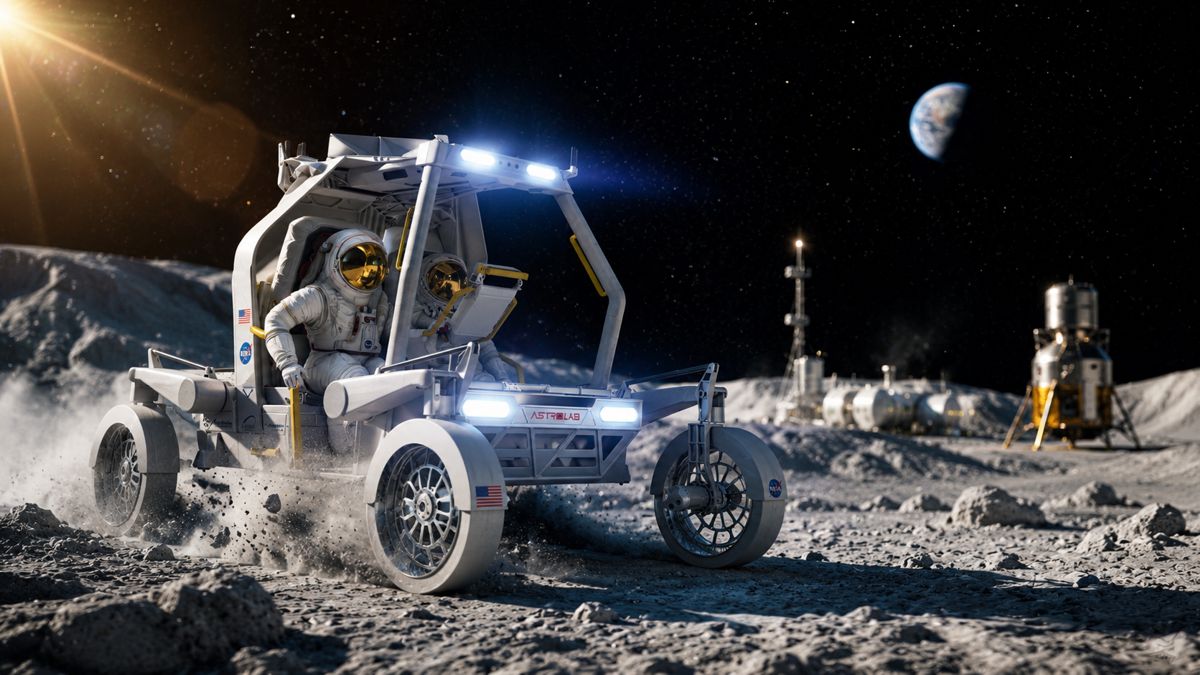
NASA is also examining the same physics for lunar applications. One engineering study considered a 1,595 W optical beam from an orbital spacecraft delivering 542 W onto a 1.5 m photovoltaic receiver on the Moon, with 300 W available directly to the user and the remainder assigned to battery charging in the modelled system.
From Energy Beam to Data Link
Power delivery is only part of the Reason-1 programme. Cowboy Space designed the satellite’s laser systems, large-aperture telescope and beam-steering architecture with later optical communications in mind. Many of the requirements overlap: a spacecraft sending a high-capacity optical data stream towards Earth also needs precise pointing, stable optics, reliable acquisition and an optical path capable of operating through atmospheric conditions.
Reason-2, scheduled for 2027, is intended to move that work from energy transfer towards data transmission. Cowboy Space says the spacecraft will share optical components with Reason-1 while attempting near-record space-to-ground transmission rates. Independent reporting indicates the mission is also expected to carry NVIDIA H200 GPUs.
That places Cowboy Space among a growing collection of companies exploring whether substantial computation can move away from terrestrial data centres. NVIDIA announced its Space-1 Vera Rubin Module in March 2026 specifically for size, weight and power-constrained environments, naming Cowboy Space, then Aetherflux, among the companies working with its accelerated computing platforms.
Orbital computing could potentially combine solar generation with processing close to space-derived data, reducing the amount of raw information that has to be transmitted to Earth. Computing hardware, however, generates heat, and a spacecraft cannot remove that heat through convection as a terrestrial data centre does. Radiation, servicing, communications, launch mass and the economics of replacing failed hardware all enter the calculation.
Reason-1 consequently tests technologies relevant to both sides of Cowboy Space’s architecture. The laser is carrying energy on this mission, while precision optical links could eventually carry data through the same broad family of hardware.
Building the Data Centre into the Rocket
Cowboy Space’s longer-term plan departs further from conventional satellite deployment. The company, which operated as Aetherflux before rebranding in May 2026, is developing its own launch vehicle rather than treating rockets solely as transportation. Its proposed architecture would leave the upper stage in orbit and turn it into part of the computing infrastructure.
Each upper stage is intended to operate as a 1 MW data centre with active thermal management and integrated computing hardware. Cowboy Space calls the wider planned constellation Stampede. The company announced a $275 million Series B funding round alongside the expanded strategy in May 2026, when the business was reported to have a $2 billion valuation.
The concept removes one familiar inefficiency in spaceflight: launching a substantial upper-stage structure and then discarding it after payload deployment. Designing the stage and computing platform as one vehicle could allow structure, power, thermal systems and avionics to be considered together from the outset.
It also gives Cowboy Space a particularly broad development programme. The company is simultaneously working on launch vehicles, spacecraft, solar power, laser systems, optical communications, thermal management and high-performance computing. Each has mature engineering disciplines behind it, but integrating them into a commercially workable orbital data centre is a substantially larger undertaking than demonstrating any one component. Current plans reportedly target the first flight of the company’s rocket and 1 MW orbital data-centre architecture for late 2028.
Power Beaming Beyond Data Centres
The origins of Reason-1 lie partly outside commercial computing. Before its expansion into orbital data centres, Aetherflux concentrated on space-based solar power. The company’s AETHER programme received support through the US Department of Defense’s Operational Energy Capability Improvement Fund, with the funding contributing to personnel, custom components and development of laser and optical payloads used in the Reason-1 programme.
Military interest in wireless power transfer is already well established. DARPA’s completed POWER programme explored airborne optical energy relays as a way of moving energy without requiring the receiving platform to carry all of its fuel or generation equipment. Its proposed architecture used ground-based lasers and airborne relays to move energy over long distances.
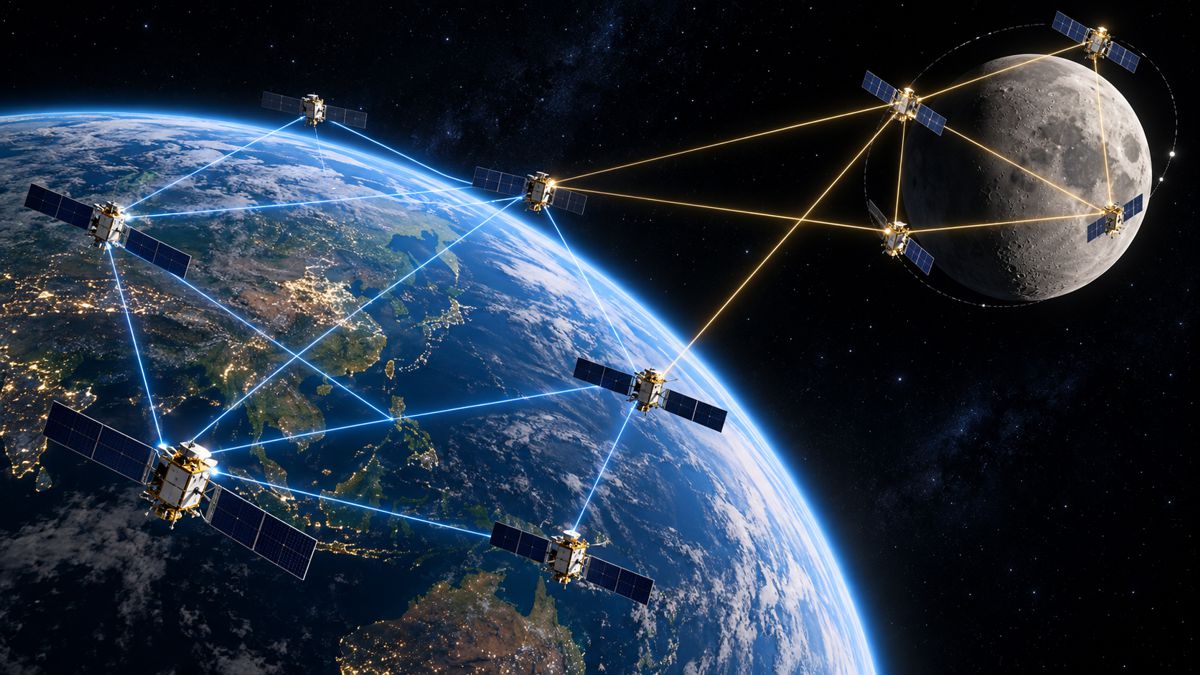
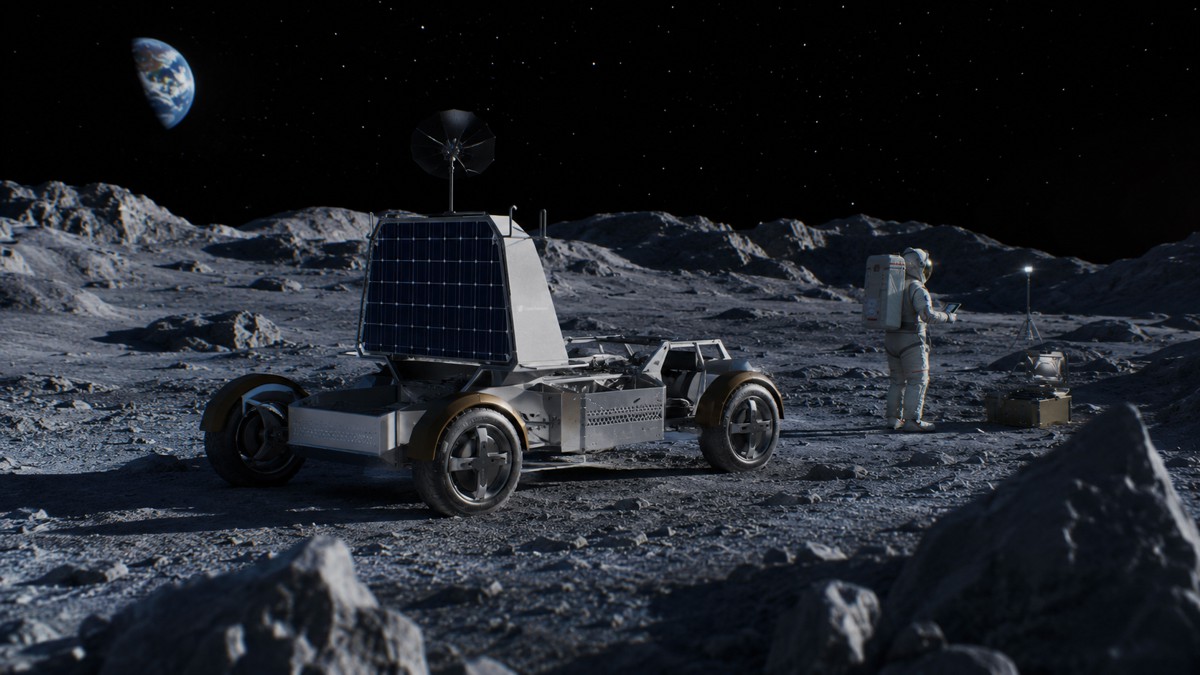
Space-based transmission extends that principle considerably. Remote installations, spacecraft, lunar equipment and other locations where cables or conventional fuel logistics are difficult have repeatedly appeared in research into power beaming. NASA has investigated orbital power delivery for lunar exploration, including systems capable of supplying landers and rovers operating through the lunar night or inside permanently shadowed regions. Recent work has examined a near-polar orbital architecture using focusable optical power transmission to support surface assets.
These applications do not establish a commercial case for transmitting large quantities of electricity from Earth orbit. They do, however, explain the continuing interest in wireless energy where conventional infrastructure becomes unusually difficult or expensive.
A Small Beam Before a Megawatt
The scale difference between Reason-1 and Cowboy Space’s proposed infrastructure is considerable. A successful delivery of tens of watts from orbit would establish neither an orbital power grid nor the economics of a megawatt data centre. It would provide flight data from an integrated system operating through conditions that simulations and ground tests can only approximate.
Pointing performance, optical stability, thermal behaviour, conversion efficiency and atmospheric transmission can then be measured against the models used to design the spacecraft.
The wider Transporter-18 manifest provides an interesting backdrop. Google’s Project Suncatcher M1 was also aboard the mission to examine hardware relevant to orbital AI computing, while Star Catcher’s Protostar is intended to demonstrate power transmission between spacecraft. Three separate projects are consequently testing different parts of the power-and-compute problem in orbit on the same rideshare mission.
Cowboy Space has chosen perhaps the broadest destination of the three. It wants to build the rocket, retain part of that rocket as infrastructure, generate electricity around it, install high-performance computers aboard it and move data optically between orbit and Earth.
Reason-1 is much smaller than that vision. For now, its job is more precise: find a receiver on the ground from low Earth orbit, hold an infrared beam on it and establish how much useful power arrives. If it can do that reliably, Cowboy Space will have its first measured result on which to build the next experiment.
Key Industry Questions
- Has Cowboy Space already beamed power from orbit to Earth? No. Reason-1 reached orbit on 1 October 2026, but the power-beaming demonstration is expected to take place after deployment and commissioning.
- How much electricity is Reason-1 expected to deliver? The spacecraft carries a kilowatt-class laser, but independent reporting indicates Cowboy Space is initially targeting approximately 30 to 100 W delivered to the ground receiver.
- Why use a laser rather than transmit electricity by microwave? Laser systems can concentrate energy into comparatively narrow beams and use optical components that overlap with high-speed communications technology. They also face demanding pointing, atmospheric and conversion-efficiency requirements.
- Has high-power laser energy transmission already been demonstrated? Yes, over terrestrial distances. DARPA delivered more than 800 W across 8.6 km during a 2025 demonstration. Orbit-to-ground transmission introduces a substantially different range, geometry and operating environment.
- What does power beaming have to do with an orbital data centre? Both power transfer and optical communications require high-performance lasers, optics, accurate beam steering and thermal management. Reason-1 allows Cowboy Space to test parts of that hardware before using related technology for high-speed data links.
- What is Reason-2 expected to test? The planned 2027 mission is intended to demonstrate high-speed optical data transmission while carrying forward power and thermal lessons from Reason-1. It is also reported to be planned with NVIDIA H200 GPU hardware.
- Why put AI computing in orbit? Orbital computing could process satellite-generated data before transmitting results to Earth and potentially exploit abundant solar energy. Launch cost, radiation, heat rejection, communications, reliability and hardware replacement remain major constraints.
- What is Cowboy Space’s proposed 1 MW data centre? The company is developing a launch vehicle whose upper stage would remain in orbit and become an integrated 1 MW computing platform rather than being discarded after launch.
- When could Cowboy Space launch that system? Current reporting places the company’s target for its first rocket and 1 MW orbital data-centre deployment in late 2028. That remains a development target rather than an established launch date.
Strategic Takeaways
- Reason-1 moves Cowboy Space’s orbital infrastructure programme into flight testing, although the central power-beaming experiment remains to be completed.
- Delivering tens of watts to Earth would be valuable primarily for the resulting pointing, optical, atmospheric and thermal data rather than the quantity of energy transferred.
- Laser hardware provides a technical bridge between Cowboy Space’s original space-based power work and its newer orbital computing strategy.
- Integrating the launch vehicle’s upper stage with the data centre could reduce duplicated spacecraft structure, but ties launch, computing, power and thermal development into one unusually broad engineering programme.
- Transporter-18 carrying separate experiments in orbital computing and power transmission puts several competing approaches into orbit at the same time, while commercial scale remains unproven.