Smart Procurement World Indaba Puts Business Value Ahead of Price Alone
Procurement departments have traditionally been measured against a deceptively simple question: how much money did they save?
At the 20th Annual Smart Procurement World Indaba in Midrand, South Africa, the discussion moved well beyond that calculation. Across sessions involving banks, industrial companies, procurement specialists and suppliers, purchasing decisions were increasingly framed around operational resilience, working capital, supplier development, technology and investment.
The event brought together procurement professionals, business leaders, government representatives, suppliers and decision-makers from across the continent. Participants included representatives from Absa, Nedbank, Standard Bank, Sasol, MTN, Afrimat, AECI and Coca-Cola Beverages South Africa, alongside specialists from across the procurement and supply-chain ecosystem.
The shift was less about abandoning cost control than recognising its limitations. A cheaper component, contractor or material is of little benefit if it introduces unacceptable delivery risk, ties a project to a fragile supply route or leaves a business unable to respond when markets move.
Briefing
- The 20th Smart Procurement World Indaba examined procurement as a source of business value, resilience and supplier development rather than cost reduction alone.
- AI is beginning to automate activities including spend analysis, contract comparison and risk identification, increasing the emphasis on interpretation and commercial judgement.
- Banking and corporate procurement leaders discussed the relationship between supplier diversification, inventory, working capital and continuity of supply.
- Supplier development emerged as both an economic objective and a means of broadening supply-chain capability.
- South Africa’s wider economic environment gives the discussion added weight, with logistics and infrastructure constraints continuing to affect investment and growth.
From Purchase Price to Business Value
One of the clearest arguments emerging from the Indaba was that procurement performance cannot be understood solely through the difference between an initial price and a negotiated price.
Revenue, sustainability, innovation, risk, supplier diversity and continuity of supply all appeared in the discussions as components of value. That is particularly relevant to construction and infrastructure, where the consequences of procurement decisions can continue for years after a contract is signed.
The lowest-priced machine is not necessarily the lowest-cost machine over its working life. Duty cycles, fuel consumption, maintenance, parts availability, residual value and downtime can quickly overwhelm a saving made at purchase. The same principle applies to materials and components if unreliable delivery leaves crews, equipment and subcontractors waiting on site.
Debbie Tagg, CEO of Smart Procurement, framed the change around a widening definition of what the profession is expected to deliver: “Procurement has moved far beyond simply delivering cost savings. Today, the profession is being called upon to create value, build resilient supply chains, enable innovation and contribute to sustainable growth. At the heart of that transformation are people. People who understand the business, build meaningful relationships and have the courage to challenge the way things have always been done. The future of procurement belongs to those who can connect people, platforms and purpose to create real impact.”
That broader remit changes the relationship between procurement teams and the organisations they serve. Mapitsi Talana, Senior SCM Specialist at Vodacom Group, argued that procurement professionals seeking to become trusted advisers need to begin with the commercial problem rather than procurement policy. Compliance remains necessary, particularly in regulated sectors, but a procurement function that understands only its own procedures can struggle to recognise the operational consequences of the decisions passing through it.
Resilience Has a Price
Companies seeking to reduce supply-chain exposure may use several suppliers instead of one, maintain additional inventory, establish alternative transport routes or deliberately retain spare capacity. Each measure can appear inefficient when assessed against purchasing cost alone.
Niron Rampersad, Divisional Executive: Trade at Nedbank Corporate and Investment Banking, described the trade-off directly: “Procurement has become central to business resilience and growth. Companies are diversifying suppliers, carrying more inventory and building greater flexibility into working capital to protect continuity of supply. These choices strengthen businesses, support suppliers and create more resilient supply chains.”
Construction provides an obvious example. A contractor may save money by sourcing a critical component from a single distant supplier, but the saving looks different once shipping delays, currency movements, port congestion and the cost of an idle machine are included.
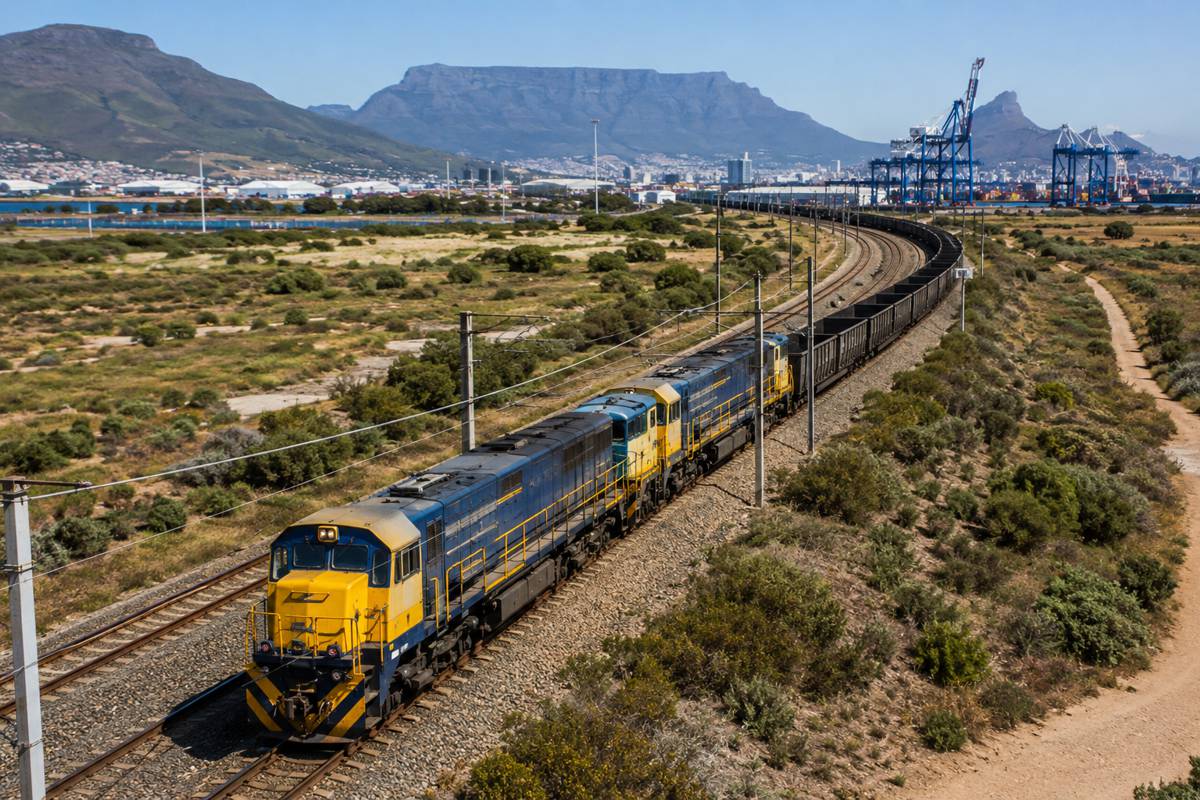
The same calculation applies at infrastructure scale. South Africa continues to face constraints in freight rail, ports, electricity and other essential systems. The International Monetary Fund expects investment to become an increasingly important source of growth as reforms address infrastructure bottlenecks, while continuing to identify structural constraints and global trade uncertainty as risks to the country’s outlook.
Procurement sits close to both sides of the problem. Organisations are purchasing the equipment, materials and services required to build and maintain infrastructure while operating supply chains affected by weaknesses in that same infrastructure.
AI Changes the Work
Artificial intelligence added another dimension to the Indaba discussions. Spend analysis, contract comparison and elements of supplier-risk identification are increasingly amenable to automation, shifting some of the emphasis from producing analysis towards interpreting information and turning it into commercial decisions.
Procurement teams have historically spent considerable time assembling information before anyone can act on it. Software capable of interrogating large volumes of contracts, invoices, supplier records and transactions can compress that process dramatically, but it does not remove uncertainty.
A system might identify excessive dependency on a supplier, detect unusual price movements or highlight contractual differences across a portfolio. Deciding whether those findings justify changing suppliers, renegotiating terms, increasing inventory or accepting the risk remains a commercial judgement. Data quality matters as well: AI applied to incomplete supplier records, inconsistent product classifications or poor contractual information does not fix the weaknesses in the underlying data.
The technology may reduce the value of some routine analytical work while increasing the value of people who understand operations, markets, contracts and suppliers well enough to question the result.
Procurement and Investment
The Indaba also pushed the procurement discussion into territory more commonly associated with corporate finance.
A keynote panel involving Absa, Coupa Software, Nedbank Corporate and Investment Banking and Standard Bank examined procurement and supply-chain information through the lens of investment and economic development. Purchasing behaviour can reveal how businesses are responding to risk, managing working capital and preparing for growth.
Miyelani Maluleke, Senior Economist and Head of South Africa Macroeconomics Research at Absa Group, placed those decisions within the wider economic environment: “The outlook for the global economy is highly uncertain as geopolitical tensions disrupt trade flows and generate huge volatility in the prices of critical inputs, especially energy. For a small open economy such as South Africa, these global headwinds will transmit directly through higher input costs and inflation, creating pressure on the central bank to respond with higher rates. But while the external environment is clearly challenging at the moment, South Africa’s strong track record in executing reforms over the last few years is an important positive development that will help to build resilience and anchor the economy towards growth over the medium to long term.”
Procurement data can provide an unusually immediate view of those pressures. Changes in lead times, inventory holdings, supplier geography, contract durations and input prices can become visible within purchasing systems before their full effects appear in conventional financial reporting.
For large contractors and infrastructure owners, that information can influence capital allocation. A recurring shortage may justify investment in storage, persistent transport disruption may support alternative logistics arrangements, and concentrated supplier exposure may encourage dual sourcing or local production. Purchasing information becomes part of operational intelligence rather than remaining confined to the procurement department.
Building Supplier Capacity
Supplier development formed another major strand of the event.
Kgalaletso Tlhoaele, Executive: Enterprise Development at Absa Group, discussed procurement’s ability to connect emerging suppliers with larger organisations while broadening supplier bases and reducing complacency within established supply chains. The discussion argued against viewing Enterprise and Supplier Development solely through a narrow category of business ownership, instead considering whether new suppliers bring capabilities, ideas and agility that established suppliers may lack.
That principle has particular relevance to infrastructure. Large projects depend on extensive networks of subcontractors, fabricators, equipment companies, logistics providers, engineering specialists and local service businesses. Developing additional capable suppliers can increase competition while reducing dependence on a small number of incumbents.
Supplier development, however, takes more than awarding an occasional contract to a smaller company. Businesses need access to buyers, workable payment terms and enough visibility of future demand to invest in people, equipment and capacity. Creating genuinely capable additional sources of supply is more useful than simply adding another company to an approved-vendor database.
Public and Private Procurement
South Africa’s public procurement environment operates under different constraints from the corporate purchasing discussed through much of the Indaba. Government departments, municipalities and public entities must balance commercial outcomes with statutory requirements covering fairness, transparency, competition and accountability.
That framework is itself in transition. In September 2026, South Africa’s Constitutional Court declared the Public Procurement Act 2024 invalid because it had been adopted in a manner inconsistent with the Constitution. Finance Minister Enoch Godongwana subsequently reiterated the constitutional requirement for a procurement system that is fair, equitable, transparent, competitive and cost-effective.
The legal framework is different, but many of the operational questions overlap: how to evaluate lifetime value, maintain competition without creating fragile supply chains, develop suppliers without compromising standards and use better data without obscuring accountability.
The Procurement Professional Changes With the Technology
The more lasting change discussed at the Indaba may concern the people doing the buying.
As transactional activities become automated, procurement professionals are being pushed towards a combination of commercial analysis, supplier relationships, operational understanding and risk management. Ronald Flockhart, Group Head Sourcing & Category Management at FNB, described a profession moving beyond savings towards sustainable relationships and shared prosperity, while African Bank’s Melita Matlala emphasised adaptable teams with access to better information and broader skills.
That does not make purchasing less technical. It makes domain knowledge more valuable.
Someone procuring construction equipment needs to understand more than the purchase price. Duty cycles, utilisation, residual values, maintenance capability, parts availability, telematics, operator requirements and transport costs can materially change the economics of a machine. The same applies to steel, asphalt, electrical equipment, software, engineering services and almost every other category entering a major infrastructure project.
AI can make more information available and make it available faster, but the organisation still has to decide what it is prepared to risk. Twenty years into the Smart Procurement World Indaba, procurement is acquiring better tools for measuring price at precisely the moment businesses are discovering that price alone tells them less and less about what something will ultimately cost.

Key Industry Questions
- How is procurement value different from cost saving? Cost saving measures the reduction in purchasing expenditure. Procurement value can also include reliability, lifecycle cost, risk reduction, supplier capability, innovation and operational continuity.
- Why can resilient procurement cost more? Dual sourcing, additional inventory, alternative logistics routes and spare capacity introduce costs but can reduce exposure to disruption.
- Where is AI already useful in procurement? Applications include spend analysis, contract comparison, supplier information analysis and identification of potential purchasing or supply-chain risks.
- Does AI replace procurement judgement? It can automate significant analytical and administrative work, but decisions involving operational risk, supplier relationships, contractual trade-offs and business priorities still require judgement.
- Why is procurement particularly important to construction? Construction programmes depend on large quantities of materials, equipment, specialist services and subcontractors working to connected schedules. A failure in one critical supply category can affect multiple activities.
- What is supplier development intended to achieve? Effective supplier development expands the pool of businesses capable of meeting purchasing requirements, potentially increasing competition, capacity and supply-chain resilience.
- Why is working capital part of procurement strategy? Decisions to increase inventory, alter payment terms or diversify supply can change the amount and timing of cash tied up in operations.
- Is South African public procurement governed by the same considerations as private procurement? No. Public bodies operate within statutory requirements covering fairness, transparency, competition and accountability, although they face many of the same operational questions around cost, resilience and supplier performance.
Strategic Takeaways
- Lowest purchase price and lowest operational cost are increasingly different measurements.
- Supply-chain resilience can require deliberate expenditure on inventory, alternative suppliers and logistics flexibility.
- Procurement data can inform investment and operational decisions beyond the purchasing department.
- AI reduces the effort required to assemble and compare information but increases the premium on commercial interpretation.
- Supplier development is strongest when it creates genuinely capable additional sources of supply rather than simply expanding vendor lists.