Trends Shaping the Modern Automotive Workshop
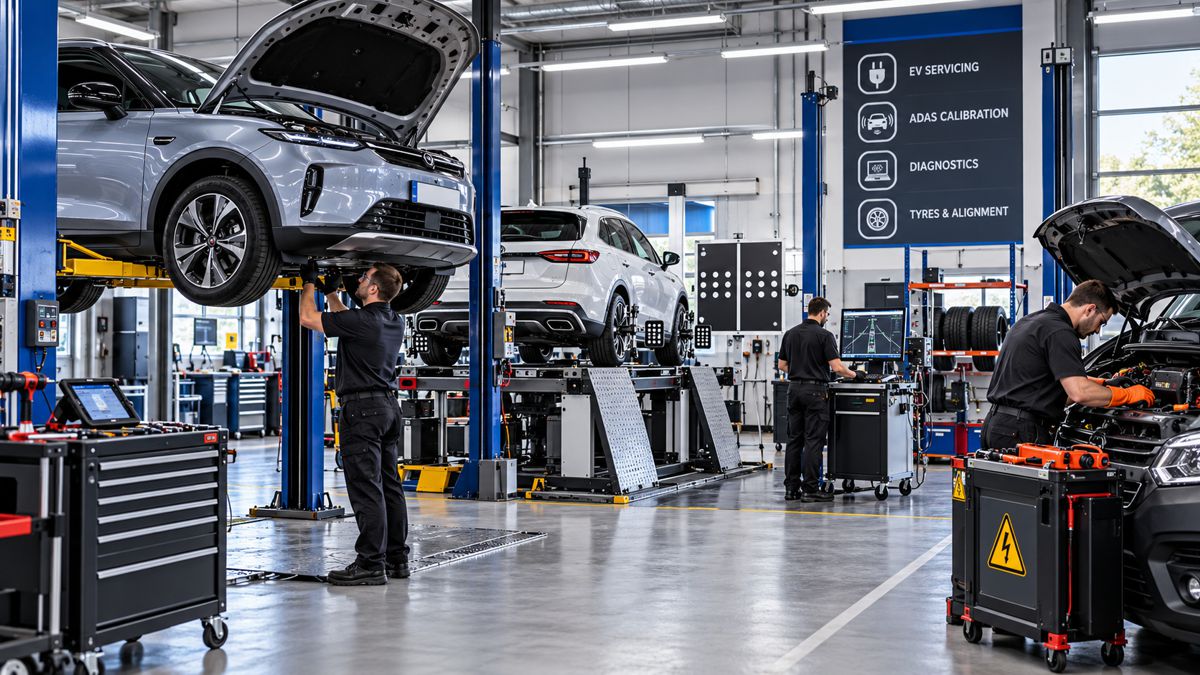
A generation ago, kitting out a workshop meant a set of ramps, a decent compressor and a wall of hand tools. Today, the same business might book in a plug-in hybrid estate one hour and a diesel panel van the next, each needing different skills, equipment and safety procedures from the technician on the ramp.
The pace of change in the professional garage sector has been considerable, and it is reshaping staff training, equipment budgets and the shape of the workshop floor itself.
The high-voltage skills gap
Electric and hybrid vehicles bring a safety question that barely existed for most workshops a decade ago: how do you let a technician work on a battery pack or motor carrying several hundred volts without putting them at risk? The answer in the UK has largely come through the Institute of the Motor Industry, whose TechSafe accreditation scheme sets out defined competence levels for anyone working on high-voltage systems, from basic awareness through to full diagnosis, repair and replacement of EV and hybrid components.
Employers are expected to check that a technician holds the right level of accreditation before they touch a high-voltage system, partly because insurers and manufacturers increasingly ask for proof of it.
The scale of the gap this has created is striking. IMI data from the third quarter of 2025 put the proportion of the UK technician workforce holding EV qualifications at around 26 per cent, roughly 71,942 people, even as electric and hybrid registrations continue to climb.
The IMI’s own modelling suggests that without faster training, demand could outstrip supply by more than 44,000 technicians by 2035, with the shortfall beginning around 2033. For a workshop owner, that turns EV accreditation from a nice-to-have into a recruitment and retention issue, and a reason training budgets have moved up the priority list.
Why a cracked windscreen now means recalibrating a camera
One of the least understood changes in modern servicing is how much of a car’s safety system now lives behind the windscreen or bumper, not under the bonnet. Forward-facing cameras, radar units and parking sensors that support lane-keeping, automatic braking and adaptive cruise control are all set up to work within very tight tolerances. Replace the windscreen, realign the wheels or repair the front bumper, and those tolerances can shift just enough to throw the system off, even though the fault stays invisible to the driver.
Many manufacturers now require an automatic reset of these systems after a mechanical alignment, precisely because the cameras and sensors are that sensitive to positioning. Official testing is heading the same way.
From February 2026, heavy vehicle roadworthiness testing began including visual checks of ADAS components for the first time, and the Driver and Vehicle Standards Agency has signalled that similar checks for standard Class 4 MOTs are a matter of when, not if. None of this can be done by eye. It requires dedicated calibration rigs, target boards and alignment tools, which is one reason garage equipment used for routine bodywork and glass jobs now needs to double as precision calibration kit.
Rethinking the layout of the workshop floor
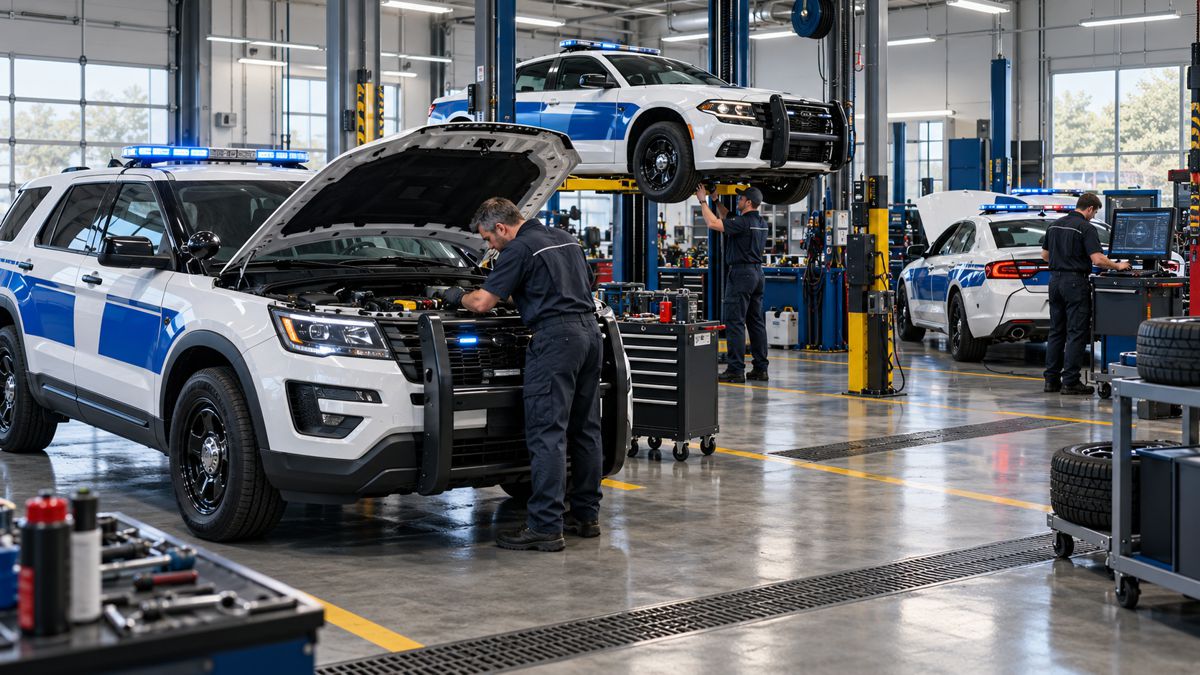
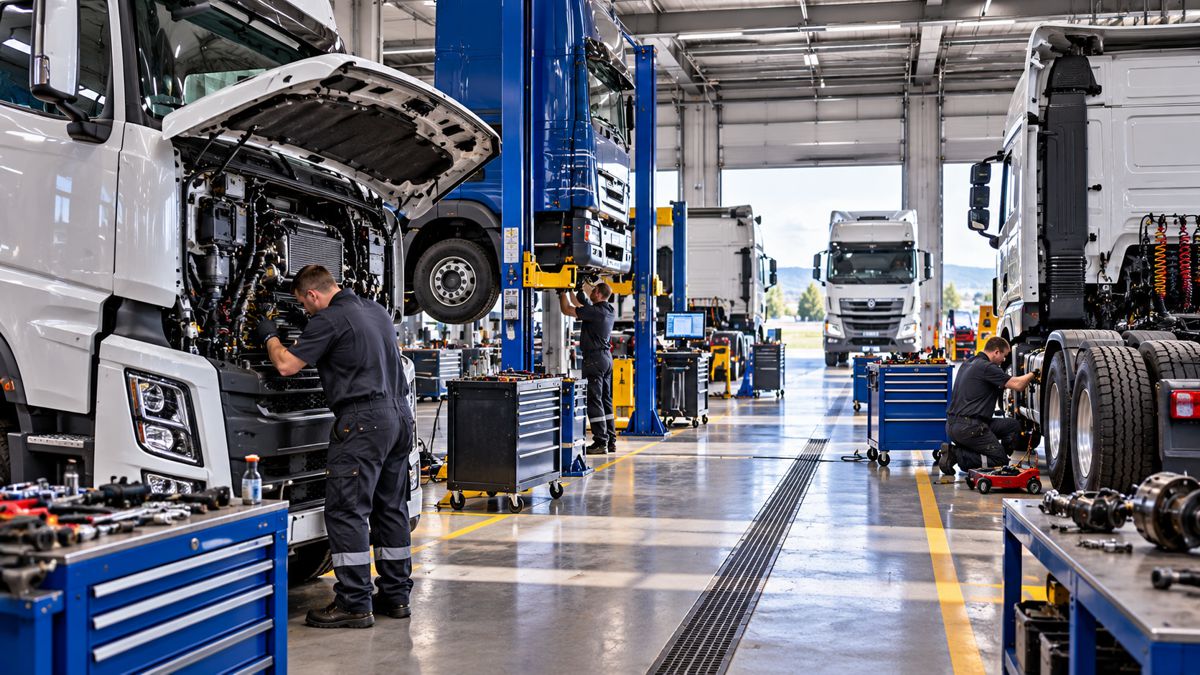
The physical layout of a workshop has had to adapt alongside the technology. Two-post lifts remain popular for quick, routine jobs because they leave the underside of the car fully accessible and take up comparatively little floor space, but four-post lifts, which support the vehicle through its wheels instead of fixed lifting points, are increasingly preferred for EV work and for any job involving wheel alignment or ADAS calibration, since the car sits level and undisturbed throughout.
Battery packs also add weight, often several hundred kilograms more than an equivalent combustion engine, so lift capacity and battery-safe lifting points have become a genuine specification question and not an afterthought.
Alongside this, insulated tools rated for high-voltage work, lockout systems to isolate a battery safely during repairs, and fire-suppression provisions suited to lithium-ion cells are becoming standard fixtures, not specialist extras. A workshop handling both an EV and a diesel van needs a broader, more carefully specified toolkit than it did ten years ago.
Tyres, fluids and the rules on what happens next
Sustainability has become a practical compliance matter for workshops, not simply a marketing line. Used tyres in the UK have been banned from landfill since the EU Landfill Directive came into full effect in July 2006, so every tyre a garage removes has to be tracked through a registered collector or recycler under a duty of care obligation, with the Tyre Recovery Association’s Responsible Recycler Scheme one of the main routes for demonstrating that this is done properly.
Waste oil, coolant and brake fluid fall under similarly strict handling and disposal rules, and garages that get this wrong risk enforcement action, more than a stern letter. For workshops already juggling EV batteries at end of life, this side of the business has become noticeably more technical than filling a skip.
Keeping customers in the loop
The customer-facing side of the workshop has changed just as much as the technical side. Digital vehicle health checks, where a technician photographs or films a worn brake pad, a corroded exhaust or a leaking hose and sends it straight to the customer’s phone with a plain-language explanation, have replaced the old habit of a mechanic ringing halfway through a job to explain jargon down the phone.
Paired with online booking systems showing real-time availability, this makes it easier for independent garages to compete with franchised dealers on convenience as well as price, and gives customers a level of transparency that did not exist when a written estimate on a carbon-copy pad was the best they could hope for.
These changes mean the modern workshop looks and runs quite differently from the one many technicians trained in. Newer developments such as AI diagnostic tools and selective battery repair suggest the pace of change is unlikely to slow any time soon. Staff need broader qualifications, the equipment on the floor has to serve a wider range of vehicles, and the paperwork trail from tyres to training records has grown longer.
Garages that keep pace with it end up equipped to service whatever pulls onto the forecourt next, whether that is a fifteen-year-old diesel or a car that only left the factory last month.