Recycled Rubber Concrete flexes into the residential market
A novel approach to rubber recycling could see end-of-life tyres repurposed into concrete for residential constructions as new research from the University of South Australia shows that it can provide an economically viable and sustainable alternative to conventional concrete.
Working with RMIT University, researchers demonstrated that crumb rubber concrete is a safe, green alternative for residential construction in Australia, proving a much-needed new market for end-of-life tyres.
Lead researcher, UniSA’s Professor Julie Mills, says that this research is the first to practically demonstrate and construct the new crumb rubber concrete mix in the field, literally taking the work from lab to slab.
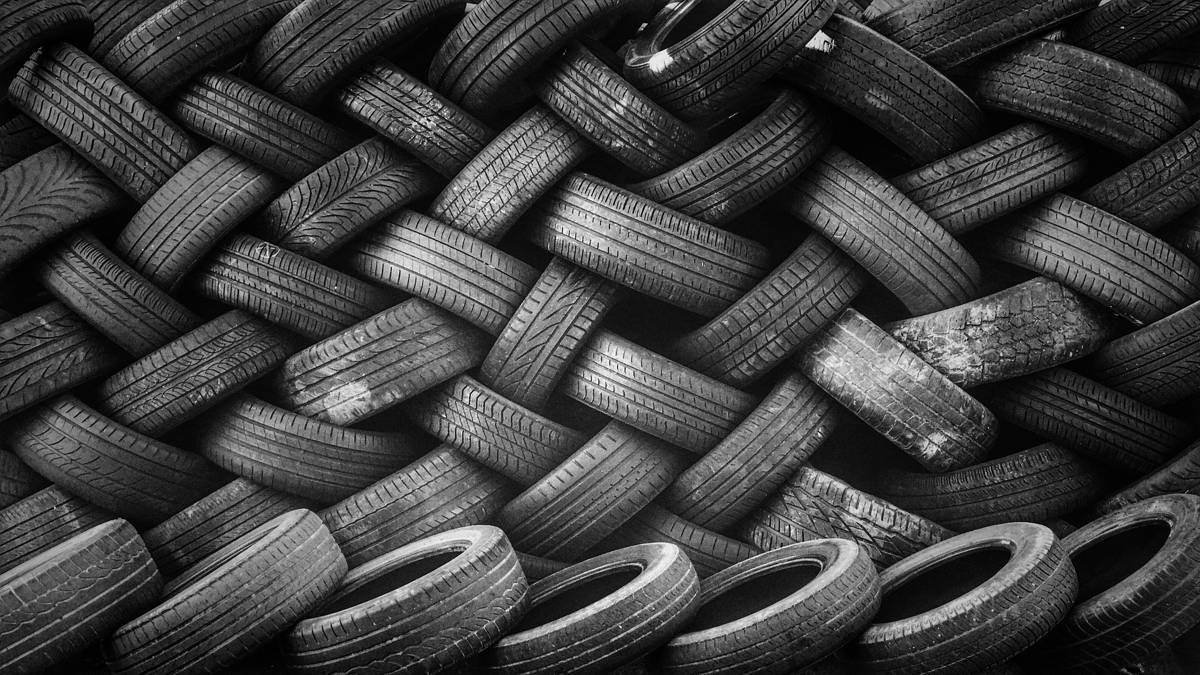
Globally, approximately 1.5 billion vehicle tyres are discarded each year. Less than one per cent of these are reused, with the rest being unaccounted for or dumped in landfills. In Australia about 51 million tyres end up in landfills, stockpiles or dumped on mine sites.
By recycling end of life tyres in concrete, valuable natural resources can be conserved, and the current tyre landfill problem can be partially resolved.
Co-researcher Dr Osama Youssf says that accumulation of end-of-life tyres is a global and growing problem for the global environment.
“Rubber tyres are not biodegradable and lead to unstable landfills, breeding grounds for mosquitoes from trapped water, polluted surfaces and toxic groundwater. They pose a significant risk for toxic fires,” Dr Youssf says.
“In Australia, two thirds of tyres end up in landfill. Such continuous waste production and disposal is entirely unsustainable, which is why we have been investigating alternative recycling options.
“This research investigated the design and processing of various crumb rubber concrete mixes for use in residential constructions, assessing its constructability, bond strength, durability, and flexural strength.
“We found that reinforced crumb rubber concrete (with up to 20 per cent sand replacement by volume) is superior to conventional concrete in some ways, with higher impact resistance, toughness and ductility, a higher damping ratio, better thermal and acoustic insulation, and a lighter weight.
“With respect to pumping, screeding, or finishing the concrete surface using a power trowel, contractors also reported no difference between using the crumb rubber concrete and conventional concrete, saying that the crumb rubber mix actually required less physical effort across all aspects.
“Additionally, the ready-mix cement companies reported no concerns relating to concrete batching, delivery or mixing, and said that the wash out of the concrete truck mixer was far easier.”
Co-researcher UniSA’s Professor Yan Zhuge says that this research shows just how suitable crumb rubber concrete is for residential constructions.
“This is an exciting development for both the recycling and construction industry,” Prof Zhuge says.
“The results clearly show that crumb rubber cement is a viable and promising alternative to conventional concrete in the residential concrete market.”
“We strongly recommend that the concrete industry considers crumb rubber concrete as a sustainable alternative to conventional concrete in reinforced residential constructions in Australia.”