Premier Plant Powers Ahead With Electric JCB Fleet and Carbon Neutral Ambitions
The UK plant hire sector is entering a more practical phase of decarbonisation. After years of discussion around emissions targets, low-carbon procurement and cleaner urban construction, fleet operators are now making real equipment choices that can reshape day-to-day site operations. In Leicestershire, Premier Plant & Tool Hire has moved further in that direction with a new investment in electric machinery from JCB.
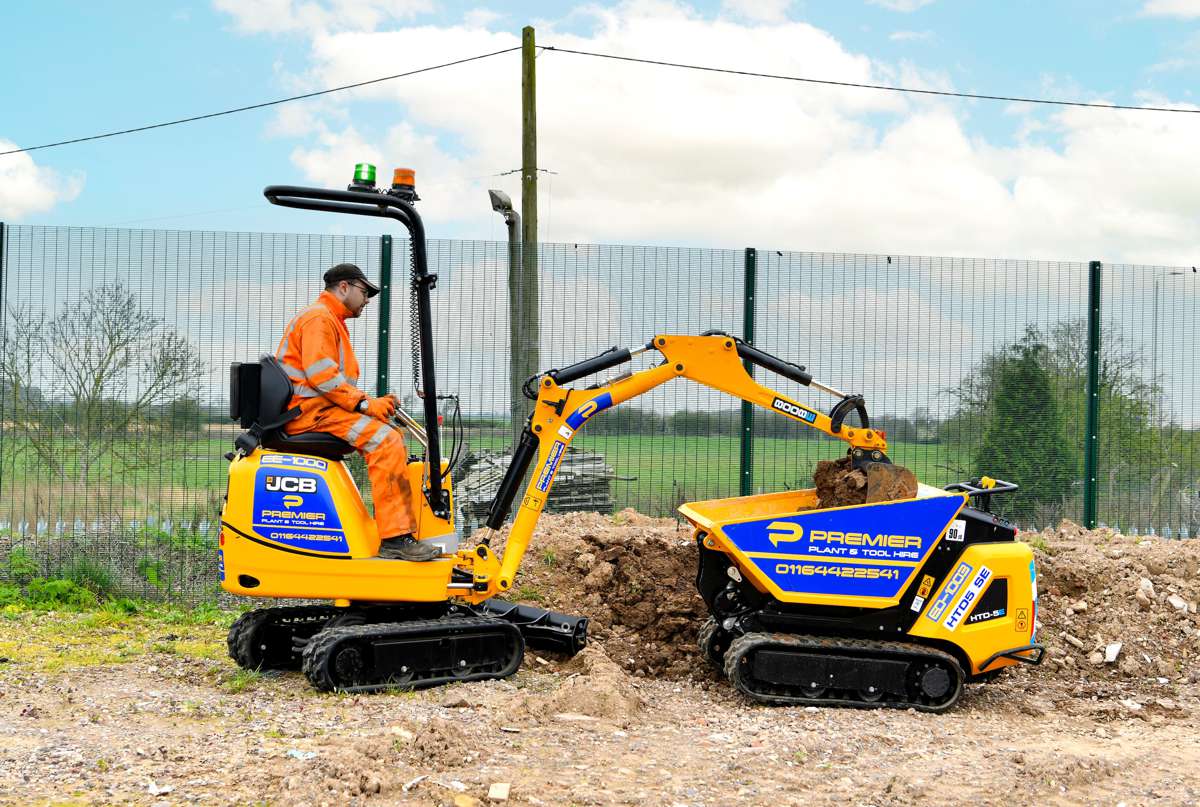
The company has added a fleet of machines from JCB’s E-TECH range, including the 19C-1E electric mini excavator, 8008E CTS electric excavator and HTD-5E electric tracked dumpster. While modest in size, these machines represent a bigger shift taking place across the construction and infrastructure supply chain. Contractors increasingly need lower-emission equipment to meet environmental requirements on projects, particularly in city centres, enclosed environments and public-sector works.
For hire companies, that creates both a challenge and an opportunity. Traditional diesel fleets remain essential across much of the market, but demand for quieter, cleaner and more flexible alternatives is growing steadily. Premier Plant & Tool Hire’s latest investment suggests forward-looking rental businesses no longer see electric equipment as experimental. Instead, it is becoming part of mainstream fleet planning.
The decision also reflects a broader commercial reality. Plant hire firms that can offer zero-emission options are likely to be better positioned for frameworks, local authority contracts, rail works, utilities projects and regeneration schemes where sustainability criteria increasingly influence procurement.
Briefing
- Premier Plant & Tool Hire has added electric machinery from JCB to support carbon neutral goals.
- New assets include the JCB 19C-1E, 8008E CTS and HTD-5E tracked dumpster.
- Demand for zero-emission rental equipment is rising across urban, indoor and regulated job sites.
- Electric fleets can help hire firms compete for sustainability-led contracts.
- The move signals continued momentum for electrification in compact construction equipment.
Electric Plant Hire Moves Into the Mainstream
Construction equipment electrification often begins with compact machines, and for good reason. Smaller excavators, dumpers and site support equipment usually operate on shorter duty cycles, return to depots regularly and are commonly used in locations where emissions and noise are sensitive issues. That makes them ideal early candidates for battery-electric power.
Across Europe and the UK, cities are tightening clean air standards while developers face pressure to reduce embodied and operational carbon on projects. London, Birmingham, Manchester and other urban centres have all seen increased attention on emissions from transport and non-road mobile machinery. Although regulations vary by location, the direction of travel is clear: cleaner equipment will become more valuable, not less.
For contractors, hiring electric equipment instead of owning it outright can be an attractive route. It avoids upfront capital exposure while allowing firms to test charging logistics, operator feedback and productivity on live projects. That puts rental businesses such as Premier Plant & Tool Hire in a strategically useful position as customers explore the transition.
JCB’s E-TECH
JCB has been one of the most visible UK manufacturers investing in battery-electric compact plant. Its E-TECH line has focused on applications where zero tailpipe emissions and lower operating noise bring immediate site advantages.
According to the supplied information, the machines acquired by Premier Plant & Tool Hire are capable of a full day’s work on a single charge, while maintaining performance expectations. If achieved in real-world operation, that is crucial. Contractors rarely adopt cleaner machinery simply for image purposes. Productivity, uptime and ease of use remain the deciding factors.
The low-noise characteristic is equally significant. Night works, internal demolition, utilities repairs, tunnels, basements, schools, hospitals and residential streets all benefit from quieter machinery. In some cases, reduced noise can extend working windows or lower complaints from nearby residents and businesses.
Fleet Strategy and Competitive Advantage
Premier Plant & Tool Hire already operates more than 100 JCB machines across categories including tracked excavators, telescopic handlers, site dumpers and compaction equipment. Adding electric models to an existing fleet suggests a measured expansion rather than a headline-grabbing gesture.
That matters because successful fleet transitions usually happen incrementally. Operators need technicians trained on new systems, charging arrangements at depots, customer education, transport planning and clear hire pricing structures. Rolling out electric machines alongside proven diesel assets allows businesses to match the right machine to the right project.
Managing Director Rob Hughes said: “We choose JCB because it is a trusted global brand that offers a wide range of construction equipment. JCB machines are powerful and reliable so they are ideal for contractors. Operators love the cabs, easy-to-use controls and hydraulics.
“As we continue our path towards carbon neutral, we value these JCB zero emission electric machines which help us to reduce our carbon footprint without affecting performance so they’re also a smart long-term investment.”
Those comments underline a practical rather than ideological approach. Reliability, operator acceptance and return on investment remain central considerations.
The Growing Pressure for Lower Carbon Construction
The UK construction sector is under mounting pressure to decarbonise. Government net zero targets, ESG reporting requirements, investor scrutiny and customer expectations are filtering through supply chains. Large contractors increasingly ask subcontractors and suppliers to evidence environmental performance.
Plant and equipment emissions form part of that equation. Diesel-powered non-road mobile machinery has long been essential to construction productivity, but it is also a recognised source of carbon emissions and local pollutants. Cleaner fuels, hybrid systems, hydrogen and electrification are all being explored, yet compact battery-electric machines are already commercially available now.
That gives rental fleets a near-term route to improvement. By offering electric options, hire firms can support clients that need to reduce emissions quickly without waiting for larger heavy equipment categories to mature technologically.
What It Means for Customers on Site
For end users, the appeal of electric compact plant often comes down to straightforward site benefits rather than policy language. Zero exhaust emissions at point of use can improve air quality in enclosed spaces. Lower vibration and noise can improve working conditions. Fewer routine engine-related service items may also reduce maintenance interruptions.
There can also be reputational value. Contractors working in public spaces or premium developments may prefer visibly cleaner and quieter equipment, particularly where community relations matter.
However, deployment still requires planning. Charging access, cable management, battery scheduling and operator familiarity all need attention. Hire firms that provide guidance alongside the machine itself may gain an edge in customer retention.
A Signal for the Wider Hire Market
Established in 2020, Premier Plant & Tool Hire has grown from a three-acre Leicestershire site to employ more than 50 people, supplying excavators, dumpers, rollers, telescopic handlers, powered access equipment and road sweepers. Its decision to invest in electric machinery only a few years into its growth story is notable.
Younger, agile businesses can sometimes move faster than legacy operators because they are building fleet strategy in real time rather than reshaping decades-old systems. That may encourage other regional hire companies to accelerate similar decisions.
For manufacturers, meanwhile, every successful rental deployment becomes a shop window. When multiple contractors use the same electric machine through hire channels, adoption barriers tend to fall quickly.
Building a Cleaner Fleet Without Losing Performance
The lesson from this latest investment is simple enough: decarbonisation in construction succeeds when it works commercially. If machines perform, charge reliably, satisfy operators and help contractors win work, adoption follows naturally.
Premier Plant & Tool Hire’s purchase of JCB E-TECH equipment shows how carbon reduction is increasingly tied to everyday business logic. Cleaner fleets are no longer just about future promises. They are becoming part of present-day competitiveness in the construction equipment market.