Ingersoll Rand and Garrett Motion Accelerate the Future of Oil Free Industrial Air
Industrial air compression rarely grabs headlines outside engineering circles, yet it quietly underpins everything from pharmaceutical production and semiconductor fabrication to beverage bottling and advanced manufacturing. When compressed air systems fail, entire production lines can grind to a halt. When they operate inefficiently, the energy bill can become staggering. With rising electricity costs, tightening environmental regulations and growing demand for contamination-free manufacturing, the pressure to modernise industrial air systems has intensified dramatically.
That shifting landscape explains why the newly announced strategic partnership between Ingersoll Rand and Garrett Motion carries far greater significance than a conventional supplier agreement. The two companies are joining forces in a multiyear collaboration aimed at developing next-generation oil-free industrial air compression technologies for critical sectors including food and beverage production and life sciences manufacturing.
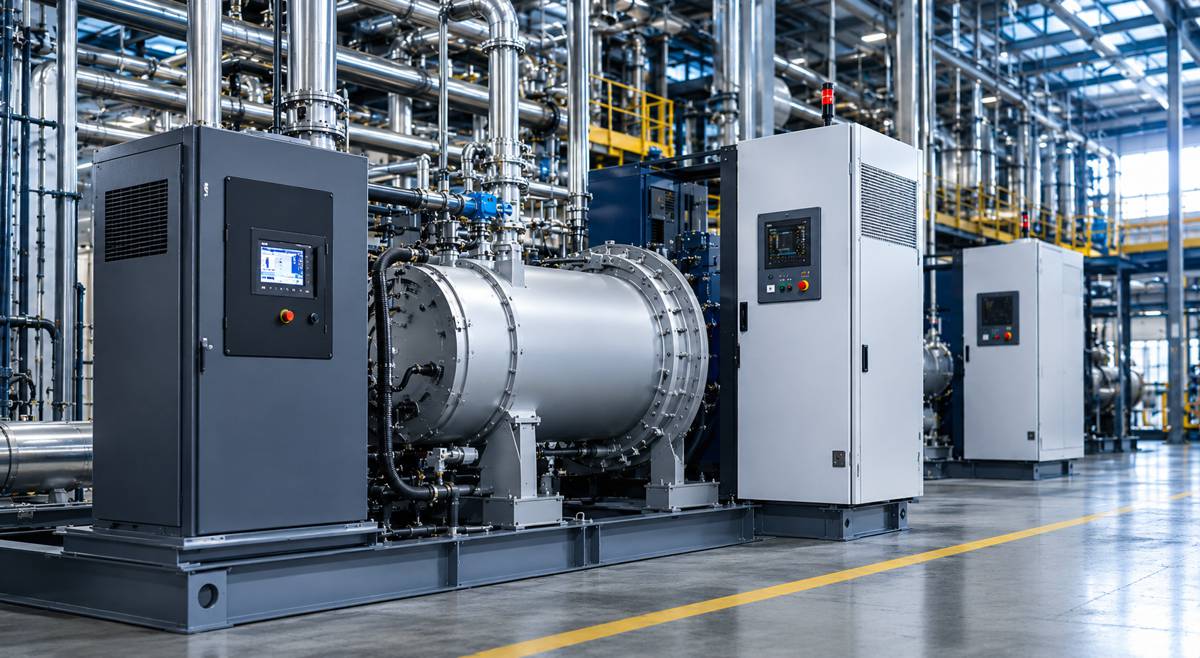
The agreement combines Ingersoll Rand’s established position in industrial compression systems with Garrett Motion’s expertise in high-speed centrifugal compressor technologies, an area historically associated with advanced turbocharging applications in automotive and industrial mobility sectors. Together, the companies are targeting a new generation of oil-free compressor systems designed to reduce energy consumption, improve operational efficiency and deliver higher levels of air purity for sensitive industrial environments.
For infrastructure operators, manufacturing groups and industrial investors, the partnership reflects a broader industrial trend already reshaping global production facilities. Factories are increasingly being judged not only by output, but by energy intensity, contamination control, operational resilience and carbon performance. Compressed air systems sit directly at the heart of that equation.
Briefing
- Ingersoll Rand and Garrett Motion have entered a multiyear strategic partnership focused on oil-free industrial air compression systems.
- The collaboration targets sectors requiring ultra-clean compressed air, including food and beverage manufacturing and life sciences.
- Garrett Motion will contribute advanced oil-free centrifugal compressor modules, while Ingersoll Rand provides system-level integration and industrial application expertise.
- Initial customer deployments are expected in 2026, with broader commercial rollout beginning in 2027.
- The partnership reflects growing global demand for lower-energy, contamination-free industrial systems as manufacturers pursue efficiency and sustainability targets.
Industrial Air Systems Under Pressure to Modernise
Compressed air has often been called the “fourth utility” of industry, sitting alongside electricity, gas and water as a fundamental requirement for industrial operations. Yet despite its importance, compressed air systems are frequently among the least efficient assets inside manufacturing facilities.
According to studies by organisations including the International Energy Agency and the U.S. Department of Energy, industrial compressed air systems can account for between 10 and 30 percent of a facility’s total electricity consumption depending on the sector and operating profile. Energy losses from leaks, inefficient compression processes and outdated equipment remain widespread across global manufacturing.
Oil-free systems add another layer of complexity. Traditional oil-lubricated compressors introduce contamination risks that are unacceptable in sectors such as pharmaceuticals, biotechnology, food processing, electronics manufacturing and medical device production. Even microscopic traces of oil contamination can compromise products, damage equipment or trigger regulatory compliance failures.
That has driven growing adoption of ISO 8573-1 Class 0 oil-free air systems, regarded as the highest standard for compressed air purity. However, achieving genuinely oil-free performance while maintaining energy efficiency and reliability has remained technically challenging and often expensive.
This latest partnership signals an attempt to address precisely that challenge by combining high-speed compressor innovation with system-level industrial integration.
A Strategic Move Beyond Traditional Compressor Design
Ingersoll Rand has long been associated with industrial compression technology across manufacturing, infrastructure and process industries. Its equipment supports sectors ranging from construction materials and mining through to chemicals, logistics and industrial automation.
Garrett Motion, meanwhile, is better known globally for turbocharging and electrification technologies within the automotive sector. Yet the underlying engineering expertise behind advanced turbo systems translates surprisingly well into industrial compression environments. High-speed centrifugal compressors rely on many of the same aerodynamic, thermal management and efficiency principles developed in advanced mobility applications.
The partnership therefore represents a convergence between industrial manufacturing expertise and advanced high-speed rotating machinery technology.
“This collaboration reflects our continued focus on delivering differentiated solutions that create superior value for our customers,” said Vicente Reynal, chairman and chief executive officer of Ingersoll Rand. “By working closely with Garrett Motion, we are strengthening our ability to innovate at the system level and address markets where performance, purity, and efficiency are non-negotiables, helping customers operate more efficiently and sustainably.”
Rather than simply developing standalone compressor hardware, the companies are emphasising system-level optimisation. That distinction matters because industrial compressed air efficiency depends not only on compressor performance, but also on airflow management, thermal control, pressure stability, variable demand response and lifecycle maintenance requirements.
Industrial operators increasingly want fully integrated efficiency ecosystems rather than isolated equipment upgrades.
Food and Beverage Manufacturing Driving Demand
One of the most immediate markets for the new technology is likely to be the global food and beverage sector, where oil-free air is essential across numerous production stages including packaging, bottling, fermentation, mixing and pneumatic conveying.
The global food processing industry has been undergoing rapid automation in response to labour shortages, supply chain pressures and tightening hygiene regulations. Automated production lines rely heavily on compressed air systems for packaging machinery, robotics and process control equipment.
At the same time, manufacturers are facing growing pressure to reduce energy consumption and emissions across their operations. Air compressors are often among the largest single electricity consumers inside food production facilities.
European Union energy efficiency directives, evolving carbon reporting frameworks and sustainability targets across multinational food brands have accelerated investment in modernisation programmes. Similar trends are visible across North America, the Gulf states and Asia-Pacific manufacturing hubs.
The ability to reduce lifecycle operating costs while maintaining contamination-free production environments could therefore become commercially significant for manufacturers operating on increasingly tight margins.
Life Sciences and Pharmaceutical Production Need Reliability
The life sciences sector presents another major opportunity for advanced oil-free air systems. Pharmaceutical manufacturing environments demand exceptionally high levels of reliability, purity and process consistency.
Compressed air is used throughout pharmaceutical production for cleanroom operations, tablet coating, sterile packaging, instrumentation and process automation. Equipment failures or contamination incidents can result in costly production interruptions, regulatory investigations and product losses.
That has pushed pharmaceutical manufacturers towards increasingly sophisticated compressed air monitoring and validation systems. Reliability has become just as important as efficiency.
Garrett Motion’s expertise in high-speed compressor technology may offer advantages in this area, particularly in terms of performance consistency and operational durability under demanding conditions.
“We are excited to partner with Ingersoll Rand to create a distinctive oil-free solution for industrial air compression,” said Olivier Rabiller, chief executive officer and president of Garrett Motion. “Ingersoll Rand is an ideal partner for Garrett as we expand the use of our unique oil-free high speed compressor technology to bring lower lifecycle costs and increased sustainability to operations in the industrial space.”
The reference to lifecycle costs is particularly important. Industrial buyers are increasingly evaluating total ownership costs rather than simply upfront equipment pricing. Maintenance intervals, downtime risks, spare parts requirements and long-term energy consumption now play central roles in procurement decisions.
Energy Efficiency Becomes an Infrastructure Priority
The timing of the partnership also reflects a much larger industrial transformation taking place globally. Manufacturing facilities are under mounting pressure to electrify operations, reduce carbon intensity and improve energy productivity.
Compressed air systems are often identified as one of the quickest routes to measurable energy savings. The European Commission has repeatedly highlighted industrial motor systems and compressed air infrastructure as major opportunities for reducing industrial electricity demand.
Modern high-speed centrifugal compression technologies can deliver meaningful efficiency improvements compared with legacy fixed-speed systems, particularly when integrated with advanced control architectures and demand-responsive operation.
For energy-intensive industries such as chemicals, cement, aggregates, mining and industrial manufacturing, those gains can have significant commercial implications. Electricity price volatility across Europe and other major industrial regions has forced many operators to reassess long-term equipment strategies.
Industrial infrastructure investors are paying close attention to these trends. Efficient utility systems increasingly contribute to facility valuations, operational resilience and ESG performance metrics.
Technology Transfer from Automotive to Industry
One of the more interesting aspects of the partnership is the continuing transfer of advanced engineering technologies from the automotive sector into industrial applications.
Garrett Motion’s heritage in turbocharging systems has historically focused on improving combustion engine efficiency and reducing emissions. However, many of the company’s core competencies, including aerodynamic optimisation, electric motor integration, thermal management and high-speed rotating systems, are directly applicable to industrial compressors.
This crossover between mobility engineering and industrial infrastructure has become increasingly common as electrification accelerates across multiple sectors.
Technologies initially developed for electric vehicles, hydrogen fuel cells and hybrid powertrains are now influencing industrial pumps, compressors, ventilation systems and power management infrastructure. That convergence is creating new competitive dynamics within industrial equipment markets traditionally dominated by established sector specialists.
For Garrett Motion, the partnership also represents a strategic diversification beyond automotive dependency at a time when global vehicle markets are undergoing structural transformation.
Commercial Rollout Begins in 2026
According to the companies, initial products emerging from the collaboration are expected to reach select Ingersoll Rand customers during 2026, with broader global commercial rollout beginning in 2027.
That timeline aligns with wider industrial capital investment cycles currently underway across manufacturing, logistics and advanced production sectors. Many industrial operators are preparing for major infrastructure upgrades tied to decarbonisation targets extending through the remainder of the decade.
The success of the partnership will ultimately depend on whether the companies can deliver measurable improvements in efficiency, reliability and lifecycle economics compared with existing oil-free technologies already available in the market.
Competition in the oil-free compressor segment remains intense, with major industrial equipment manufacturers investing heavily in efficiency improvements, digital monitoring and predictive maintenance systems. Buyers will expect tangible operational gains rather than incremental technical refinements.
Still, the partnership highlights an increasingly important industrial reality. Future competitiveness in manufacturing will depend not only on production output, but on the efficiency and resilience of the invisible infrastructure powering modern industry behind the scenes.
Cleaner Air Systems Reshaping Industrial Manufacturing
Industrial air compression may not attract the same public attention as electrified transport, artificial intelligence or renewable energy megaprojects, yet its influence stretches across almost every modern production environment. From pharmaceutical cleanrooms to automated food factories and advanced electronics facilities, reliable oil-free air systems have become foundational infrastructure.
The collaboration between Ingersoll Rand and Garrett Motion reflects a growing recognition that industrial efficiency gains will increasingly come from smarter supporting systems rather than headline-grabbing machinery alone.
As manufacturers pursue lower emissions, reduced operating costs and tighter contamination control, compressed air infrastructure is moving from background utility to strategic operational asset. The companies betting on that shift are positioning themselves for a market where efficiency, reliability and sustainability are no longer optional extras, but core industrial requirements.