Teaching Vehicles to Feel the Road Ahead
Autonomous driving has spent years focused on vision. Cameras, radar and lidar systems have steadily improved how vehicles identify obstacles, interpret traffic behaviour and navigate increasingly complex environments. Yet one critical variable has remained stubbornly unpredictable: the road surface itself.
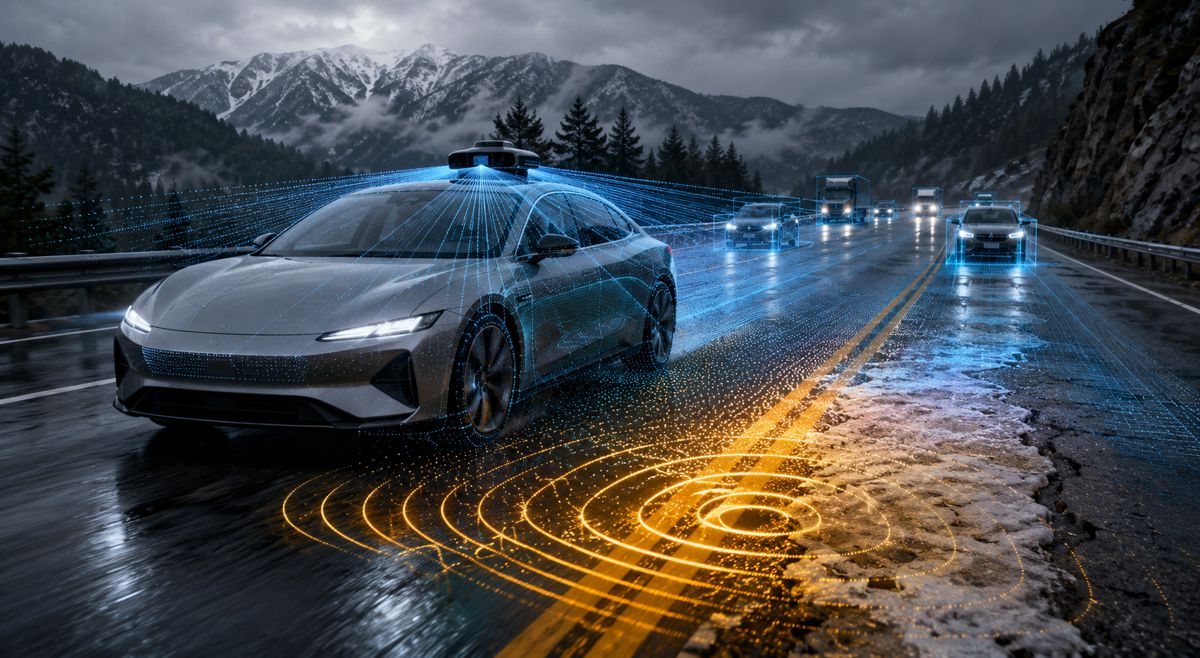
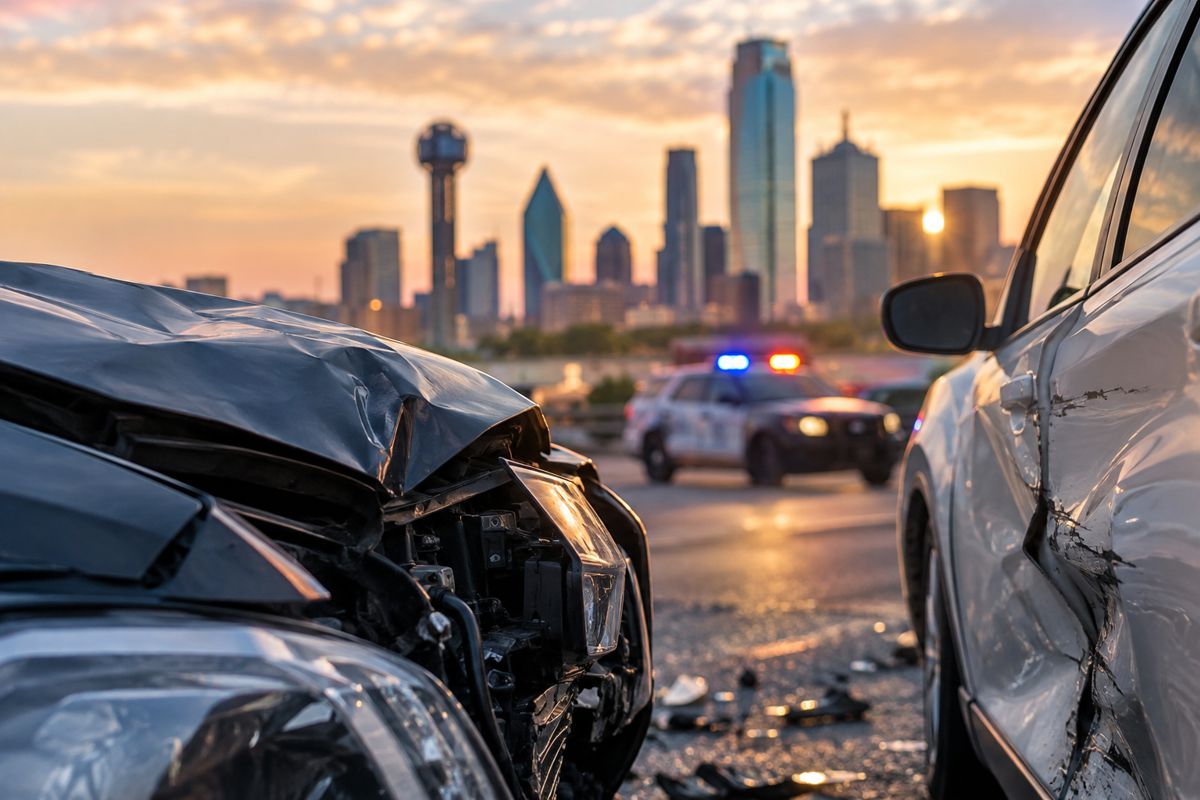
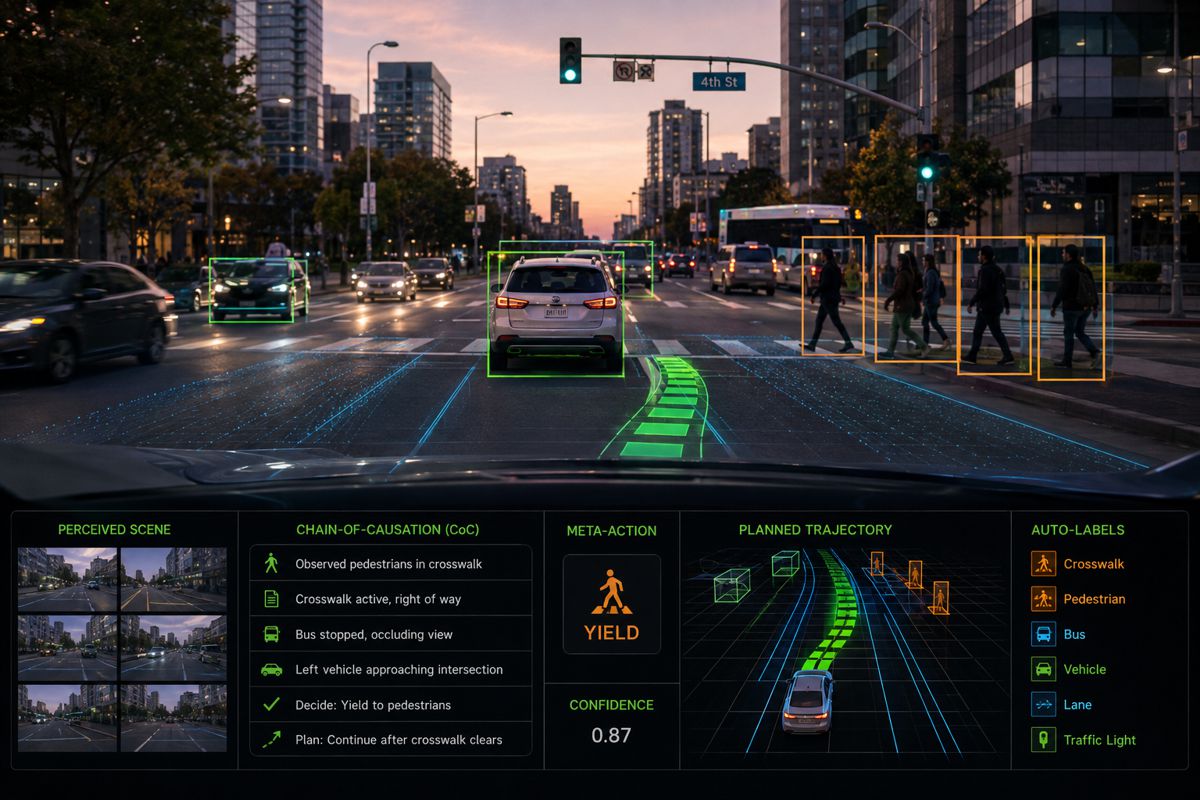
A vehicle may detect a pedestrian hundreds of metres ahead, recognise lane markings in heavy rain and calculate safe following distances in milliseconds. However, if the surface beneath its tyres suddenly shifts from wet asphalt to black ice, or if friction levels collapse unexpectedly during braking, even the most sophisticated Advanced Driver-Assistance Systems can face dangerous limitations.
That challenge sits at the centre of a new exploratory partnership between AEye and MoveAWheeL, two technology firms approaching vehicle intelligence from very different directions. Their recently announced Memorandum of Understanding aims to explore how long-range lidar perception and real-time road-surface sensing could work together to improve vehicle awareness during adverse conditions.
Rather than simply helping vehicles see farther ahead, the proposed integration seeks to help automated systems understand how the road itself is behaving in real time. That distinction may prove increasingly important as the automotive industry moves from driver assistance towards higher levels of autonomy across public road networks.
Briefing
- AEye and MoveAWheeL have signed an MOU to explore combining lidar perception with road-friction sensing technology
- The collaboration targets improved ADAS and autonomous driving performance during rain, snow and icy conditions
- AEye’s Apollo lidar system can reportedly detect objects at distances up to one kilometre
- MoveAWheeL uses active acoustic sensing to estimate road-surface friction coefficients in real time
- The companies intend to evaluate automotive applications, customer opportunities and regional go-to-market strategies
The Growing Importance of Road Surface Intelligence
Road conditions remain one of the least predictable variables in vehicle automation. Human drivers often react instinctively to subtle changes in grip, texture and tyre feedback. Machines, by contrast, depend entirely on sensor inputs and predictive software models.
Research from organisations including the European Road Safety Observatory and the National Highway Traffic Safety Administration has repeatedly highlighted the role that adverse weather and poor surface conditions play in vehicle incidents. Rain, snow, standing water and ice continue to contribute to significant collision risks worldwide.
Modern ADAS platforms already incorporate traction control, anti-lock braking systems and stability management technologies. Still, many of those systems are fundamentally reactive. They respond once wheel slip or instability has already begun. The next phase of automotive safety increasingly centres on predictive awareness rather than reactive correction.
That shift is driving interest in technologies capable of forecasting friction conditions before the vehicle encounters them. If automated systems can estimate surface grip levels ahead of time, braking profiles, steering inputs and acceleration strategies can theoretically be adjusted earlier and more smoothly.
For autonomous driving developers, this capability is particularly significant. Self-driving systems cannot rely on human instinct when unexpected road conditions appear. Predictive surface intelligence therefore becomes an operational necessity rather than simply an enhancement.
Pairing Vision with Tactile Intelligence
The collaboration between AEye and MoveAWheeL reflects a broader trend within the automotive sector toward multi-layered sensor fusion.
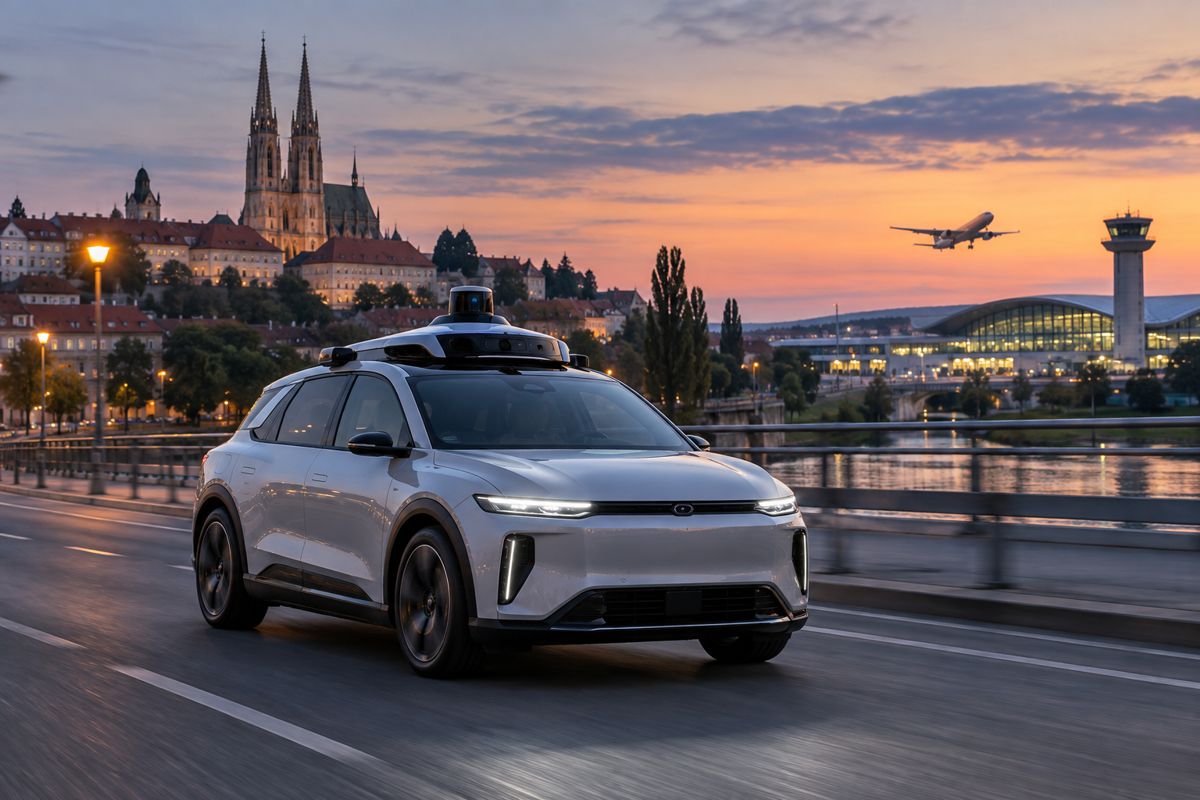
AEye’s Apollo lidar platform focuses on long-range environmental perception. According to the supplied material, the sensor can detect objects at distances up to one kilometre while remaining compact enough for behind-the-windshield integration. The use of 1550-nanometre lidar technology is notable because this wavelength enables higher power operation while remaining eye safe, supporting longer detection ranges compared with some conventional automotive lidar systems.
MoveAWheeL approaches the problem from beneath the vehicle rather than ahead of it. Its acoustic sensing platform estimates road-surface friction coefficients using active sensing techniques designed to evaluate grip conditions in real time.
Combined, the technologies aim to create a more comprehensive understanding of driving environments. One system identifies hazards, traffic patterns and distant objects. The other attempts to determine how safely the vehicle can physically respond under current surface conditions.
“Physical AI depends on giving machines the ability to accurately perceive and understand the real world,” said Matt Fisch, Chairman and CEO of AEye. “Apollo™ was designed to deliver long-range, real-time 3D perception that helps systems see farther and react earlier in complex environments. By exploring the integration of Apollo™ with MoveAWheeL’s road-surface intelligence, we have the opportunity to create an even deeper understanding of the driving environment, particularly in the adverse conditions where advanced safety systems are needed most.”
The terminology around “Physical AI” is becoming increasingly common across mobility and robotics sectors. Unlike purely digital AI systems, Physical AI refers to artificial intelligence operating within dynamic physical environments where sensor interpretation, motion control and real-world unpredictability intersect continuously.
Weather Remains One of Autonomy’s Biggest Challenges
Despite rapid progress in autonomous mobility development, adverse weather conditions continue to expose major limitations across many existing sensor systems.
Heavy rain can interfere with camera visibility. Snow may obscure lane markings. Fog affects optical systems. Standing water can distort radar reflections. Black ice remains notoriously difficult for vehicles to identify visually before traction loss occurs.
This challenge has slowed deployment ambitions for higher-level autonomous driving in several global markets. Many autonomous vehicle pilot programmes still operate primarily in regions with predictable weather patterns and well-maintained infrastructure.
The industry’s growing focus on sensor redundancy reflects recognition that no single technology provides perfect environmental understanding under all conditions. Radar, cameras, lidar, ultrasonic sensors and high-definition mapping each contribute different strengths and weaknesses.
Road-surface sensing potentially introduces another important data layer into that ecosystem. Instead of relying solely on visual interpretation, vehicles could gain measurable friction intelligence that directly influences dynamic driving decisions.
“While Lidar provides the ‘eyes’ for a vehicle to see obstacles, MoveAWheeL provides the ‘tactile sense’ to feel the road. By integrating our Physical AI with AEye’s long-range perception, we are creating a complete safety stack that remains robust even in the most treacherous weather conditions,” said Dr. Min-Hyun Kim, Founder and CEO of MoveAWheeL.
That concept of a “safety stack” is increasingly shaping automotive engineering priorities. Vehicle intelligence is no longer defined by isolated sensor performance alone. Instead, resilience depends on how effectively multiple systems combine and cross-reference environmental data.
Expanding Beyond Passenger Vehicles
Although the announcement focuses primarily on automotive safety and autonomous driving, the underlying technologies have wider infrastructure and transport implications.
Road-surface intelligence could prove valuable across commercial freight, mining, public transport and smart infrastructure operations. Fleet operators increasingly depend on predictive analytics to improve safety, reduce downtime and optimise vehicle performance across varying conditions.
Heavy trucks, buses and industrial equipment frequently operate in environments where traction conditions can deteriorate rapidly. Real-time friction analysis could potentially support safer braking strategies, lower accident risks and more efficient vehicle control systems.
There are also implications for intelligent transport infrastructure. Smart roads and connected mobility ecosystems increasingly rely on shared environmental data between vehicles and infrastructure networks.
If road-surface condition data can be captured accurately and transmitted reliably, future transport systems may enable connected fleets to share friction intelligence across networks in real time. A hazardous icy section detected by one vehicle could theoretically trigger alerts or automated speed adjustments for approaching vehicles moments later.
That aligns closely with wider industry movement toward Vehicle-to-Everything connectivity, edge computing and AI-driven traffic management systems.
Competition Intensifies Across the Lidar Sector
The announcement also arrives during a pivotal period for the lidar industry itself.
Automotive lidar suppliers have faced growing pressure to demonstrate commercial viability after years of investor enthusiasm and aggressive market forecasts. Several lidar companies expanded rapidly during the SPAC-driven technology boom earlier this decade, only to encounter slower-than-expected autonomous vehicle deployment timelines.
As a result, many firms are now emphasising practical ADAS applications rather than fully autonomous driving alone. Long-range detection, highway safety systems, collision avoidance and industrial automation have become increasingly important commercial targets.
AEye has positioned itself around software-defined lidar architecture capable of adapting sensing priorities dynamically. Alongside Apollo, the company also offers its STRATOS and OPTIS platforms aimed at broader industrial and mobility applications.
Meanwhile, South Korea continues strengthening its position as a global mobility technology hub. Korean firms remain heavily involved in advanced automotive electronics, battery systems, semiconductor development and intelligent transport technologies. MoveAWheeL’s acoustic sensing approach reflects growing diversification beyond conventional camera and radar solutions within Asian mobility innovation ecosystems.
Building Safer Machine Decision Making
As vehicle automation progresses, the industry’s biggest engineering challenge may not be teaching machines how to drive under ideal conditions. It may be teaching them how to respond safely when conditions become unpredictable.
That distinction matters enormously for public trust. Consumers are unlikely to fully embrace higher levels of vehicle autonomy unless systems can demonstrate reliability during the difficult, messy and inconsistent conditions that human drivers face daily.
Road spray, glare, snow, potholes, deteriorating markings and sudden traction loss all remain stubbornly real-world problems that laboratory environments cannot fully replicate.
Partnerships such as the one between AEye and MoveAWheeL illustrate how the sector is gradually shifting from isolated automation technologies toward broader environmental intelligence systems.
Vehicles of the future may need more than vision. They may need situational awareness that combines sight, prediction and physical understanding simultaneously.
Quietly, that evolution is already reshaping how machines interpret the world around them.