Atlas Expands Driverless Truck Fleet to Build the Digital Oilfield Supply Chain
Atlas Energy Solutions has committed to quadrupling the driverless truck fleet it runs with Kodiak AI, lifting it from 28 vehicles at the end of March 2026 to 100 by the middle of 2027 and moving those trucks onto public roads for the first time in early 2027. Taken in isolation, a fleet expansion in a corner of the West Texas oil patch might read as routine industrial housekeeping. Set against the past decade of autonomous trucking, it looks closer to a verdict.
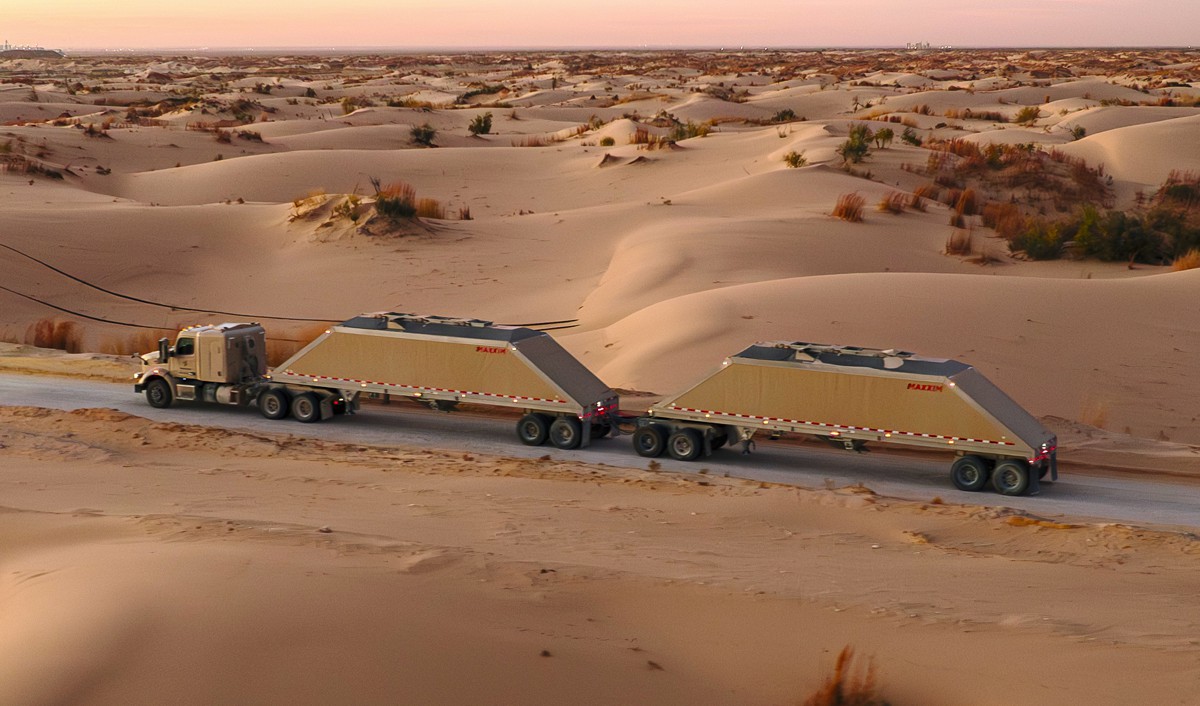
While a long list of self-driving developers spent years and hundreds of millions of dollars trying to validate driverless freight on the open interstate, the largest working fleet of driverless big-rigs in the world has quietly assembled itself hauling frac sand across the private lease roads of the Permian Basin.
That distinction matters because it inverts the assumption that autonomy would arrive first on the highway. Atlas and Kodiak built their programme in the one environment where the economics closed early, namely a controlled, repetitive, high-frequency industrial route served for a single customer that owns the trucks and controls the road.
The addition of a second simultaneous load-out point along Atlas’s 42-mile Dune Express conveyor, together with an agreed ramp to 100 vehicles, signals that the pair now treat driverless haulage not as a pilot to be proven but as core logistics infrastructure to be scaled. For anyone tracking where autonomy actually becomes a business rather than a demonstration, the oilfield rather than the freeway is where the answer is being written first.
Briefing
- Atlas will grow its Kodiak-powered driverless fleet from 28 trucks as of 31 March 2026 to 100 by mid-2027, with public-road operation targeted for early 2027, subject to regulatory and operational milestones.
- A second simultaneous load-out point on the 42-mile Dune Express conveyor, roughly 90 minutes from the first, allows Atlas to serve well sites in Texas and New Mexico concurrently rather than one location at a time.
- The programme has carried around 7,000 loads across 15 routes since 2024, hauled more than 450,000 tons of sand, logged over 23,500 driverless hours in the first quarter of 2026, and set a single-day record of 176 loads on 20 July 2026.
- Kodiak, now listed on Nasdaq under the ticker KDK following a roughly 2.5 billion dollar SPAC merger in September 2025, describes the joint operation as the world’s largest fleet of driverless big-rig trucks.
- Earlier in 2026 the partners ran what they describe as the first autonomous triple-trailer operation, moving a combined loaded weight above 135 tons behind a single driverless tractor.
Why The Oilfield Cracked The Autonomy Problem First
The commercial history of autonomous trucking has been defined less by technical failure than by the difficulty of finding a route where the numbers work today rather than in some deferred future. Public highways combine long distances with unpredictable traffic, mixed weather, and a regulatory patchwork across state lines, which is precisely why validation has been so slow and so capital-intensive.
Frac sand delivery in the Permian offered the opposite conditions. The runs are short and repetitive, frequently the twenty to one hundred mile last-mile legs that define oilfield logistics, and until now they have taken place largely on private lease roads under the operator’s own control. That environment removes much of the ambiguity that has stalled highway deployment and lets a driverless system prove reliability on a route it sees hundreds of times.
Just as important is the ownership model. Rather than selling software to a third-party carrier, Kodiak equipped trucks that Atlas itself owns and operates, making Atlas the first customer to run driverless commercial semi-trucks with its own fleet. That structure aligns incentives tightly, because the party paying for autonomy is also the party capturing the operational savings at the wellsite.
John Turner, chief executive and president of Atlas, framed the wider strategy plainly, describing the tie-up as “This partnership with Kodiak is a critical part of the Atlas strategy to transform oilfield sand logistics through innovation,” and setting out an approach built on identifying “Our mission is to seek critical energy infrastructure with inefficiencies, then engineer solutions that improve efficiency, reduce risk and enhance our customers’ operational success.” The result is a working template for how autonomy reaches commercial scale, which is by starting where a single operator controls the asset, the road and the demand.
The Dune Express And The Logic Of An Automated Supply Chain
The autonomous fleet does not stand alone. It sits at the end of a heavily engineered logistics chain that Atlas has assembled specifically to strip cost and risk out of moving sand. The Dune Express is a fully electrified overland conveyor stretching 42 miles from the company’s mine at Kermit in West Texas to an end-of-line loadout just across the New Mexico state line in Lea County, with capacity to move around 13 million tons of proppant a year through two permanent loadout facilities holding more than 84,000 tons of vertical storage.
The conveyor was designed to take frac sand off crowded, hazardous oilfield roads for the bulk of its journey, cutting truck miles, emissions and traffic before the load is ever handed to a driver. Automating the final leg from conveyor to wellsite completes the picture, so that the section of the supply chain most exposed to labour shortages and road risk is also the section being handed to software.
Layered onto Atlas’s broader asset base, the strategic intent becomes clearer still. The company operates fourteen proppant production facilities across the Permian with combined annual capacity of around 29 million tons, alongside a conventional fleet of roughly 120 custom-trailered trucks and a patented drop-depot process built to raise payload and cut turnaround.
Autonomy is therefore not a bolt-on novelty but the logical extension of a vertically integrated system in which mining, conveyance and last-mile delivery are engineered as a single flow. That integration is what allows a second driverless load-out point to be added without redesigning the operation, and it is what makes the economics of scaling to 100 trucks credible rather than speculative.
What A Second Load-Out Point Actually Buys
Until this expansion, Atlas ran its driverless trucks from one load-out point at a time, which capped how much of the basin the fleet could serve at once. Operating concurrently from two distinct locations around 90 minutes apart changes the geometry of the service, letting Atlas dispatch autonomous loads to well sites across a far wider area of the Permian simultaneously and respond faster as completion schedules shift.
In a market where a single large completion can demand hundreds of truckloads spread over several days, and where modern high-intensity wells can consume five to ten thousand tons of proppant or more, the ability to feed multiple frac spreads without idle time is a direct commercial advantage. Completion crews stand down expensively when sand runs short, so reliability of supply, not headline haul rate, is increasingly the metric that wins the work.
The throughput data suggests the operation is already delivering at industrially meaningful volumes. Since deployments began in 2024, the fleet has moved more than 450,000 tons across roughly 7,000 loads on 15 routes, and in the first quarter of 2026 alone it logged over 23,500 driverless hours. The single-day record of 176 loads set on 20 July 2026 matters less as a statistic than as evidence that autonomous assets can sustain the tempo the oilfield demands.
Set against last-mile economics, where industry survey data has put Permian haul rates near eighteen dollars a loaded mile on short thirty-mile runs, and against a persistent shortage of qualified drivers willing to work long shifts on rough, dangerous lease roads, a fleet that can run around the clock without a cab crew addresses a genuine and expensive constraint rather than a manufactured one.
Kodiak’s Listing And The Investment Case For Driverless Freight
The partner supplying the autonomy has itself become a public-market bellwether for the sector. Kodiak, founded in 2018 by former Google self-driving engineer Don Burnette and formerly known as Kodiak Robotics, completed a business combination with Ares Acquisition Corporation II in September 2025, listing on Nasdaq under the tickers KDK and KDKRW at a valuation of roughly 2.5 billion dollars in one of the larger operating-company de-SPAC deals of that year.
The transaction brought in more than 212 million dollars, and the company followed it in May 2026 with a further 100 million dollar private placement backed by an affiliate of Ares and new institutional investors. Those raises are being consumed at pace, with Kodiak reporting a first-quarter 2026 operating loss of 37.9 million dollars against revenue of 1.8 million, so the investment thesis rests on the trajectory rather than current profitability.
That trajectory is what the Atlas expansion helps to validate. Kodiak’s revenue grew 74 per cent quarter on quarter in early 2026, driven by its Driver-as-a-Service model, and the company runs a single autonomous stack across long-haul highway, industrial and defence applications, a structure it describes as a compounding flywheel in which miles driven in one vertical improve capability in the others.
Burnette placed the Atlas work at the centre of that argument, stating that “Together, Atlas and Kodiak have deployed the world’s largest fleet of driverless big-rig trucks,” and adding that “We’ve demonstrated that autonomous trucking is delivering meaningful results today. Our expanding partnership, which now covers two unique locations, is creating a blueprint for how autonomy can transform logistics by improving efficiency, increasing productivity, and delivering lasting value for customers at commercial scale.”
Diversification underpins the resilience of that case, with Kodiak extending into defence through a collaboration with General Dynamics Land Systems on the Leonidas autonomous ground vehicle and planning to integrate NVIDIA’s DRIVE Hyperion architecture into its next generation of trucks, so that a single proven stack can be monetised well beyond the sand routes where it first earned its keep.
The Competitive Field And Two Roads To Revenue
Kodiak and Atlas are not building this market alone, and the shape of the competition clarifies why the industrial route has proved so valuable. The most visible rival, Aurora Innovation, has pursued the opposite strategy, launching commercial driverless service on Texas interstates and expanding across corridors linking Dallas, Houston, Fort Worth, El Paso and Phoenix, with a stated ambition of running around 200 trucks by the end of 2026 and revenue guidance for the year of between 14 and 16 million dollars.
Aurora has attracted heavyweight backing from Uber and Nvidia’s venture arm, secured a driverless agreement with distribution giant McLane, and notably taken frac sand hauling work of its own with Detmar Logistics, a sign that the oilfield is now contested ground for both the private-road and public-road models. Truck makers including Volvo and International, alongside software developers such as Waabi and the recently listed PlusAI, complete a field that is finally producing paying freight rather than press releases.
The strategic lesson for construction and infrastructure leaders is that these two roads to revenue are converging on the same conclusion from different directions. Aurora is proving that driverless freight can work at highway speed across public corridors, while Atlas and Kodiak are proving that it can work at industrial density on controlled sites, and both are now generating commercial revenue where the sector spent years generating only pilots.
For operators weighing where autonomy might touch their own supply chains, the evidence points to controlled, repetitive, asset-owner-controlled routes as the first place the technology pays. That has obvious read-across beyond oil and gas, to aggregates haulage, mine-to-plant movements, port drayage and large civils projects, wherever a single operator controls both the road and the demand and can therefore capture the savings directly.
The Public-Road Test And What Follows
The next milestone is also the hardest. Moving Atlas’s driverless trucks onto public roads in early 2027 shifts the operation out of the controlled environment that made the early economics work and into the mixed traffic, variable conditions and cross-border regulatory oversight that have slowed every autonomous developer before it.
Atlas and Kodiak have flagged that the timeline is contingent on regulatory and operational milestones, which is the appropriate framing, because public-road certification is where confident private-site performance meets a far less forgiving set of variables. Success would extend the reach of the fleet dramatically and open routes the Dune Express and private lease roads cannot serve, while any delay would simply hold the operation at the industrial scale it has already reached.
For the wider industry the significance runs deeper than one fleet’s route map. If a driverless operation seeded on frac sand can graduate to public roads while sustaining commercial volumes, it establishes a repeatable pathway from controlled industrial deployment to open-network freight, and it does so with real utilisation data behind it rather than projections.
That would reshape how infrastructure owners think about last-mile logistics, labour risk and lifecycle cost across heavy materials movement, and it would give financiers a live template for underwriting autonomy on the basis of proven throughput. The Permian has spent a decade as the proving ground for shale technology and in-basin sand supply. It is now, on the strength of Atlas and Kodiak’s expansion, becoming the proving ground for autonomous heavy haulage as well.
Key Industry Questions
- Why did driverless trucking scale first in the oilfield rather than on public highways? Frac sand delivery in the Permian offered conditions that suited autonomy far earlier than open-network freight. The routes are short, repetitive and high-frequency, and until now they have run largely on private lease roads under a single operator’s control, which removes the traffic unpredictability and multi-state regulatory complexity that have slowed highway deployment. Crucially, Atlas owns and operates the trucks itself, so the party paying for the technology is also the party capturing the wellsite savings. That alignment, combined with a controlled route the system encounters repeatedly, allowed reliability to be demonstrated at commercial volume. The result is that the largest working fleet of driverless big-rigs emerged in an industrial setting rather than on the interstate.
- How does the Dune Express conveyor change the economics of the autonomous fleet? The Dune Express carries sand 42 miles from the Kermit mine to a loadout near the New Mexico line by fully electrified conveyor, capable of moving around 13 million tons a year. By taking proppant off public and lease roads for the bulk of its journey, it removes truck miles, emissions and traffic before a driver is ever involved. Automating the final leg from conveyor to wellsite then hands the most labour-intensive and hazard-exposed section of the chain to software. Because mining, conveyance and last-mile delivery are engineered as one integrated flow, a second driverless load-out point can be added and the fleet scaled without redesigning the operation, which is what makes the ramp to 100 trucks commercially credible.
- What does adding a second load-out point actually deliver? Previously Atlas ran driverless trucks from one load-out point at a time, limiting how much of the basin it could serve simultaneously. Operating concurrently from two sites about 90 minutes apart lets the fleet dispatch loads across a much wider area of the Permian at once and respond faster as completion schedules change. Given that a single large completion can require hundreds of truckloads over several days, the ability to feed multiple frac spreads without interruption is a direct advantage. Completion crews stand down expensively when sand runs short, so consistent supply, rather than headline haul rate, is increasingly the metric that secures the work. The second point effectively converts proven capability into broader market coverage.
- How does the Atlas and Kodiak model differ from Aurora’s public-road approach? Aurora has pursued driverless freight on Texas interstates, running commercial routes between cities such as Dallas, Houston, El Paso and Phoenix and targeting around 200 trucks by the end of 2026. Atlas and Kodiak instead proved autonomy at industrial density on controlled private sites before attempting public roads. Both approaches are now producing commercial revenue, which marks a genuine turning point after years of pilots. The two models are converging on the same conclusion from different directions, namely that autonomy pays first where routes are repetitive and demand is predictable. Notably, the oilfield is now contested by both, with Aurora also taking frac sand work through a separate logistics customer.
- What does Kodiak’s Nasdaq listing mean for the partnership and for investors? Kodiak listed on Nasdaq in September 2025 through a SPAC merger valuing it at roughly 2.5 billion dollars, and raised a further 100 million dollars in May 2026. It remains pre-profit, reporting a first-quarter 2026 operating loss of 37.9 million dollars on revenue of 1.8 million, so the case rests on trajectory. Revenue grew 74 per cent quarter on quarter, driven by its Driver-as-a-Service model, and the company runs one autonomous stack across long-haul, industrial and defence applications. The Atlas expansion supplies exactly the kind of scaling, real-world utilisation data that public investors need to see. For the partnership, the listing and follow-on financing provide the capital required to fund the ramp to 100 trucks and the move to public roads.
- What are the regulatory and safety hurdles before public-road operation in early 2027? Atlas and Kodiak have stated that public-road operation is subject to regulatory and operational milestones, which is the correct framing. Moving off controlled private sites introduces mixed traffic, variable weather and cross-border oversight between Texas and New Mexico, each of which is more demanding than a repeated lease-road route. Certification typically requires demonstrated safety performance, engagement with state authorities and validation of the system across the wider range of scenarios public roads present. The advantage the partners carry is a substantial base of driverless hours and loads already accumulated in commercial service, which provides an evidence base most developers lack. Any slippage in timing would hold the operation at its current industrial scale rather than reversing progress.
- What does autonomy mean for oilfield drivers and the wider labour market? Last-mile frac sand hauling has long been characterised by driver shortages, high turnover and demanding, hazardous conditions on rough lease roads, and operators have struggled to retain experienced personnel. Autonomy addresses that constraint directly by handling the most exposed section of the chain without a cab crew, which supports round-the-clock running and consistent supply. The near-term effect is less about displacing a stable workforce than about filling capacity the market has found hard to staff reliably. Over time, roles are likely to shift toward remote operations, monitoring, maintenance and higher-value logistics coordination. The transition will need careful management, but it begins in a segment where labour scarcity, rather than surplus, has been the defining problem.
- Why should construction and infrastructure firms outside oil and gas pay attention? The Atlas and Kodiak model demonstrates that autonomous heavy haulage pays first where a single operator controls the route, the asset and the demand, and can therefore capture the savings directly. That pattern maps neatly onto aggregates haulage, mine-to-plant movements, port drayage and material transport on large civils projects, all of which share the controlled, repetitive characteristics that made the oilfield deployment work. For infrastructure owners weighing lifecycle cost, labour risk and reliability, the programme offers a live template with genuine utilisation data behind it rather than projections. As the technology graduates from private sites to public roads, the case for piloting autonomy on controlled industrial corridors strengthens considerably, and early movers will accumulate the operating evidence that later financing and procurement decisions will demand.
Strategic Takeaways
- Autonomy is reaching commercial scale first on controlled industrial routes rather than open highways, so operators seeking early returns should look to repetitive, asset-owner-controlled corridors where the technology already pays.
- Vertical integration is the enabler, as Atlas’s combination of conveyor, custom trailers and driverless last-mile delivery shows that autonomy compounds in value when it sits inside an engineered supply chain rather than bolted onto an existing one.
- Reliability of supply, not headline haul rate, is becoming the decisive competitive metric in high-intensity completions, and round-the-clock driverless capacity directly targets the idle-time and labour constraints that cost operators most.
- Kodiak’s public listing turns the Atlas fleet into a visible investment proof point, and the single-stack model spanning long-haul, industrial and defence gives the technology multiple routes to monetisation beyond frac sand.
- The move to public roads in early 2027 is the sector’s next real test, and success would establish a repeatable pathway from controlled industrial deployment to open-network freight that infrastructure owners across heavy haulage should be positioning to exploit.