KfW IPEX-Bank Leads CHF 254m Financing for Saudi Passenger Trains
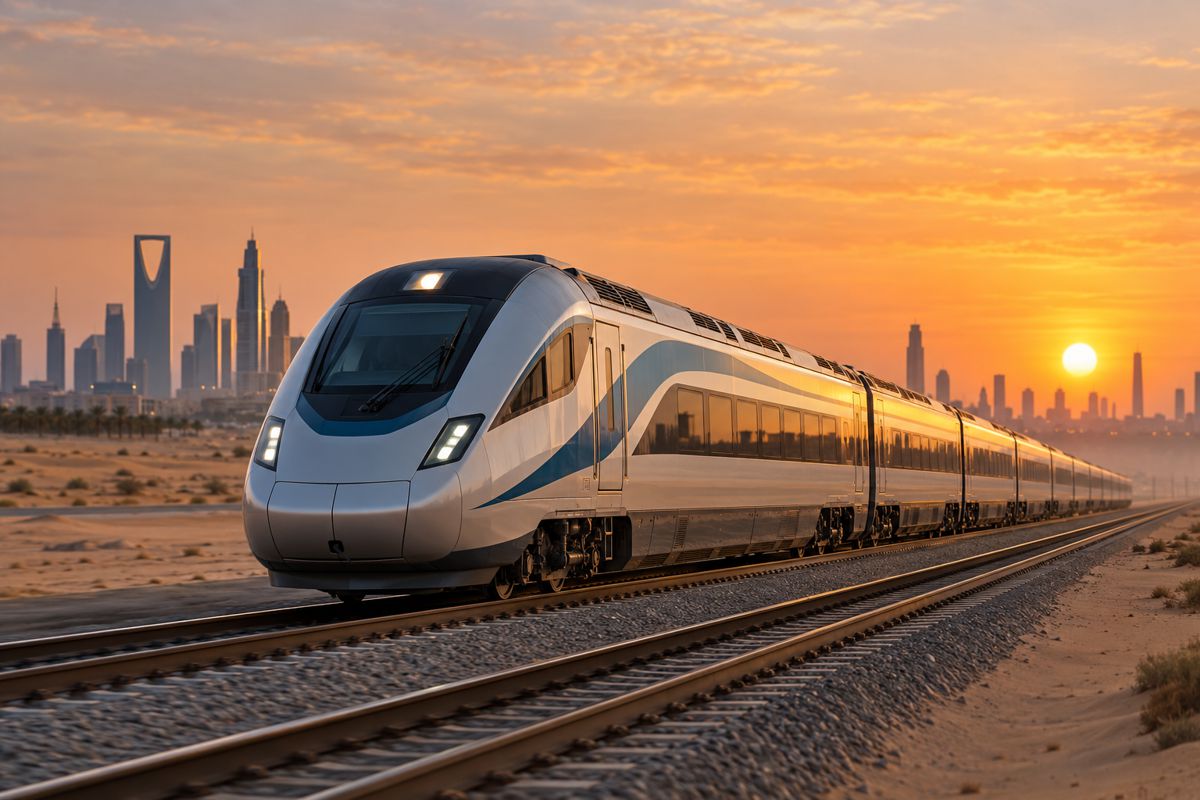
A CHF 254 million export credit facility will finance ten Stadler passenger trains for Saudi Arabia’s East Network, bringing Swiss rolling-stock manufacturing, European banking and state-backed export insurance into the Kingdom’s expanding rail programme.
KfW IPEX-Bank is acting as Initial Mandated Lead Arranger and Bookrunner for the facility for Saudi Arabia Railways (SAR), leading a banking consortium that includes Commerzbank and UBS Switzerland as arrangers. Swiss Export Risk Insurance SERV is providing export credit agency support.
The financing covers ten passenger trains being supplied by Stadler Rail. They form the base order of a considerably larger procurement programme agreed in 2024, under which SAR ordered ten trains with an option for another ten, accompanied by long-term maintenance arrangements.
For Saudi Arabia, the immediate objective is additional passenger capacity between Riyadh and the Eastern Province. For Stadler, the contract represents its first entry into the Saudi Arabian rail market. The financing structure connects both objectives, providing the long-term funding and risk allocation needed to move the trains from manufacturing contract to passenger service.
Briefing
- KfW IPEX-Bank is leading a CHF 254 million Export Credit Facility for Saudi Arabia Railways.
- The financing covers ten new Stadler passenger trains for Saudi Arabia’s East Network.
- Commerzbank and UBS Switzerland are arrangers, with Swiss Export Risk Insurance SERV acting as the export credit agency.
- Stadler’s underlying 2024 agreement covers ten trains, an option for another ten and long-term maintenance, with a total potential order value of around CHF 600 million.
- SAR expects the new fleet to help raise annual East Network passenger capacity to more than 3.8 million.
Financing European Rolling Stock
KfW IPEX-Bank’s role places the transaction within the established model of export finance used for capital-intensive infrastructure equipment. Large rolling-stock orders involve substantial expenditure well before the assets begin generating operational value, while manufacturing can extend over several years and across multiple national supply chains.
Export credit structures can bridge that gap by combining commercial lending with risk cover from an export credit agency. In this case, KfW IPEX-Bank leads the lending consortium while SERV provides the ECA involvement supporting the Swiss export component.
SERV’s buyer credit insurance framework is designed to insure financial institutions against defined payment risks associated with loans financing Swiss exports. Its cover can address political, commercial, transfer and force majeure risks, with a maximum cover ratio of 95 per cent under its standard buyer credit product.
For rolling-stock manufacturers, the structure provides greater certainty while engineering resources, production capacity, suppliers and components are committed long before trains enter passenger service. Banks gain a mechanism for managing defined risks associated with financing an overseas purchaser over a longer timeframe than a conventional equipment sale.
SERV reported that Saudi Arabian rail was already among its largest areas of new commitment in 2024, when Saudi Arabia was one of several countries where new commitments exceeded CHF 100 million.
Aida Welker, member of the Management Board of KfW IPEX-Bank, said: “Modern rail projects like this are central to our infrastructure strategy. They illustrate how European technology and targeted export finance can work hand in hand to strengthen efficient public transport services.”
The arrangement therefore links Saudi infrastructure investment with the European industrial supply chain through a financing structure capable of supporting a sizeable export programme.
Stadler’s Saudi Arabian Entry
The ten trains being financed are part of a contract that predates the latest financing announcement. SAR and Stadler signed their agreements in February 2024 following an international tender launched in 2022, Stadler’s selection as preferred bidder in 2023 and subsequent negotiations.
The base supply contract covers ten trainsets with an option for another ten. A separate maintenance agreement provides full maintenance support and spare parts for ten years, with provision to extend that arrangement to the additional trains if the option is exercised. Stadler put the potential combined value of the supply and maintenance agreements at approximately CHF 600 million.
The CHF 254 million financing figure should therefore be distinguished from the value of the wider Stadler programme. It is the export credit facility supporting the ten trains identified in the current transaction rather than the announced value of the complete procurement.
For Stadler, Saudi Arabia also represents a new national market. The manufacturer subsequently described the contract in its 2024 annual reporting as its first delivery of intercity trains to the Kingdom and confirmed the ten-plus-ten structure.
The engineering requirement extends beyond adapting an existing European train for another operator. Saudi rolling stock must operate reliably in high temperatures and an environment where sand and dust can affect cooling, filtration, braking, doors, electrical systems and other equipment. Stadler specifically identified the need for trains capable of operating despite sand on the tracks when discussing the Saudi programme in its annual report.
The company arrives with previous experience designing rolling stock for climatic conditions elsewhere in the Middle East and North Africa. The Saudi contract takes that experience into a much larger Gulf market and adds a long-term service component rather than ending the commercial relationship when the trains are delivered.
Expanding the East Network
The trains have a defined operational role. SAR’s East Train Network extends approximately 1,775 kilometres and combines passenger and freight infrastructure between Riyadh and the Eastern Province. Its double-track passenger route runs for 733 kilometres between Riyadh and Dammam via Hufuf and Abqaiq.
The existing passenger fleet consists of 11 trains, according to SAR, with business and economy accommodation as well as restaurant and prayer facilities. The four passenger stations are Riyadh East, Hufuf, Abqaiq and Dammam.
The new Stadler fleet was ordered in response to growing demand rather than as a simple like-for-like fleet replacement. When the contract was announced, Saudi Transport and Logistics Minister Saleh bin Nasser Al-Jasser said the trains were expected to help double annual East Train capacity to more than 3.8 million passengers. The programme also envisaged direct Riyadh-Dammam express services alongside greater seat capacity and more daily departures.
More rolling stock gives SAR scope to increase frequencies and seats while retaining sufficient vehicles for maintenance and operational resilience. It does not automatically produce higher ridership, but it removes one of the physical constraints on service growth.
A Long-Term Fleet Relationship
The maintenance element gives the Stadler agreement a longer commercial life than the initial train delivery. Fleet availability, spare parts, specialist maintenance knowledge, software, diagnostics and component support will influence the cost and reliability of the trains throughout their operating lives.
Stadler confirmed that the SAR agreement includes a ten-year service contract. Its 2024 financial reporting separately identified Saudi Arabia among the manufacturer’s long-term service orders.
That arrangement gives Stadler a continuing presence in a market where rail investment extends well beyond this individual order. Instead of supplying equipment and handing responsibility entirely to the operator, the contract connects manufacturing with the early operational life of the fleet.
For SAR, manufacturer support provides continuity while a new train type is introduced into an established network. For Stadler, it creates recurring service activity alongside the original rolling-stock order and establishes an operating reference in the Gulf.
Export Credit and Heavy Engineering
The financial structure behind the trains is typical of the complexity surrounding major equipment exports. Before a passenger train enters service, manufacturers have committed years of design, production, testing, certification, logistics and supplier expenditure. The buyer needs financing compatible with the delivery schedule and useful life of the assets, while commercial banks need an acceptable risk structure.
Export credit agencies can take defined portions of that risk. SERV operates within international rules governing officially supported export credits, including the OECD Arrangement on Officially Supported Export Credits, which establishes common disciplines for government-supported export financing.
The Saudi transaction involves several institutions rather than a single bilateral lender. KfW IPEX-Bank leads the facility, Commerzbank and UBS Switzerland participate as arrangers, and SERV provides the Swiss export-credit element.
The result is effectively a financial supply chain sitting alongside the industrial one.
From Contract to Passenger Service
Saudi Arabia already operates more than 5,500 kilometres of railway across its networks, with SAR responsible for passenger and freight operations across large parts of the country. The East Network links Riyadh with the densely populated and economically important Eastern Province, giving the new trains an immediate role within an established intercity operation.
The industrial contract was signed in 2024. The CHF 254 million facility now puts another part of the delivery structure in place, connecting Saudi infrastructure investment with Swiss manufacturing, European banking and export-credit insurance.
What eventually emerges from that structure is considerably more tangible: ten trains intended to increase frequencies and capacity on one of Saudi Arabia’s established intercity corridors, with another ten potentially following.
Key Industry Questions
- What is the value of the export credit facility? The facility has a total transaction volume of CHF 254 million and is being led by KfW IPEX-Bank.
- How many trains does the financing cover? It covers ten new Stadler passenger trains for Saudi Arabia Railways.
- Is CHF 254 million the total value of the Stadler contract? No. Stadler said the wider supply and maintenance agreements, including options, have a potential value of approximately CHF 600 million.
- Could Saudi Arabia receive more Stadler trains? Yes. The original supply contract includes an option for another ten trainsets.
- Where will the first trains operate? They are intended for SAR’s East Network serving Riyadh, Hufuf, Abqaiq and Dammam.
- How much additional capacity is planned? When the Stadler order was announced, Saudi authorities said the new trains would help increase annual East Network capacity to more than 3.8 million passengers.
- Why is SERV involved? SERV is Switzerland’s export credit agency. Export credit insurance can reduce defined payment and political risks associated with financing Swiss exports.
- Does the Stadler agreement include maintenance? Yes. The agreement provides ten years of maintenance support and spare parts, with options associated with the potential additional fleet.
- Why are Saudi operating conditions significant for the trains? High temperatures, dust and sand create demanding conditions for rolling stock and its cooling, filtration and other systems. Stadler has specifically referred to designing the trains for Saudi operating conditions.
Strategic Takeaways
- The CHF 254 million financing is part of a wider rolling-stock programme rather than the full value of the Stadler agreement.
- Export credit support distributes defined manufacturing, lending and infrastructure procurement risks across several institutions.
- SAR is purchasing additional capacity for an established intercity corridor rather than replacing the existing fleet like for like.
- Stadler’s ten-plus-ten structure gives SAR a route to further fleet expansion without committing immediately to the full potential order.
- The ten-year maintenance agreement makes the Saudi contract a lifecycle relationship as well as a rolling-stock export.