Aeva 4D LiDAR Gains Australian Certification for Automated Speed Enforcement
Measuring a vehicle’s speed with radar is well established in automated traffic enforcement. Measuring it independently with a second technology, while identifying the same vehicle across several lanes of traffic, adds another level of verification. Aeva’s Atlas 4D LiDAR has now received regulatory certification for that secondary measurement role in Sensys Gatso’s Australian speed enforcement systems.
Announced on 20 October 2026, the certification advances the companies’ development of dual-sensor equipment combining conventional radar speed detection, FMCW LiDAR verification and high-resolution photographic evidence. The arrangement allows measurements from two different sensing technologies to be compared, strengthening the reliability of recorded violations.
The development follows a partnership announced in March 2025, when Sensys Gatso Australia selected Aeva as its exclusive LiDAR supplier for secondary speed detection in a new generation of mobile enforcement equipment. The latest certification advances that programme towards commercial deployment, although the companies have not disclosed installation numbers, contract values or a deployment timetable.
Briefing
- Aeva’s Atlas 4D LiDAR has received Australian regulatory certification for secondary speed measurement in Sensys Gatso enforcement systems.
- The technology independently verifies readings from a primary radar sensor.
- Frequency Modulated Continuous Wave (FMCW) LiDAR measures radial velocity directly alongside three-dimensional position.
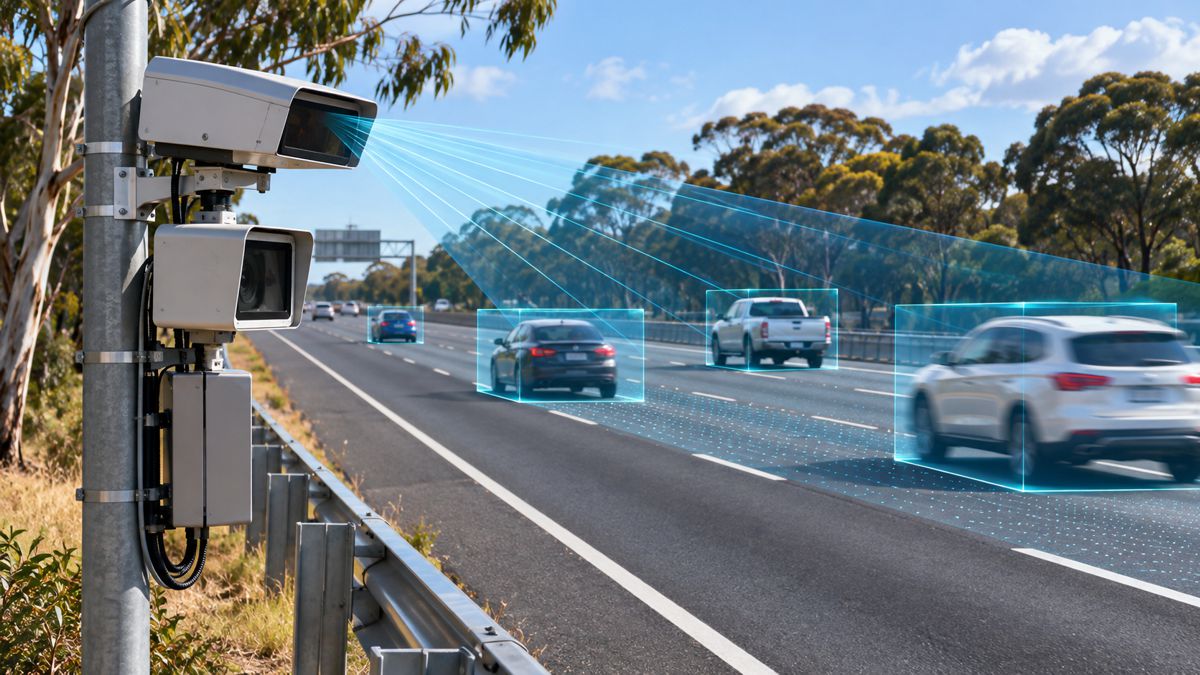
- A single Atlas sensor can monitor up to six traffic lanes, covering approaching and receding vehicles.
- The certification builds on a March 2025 supplier agreement and supports planned commercial deployment in Australia.
Independent Speed Verification
Automated speed enforcement depends on accurately measuring vehicle velocity and associating that measurement with the correct vehicle. The task becomes more complicated on multilane roads, particularly where several vehicles travel close together or move in opposite directions.
Sensys Gatso’s proposed configuration uses radar as the primary speed measurement technology. Aeva’s Atlas LiDAR provides an independent secondary measurement, while high-resolution cameras capture the images required to document a suspected violation.
The sensors operate using different physical principles. Radar measures velocity through the Doppler effect, while Aeva’s FMCW LiDAR uses frequency-modulated laser light to obtain distance and radial velocity information. Comparing their outputs provides an additional means of checking a recorded speed.
Enforcement authorities must also demonstrate that the recorded speed belongs to the vehicle identified in the accompanying photographic evidence. Combining velocity and spatial measurements can assist that association, although the complete evidentiary process depends on system configuration, calibration and applicable legal requirements.
Sensys Gatso already supplies automated enforcement equipment for fixed and mobile applications. Its existing experience provides an established platform for incorporating the additional sensor alongside the primary radar and camera architecture.
How FMCW LiDAR Measures Vehicle Speed
Conventional pulsed LiDAR determines distance by measuring the travel time of reflected laser light. Vehicle velocity can then be calculated from changes in measured distance over time, or through other processing methods depending on the equipment.
FMCW LiDAR operates differently. It transmits laser light whose frequency changes continuously in a controlled pattern. By comparing the transmitted signal with light reflected from an object, the system can determine range and measure the Doppler frequency shift associated with movement.
Aeva’s Atlas sensor combines these measurements to produce three-dimensional spatial information together with direct radial velocity measurements. Radial velocity describes movement towards or away from the sensor, rather than the complete velocity vector of a moving vehicle. The enforcement system must account for the measurement geometry when determining vehicle speed.
The additional velocity dimension is the basis of Aeva’s 4D LiDAR terminology. For roadside enforcement, it provides a means of identifying moving vehicles within the sensor’s field of view and measuring their motion independently of the primary radar.
According to Aeva, one Atlas unit can monitor as many as six traffic lanes simultaneously, including vehicles approaching and travelling away from the sensor. Actual coverage will depend on installation geometry, field of view and operating conditions.
The ability to monitor multiple lanes from a single sensing position is particularly relevant to mobile enforcement systems, where equipment must operate at different roadside locations without extensive permanent infrastructure.
From Supplier Agreement to Certification
The latest announcement follows an earlier commercial development between the two companies.
In March 2025, Aeva confirmed that Sensys Gatso Australia had selected its Atlas technology as the exclusive LiDAR solution for secondary speed detection in new mobile enforcement products. The agreement established a specific application for Aeva’s sensing technology outside its automotive and industrial automation markets.
The October 2026 certification represents a further stage in that process. Rather than simply demonstrating that the sensor can measure moving vehicles, the technology has now received regulatory certification for a defined role within an automated enforcement system intended for Australian public roads.
Jim Tan, Vice President of Business Development APAC at Aeva, described the approval as “an important step forward in commercializing Aeva’s technology within an automated traffic enforcement system.”
The announcement does not identify the certifying authority, the applicable certification standard or the detailed test results. Nor does it establish that every Australian jurisdiction has approved the resulting equipment for operational use. Individual deployments may involve further procurement, installation and operational approvals.
Australia’s Automated Enforcement Market
Australia has an established market for automated speed enforcement, including fixed roadside cameras, mobile enforcement vehicles and systems designed to monitor several lanes of traffic.
Sensys Gatso has an existing presence in the country, supplying enforcement technology to public authorities. The integration of Aeva’s FMCW LiDAR builds on the company’s established radar and camera systems, introducing a secondary sensor capable of measuring velocity and spatial position simultaneously.
For public authorities, the operational considerations include measurement reliability, vehicle identification, calibration procedures, equipment availability and the quality of the evidence generated. Mobile systems must also remain practical to position and operate at different enforcement locations.
The companies have not published comparative performance data demonstrating improvements in accuracy, deployment time or operating costs against existing secondary measurement equipment. Such evidence would help establish the practical advantages of FMCW LiDAR beyond its underlying technical capabilities.
Commercial Deployment and International Opportunities
The certification provides a clearer route towards commercial deployment for the partnership, although the scale of the opportunity remains unquantified.
Sensys Gatso can combine its existing radar and imaging equipment with a secondary sensor that directly measures radial velocity while providing spatial information about monitored traffic. For Aeva, the partnership extends the application of its LiDAR technology into roadside infrastructure, where measurement reliability, equipment durability and regulatory compliance are central operating requirements.
The companies have indicated that they see opportunities beyond Australia and expect the certification to support future commercial engagements. International expansion would nevertheless require compliance with the technical and legal requirements of individual markets.
The next stage will be the transition from certification to operational deployment. Customer orders, installation experience and performance under routine roadside conditions will provide a clearer picture of how the combined radar and FMCW LiDAR system compares with established enforcement equipment.
Key Industry Questions
- What has Aeva’s 4D LiDAR been certified to do in Australia? It has received regulatory certification for use as a secondary speed measurement device within Sensys Gatso’s automated enforcement system for public roads.
- Does the LiDAR replace the existing radar speed camera? No. The certified arrangement retains radar as the primary speed measurement technology and uses LiDAR to provide an independent verification measurement.
- What is FMCW LiDAR? Frequency Modulated Continuous Wave LiDAR uses controlled changes in laser frequency to measure distance and radial velocity, allowing movement and position to be measured together.
- How many traffic lanes can one Atlas sensor monitor? Aeva states that a single sensor can monitor up to six lanes simultaneously, including approaching and receding vehicles. Coverage depends on installation conditions.
- Can the technology be used in mobile speed cameras? Yes. Sensys Gatso selected Aeva’s technology for secondary speed verification in its Australian mobile enforcement products.
- Does the certification mean the equipment is already deployed? Not necessarily. The announcement confirms certification and progress towards commercial deployment but does not specify operational installations using the newly certified configuration.
- Does Australian certification apply internationally? No. Other countries may require separate technical assessments, certifications and approvals before enforcement use.
- Why use two independent speed measurement technologies? Independent measurements provide a means of cross-checking recorded speeds and supporting the reliability of enforcement evidence.
Strategic Takeaways
- Independent speed verification can strengthen the evidentiary reliability of automated enforcement systems, with FMCW LiDAR providing an alternative sensing method.
- Combining radial velocity measurements with three-dimensional positioning provides additional information for associating vehicle movements with recorded violations.
- Multilane coverage is particularly relevant to mobile enforcement equipment operating at varied roadside locations.
- Regulatory certification advances the Aeva and Sensys Gatso partnership beyond its initial supplier agreement, although commercial deployment remains to be demonstrated.
- International opportunities will depend on local enforcement regulations, procurement requirements and evidence of operational performance.