Jaguar Land Rover using aerospace technology to develop lightweight vehicles
Jaguar Land Rover is taking part in pioneering research trials to test the capability of advanced lightweight metals and composites to be used in future vehicles.
As part of a two-year project, the company will use technology developed for the aerospace industry to understand how materials respond to corrosive environments, in global markets and over rigorous terrains.
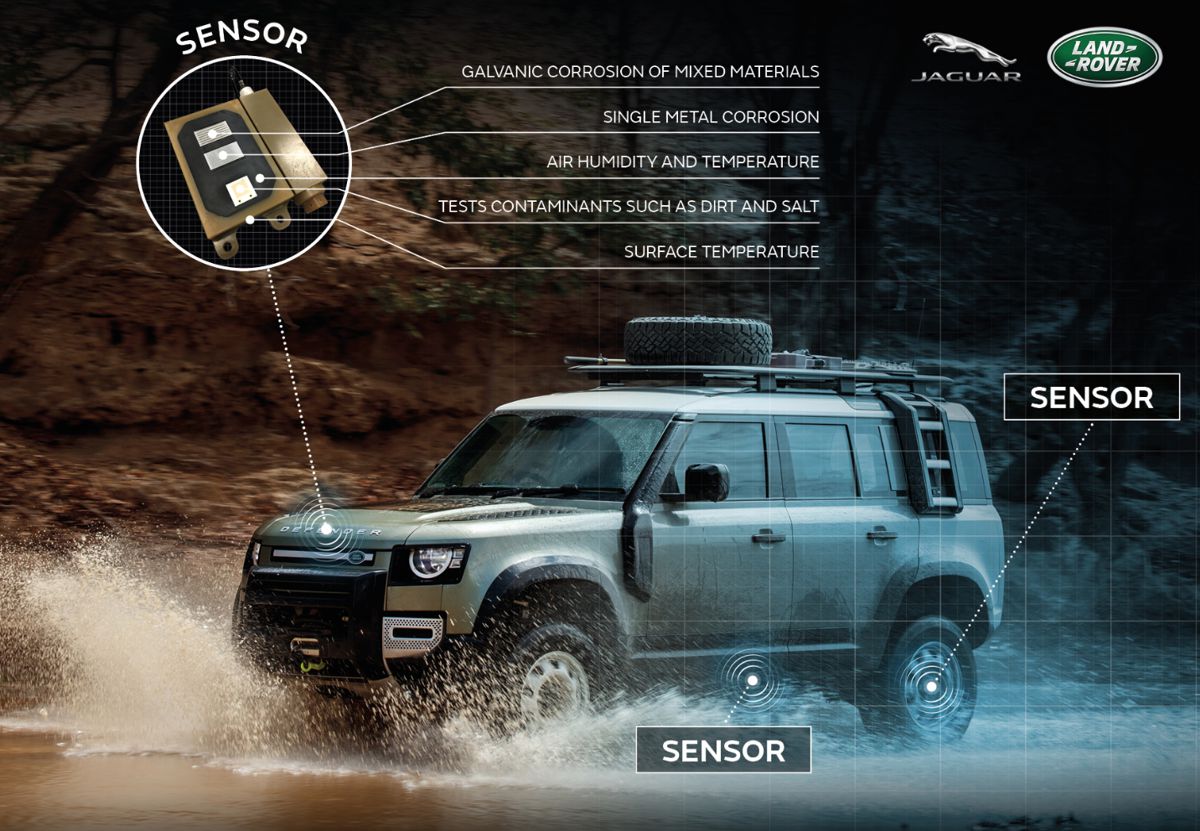
Samples of new metals and composites planned for use in future Jaguar and Land Rover vehicles will be built into aerospace-grade sensors and put through their paces in some of the world’s most extreme physical conditions, tested for over 400,000km across North America.
The sensors will continuously measure the performance of the materials and share data with the Jaguar Land Rover’s product development team in the UK. With this information, the engineers can accurately forecast the material’s behaviour in the development of future vehicle programmes to ensure that next-generation lightweight metals meet the company’s stringent standards, delivering a longer-lasting, high quality finish.

Matt Walters, Lead Engineer, Metals and Process Materials for Jaguar Land Rover, said: “This research project is a prime example of our commitment to developing lightweight, durable and robust materials for our future vehicles. Using advanced aerospace-grade technology, such as these sensors, is testament to the quality and standards we are achieving.
“We are working alongside world-class partners on this ground-breaking research project and will improve the correlation between real-world and accelerated testing as we continue to raise the bar for quality and durability.”
The research forms part of Gesamtverband der Aluminiumindustrie (GDA), a consortium of aluminium manufacturers and car makers researching the longevity of materials and how they can be made lighter and more durable.

Working with industry leaders across quality assurance and manufacturing to develop future lightweight vehicles, increasing efficiency and reducing emissions further is a key part of Jaguar Land Rover’s Destination Zero vision – a future with zero emissions, zero accidents and zero congestion.
The project builds on continued research into future materials, from the REALITY project, a pioneering recycling process which gives premium automotive-grade aluminium a second life, to the development of printed structural electronics, which can reduce the weight of in-car electronics by up to 60%.