Making Electric Vehicle Charging Stations Cybersecure
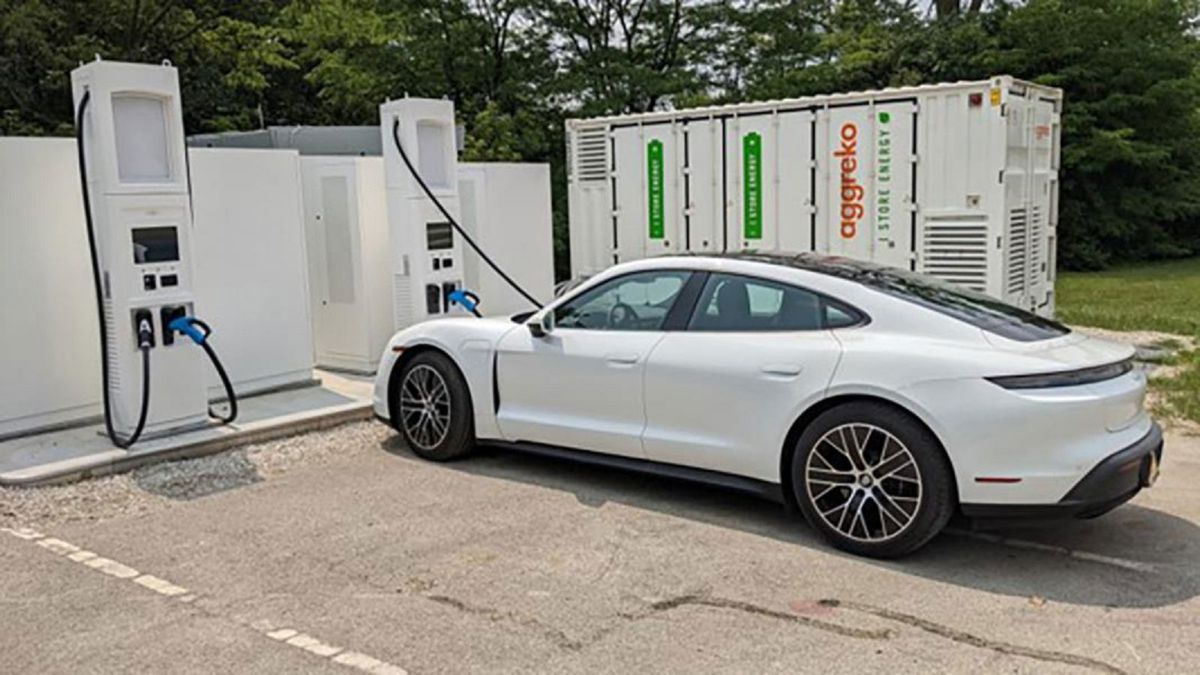
As more electric vehicles (EVs) hit the road, charging stations are popping up across the United States. The benefits go beyond curbing carbon emissions from road travel.
These systems can also link to the electric grid through smart charging, drawing power when overall demand is low and feeding it back to the grid when needed.
Any digital device needs cybersecurity precautions, and connected vehicle chargers are no exception. Researchers at the U.S. Department of Energy’s (DOE) Argonne National Laboratory, in collaboration with Exelon, the nation’s largest utility company are preparing for a secure smart-charging future as part of a four-year, $5 million project funded by DOE’s Vehicle Technologies Office within the Office of Energy Efficiency and Renewable Energy (EERE).
Computer networks enable the on-demand charging that will allow EVs to bolster the grid. That requires some smart charging stations to be more than some outlets and wiring—they often have wireless connectivity, hard drives, and the ability to plug in keyboards and mice.
“We functionally think of these as computers on the network. What if they were compromised by someone who shouldn’t have access?” said Roland Varriale, cybersecurity analyst at Argonne. “We are looking at how we can mitigate any risks associated with that.”
Varriale and colleagues evaluated different charging technologies and setups with the help of the Smart Energy Plaza, Argonne’s testbed for integrating EV charging, renewable energy, building systems and energy storage. They compiled known, identified vulnerabilities to EV charging systems, on demand response charging technologies, and devices such as mobile phones; and provided best practices for safeguarding them, briefing Exelon and equipment manufacturers.
“EV charging infrastructure will become critical to everyday business and the energy security of the United States,” said Dan Dobrzynski, research engineer at Argonne. “The work that we are doing is giving us an idea of the potential pitfalls, and where to go next, as more of these systems come online.”
The work with Exelon will also inform DOE’s Electric Vehicles at Scale Lab Consortium (EVs@Scale), which has a focus on cyber-physical security. The consortium brings together six DOE national research labs including Argonne to collaborate with industry, community groups and other stakeholders. The initiative’s overarching goal is to address challenges and barriers for high-power EV charging infrastructure.