C-Crete’s Clinker-Free Cement Turns Decarbonisation into a Procurement-Ready Product
For most of the past decade the argument over low-carbon cement has been conducted in the future tense, framed around pilot pours, promising chemistry and plants that do not yet exist. C-Crete Technologies has moved part of that argument into the present.
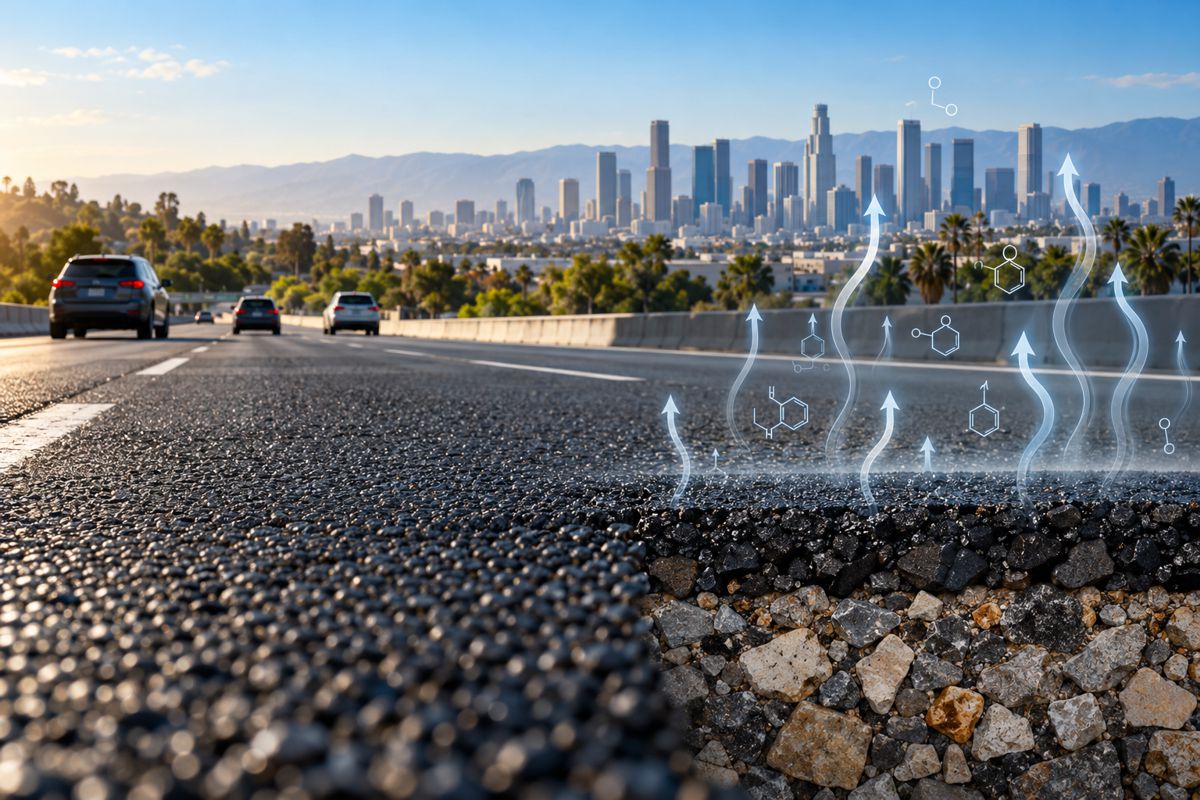
The company has published two independently verified Environmental Product Declarations confirming cradle-to-gate emissions as low as 43.1 kg CO2-eq per metric tonne, a figure the declarations place at roughly 95 per cent below the industry-average benchmark for ordinary portland cement. What carries the commercial weight here is not the headline percentage but the word verified, because the numbers now sit inside third-party Type III declarations rather than on a corporate slide.
That distinction has become the fault line of the entire market. As the European Union’s Carbon Border Adjustment Mechanism entered its definitive phase in January 2026, and as public procurement rules increasingly read embodied-carbon limits straight from EPDs, unverified environmental claims have lost most of their commercial value. A cement that cannot document its footprint through an accredited declaration is, for a growing share of buyers, simply not specifiable. C-Crete’s declarations arrive at the precise moment when the ability to prove a number, rather than assert one, has become the price of entry.
Briefing
- Two third-party-verified declarations, NRMCA EPD 20353 and 20355, developed under ISO 14025 and ISO 21930, report cradle-to-gate global warming potential as low as 43.1 kg CO2-eq per tonne, roughly 95 per cent below the industry-average portland cement benchmark.
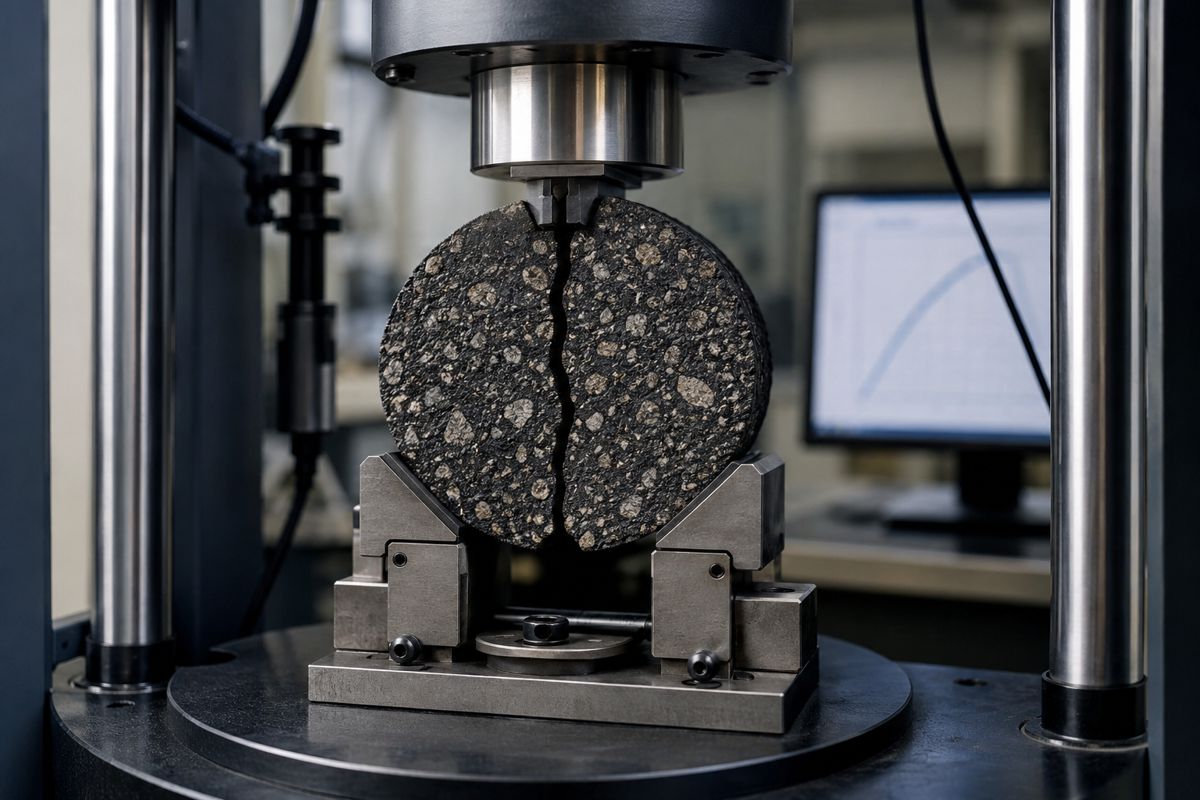
- The clinker-free binders meet the ASTM C1157 hydraulic cement standard and exceed 5,200 psi at 28 days, neutralising the performance objection that has historically slowed low-carbon cement adoption.
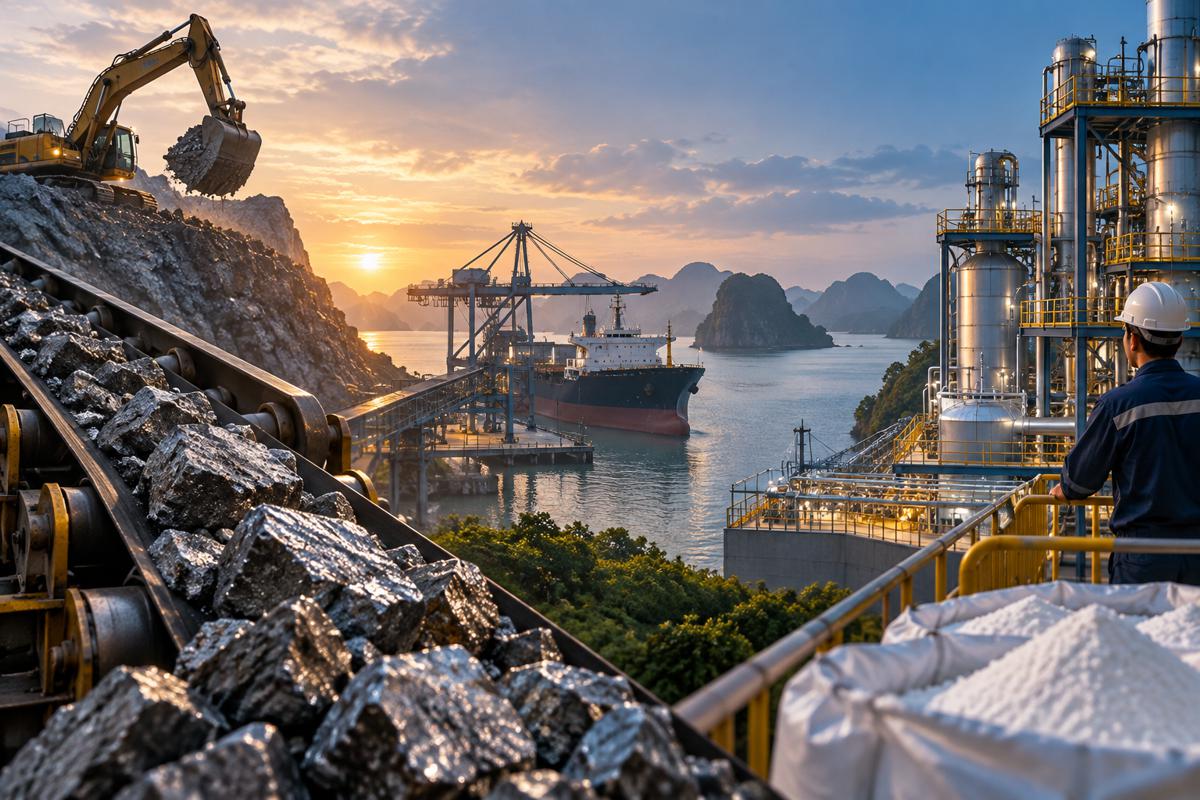
- C-Crete’s platform activates natural rocks and industrial by-products, from limestone, dolomite, basalt and zeolite to slag, fly ash, recycled concrete and mine tailings, allowing regional feedstock sourcing in place of fixed limestone supply.
- The kiln-free, decentralised model is capital-light by design, a pointed contrast with the electrochemical and carbon-capture routes that lost hundreds of millions in United States federal funding during 2025.
- The binders are positioned for adoption by established producers within existing operations, and for international standards such as Europe’s EN 197 that already permit high portland-cement replacement.
Verified Numbers Change the Commercial Conversation
The two declarations do more than restate a sustainability ambition; they quantify it in a form that specifiers can act on. NRMCA EPD 20353 covers C-Crete’s clinker-free Ultra Low Carbon Cement and reports a global warming potential of 43.1 kg CO2-eq per tonne, set against the roughly 919 kg reported in the Portland Cement Association’s industry-average declaration for United States portland cement.
The second, NRMCA EPD 20355, describes a family rather than a single product: clinker-free grades between 129 and 187 kg CO2-eq per tonne, representing reductions of 80 to 86 per cent, and blended grades retaining some clinker between 227 and 312 kg, or 66 to 75 per cent lower. Read as a spread rather than one hero figure, the declarations map a tunable product line that can be matched to different specifications and price points, which is far more useful to a ready-mix producer than a single demonstration mix.
The reductions come without the performance trade-off that has long given structural engineers pause. C-Crete’s cements meet ASTM C1157, the performance-based hydraulic cement standard, and reach more than 5,200 psi at 28 days, comfortably inside structural territory. The saving is intrinsic to the chemistry rather than bolted on afterwards, coming from the elimination of clinkerisation, the firing of limestone at roughly 1,450 degrees Celsius that accounts for the bulk of cement’s process and fuel emissions, and the activation of minerals or by-products through a proprietary route instead.
That matters for a reason procurement teams understand well, because inherent reductions embedded in the product survive the scrutiny of buyers who increasingly refuse offset-based environmental claims, whereas paper reductions do not.
Why an Auditable Footprint Now Sets the Price of Entry
Regulation has quietly rewritten the value of an EPD, turning embodied carbon from a reputational metric into a priced liability. The Carbon Border Adjustment Mechanism entered its definitive phase on 1 January 2026, with cement among the first six sectors covered, and importers must now surrender certificates priced against the EU Emissions Trading System, set at around 75 euros per tonne of CO2 in early 2026.
Running in parallel, the free allocation that has cushioned European cement producers is being withdrawn on a rising trajectory that reaches full exposure by 2034, so every tonne of clinker steadily acquires a market-rate carbon cost. In that environment, importers and buyers gravitate towards suppliers who can present verified installation-level emissions data rather than fall back on punitive default values, which places a documented low-carbon cement at a direct commercial advantage.
The same logic is reshaping public procurement on the other side of the Atlantic. Federal buyers in the United States now publish embodied-carbon thresholds by concrete strength class that are read directly from EPDs, so a mix without an accredited declaration cannot clear the specification regardless of its actual footprint.
Crucially, a growing number of public owners bar the use of purchased offsets in embodied-carbon bids, which favours products whose reductions are inherent to manufacture over those marketed as net zero on the strength of forestry or capture credits. C-Crete’s declarations speak precisely to this shift, because they document reductions achieved by removing clinker rather than by compensating for it, and that is exactly the kind of number a hardening procurement regime is built to reward.
A Capital-Light Answer to a Capital-Heavy Problem
Conventional cement economics are unforgiving, dominated by the kiln. A single clinker line can cost hundreds of millions of dollars, ties production to a fixed limestone source, and locks capital into an asset with a decades-long payback. C-Crete inverts that structure by dispensing with the kiln and the high-temperature calcination altogether, which lowers both the capital and the energy footprint of a production line and allows manufacturing to be sited close to demand.
For an established producer, that reads as a capital-light route to a verified low-carbon product line that works within existing operations, distribution and customer relationships, rather than a wholesale plant replacement.
The strategic value of that model was thrown into sharp relief during 2025, when the fragility of the capital-heavy alternative became impossible to ignore. The United States Department of Energy withdrew clean-energy demonstration awards from two of the sector’s most closely watched startups, stripping roughly 87 million dollars earmarked for Sublime Systems’ first commercial plant in Massachusetts and up to 189 million dollars committed to Brimstone’s commercial facility, both electrochemical or novel-feedstock routes dependent on large-scale subsidy to reach first commercial output.
C-Crete has drawn on federal support of its own, including Department of Energy awards and a share of a 10.4 million dollar package from the California Energy Commission and the DOE to scale up production. The distinguishing point is one of exposure rather than funding history, because a decentralised model that can be built at modest cost near its feedstock is far less hostage to a single grant decision than a flagship plant whose business case rests on it.
Turning Local Rock and Industrial Waste Into Binder
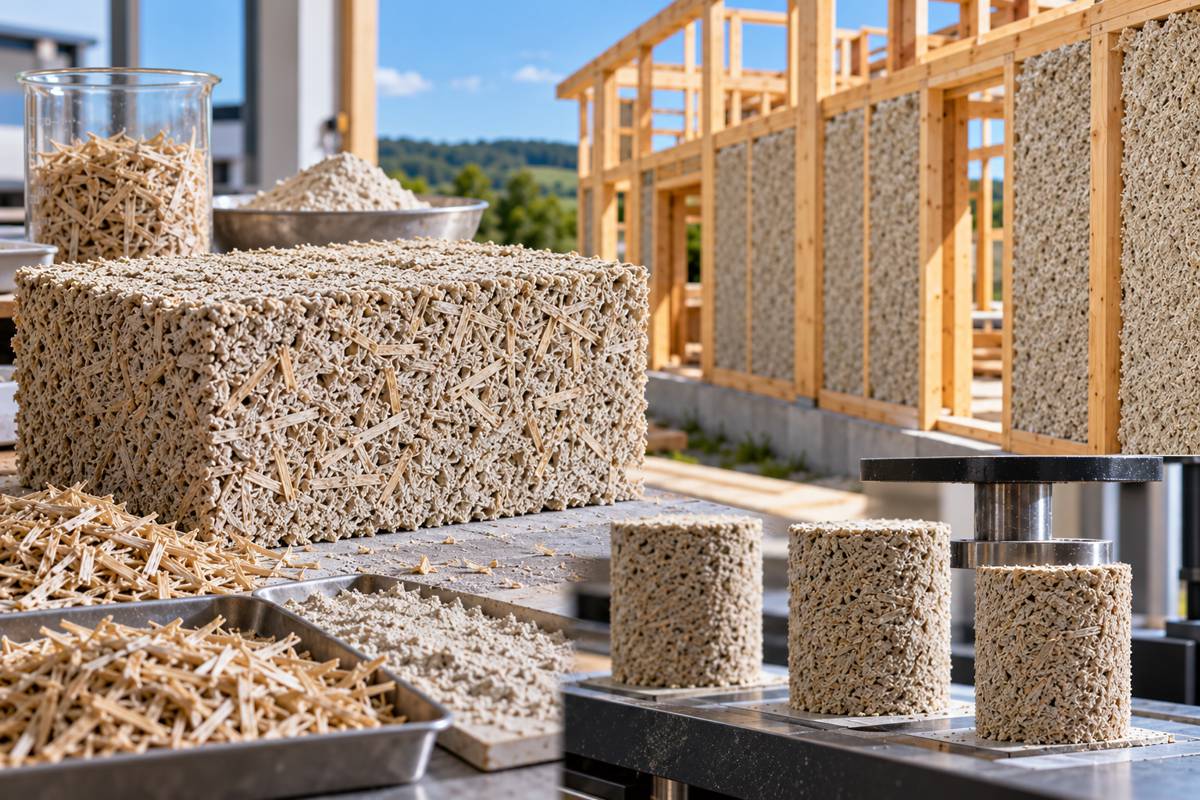
The feature that gives C-Crete its geographic reach is the breadth of material its platform can activate. The chemistry works across natural minerals such as limestone, dolomite, granite, basalt, zeolite, pumice and tuff, and across industrial by-products and waste streams including slag, fly ash, recycled concrete and mine tailings.
That range lets a producer build low-carbon cement from whatever is plentiful in its region, which converts a supply constraint into a sourcing choice and reduces the long-distance haulage that adds both cost and carbon to conventional binder logistics. In a market increasingly sensitive to border carbon pricing, the ability to source binder feedstock locally is a commercial hedge as much as an environmental one.
There is a resource-recovery dimension that sharpens the case further. Turning slag, fly ash and mine tailings into structural binder gives a second commercial life to materials that producers and miners otherwise pay to store or dispose of, at a time when tailings management and industrial waste liability are under growing regulatory and financial pressure.
Fly ash supply in particular has tightened as coal generation retires across several markets, so a platform that can substitute a wide spectrum of alternative feedstocks offers a degree of resilience that single-input supplementary cementitious materials cannot match. The wider implication for the construction supply chain is a gradual decoupling of cement production from a handful of fixed extraction points, and a move towards binder made from the materials a region already has to hand.
Built for Incumbents, and for the Standards They Answer To
The most commercially telling feature of C-Crete’s positioning is that it is designed to be adopted by the incumbents rather than to unseat them. The major producers are already committed to decarbonisation along two capital-intensive paths. Heidelberg Materials has staked its near-zero proposition on carbon capture, with its evoZero cement produced at the Brevik plant in Norway and a further capture project advancing at Padeswood in the United Kingdom, while Holcim and CEMEX have built out lower-clinker ranges such as ECOPact, ECOPlanet and Vertua that lean on supplementary cementitious materials and tiered EPD-backed reduction claims.
Both routes preserve the kiln. C-Crete offers a third path that removes clinker entirely and can be dropped into an existing producer’s operations as a distinct, verified product line, which is a materially different commercial proposition from a plant retrofit or a blended mix.
That model only works if the binders fit the standards buyers already specify, and here the international picture is moving in C-Crete’s favour. In the United States the ASTM C1157 performance standard judges cement on what it does rather than what it contains, which suits a clinker-free binder well. In Europe, EN 197 already permits substantial portland-cement replacement, with roughly 55 per cent allowed under CEM IV/B-P and higher ceilings under the composite cements CEM II/C-M and CEM VI, so binders engineered for high replacement are natural candidates as regions push clinker content down.
Dr Rouzbeh Savary, Founder and President of C-Crete, frames the logic in terms of geography as much as chemistry. “Decarbonizing cement can’t happen from one plant or one country — it has to happen everywhere cement is made,” he said. “Because our chemistry runs on raw materials that exist almost everywhere, it’s well suited to local, decentralized production rather than a handful of massive kilns — a natural fit for producers who want verified ultra-low-carbon cement in their own markets, and we’re glad to work alongside them.”
Where Commercial Value Is Concentrating
Taken together, the two declarations mark a shift in where value sits within the cement decarbonisation story. For several years the narrative has favoured the megaproject, the billion-dollar capture retrofit and the subsidy-backed electrochemical plant, and those routes retain a role for the largest integrated producers with the balance sheets to carry them.
What C-Crete’s verified EPDs demonstrate is that a second centre of gravity is forming around auditable, capital-light, regionally sited product lines that clear procurement on the strength of an accredited number and can be adopted market by market without rebuilding a plant. As border carbon pricing and embodied-carbon specification tighten in step, the commercial premium is migrating towards whoever can prove a low footprint at acceptable cost and reasonable capital risk.
For industry leaders the practical reading is straightforward enough to act on now. Producers should treat verified EPDs as a competitive asset rather than a compliance chore, and should assess feedstock-flexible, clinker-free chemistry as a lower-risk complement to capture and blending strategies rather than a rival to them. Infrastructure owners and specifiers writing embodied-carbon requirements should be precise about whether they will accept offset-based claims or demand inherent reductions, because that single clause increasingly decides which products qualify.
Investors, meanwhile, would do well to weigh capital exposure and regulatory dependency alongside headline carbon performance, since the events of 2025 showed how quickly a scale-up thesis can turn on a single funding decision. The materials that win the next decade of low-carbon procurement will be the ones that can be documented, sited locally and afforded, and C-Crete’s declarations are a signal of where that combination is heading.
Key Industry Questions
- What is an Environmental Product Declaration, and why does a verified one matter more than a manufacturer’s own carbon figure? An Environmental Product Declaration is a standardised, third-party-verified report of a product’s environmental impact across defined life-cycle stages, developed under international standards such as ISO 14025 and ISO 21930. For cement, a Type III EPD documents cradle-to-gate global warming potential in a form that specifiers, regulators and border-carbon schemes will accept as evidence. The distinction from a self-declared figure is commercial rather than cosmetic, because procurement rules and the EU’s Carbon Border Adjustment Mechanism increasingly recognise verified installation-level data while discounting unverified claims to punitive defaults. A verified EPD therefore functions less as a marketing document and more as a passport into specifications that a self-declared number cannot enter.
- How does eliminating clinker actually cut cement’s carbon footprint? Most of cement’s emissions come from clinkerisation, the process of firing limestone in a kiln at around 1,450 degrees Celsius. That step releases carbon dioxide twice over, first from burning fuel to reach the temperature, and second from the chemical breakdown of limestone itself, which liberates process CO2 regardless of the fuel used. Clinker-free binders such as C-Crete’s avoid both sources by activating natural minerals or industrial by-products through a chemical route that does not require a kiln. Because the reduction is intrinsic to how the binder is made, it is documented directly in the EPD rather than achieved through purchased offsets, which is the form of reduction that hardening procurement rules increasingly favour.
- Can clinker-free cement match the structural performance of ordinary portland cement? Performance has historically been the principal objection to low-carbon cement, and it is the objection these declarations are designed to answer. C-Crete’s binders meet ASTM C1157, the performance-based hydraulic cement standard that judges a cement on measured behaviour rather than prescribed ingredients, and reach compressive strength above 5,200 psi at 28 days. That places the material within the range required for a broad set of structural applications rather than confining it to non-structural uses. The performance-based standard route matters because it allows a novel chemistry to qualify on results, which is the appropriate test for a binder that deliberately departs from the conventional clinker recipe.
- How does this technology affect the capital cost of producing cement? Conventional cement is among the most capital-intensive materials in construction, because a single clinker kiln can cost hundreds of millions of dollars and ties production to a fixed location and limestone source. A kiln-free process removes the largest single item of capital expenditure and the high-temperature energy load that accompanies it, which lowers both the cost and the energy footprint of a production line. The consequence is a model that can be built at smaller scale, sited near demand and adopted incrementally rather than through a single large plant investment. That lower capital exposure also reduces dependence on the large subsidies that capture and electrochemical routes have needed to reach first commercial output.
- Why did major low-carbon cement startups lose United States federal funding in 2025? During 2025 the United States Department of Energy conducted a review of clean-energy demonstration awards and withdrew support from a number of industrial decarbonisation projects, including commercial-scale plants planned by Sublime Systems and Brimstone. The affected companies had been relying on those awards, in the region of 87 million and up to 189 million dollars respectively, to help finance first commercial facilities. The episode illustrated a structural vulnerability of capital-heavy decarbonisation routes, whose business cases can depend on a single grant decision. It also strengthened the case for lower-capital models that can reach commercial production without hinging on large public co-funding.
- What does the Carbon Border Adjustment Mechanism mean for cement producers and importers? The mechanism entered its definitive phase on 1 January 2026, with cement among the covered sectors, requiring EU importers to surrender certificates priced against the EU Emissions Trading System at around 75 euros per tonne of CO2 in early 2026. In parallel, the free allocation that has shielded European producers is being phased out on a rising schedule that reaches full exposure by 2034. The practical effect is a steadily increasing cost on embedded carbon, and a strong incentive for buyers to favour suppliers who can present verified emissions data over those relying on default values. For a documented low-carbon cement, the mechanism functions as a demand driver rather than a cost.
- Which feedstocks can the platform use, and why does that flexibility matter commercially? The platform activates a wide spectrum of materials, including natural minerals such as limestone, dolomite, granite, basalt, zeolite, pumice and tuff, alongside industrial by-products and waste streams such as slag, fly ash, recycled concrete and mine tailings. That breadth allows a producer to build binder from whatever is abundant in its region, which reduces long-distance haulage and its associated cost and carbon. It also offers resilience as traditional supplementary materials tighten, notably fly ash as coal generation retires. The added dimension is resource recovery, since turning tailings and industrial residues into structural binder converts a disposal liability into a usable input.
- Is this a commercially available product or a laboratory concept? The binders are already being batched and poured in commercial concrete, which is the point the declarations are intended to reinforce. Earlier deployments include structural applications in commercial buildings and a seismic retrofit project, and the published EPDs now attach verified environmental data to a material that producers can specify and place today. The significance of that combination is that it moves the technology past the demonstration stage into the territory of a documented, procurement-ready product. For specifiers, that means the material can be evaluated on the same terms as any other cement, against a verified declaration rather than a promise of future performance.
Strategic Takeaways
- Verified EPDs have become the currency of market access in cement, and C-Crete’s declarations convert a promising chemistry into a procurement-ready product exactly as border carbon pricing and embodied-carbon specification start to reward documented reductions over asserted ones.
- Inherent reductions carry a growing premium over offset-based claims, because a rising number of public owners bar purchased offsets in embodied-carbon bids, which favours clinker-free binders whose savings are built into manufacture.
- The 2025 withdrawal of United States federal funding from capital-heavy cement startups exposed the fragility of subsidy-dependent scale-up, strengthening the commercial logic of low-capital, decentralised production that can reach the market without hinging on a single grant.
- Feedstock flexibility is a supply-chain and border-carbon hedge as much as an environmental feature, letting producers source binder inputs locally and convert industrial and mining waste into a resource as traditional supplementary materials tighten.
- The decisive competitive move is adoption by incumbents rather than displacement of them, positioning clinker-free binders as a capital-light complement to capture and blending strategies and as a natural fit for standards such as EN 197 and ASTM C1157 that already permit or reward high portland-cement replacement.