Why Heavy-Truck Stopping Distance Is a System, Not a Single Number
Stopping distance is often discussed as if every truck has one fixed number attached to it. In practice, a safe stop depends on an entire system: the driver’s attention, vehicle speed, brake response, tire and brake condition, cargo distribution, pavement, grade, weather, and the road geometry ahead.
That systems view matters to highway designers, fleet operators, contractors, and passenger drivers. A road may meet its design standard under ordinary conditions yet become much less forgiving when traffic queues form unexpectedly, rain reduces friction, a work zone narrows sight lines, or a commercial driver approaches too quickly. Preventing serious rear-end and loss-of-control crashes requires every layer to work before the emergency begins.
A Stop Begins Before the Brakes Apply
The total distance between seeing a hazard and reaching zero speed has several components.
First comes perception. The driver must detect that traffic has slowed, a signal has changed, debris has entered the lane, or a work-zone flagger has stopped vehicles. Visual clutter, darkness, fatigue, distraction, or a blocked line of sight can delay that recognition.
Next comes reaction. The driver has to decide what is happening, release the accelerator, and move to the brake pedal. Even an attentive driver covers substantial ground during this interval at highway speed.
Commercial air-brake systems add another step. Pressure must move through the system before the brakes fully engage. That short delay may feel insignificant at low speed, but every fraction of a second consumes roadway at 65 or 70 mph.
Only then does physical braking distance begin. Federal Motor Carrier Safety Administration educational material notes that a truck traveling at 65 mph can require as much as two football fields to stop and that large trucks can take about 40 percent longer to stop than passenger vehicles. Utah’s Truck Smart safety program illustrates the same problem with an estimate of roughly 525 feet for a loaded tractor-trailer traveling at 65 mph in good conditions.
The important lesson is not that one number applies everywhere. It is that the braking phase begins only after perception, reaction, and system response have already consumed distance.
Speed Changes the Problem Faster Than Many Drivers Expect
Vehicle speed is central because kinetic energy increases with the square of speed. A moderate increase in speed therefore produces a disproportionately larger amount of energy that the brakes and tires must dissipate.
Higher speed also increases the distance traveled during perception and reaction. This creates a compounding effect: the vehicle travels farther before braking starts, and it then requires more distance to slow once the brakes engage.
For motorists who want to understand the underlying phases and commonly cited benchmarks, this explanation of semi-truck stopping distance separates reaction distance, air-brake lag, and physical braking distance.
Posted speed limits cannot eliminate this problem. They define the maximum lawful speed under suitable conditions, not a promise that every approach can safely be driven at that speed during rain, congestion, construction, glare, or restricted visibility. Professional drivers must continuously choose a speed that preserves enough room for the conditions they can see—and for foreseeable conditions they may soon encounter.
Load Matters, but It Is Not a Simple Heavier-Equals-Longer Rule
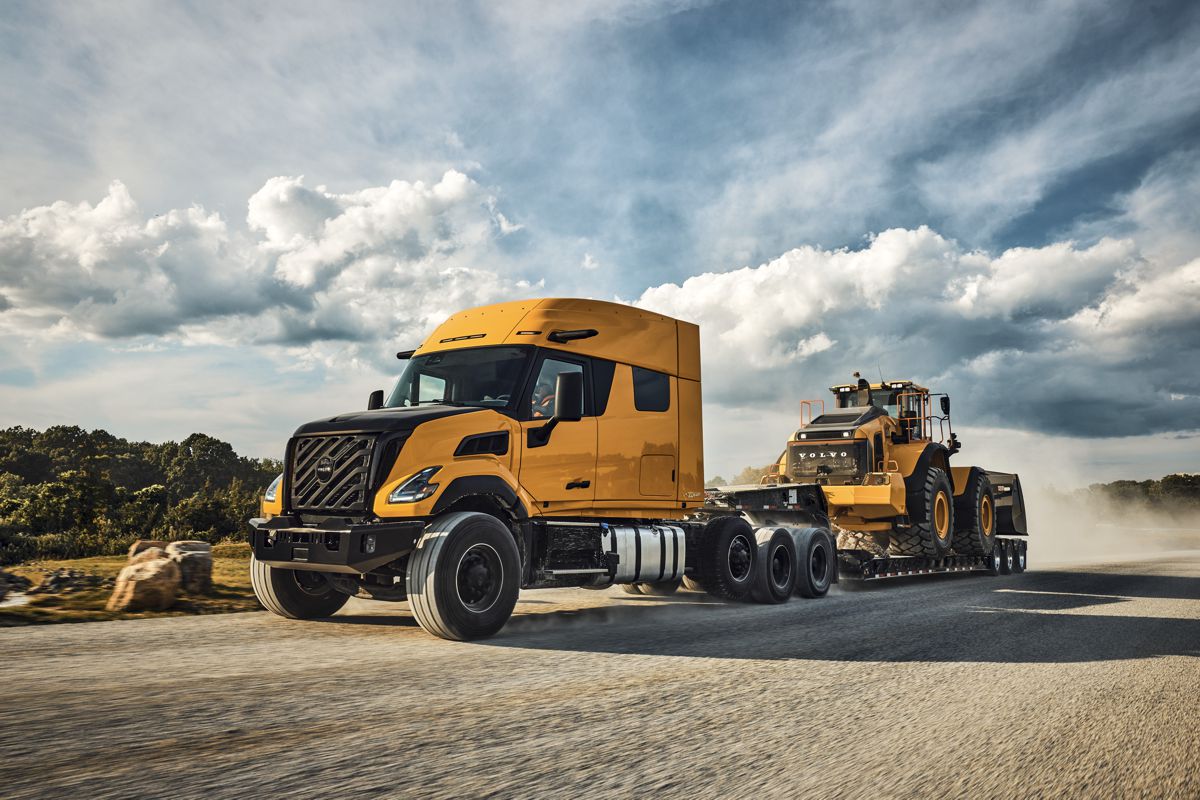
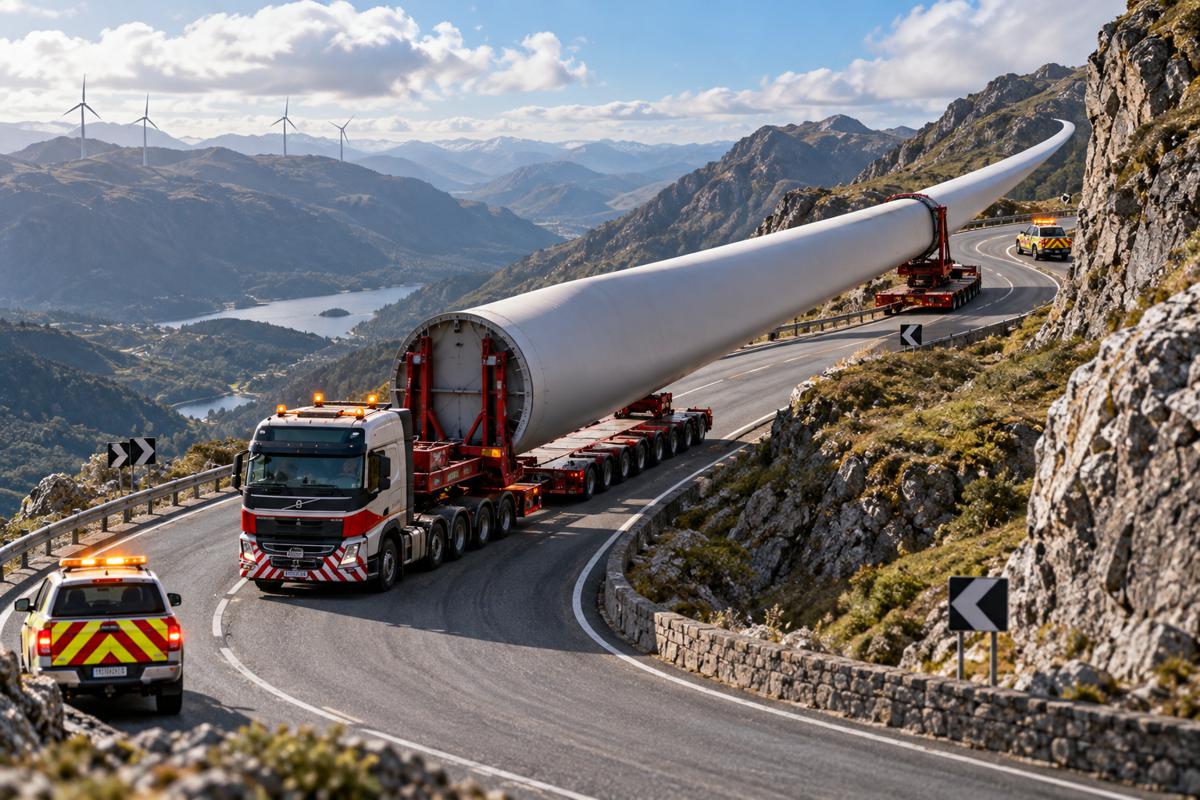
A fully loaded combination vehicle may weigh up to 80,000 pounds under the ordinary federal interstate limit. That mass increases the energy involved in a highway-speed stop, but actual stopping performance also depends on how the vehicle and its braking system are configured.
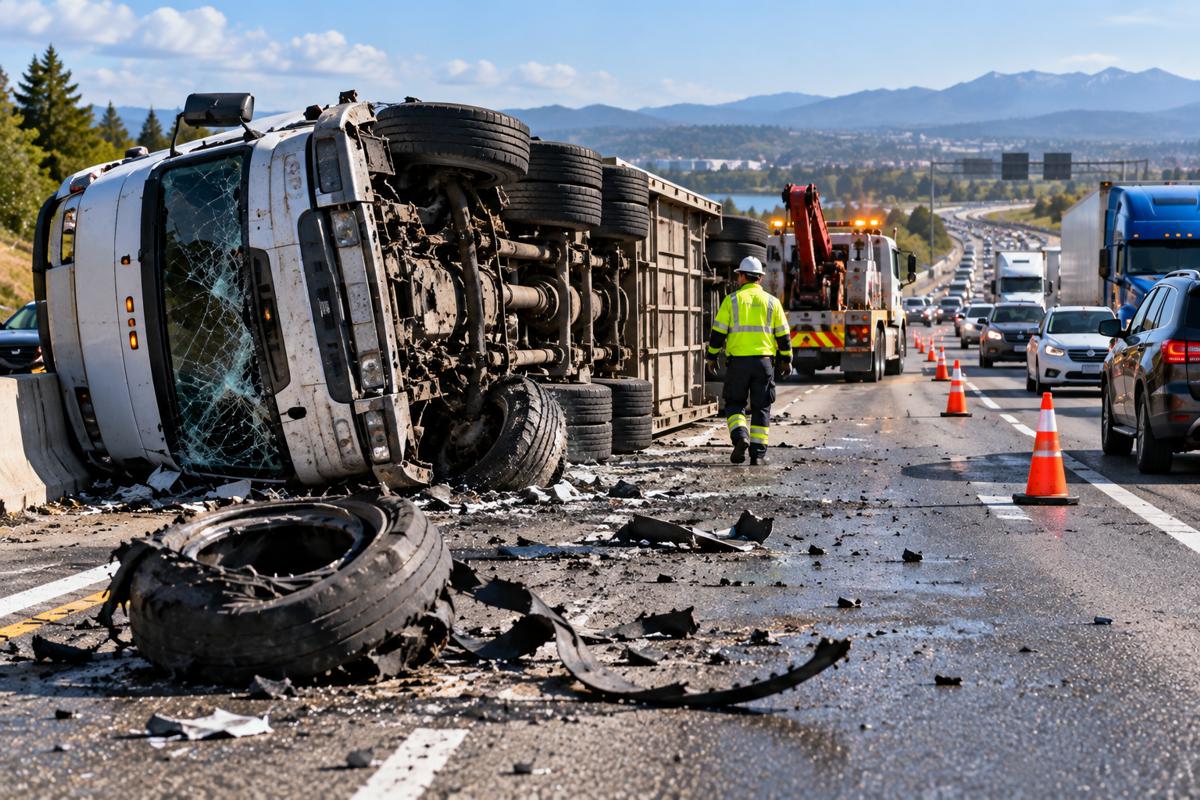
A properly maintained loaded truck can have substantial tire contact and braking capacity across multiple axles. An empty or lightly loaded trailer can behave differently, particularly on low-friction pavement. Poorly distributed or shifting cargo can destabilize the combination, reduce predictable tire loading, and increase the risk of a jackknife or rollover during sudden braking.
The practical point is that weight alone does not predict the outcome. Fleet operators must account for the tractor, trailer, brake adjustment, tires, load securement, road surface, and grade as one operating system.
Maintenance Determines Whether Designed Performance Is Available
Even generous sight distance and a cautious driver cannot compensate for neglected equipment indefinitely. Brake adjustment, worn friction material, air-system leaks, damaged components, tire condition, and mismatched braking performance can all reduce the stopping capability available when it is needed most.
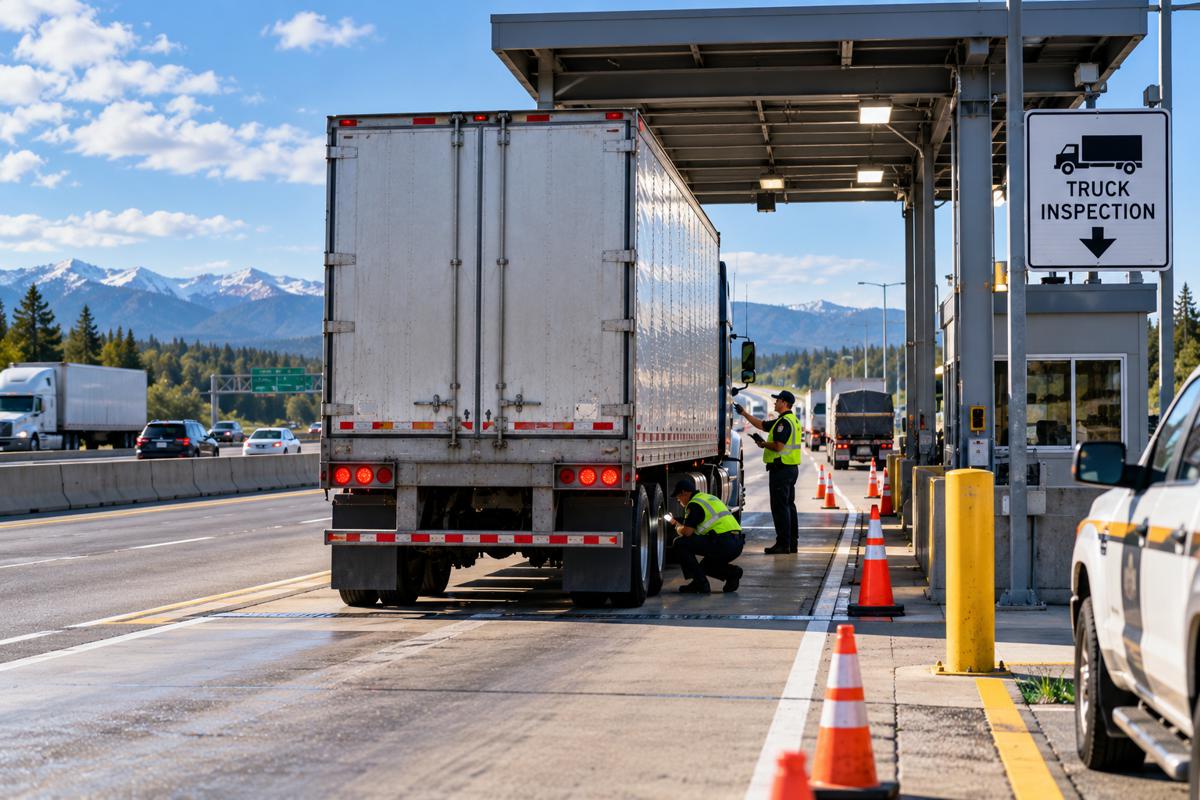
Federal rules in 49 CFR Part 396 require motor carriers to systematically inspect, repair, and maintain the vehicles under their control. That obligation is operational, not merely administrative. Inspection reports and maintenance schedules should identify developing problems before a driver discovers them during an emergency stop.
Fleets can strengthen that process by tracking brake-related defects across vehicles, verifying that reported problems are closed rather than merely logged, and comparing maintenance patterns among routes, trailers, and terminals. Repeated adjustment issues or uneven wear should be treated as system signals, not isolated paperwork events.
Road Design and Work Zones Shape the Available Margin
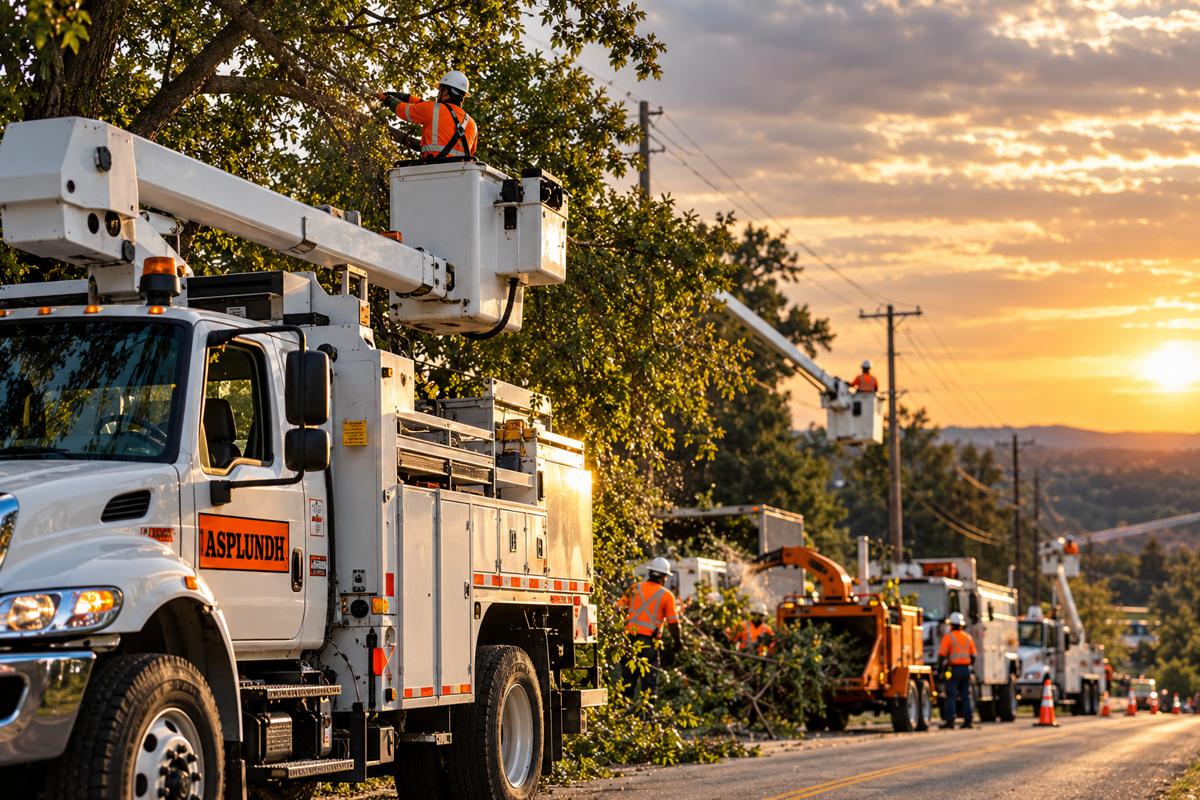
Stopping-distance risk is also an infrastructure issue. A driver needs enough visible roadway to perceive a problem and enough physical space to respond. Crest curves, horizontal curves, temporary barriers, vegetation, roadside equipment, and construction vehicles can restrict that view.
Work zones deserve special attention because traffic behavior can change faster than permanent geometry suggests. A lane closure may create a queue beyond the point drivers expect. A temporary crossover can reduce operating speed. Construction traffic may enter from a short access point. Overnight work can combine reduced visibility with tired drivers and unfamiliar lane markings.
Useful countermeasures include advance queue warnings, portable changeable-message signs, temporary rumble strips where appropriate, clear taper geometry, high-visibility markings, enforcement targeted at dangerous approaches, and traffic-control plans that are revised when queues extend beyond the designed warning area. Connected work-zone systems can add value by detecting slowing traffic and moving warnings upstream in near real time.
Grade matters as well. A long downgrade converts gravity into continued vehicle energy, requiring drivers to manage speed before service brakes overheat. Safe operations may depend on selecting the correct gear, using engine braking appropriately, respecting truck-specific warning signs, and avoiding a high-speed approach that leaves no recovery margin.
Following Distance Is the Driver’s Most Portable Safety Tool
Technology and infrastructure help, but following distance remains one of the most adaptable controls available to a driver. Space ahead gives the driver time to detect a change, choose a response, and brake progressively rather than abruptly.
That margin should expand when visibility worsens, pavement becomes wet or icy, traffic grows erratic, a downgrade begins, or a work zone is likely to create a hidden queue. It should also expand when the driver is operating an unfamiliar tractor-trailer combination or carrying a load that may change handling.
Passenger drivers contribute to the same safety margin. Cutting sharply in front of a heavy truck can erase the space its driver intentionally created. Remaining visible, signaling early, and avoiding a merge directly into the truck’s forward buffer make the road more predictable for everyone.
Data Can Turn Near Misses Into Prevention
Modern fleets have more information than ever about hard braking, following distance, speed, location, and driver hours. The value of that data depends on how it is used.
A single hard-braking event may reflect a passenger car cutting in, a signal changing, or a hazard entering the roadway. Repeated events at the same location or by the same vehicle deserve deeper review. They may reveal an approach with poor sight distance, an unrealistic schedule, coaching needs, a brake problem, or route design that routinely places drivers in late-decision situations.
The strongest safety programs combine telematics with driver interviews, maintenance findings, dash-camera context, and roadway observations. They focus on patterns and corrective action rather than treating every alert as proof of misconduct. When drivers trust that reporting a hazard will lead to a practical response, operators gain better information about the conditions that automated systems cannot fully explain.
Build Margin Into Every Layer
Heavy-truck stopping distance is not controlled by one component and cannot be reduced to one universal figure. It begins with what the driver can see, continues through perception and reaction, depends on the condition and response of the vehicle, and ends on a particular piece of pavement under particular conditions.
The best prevention strategy is therefore layered: maintain the equipment, manage speed before hazards develop, preserve following distance, design for visible and foreseeable queues, warn drivers early, and learn from near misses. Each layer creates additional margin. When several layers fail at once, the roadway leaves little room for recovery.