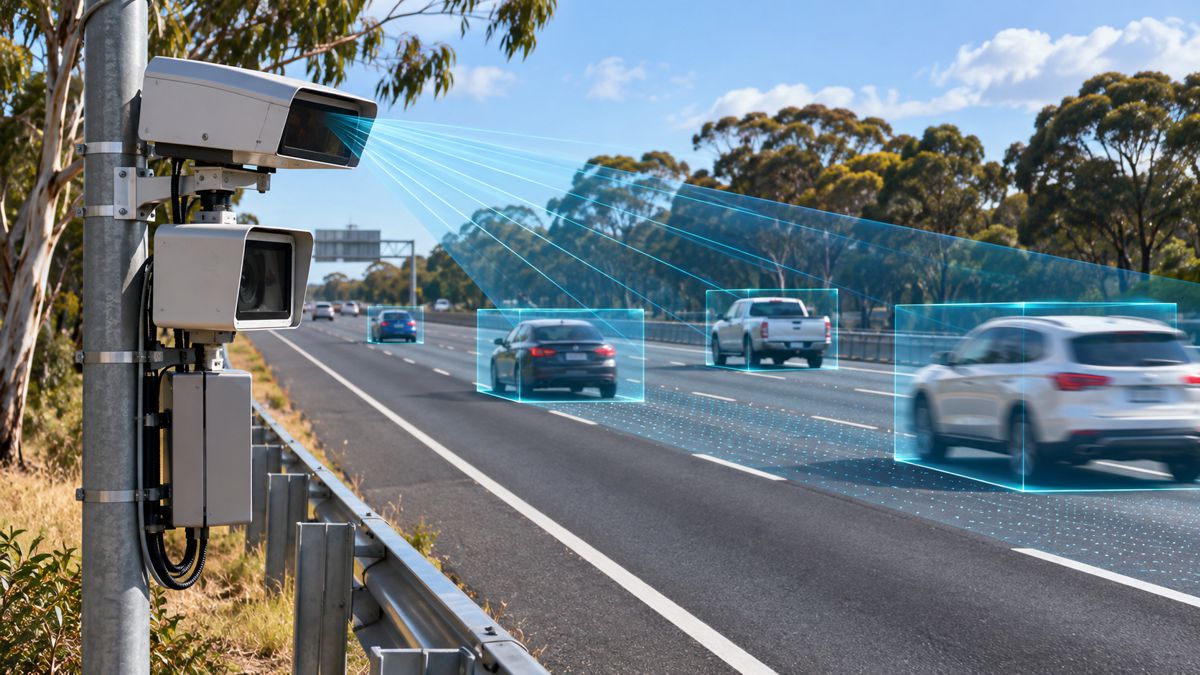
Kapsch TrafficCom Partners With TomTom To Power Intelligent Mobility
Urban congestion, inefficient transport networks and rising demands on infrastructure are placing extraordinary pressure on road authorities around the world. Cities are growing, freight volumes are increasing and public expectations for efficient mobility continue to rise. Against this backdrop, access to accurate traffic intelligence has become one of the most valuable assets for transport planners and infrastructure operators.
A new partnership between Kapsch TrafficCom and TomTom reflects this evolving reality. By integrating TomTom’s advanced traffic data services into Kapsch TrafficCom’s EcoTrafiX Platform, the collaboration aims to deliver more precise, real time insights for cities and road operators managing increasingly complex transport ecosystems.
For infrastructure professionals, the significance of this development lies not simply in a software integration. Instead, it highlights a broader transformation underway in traffic management where data driven decision making is rapidly replacing traditional infrastructure centric approaches.
Real Time Traffic Intelligence Becomes Essential Infrastructure
Traffic data has evolved into a critical component of modern transport systems. Where engineers once relied heavily on roadside sensors, manual counts and static models, today’s mobility networks increasingly depend on live data streams gathered from connected vehicles, navigation devices and mobile platforms.
TomTom’s traffic services are built on vast volumes of anonymised Floating Car Data collected from millions of connected devices and vehicles worldwide. This approach allows the system to generate continuously updated insights into traffic speeds, travel times, congestion patterns and incidents across road networks.
For city authorities responsible for managing traffic flow, these data streams offer an unprecedented level of visibility. Real time insights can reveal how congestion forms, how incidents ripple through the network and how infrastructure interventions influence traffic behaviour.
This shift towards live mobility intelligence aligns with wider global trends. According to research from the International Transport Forum, urban congestion costs economies billions of euros annually through lost productivity, increased fuel consumption and environmental impacts. Data driven traffic management systems are increasingly seen as one of the most effective tools for addressing these challenges.
Integrating Traffic Data Into Intelligent Mobility Platforms
At the heart of the partnership lies the integration of TomTom Traffic services and Floating Car Data into Kapsch TrafficCom’s EcoTrafiX Platform. The platform is widely used by road authorities and municipalities to monitor and manage traffic conditions across urban and regional transport networks.
By embedding TomTom’s traffic intelligence directly into the platform, the system can provide operators with detailed information on traffic flow, incidents, congestion trends and travel times. These insights can then be used to optimise traffic signal control, adjust operational strategies and respond more effectively to disruptions.
Crucially, the integration removes the need for additional hardware installations or project specific customisation. Traditionally, deploying advanced traffic monitoring systems required extensive sensor networks, roadside equipment and complex integration projects. By relying on data gathered from connected vehicles and navigation systems, authorities can access sophisticated traffic intelligence without the cost and complexity associated with physical infrastructure.
This software centric approach reflects a growing trend across the intelligent transport sector. Increasingly, the value in mobility systems lies not in roadside equipment alone, but in the data layers that interpret how infrastructure is actually used.
Expanding Capabilities for Global Road Operators
Kapsch TrafficCom has built a global reputation in tolling and traffic management technologies, delivering projects across more than fifty countries. Its systems are widely used for road pricing, congestion management and network operations, forming part of the digital backbone that keeps modern transport systems functioning.
The addition of TomTom’s traffic intelligence significantly expands the capabilities available within the EcoTrafiX Platform. With richer data inputs, operators gain access to more detailed analytics and predictive insights that support operational planning and long term infrastructure management.
Samuel Kapsch, Chief Operating Officer of Kapsch TrafficCom, emphasised the role of data in modern mobility management: “We are delighted about this partnership with TomTom, a leading traffic data provider. Data is making a real difference in combatting congestion, because it allows cities to better understand the impact of their actions on their mobility ecosystem. With this partnership, we are giving them real-time insights into their streets so they can ensure that mobility is accessible to everyone.”
The emphasis on accessibility highlights another important dimension of modern traffic systems. Mobility is no longer simply about vehicle throughput. Instead, cities must balance the needs of pedestrians, cyclists, public transport and freight logistics while maintaining safe and efficient road networks.
From Data Streams to Operational Decisions
The real value of traffic data lies in how it is translated into operational decisions. Platforms like EcoTrafiX use analytics and visualisation tools to help operators interpret large volumes of traffic information and identify patterns that might otherwise remain hidden.
For example, real time congestion monitoring allows authorities to adjust signal timings to prevent bottlenecks from cascading through the network. Incident detection tools enable faster responses to accidents or disruptions. Travel time analytics help planners evaluate the impact of infrastructure changes or policy interventions.
Over time, these capabilities support more adaptive and responsive traffic management strategies. Instead of relying on fixed traffic plans or static models, operators can continuously adjust network operations based on real world conditions.
This approach is increasingly central to the concept of intelligent mobility. Rather than expanding road capacity alone, cities are focusing on managing existing infrastructure more efficiently through digital technologies and data analytics.
The Growing Role of Location Technology in Transport
TomTom’s involvement reflects the expanding role of location technology providers in the mobility ecosystem. Once known primarily for navigation devices, the company has evolved into a major supplier of mapping data, APIs and mobility analytics used by automotive manufacturers, software developers and public sector organisations.
With more than three decades of experience in digital mapping, TomTom now delivers application ready location data that supports everything from navigation systems to autonomous vehicle development. Its traffic intelligence services combine billions of data points from multiple sources to build a constantly updated picture of road conditions.
Mike Schoofs, Chief Revenue Officer at TomTom, highlighted the importance of these capabilities for transport authorities: “Cities and road operators increasingly need immediate, data-rich insights to keep people and goods moving safely and efficiently. We’re excited to partner with Kapsch TrafficCom and power their solutions with our industry-leading traffic data. By combining our traffic intelligence with Kapsch TrafficCom’s platform, we enable cities and road authorities to make faster, smarter, and more sustainable decisions.”
For infrastructure investors and policymakers, this shift illustrates how digital platforms are becoming as important as physical infrastructure in the future of transport systems.
Demonstrating the Technology at Intertraffic
The enhanced EcoTrafiX Platform incorporating TomTom’s traffic services will be showcased at Intertraffic Amsterdam, one of the world’s most influential events for traffic technology and intelligent transport systems.
Industry gatherings such as Intertraffic play an important role in shaping the future of mobility infrastructure. They provide a platform for governments, technology providers and infrastructure operators to exchange ideas and explore new approaches to managing increasingly complex transport networks.
Live demonstrations of the integrated system will allow industry professionals to see how real time traffic data feeds into operational platforms, enabling more responsive and data driven decision making. For many cities exploring digital mobility strategies, these technologies offer a glimpse of how traffic management systems are evolving beyond traditional control rooms into dynamic, data rich platforms.
Smarter Infrastructure for a Congested World
The collaboration between Kapsch TrafficCom and TomTom reflects a broader transformation underway across the infrastructure sector. Roads, once viewed primarily as physical assets, are becoming digitally enabled networks that generate and consume vast quantities of data.
For cities facing mounting congestion and environmental pressures, the ability to understand how traffic flows through urban networks is increasingly vital. Real time data allows authorities to respond quickly to changing conditions, optimise infrastructure use and support more sustainable mobility strategies.
At the same time, partnerships between infrastructure technology providers and data specialists are reshaping the market. Rather than building isolated systems, companies are creating integrated platforms that combine infrastructure management, analytics and mobility intelligence.
As urban populations continue to grow and global freight volumes expand, the need for smarter traffic management solutions will only intensify. Data driven mobility platforms may not eliminate congestion overnight, but they provide a powerful set of tools to help cities manage the complex transport ecosystems of the future.