Engineering Carbon at the Atomic Level with AI and Supercomputing
Carbon has always sat at the heart of modern civilisation. From steel production to asphalt binders and advanced composites, it underpins the very fabric of infrastructure. Yet what’s emerging now is something altogether different. Researchers are no longer just using carbon. They’re learning to engineer it at the atomic level, predicting how it behaves before it’s ever physically created.
That shift matters enormously for construction, transport and industrial technology. Materials define performance, cost, durability and sustainability. If scientists can reliably design stronger, lighter and more adaptive carbon-based materials in advance, it changes how infrastructure is conceived, financed and delivered. It’s not just a laboratory breakthrough. It’s a blueprint for faster innovation across the built environment.
Recent research from Argonne National Laboratory signals that this future is no longer theoretical. By combining artificial intelligence with some of the world’s most powerful supercomputers, scientists are beginning to understand how carbon transforms under extreme conditions. More importantly, they’re learning how to control those transformations.
Why Carbon Still Dominates the Materials Landscape
Carbon’s importance isn’t new. What’s new is the level of control now being achieved. As one of the most versatile elements on Earth, carbon can form structures ranging from soft graphite to ultra-hard diamonds. It can be conductive or insulating, rigid or flexible, inert or chemically reactive.
For infrastructure and industrial applications, this versatility has always been both an opportunity and a limitation. Traditional material development relies heavily on trial and error. Engineers test formulations, observe results and iterate. It works, but it’s slow, expensive and often unpredictable.
The ability to predict how carbon behaves under different conditions changes that dynamic. It shifts materials science from empirical experimentation to computational design. That’s a profound step forward, particularly in sectors where timelines are tight and margins are under constant pressure.
Simulating the Extreme to Unlock New Possibilities
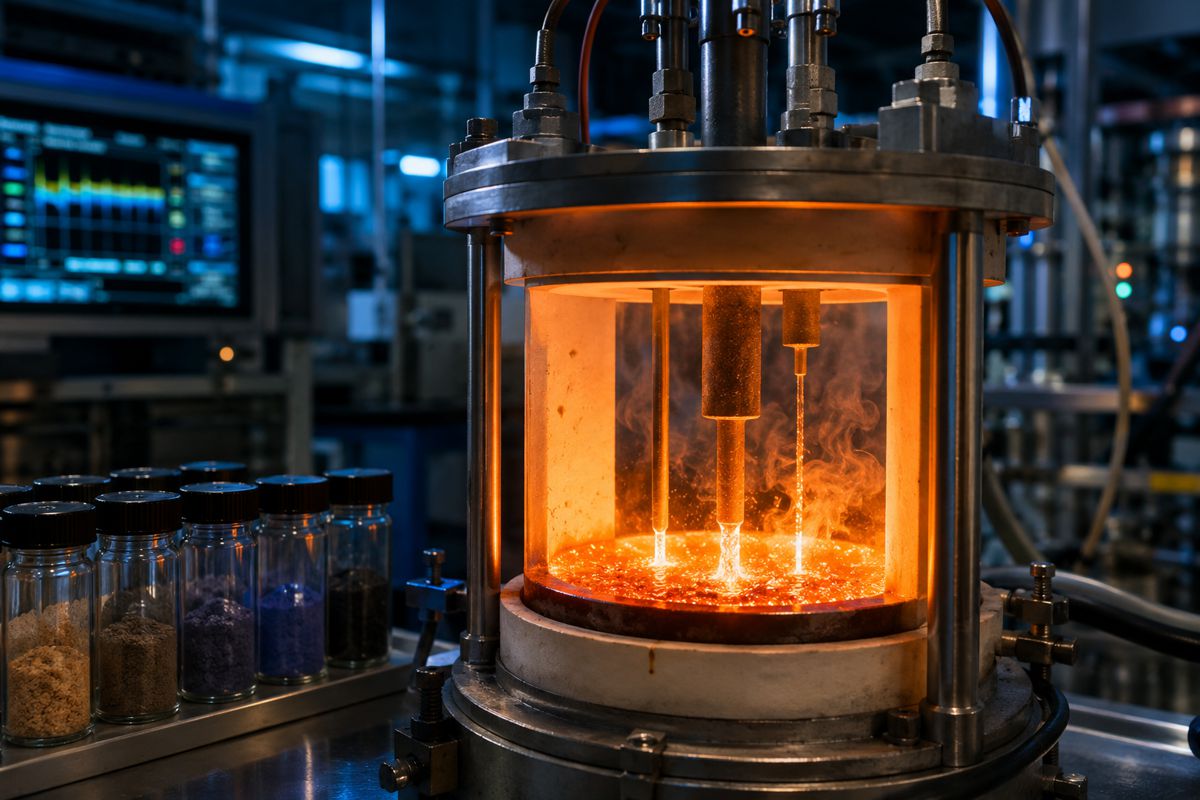
At the centre of this breakthrough is the ability to simulate extreme environments that are nearly impossible to replicate safely in a laboratory. When carbon is exposed to intense heat and pressure, such as those found in explosive environments, it undergoes rapid and complex transformations.
These conditions produce nanocarbons, microscopic structures with remarkable properties. Nanodiamonds, for example, are incredibly strong and stable. Other forms, such as layered or hollow carbon structures, offer unique electrical, thermal and chemical characteristics.
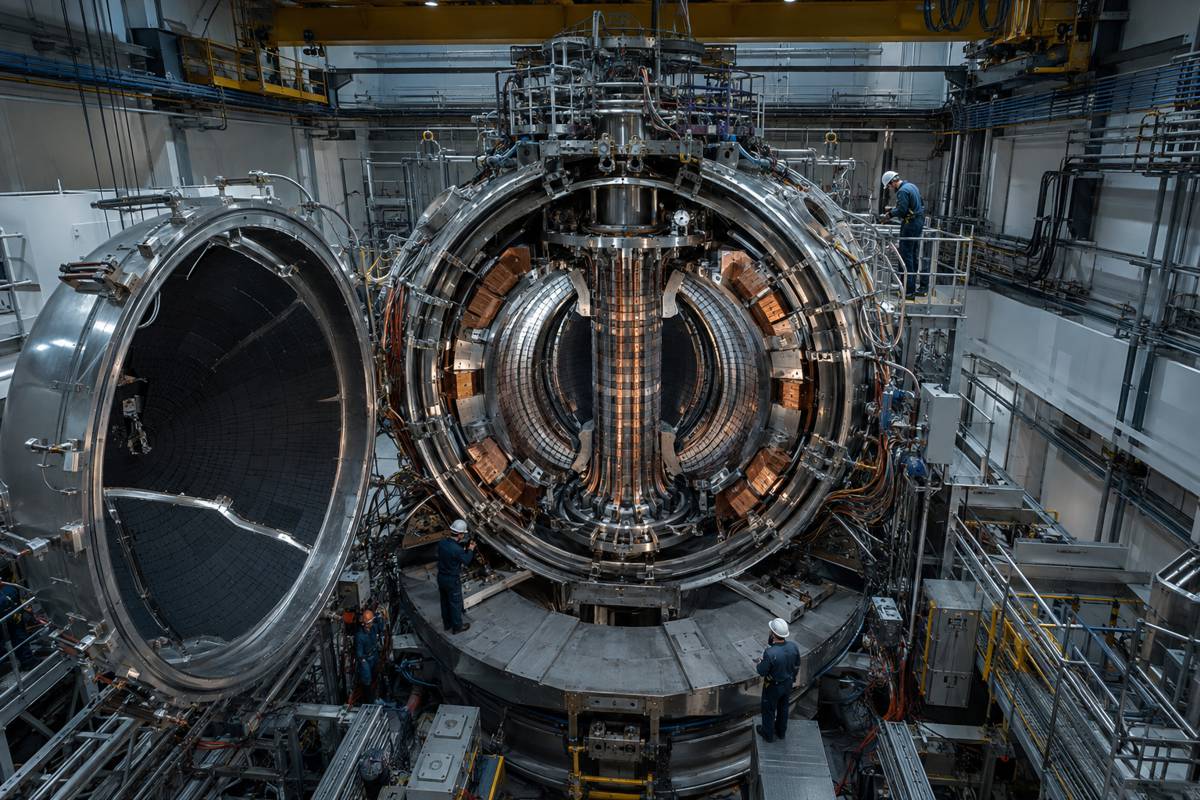
Traditionally, understanding these transformations required dangerous and costly experiments. Now, supercomputers are stepping in to do the heavy lifting. Systems like Argonne’s Aurora and Oak Ridge’s Frontier can simulate atomic interactions at extraordinary scale and speed.
These simulations act like ultra-high-speed cameras, capturing how carbon atoms move, bond and rearrange under changing conditions. Instead of observing outcomes after the fact, scientists can watch the process unfold in real time at the atomic level.
Artificial Intelligence Turns Data into Design
Simulation alone isn’t enough. The real leap comes from integrating artificial intelligence into the process. The datasets generated by these simulations are vast, far beyond what human researchers can analyse manually.
AI models are trained on this data to identify patterns between temperature, pressure and resulting material structures. Over time, these models learn to predict how specific conditions will influence the final form of carbon.
That capability transforms the entire workflow. Instead of running countless experiments to find the right material, researchers can define a target property and work backwards. The AI suggests the conditions needed to achieve it.
As Eliu Huerta explained: “Carbon is remarkably versatile, and under extreme conditions, it reveals entirely new structures. By integrating physics-based modeling, AI and exascale computing, we can predict how carbon assembles at the nanoscale and use that insight to design advanced carbon materials with properties tailored for real-world applications.”
This approach reduces development time, lowers costs and opens the door to materials that would have been impractical to discover through traditional methods.
Nanodiamonds and Beyond Real World Applications
One of the most promising areas of focus is nanodiamonds. These particles, measured in nanometres, can form under extreme heat and pressure. Thousands could fit across the width of a human hair, yet their properties are anything but small.
The research shows that the way these particles cool and decompress determines their final structure. Rapid cooling tends to preserve the diamond form. Slower cooling allows atoms to rearrange into layered or hollow configurations.
Each structure brings its own set of applications. Nanodiamonds are already being explored for use in quantum sensing and advanced medical imaging. Their stability and optical properties make them particularly valuable in high-precision environments.
Meanwhile, layered carbon structures show strong potential for energy storage. Their ability to store and release electrical charge efficiently could support next-generation batteries and grid systems. For infrastructure, that translates into more resilient energy networks and improved integration of renewables.
Implications for Construction and Infrastructure Materials
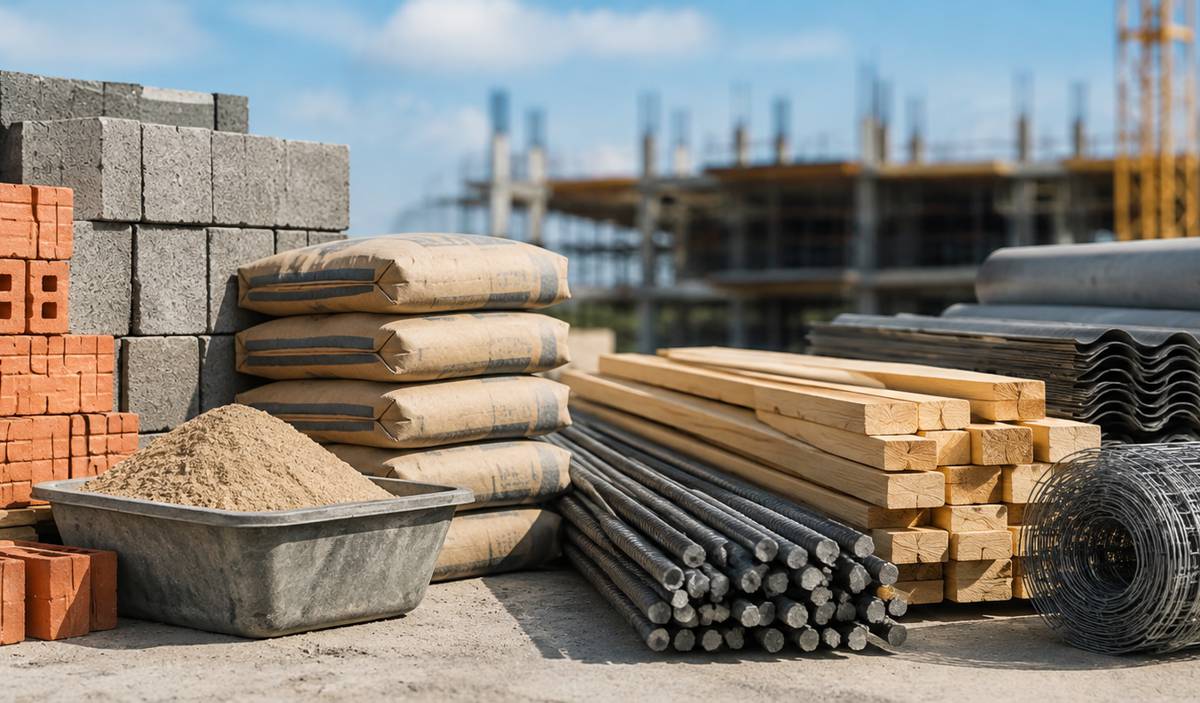
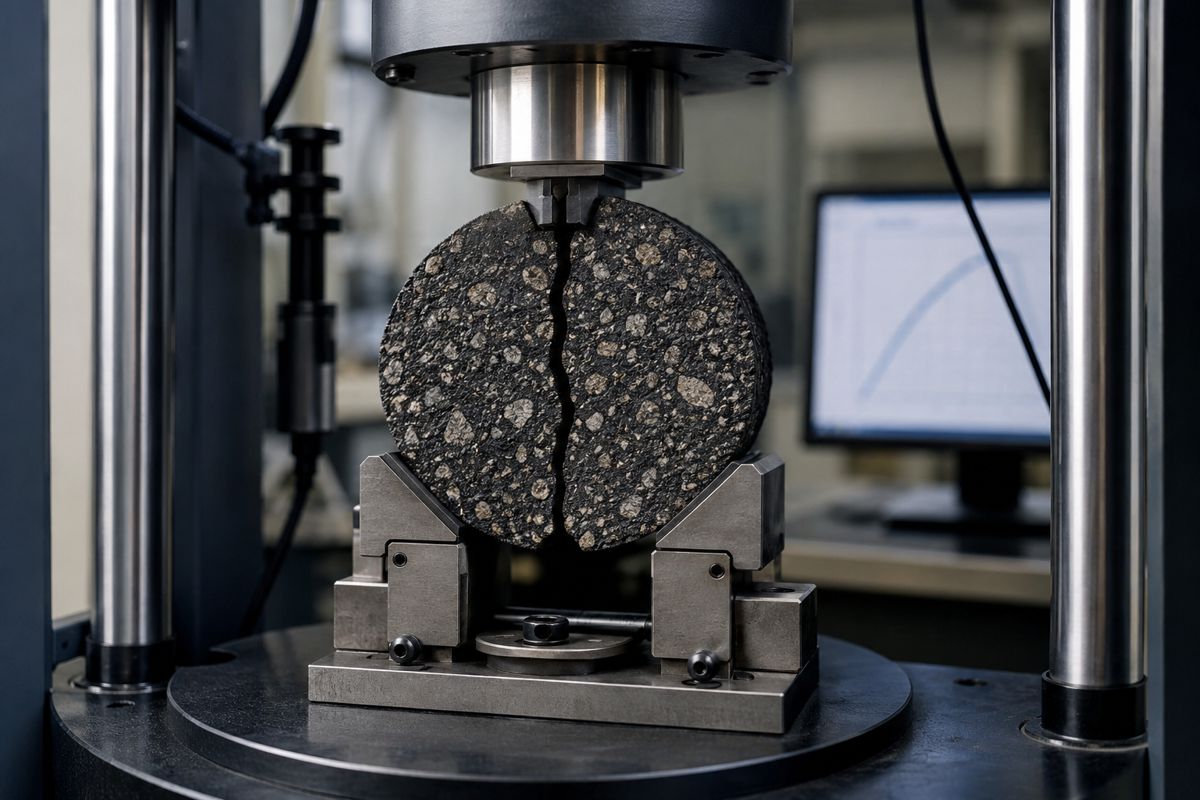
For construction professionals, the implications are both immediate and long term. Carbon-based materials are already widely used, from asphalt and composites to coatings and reinforcement systems. Enhancing their properties could deliver tangible benefits across the sector.
Stronger materials mean longer-lasting infrastructure. Lighter materials reduce transportation and installation costs. More adaptable materials can respond to environmental stresses, improving resilience against extreme weather and climate change.
There’s also a sustainability angle that shouldn’t be overlooked. Better materials can reduce resource consumption and extend asset lifespans, lowering the overall carbon footprint of infrastructure projects. In an industry under increasing pressure to decarbonise, that’s a significant advantage.
National Security and High Energy Environments
Beyond civil infrastructure, this research carries weight in defence and high-energy applications. Carbon plays a critical role in systems exposed to extreme conditions, including protective materials, coatings and components used in demanding environments.
Understanding how carbon behaves under these conditions improves predictive models for explosives and impact scenarios. It also supports the development of stronger, lighter and more resilient materials for defence applications.
As Millie Firestone noted: “What’s exciting is that supercomputers let us simulate extreme conditions, and AI turns that knowledge into the ability to design extraordinary, tailorable materials.”
For industries operating in harsh environments, from mining to aerospace, these advancements could lead to safer operations and more durable equipment.
From Laboratory Curiosity to Industrial Reality
While the science is cutting-edge, the trajectory is clear. Computational materials design has been evolving for years, but the integration of AI marks a step change. Systems are no longer just simulating. They’re learning, adapting and guiding discovery.
This convergence of physics, chemistry, computer science and AI is reshaping how materials are developed. It’s not just about understanding what happens. It’s about deciding what should happen and engineering it accordingly.
For the construction and infrastructure sectors, that’s a powerful proposition. Materials innovation has always been a slow burn. Now, it’s accelerating, driven by data and computation rather than trial and error.
Building the Future One Atom at a Time
The broader significance of this work lies in its scalability. The same principles used to study nanocarbons can be applied to other materials and systems. As computing power continues to grow, so too will the ability to design materials with unprecedented precision.
That’s likely to ripple across the entire infrastructure ecosystem. From smarter roads and energy systems to advanced transport technologies and resilient urban environments, materials will play a central role.
What Argonne’s researchers have demonstrated is a glimpse of that future. By unlocking the behaviour of carbon under extreme conditions, they’ve shown how science, computation and AI can come together to solve complex challenges.
It’s not about replacing traditional engineering. It’s about enhancing it with tools that make the invisible visible and the unpredictable predictable. And in an industry where performance, safety and efficiency are paramount, that’s a development worth watching closely.