Turning Steel Waste into Infrastructure Gold with Cocoon Carbon
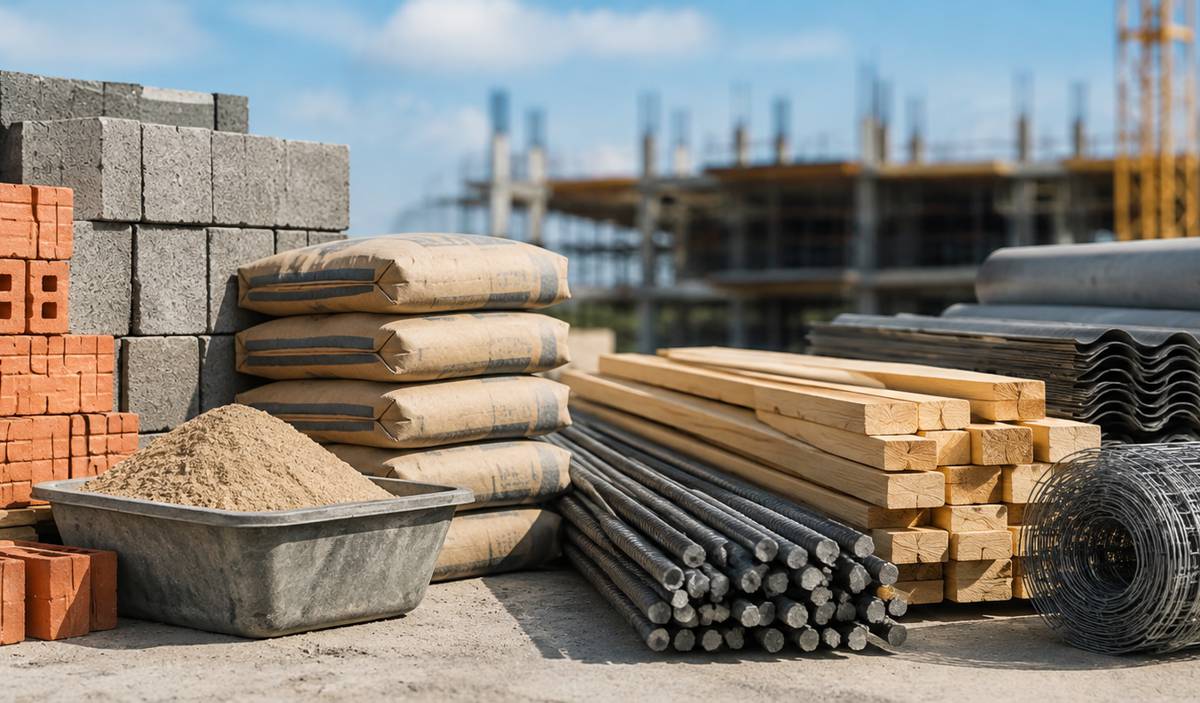
Concrete sits at the very foundation of modern civilisation. From highways and bridges to ports, data centres and housing, it remains the most widely used material on Earth after water. Yet behind its apparent abundance lies a growing supply crisis, one that’s quietly reshaping the economics and sustainability of global construction.
At the centre of this challenge are supplementary cementitious materials, commonly known as SCMs. These materials partially replace cement in concrete, improving performance while reducing cost and carbon emissions. Historically, SCMs have been sourced from industrial byproducts such as coal fly ash and blast furnace slag. However, as coal-fired power plants are phased out and traditional steelmaking declines in Europe and North America, these once-reliable supply streams are rapidly shrinking.
The consequences are already being felt. Demand for SCMs is rising steadily, driven by infrastructure expansion and the rapid buildout of energy-intensive facilities such as data centres. At the same time, supply constraints have tightened markets, with prices in some regions doubling since the late 2010s. With global infrastructure expected to double over the next four decades, the imbalance between supply and demand is becoming increasingly acute, forcing the industry to rethink where its materials will come from.
Cocoon Carbon’s $15 Million Bet on a New Supply Chain
Cocoon Carbon has secured $15 million in Series A funding to scale what it believes is a fundamentally new supply pathway for SCMs. The investment was co-led by 2150 and Brick & Mortar Ventures, both well-known for backing innovations in the built environment, alongside participation from The Venture Collective and existing investors including Wireframe Ventures, Celsius Industries, Gigascale Capital and SOSV.
Rather than chasing entirely new material chemistries or expensive carbon capture approaches, Cocoon’s strategy is grounded in industrial pragmatism. The company is focusing on unlocking value from an underutilised waste stream that already exists at scale, steel slag generated by electric arc furnaces. In doing so, it aims to address both the supply gap and the cost pressures that have historically slowed adoption of low-carbon materials.
The funding will support the deployment of Cocoon’s first commercial demonstration facility in the United States, marking a shift from pilot-scale validation to industrial deployment. If successful, the company plans to roll out its technology across more than 50 steel plants in the US and Europe, creating a distributed network of SCM production embedded within existing heavy industry.
Reimagining Steel Slag as a Strategic Resource
Steelmaking has undergone a quiet transformation over the past two decades. Electric arc furnaces, which melt scrap steel using electricity rather than producing iron from ore using coal, are gaining ground as a lower-carbon alternative to traditional blast furnaces. This shift is expected to accelerate, with projections indicating that EAF-based steel production could double by mid-century.
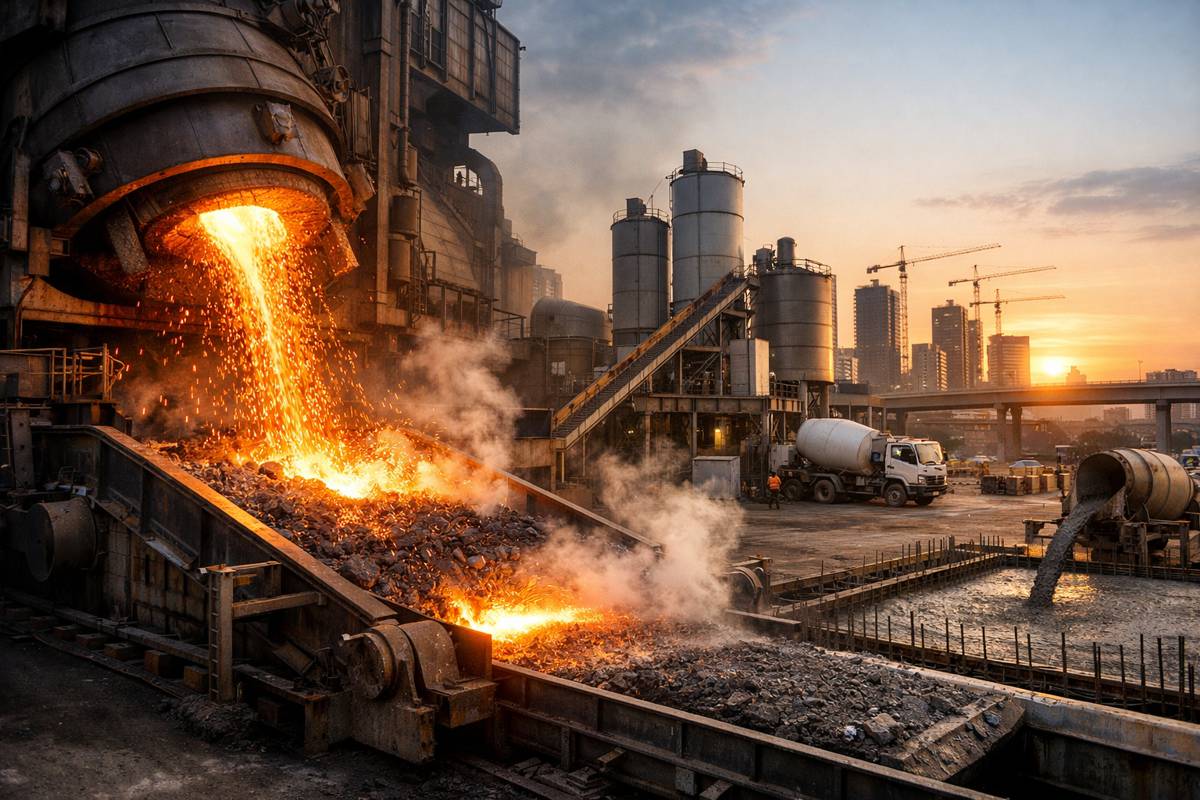
Each tonne of steel produced through this route generates slag, a molten byproduct that has historically been underutilised or relegated to low-value applications. Cocoon Carbon’s approach is to treat this material not as waste, but as a strategic input for the construction sector.
By converting steel slag into a high-performance cement replacement, the company effectively links two industrial systems that have traditionally operated in parallel. Steel plants become suppliers to the concrete industry, while concrete producers gain access to a new, localised source of SCMs. This integration has implications not only for material availability, but also for regional supply resilience and cost stability.
Engineering a Drop-In Alternative Without the Green Premium
One of the persistent barriers to low-carbon construction materials has been cost. Many alternatives to traditional cement come with a so-called green premium, making them difficult to adopt at scale in a price-sensitive industry. Cocoon’s model attempts to sidestep this issue entirely.
Instead of building new standalone production facilities, the company has developed a rapid cooling technology that can be retrofitted directly into existing steelmaking processes. By capturing molten slag and cooling it dramatically faster than conventional methods, Cocoon produces a consistent material suitable for use as an SCM.
This approach offers several advantages. It avoids the need for high capital expenditure, reduces energy inputs, and eliminates the logistical complexity associated with transporting materials over long distances. By co-locating production at steel mills, Cocoon also addresses one of the hidden costs of SCMs, transportation, which can represent a significant portion of the final delivered price.
The result is a material that matches the performance of traditional SCMs while reducing the embodied carbon of concrete by up to 40 percent. Crucially, it does so without requiring contractors or developers to pay a premium, making it far more likely to gain traction in mainstream construction markets.
Scaling Through Industrial Integration
Cocoon’s strategy is not simply about producing a new material. It is about embedding that production within existing industrial ecosystems. This plug-and-play model allows for faster deployment compared to greenfield projects, which often face lengthy permitting processes, high upfront costs and operational risks.
The company has already piloted its technology at a major steel facility and completed third-party validation of its material in concrete applications. Over the past year, it has also established a research and development centre and concrete testing laboratory in London, providing a technical foundation for further scaling.
The next phase will focus on demonstrating consistent performance at commercial scale. The planned US facility will serve as a proof point for investors, partners and customers, helping to de-risk future deployments. If successful, it could unlock financing for a broader rollout across dozens of sites, significantly expanding SCM supply in key markets.
At the same time, Cocoon is expanding its workforce, hiring engineers, materials scientists and commercial specialists in the UK, alongside operational and technical staff in the United States. This reflects the dual nature of the challenge, combining advanced materials science with the practical realities of industrial deployment.
Industry Voices Highlight the Scale of the Opportunity
The significance of Cocoon’s approach has not gone unnoticed by investors and industry observers, who see it as a potential inflection point in how construction materials are sourced.
“The SCM market is facing a structural deficit at exactly the moment infrastructure demand is rising,” said Eliot Brooks, CEO and Co-Founder of Cocoon Carbon. “We’re focused on delivering a plug-and-play solution that gives concrete producers access to affordable, local materials – while improving the economics of electric steelmaking. Expanding supply is the fastest way to stabilize costs and lower carbon in concrete.”
His comments underline a broader shift in thinking. Rather than focusing solely on reducing emissions, the industry is increasingly recognising the importance of supply chain resilience and cost stability. Without addressing these factors, even the most innovative technologies risk remaining niche solutions.
“Concrete is one of the biggest value streams on the planet, providing the foundation of our civilization, from buildings to infrastructure to data centers. It consumes orders of magnitude more energy than AI and emits more CO2 than any other sector,” says Jacob Bro, partner and co-founder of 2150. “Cocoon stands out in the innovation landscape with a product that is better and cheaper than cement and delivers a true drop-in replacement product for the industry.”
This perspective highlights the scale of the challenge. Cement production alone accounts for roughly 7 to 8 percent of global carbon emissions, according to widely cited industry estimates. Any solution capable of reducing emissions while maintaining performance and cost competitiveness has the potential to deliver outsized impact.
Infrastructure and Policy
For policymakers and infrastructure planners, the implications of Cocoon’s model extend beyond individual projects. As governments commit to ambitious construction programmes, from transport networks to energy systems, securing reliable and sustainable material supplies becomes a strategic priority.
A diversified SCM supply base could reduce dependence on legacy industrial processes and mitigate price volatility. It could also support regional manufacturing ecosystems, creating new economic opportunities around steel plants and other industrial hubs. In an era where supply chain disruptions have become increasingly common, such resilience is likely to be highly valued.
For investors, the opportunity lies in scaling a solution that aligns economic and environmental incentives. By improving the efficiency of existing industrial processes and creating new revenue streams from waste materials, Cocoon’s approach offers a pathway to both financial returns and measurable carbon reductions.
For the construction industry itself, the message is clear. The transition to low-carbon materials will not be driven by idealism alone. It will depend on solutions that integrate seamlessly into existing workflows, deliver consistent performance and make economic sense at scale.
Building Momentum for a New Materials Economy
Cocoon Carbon’s Series A funding marks an early but significant step in what could become a broader transformation of the construction materials landscape. By turning an overlooked byproduct into a valuable input, the company is challenging long-held assumptions about where critical materials come from and how they are produced.
As infrastructure demand continues to rise and traditional supply chains come under increasing pressure, such innovations are likely to play a central role in shaping the future of construction. The question is no longer whether alternative materials will be needed, but how quickly they can be deployed at scale.
If Cocoon can deliver on its promise of a cost-competitive, low-carbon SCM produced within existing industrial systems, it may well help bridge one of the most pressing gaps in the global construction ecosystem. In doing so, it offers a glimpse of a more integrated, efficient and resilient materials economy, one where waste is no longer wasted, but reimagined as the foundation of the next generation of infrastructure.