Building Regional Autonomous Transit Networks for the Real World
Autonomous vehicles have become a familiar sight in pilot projects, demonstration corridors and carefully controlled test environments. Yet the future of autonomous public transport will not be determined by how successfully a single shuttle completes a route or how many kilometres a test vehicle can travel without intervention. The real challenge begins when local demonstrations are expected to evolve into dependable transport systems serving entire regions.
Across Europe, North America and Asia, governments and transport authorities are increasingly examining autonomous mobility as part of a broader strategy to improve accessibility, reduce operating costs and address growing transport demands. While much of the public discussion continues to focus on sensors, artificial intelligence and vehicle platforms, industry experts are recognising that the next stage of development revolves around something far more complex: integrating autonomous mobility into functioning regional transport ecosystems.
That shift in focus is significant for infrastructure planners, transport operators, policymakers and technology providers alike. A pilot project can demonstrate technical feasibility. Scaling autonomous transport across multiple jurisdictions, operating environments and transport modes requires an entirely different level of organisational coordination, operational resilience and system architecture. The question is no longer whether autonomous vehicles can operate. It is whether autonomous mobility can be managed reliably across interconnected public transport networks.
Briefing
- Autonomous public transport faces its greatest challenges during regional scaling rather than local pilot deployment.
- Future autonomous mobility systems must integrate municipalities, operators, infrastructure managers, regulators and transport authorities.
- Mobility demand is defined by travel corridors and transport connections rather than administrative boundaries.
- Fleet-wide vehicle control is becoming a critical system-level requirement for large-scale autonomous operations.
- Regional deployment demands scalable, fail-operational control systems capable of handling diverse operating conditions.
Moving Beyond Municipal Boundaries
Transport users rarely think in terms of municipal jurisdictions. Their journeys connect homes, workplaces, schools, hospitals, transport hubs and commercial centres regardless of local government boundaries. Successful public transport systems therefore depend on continuous mobility chains rather than isolated routes.
This reality is increasingly influencing the way autonomous transport strategies are being developed. National policymakers are beginning to recognise that autonomous mobility should not be viewed solely as an urban innovation. Instead, it represents a potential component of future regional transport services capable of improving accessibility in both densely populated cities and underserved rural communities.
Germany’s federal strategy on autonomous driving reflects this broader perspective by identifying autonomous mobility as a future mobility solution extending beyond urban environments. Similar thinking can be observed throughout Europe, where ageing populations, labour shortages and rising operating costs are forcing transport authorities to explore new approaches to maintaining public transport coverage.
For rural communities in particular, autonomous services may eventually help bridge gaps in existing transport networks. However, achieving that vision requires considerably more than deploying autonomous vehicles. It requires coordinated transport planning, shared operational standards and reliable system-wide management structures.
The Importance of Connected Mobility Chains
The most valuable transport services are those that successfully connect people with destinations. This principle remains unchanged regardless of whether vehicles are driven by humans or algorithms.
Autonomous mobility therefore derives its practical value from its ability to strengthen existing transport networks. Connections between residential neighbourhoods and railway stations, links between hospitals and city centres, and services connecting rural communities to regional transit networks represent the types of mobility chains that determine whether transport systems genuinely meet public needs.
The German “Handbook on Autonomous Driving in Public Transportation” highlights this integrated approach by describing autonomous transport services as components within broader operational and transportation structures rather than standalone technology projects. The emphasis shifts from individual vehicles to network performance.
Norway has adopted a similarly integrated perspective through its national transport planning framework. Mobility is increasingly viewed as a regional challenge requiring coordination between infrastructure assets, transport providers and public authorities. The objective is not simply deploying autonomous vehicles but creating reliable, interconnected service systems capable of supporting long-term mobility requirements.
Scaling Changes Everything
Many autonomous transport demonstrations operate within highly controlled environments. Routes are predefined, operational areas are restricted and contingency procedures are carefully managed. These conditions allow technology developers to validate systems while limiting operational risks.
Regional deployment introduces a very different reality. Autonomous fleets operating across larger geographical areas encounter varying road conditions, diverse traffic patterns, changing weather environments and multiple stakeholder interfaces. Operational complexity grows rapidly as the number of vehicles, routes and service areas increases.
Infrastructure conditions may differ significantly between urban streets, suburban corridors and rural roads. Traffic volumes fluctuate throughout the day. Construction activities create temporary changes in road layouts. Communication networks vary in reliability. Each factor introduces additional variables that autonomous systems must accommodate.
The challenge is not merely organisational. It is fundamentally architectural. Every expansion in geographical coverage increases demands on system control, operational oversight and safety management. As autonomous mobility networks become larger and more distributed, maintaining consistent performance becomes increasingly difficult.
Fleet Control Becomes a Critical Infrastructure Layer
One of the most important shifts occurring within autonomous mobility development involves the concept of control itself. During pilot deployments, vehicle control is often treated as an attribute of individual vehicles. Once systems scale regionally, that assumption becomes insufficient.
Control must increasingly be viewed as a characteristic of the entire operational network. Vehicles can no longer function as isolated autonomous units. Instead, they become components within a coordinated fleet ecosystem requiring continuous management and supervision.
This evolution mirrors developments already observed in other critical infrastructure sectors. Air traffic management, railway signalling systems and electrical grid operations all rely on centralised coordination frameworks that maintain safe and efficient operations across distributed assets.
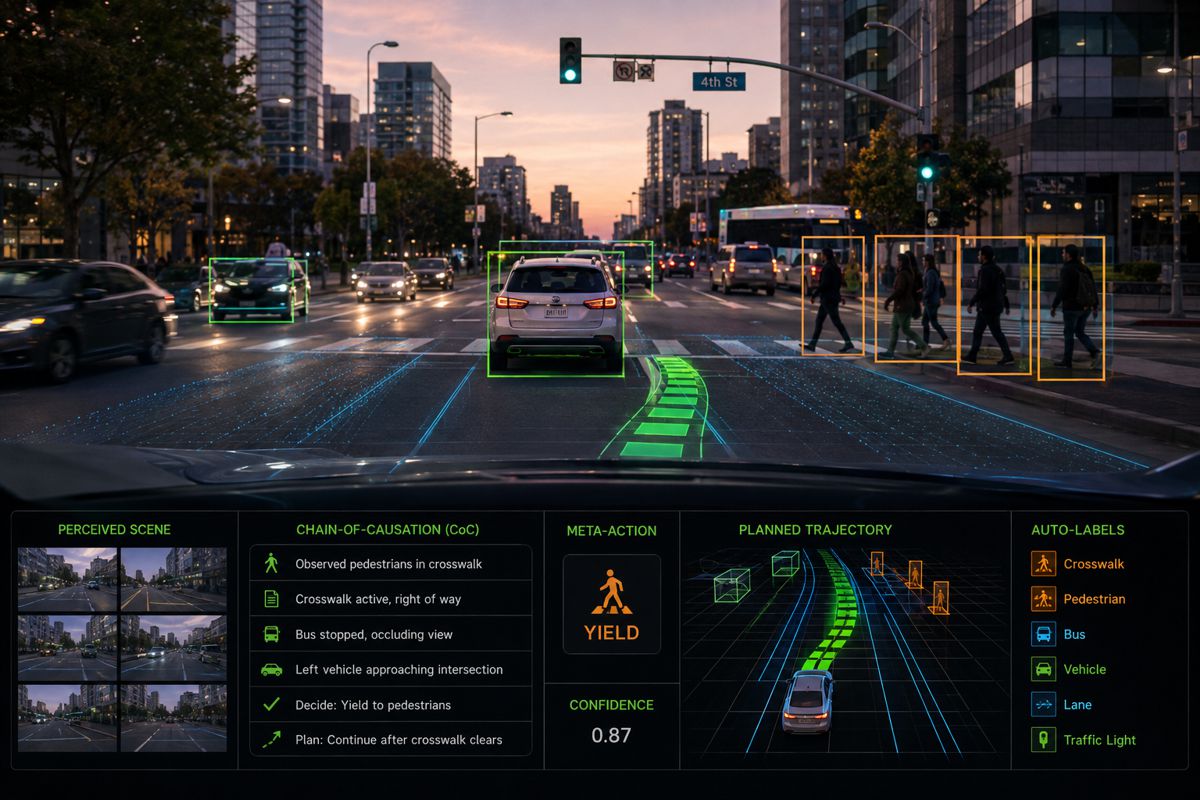
Autonomous public transport appears to be moving in a similar direction. Fleet-wide visibility, operational consistency, route management, safety monitoring and intervention capabilities are becoming increasingly important. Developers and system architects are therefore focusing on technologies capable of supporting these broader operational requirements rather than concentrating solely on vehicle-level autonomy.
Learning from Real Operating Environments
Industry organisations have repeatedly highlighted the importance of moving beyond laboratory testing and limited pilot deployments. Larger demonstration regions and realistic operating conditions provide insights that cannot be obtained within tightly controlled environments.
German digital industry association Bitkom has argued that broader deployment areas are essential for understanding both scalability and economic viability. Real-world transport systems generate operational complexities that simulations and small-scale pilots often fail to capture.
This lesson is already evident in several international autonomous mobility programmes. Pilot projects frequently achieve technical success, yet scaling efforts encounter challenges related to integration, governance, operational management and public acceptance.
Infrastructure managers and transport authorities increasingly recognise that autonomous mobility cannot simply be added to existing networks without wider organisational adaptation. Procurement frameworks, regulatory oversight, operational procedures and maintenance strategies must evolve alongside the technology itself.
Creating Resilient Autonomous Mobility Systems
The long-term success of autonomous public transport will depend on resilience as much as innovation. Public transport networks operate under constant pressure from weather events, infrastructure disruptions, traffic incidents and fluctuating demand patterns. Autonomous systems must be capable of maintaining safe and reliable operations under similarly dynamic conditions.
For transport operators, this means prioritising reproducibility, scalability and controllability across the entire mobility ecosystem. Every component within the system must support predictable behaviour while remaining adaptable enough to respond to changing operational circumstances.
System architects increasingly describe this requirement as the creation of independent, fail-operational control layers. Rather than relying exclusively on vehicle-specific technologies, future autonomous mobility systems may require dedicated control architectures capable of coordinating diverse vehicle platforms and operating environments.
NX NextMotion from Arnold NextG is one approach aimed at addressing this challenge by providing scalable vehicle control capabilities intended for networked autonomous mobility environments. Regardless of the specific technology platform adopted, the broader industry trend is clear. Control systems are becoming a foundational component of autonomous transport infrastructure rather than a secondary operational feature.
From Demonstration Routes to Regional Mobility
The autonomous mobility sector is entering a period where technical capability alone is no longer enough. Demonstrations have shown that autonomous vehicles can function effectively under controlled conditions. The next challenge involves transforming those isolated successes into dependable public services operating across real transport networks.
Achieving that objective requires collaboration between local authorities, regional governments, transport operators, infrastructure owners, regulators and technology providers. It also requires recognising that mobility is fundamentally a network challenge rather than a vehicle challenge.
As autonomous public transport expands, the organisations that succeed will be those capable of managing complexity at a regional scale. The future will not be shaped by individual vehicles navigating test tracks. It will be determined by how effectively entire transport ecosystems coordinate people, infrastructure, operations and technology into a single, resilient mobility system.