Get Paid to See the World: The Global Opportunities Hidden in Construction
Most people planning a trip to a tropical island expect to pay for their flights, accommodation and meals. Experienced construction machinery operators responding to a recruitment campaign in Australia’s Northern Territory were offered a rather different arrangement. Their employer would fly them from Cairns or Darwin to a remote island, put them up at a four-star waterfront resort, provide their meals and pay them to operate heavy equipment.
The offer came from GEBIE Civil and Construction (GCC), a subsidiary of Groote Eylandt and Bickerton Island Enterprises Aboriginal Corporation, which undertakes infrastructure work across the Groote Archipelago in the Gulf of Carpentaria. Recruitment advertisements published during 2026 offered an 18-days-on, 10-days-off fly-in, fly-out roster, with accommodation at Groote Eylandt Lodge. The resort featured waterfront rooms, a swimming pool, restaurant and recreational facilities, while Sundays were advertised as non-working days, allowing employees to enjoy the island’s coastline and fishing opportunities.
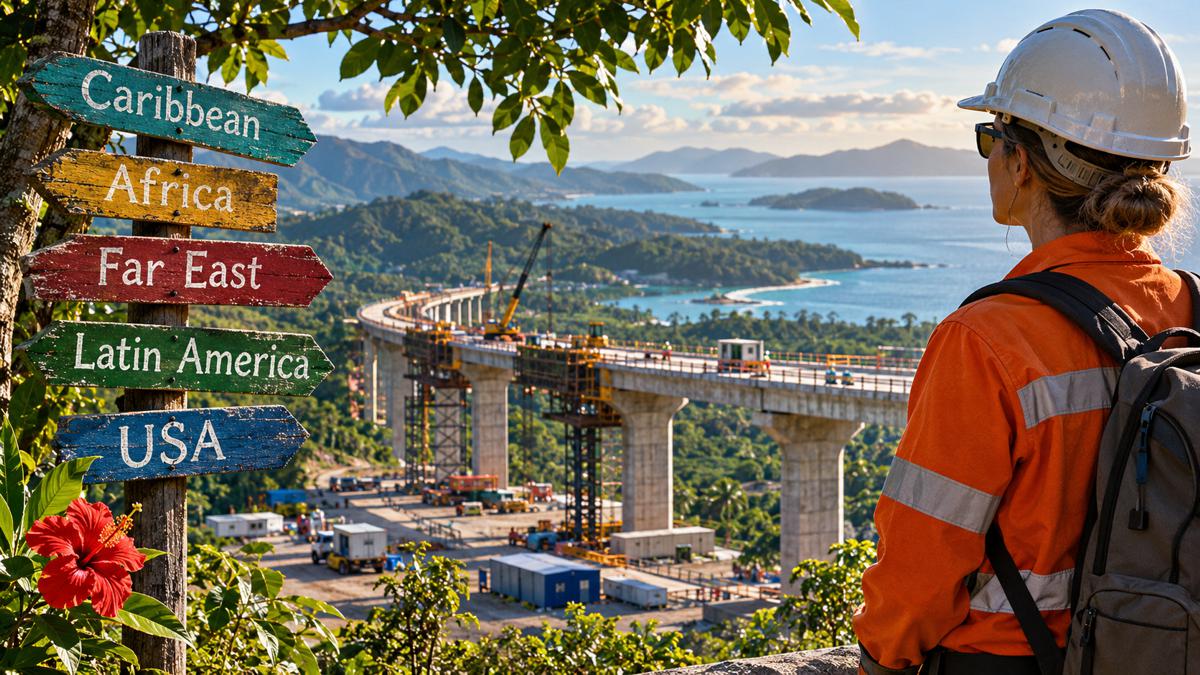
Groote Eylandt is a domestic Australian assignment rather than an overseas posting, but the employment arrangements are familiar to generations of internationally mobile construction professionals. Projects such as airports in the Caribbean, highways across Africa, industrial developments in Southeast Asia and infrastructure schemes throughout Latin America have taken engineers, machinery operators and technical specialists to extraordinary locations, often with their travel and living expenses covered.
International infrastructure jobs also extend well beyond the construction workforce. Modern projects employ environmental specialists, educators, communications professionals, financial advisers, community engagement teams and people from numerous other disciplines. The skills needed to deliver infrastructure can open doors to countries and experiences that might otherwise remain beyond reach.
Briefing
- Previously advertised Australian construction positions offered flights from Cairns or Darwin, resort accommodation, meals and an 18-on, 10-off FIFO roster.
- International infrastructure contracts can include employer-funded travel, accommodation, vehicles, meals and additional allowances.
- Major projects employ professionals in environmental protection, public education, communications, finance and social development alongside construction teams.
- The World Bank, Asian Development Bank, African Development Bank and EBRD provide routes to discovering international project and consultancy opportunities.
- Overseas assignments can combine professional development and financial advantages with the opportunity to experience different countries and cultures.
Expatriate and Rotational Employment
The traditional expatriate construction contract could be an attractive arrangement. An international contractor needed an engineer, surveyor, mechanic or project manager in another country, so it organised the flights, provided somewhere to live, supplied transport and covered meals or living expenses. The employee received a salary, sometimes enhanced by overseas or hardship allowances, while many of the usual costs of everyday life were taken care of.
Such packages became familiar on remote construction, mining, oil and gas, and major engineering projects where experienced personnel were difficult to recruit locally. Accommodation might be a hotel, furnished apartment, company housing or dedicated construction camp, with vehicles, medical insurance and periodic flights home included according to the contract.
The financial attraction was considerable. Someone accustomed to paying rent, utility bills, commuting costs and household expenses could find that a comparable overseas salary went substantially further when those costs were covered by an employer. Several years spent moving between fully supported international assignments could provide an opportunity to accumulate savings while gaining experience on increasingly complex projects.
These arrangements still exist, although packages vary considerably between countries, employers and contract types. Rotational employment, permanent expatriate appointments and short-term consultancy assignments have different conditions, and many jobs offer only some of the traditional benefits.
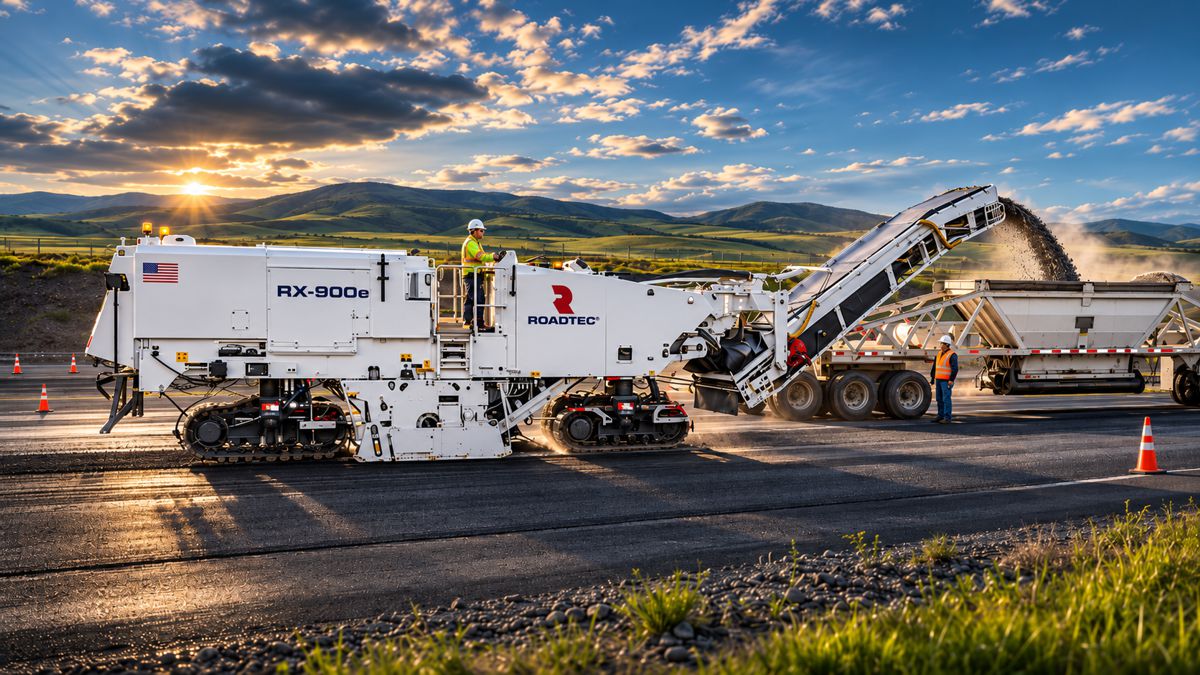
GCC’s earlier recruitment advertisements showed how attractive the accommodation arrangements could become. The positions covered experienced dozer and other mobile plant operators, with work involving civil earthmoving, road construction and maintenance. The advertised benefits included five weeks of annual leave, an additional Christmas shutdown week and an annual bonus. The advertisements did not state a salary.
The resort surroundings did not remove the demands of the work. Remote infrastructure projects can involve long shifts, challenging logistics, difficult weather and limited access to services. Yet the prospect of spending evenings beside the sea and enjoying free days in such an extraordinary location demonstrated how different a remote construction career could be from commuting to the same workplace every morning.
Living and Working in Another Country
Working overseas offers experiences that are difficult to reproduce through conventional tourism. An international assignment can last months or years, providing time to become familiar with local communities, develop friendships and experience everyday life beyond the hotels and attractions that most visitors encounter.
A highway project in East Africa might involve working alongside local contractors and learning how infrastructure is delivered in communities with different resources and priorities. On a port development in Southeast Asia, an international specialist could find themselves collaborating with engineers, equipment suppliers and construction teams from several countries, each bringing their own experience to the project.
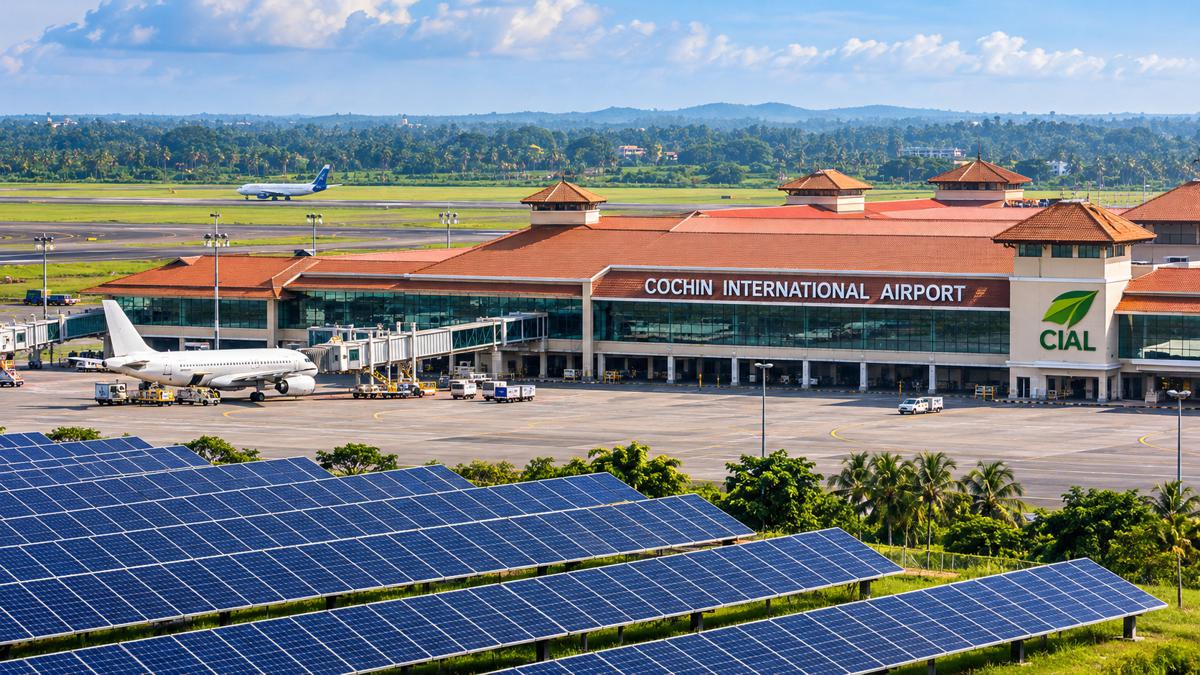
The possibilities stretch across almost every region. Caribbean airport developments, Middle Eastern transport networks, African water projects, Latin American highways and major Asian industrial facilities all require combinations of international and local expertise. Some assignments are based in major cities with familiar amenities, while others take workers into remote communities where they become part of local life for the duration of the project.
Living overseas also allows time for experiences that rarely fit into a holiday itinerary. Local food, markets, languages, festivals and friendships gradually become part of everyday life. A weekend might involve exploring a historic town, travelling into the countryside or accepting an invitation from colleagues to visit somewhere that would never appear in a conventional travel guide.
International work can be an education in itself. Professional practices differ between countries, as do construction methods, management expectations and approaches to solving problems. Engineers and supervisors may need to adapt familiar techniques to local materials, climate, equipment availability or working traditions, while the knowledge of local colleagues can prove invaluable.
There are less appealing aspects. Remote assignments can mean demanding schedules, difficult climates, isolation and extended periods away from family. Some locations bring additional health, safety or security considerations, and project deadlines rarely accommodate the relaxed pace of a holiday. Even the most spectacular destination can lose some of its charm after several weeks of long shifts.
Nevertheless, the rewards can extend well beyond salary and professional development. International assignments create friendships, memories and an understanding of different cultures that can remain with people throughout their lives, often influencing their outlook long after they have returned home.
Careers Beyond Engineering and Construction
The people building roads, bridges, airports and railways represent only part of the workforce involved in delivering modern infrastructure. A major transport or energy project may need engineers, construction supervisors and machinery operators, but it can also require environmental scientists, educators, communications professionals, economists, financial specialists and community development advisers. Some work directly for project owners or contractors, while others are employed by engineering consultancies, specialist firms or organisations supporting the development programme.
Internationally financed projects can create substantial work beyond physical construction because of their environmental and social requirements. The World Bank’s Environmental and Social Framework establishes standards covering labour conditions, community health and safety, biodiversity, land acquisition and stakeholder engagement. Depending on a project’s scale and risks, meeting these requirements can involve environmental impact assessments, public consultation, social monitoring, community education and measures to manage the effects of construction on local people.
Consider a new highway passing through several rural communities. Engineers may develop the design, surveyors establish the alignment and contractors undertake the earthworks. Other teams could be needed to consult residents, explain changes to access routes, assess impacts on agricultural land, develop road safety awareness campaigns and establish procedures for addressing complaints.
Environmental specialists might monitor water quality, protect sensitive habitats or advise on erosion control, while social development professionals work with affected households. Communications teams prepare public information materials and explain the project to local communities, and training specialists may help develop workforce skills or support institutional development.
The attention given to environmental, social and governance performance adds another dimension, although corporate ESG reporting and the specific environmental and social safeguards required by development-finance institutions are not interchangeable. The latter frequently involve assessments, management plans and monitoring obligations tied directly to project financing.
These requirements create opportunities for professionals with backgrounds in education, environmental management, public relations, social development, accounting and administration. Many positions require specialist qualifications or substantial experience, but they are connected to infrastructure careers that rarely feature in conventional construction recruitment campaigns.
Communications and Community Engagement Roles
A World Bank Group procurement notice concerning proposed wind developments in Côte d’Ivoire demonstrates the range of professions involved in international infrastructure. The Government of Côte d’Ivoire, through its Ministry of Mines, Petroleum and Energy, is preparing the country’s first utility-scale wind independent power producer projects at Hiré-Ouatta and Bondoukou. Each proposed development has an anticipated capacity of approximately 90 MW, with the International Finance Corporation acting as lead transaction adviser.
A World Bank Group expression of interest for communications services sought expertise in stakeholder mapping, communications strategy, media relations, community information sessions and crisis communications. The assignment also included communications support around key transaction milestones through to financial close.
The selection was organised through the World Bank Group’s procurement system. Although the notice principally invited eligible consulting firms and described a firm-based shortlisting process, its submission requirements also referred to CVs and cover letters for individual applicants.
The proposed wind developments require technical and financial expertise, but they also need professionals capable of explaining the projects, supporting public engagement and communicating with communities and other stakeholders. Similar work arises on roads, railways, water schemes, power transmission projects and urban development programmes.
Another example comes from the Asian Development Bank’s Guizhou Gui’an New District New Urbanization Smart Transport System Development Project in China, identified as project 51366-001. A consultancy notice published on 2 November 2026, under package C204, sought a firm to provide behaviour-change communications and promote green and sustainable transport.
The eight-month assignment called for expertise in public communications, stakeholder engagement, green travel promotion, gender considerations, monitoring and evaluation, and media campaign planning. The stated maximum consulting budget was US$61,241, with an expression-of-interest deadline of 1 December 2026.
Neither assignment resembles a traditional construction vacancy, yet both form part of infrastructure development. They demonstrate how investment in transport and energy creates work for professionals who may never operate machinery, design a bridge or supervise a construction site.
Finding International Infrastructure Opportunities
Development-finance institutions provide useful starting points for professionals interested in overseas infrastructure work. The World Bank, Asian Development Bank, African Development Bank and European Bank for Reconstruction and Development support projects across transport, energy, water, urban development and other sectors. Implementation commonly involves government agencies, engineering consultancies, contractors and specialist service providers, which recruit the people needed to undertake the work.
Their procurement platforms reveal the types of projects being developed, the expertise required and, through contract award information, the organisations securing assignments. The World Bank’s Business Opportunities portal provides access to project procurement notices, while the Asian Development Bank’s Business Opportunities portal includes consultancy opportunities, procurement plans and contract information.
The African Development Bank publishes procurement information for financed projects, and the EBRD’s project procurement services provide access to opportunities across its regions of operation. These platforms primarily advertise contracts rather than individual jobs, although some consulting assignments are open to individual specialists. They can still help prospective employees identify which organisations are active in a particular country or professional discipline.
An environmental specialist interested in working in Central Asia, for example, could examine projects financed by the ADB or EBRD, identify consulting firms undertaking environmental assessments and follow their recruitment activities. A construction manager considering opportunities in Africa might investigate major road or water infrastructure programmes and establish which international contractors have secured work.
Private-sector investment offers further possibilities. Major construction companies, equipment manufacturers, mining operators, industrial developers and engineering consultancies recruit internationally for projects that have no direct connection with development-bank financing.
Equipment manufacturers and their dealer networks may require field service technicians, commissioning engineers and trainers to install, maintain and support machinery in different countries. Consulting firms can offer assignments in surveying, project management, environmental assessment and technical advisory work, while specialist contractors need commercial managers, quantity surveyors, procurement professionals and health and safety personnel.
Professional networks remain valuable. International teams frequently bring together people who have worked across several continents, and relationships established during one assignment can lead to introductions elsewhere. Following project announcements, contract awards and the recruitment activities of organisations already working in a preferred region can be more productive than relying exclusively on general job boards.
Evaluating an Overseas Contract
Anyone considering overseas construction careers should examine the complete employment package rather than concentrate solely on the advertised salary. Flights, accommodation, meals, vehicles, medical insurance and home leave can make a substantial difference to the financial value of an assignment. Employers may provide these directly or offer allowances intended to cover them, and the contract should explain precisely what is included.
Working hours, leave arrangements and accommodation standards can be just as important as salary. A remote rotational position might involve long shifts and limited opportunities to leave the project area, while a city-based assignment could offer more freedom but require employees to meet a greater share of their living costs.
Visa and work permit arrangements also need to be established before departure. Professional qualifications may not automatically be recognised in another country, and employment legislation, insurance requirements and taxation can differ considerably between jurisdictions.
Working overseas does not automatically make earnings tax-free. Personal residence, the location of employment, the employer’s arrangements and applicable tax treaties can affect liability, while accommodation and other benefits may themselves have tax implications.
Security and medical arrangements are particularly important for remote or higher-risk locations. Contracts should address healthcare, emergency evacuation where appropriate, project suspension, early termination and repatriation. Applicants should also verify unfamiliar employers or recruitment agencies and avoid arrangements involving unexplained placement fees.
A well-supported remote contract may be attractive to someone seeking to accumulate savings, while a longer appointment in a major city might better suit a professional interested in cultural experiences and a more settled lifestyle. Short-term consultancy assignments can provide regular international travel without requiring permanent relocation.
Professional Experience and International Networks
Major infrastructure projects bring together engineers trained on different continents, local specialists with extensive regional knowledge, international equipment technicians and consultants accustomed to different contractual and regulatory systems. Working effectively in such environments requires cooperation, patience and an appreciation of unfamiliar approaches, while practical problems often demand solutions that would never arise on a familiar home-country project.
The professional relationships formed along the way can endure long after construction is completed. Former colleagues meet again on assignments in other countries, contacts develop into friendships and experience gained on one project becomes useful somewhere entirely different. There can also be a particular satisfaction in returning years later to a road, bridge, airport or other facility that one helped deliver, remembering the colleagues and challenges behind the finished structure.
International work is not exclusively an opportunity for younger people. Experienced engineers, managers, consultants and specialists often possess precisely the knowledge required for complex assignments, while those earlier in their careers may be attracted by the chance to develop independence and explore the world. Family commitments, health considerations and personal preferences inevitably influence the decision, particularly when employment involves long periods away from home.
Some professionals settle in another country for years, while others build careers around successive contracts in different regions. The lifestyle is not suitable for everyone, but it can provide an unusual combination of professional development, financial opportunity and personal experience.
Infrastructure Careers Across the World
The Groote Eylandt recruitment campaign demonstrated some of the benefits that can accompany remote employment. Its tropical resort accommodation was unusual, but the broader arrangement of employer-funded travel, accommodation and living expenses has been familiar to internationally mobile construction professionals for decades.
Infrastructure investment continues to create opportunities across an enormous range of occupations. Roads need building, railways require modernisation, ports need expanding and communities need reliable water, energy and transport connections. These developments depend on engineers, operators and construction teams, alongside the environmental, commercial and social specialists responsible for supporting their delivery.
The people who take these assignments gain experience that can be valuable throughout their careers, often in places they might never have considered visiting. Some projects are demanding and remote, others are based in major cities, and a few offer the unexpected pleasure of living beside a tropical beach.
A career involving successive international assignments can provide extensive professional experience, an understanding of different working cultures and relationships that extend across continents. With major infrastructure programmes continuing in developed and emerging economies alike, the opportunities remain for experienced specialists willing to take their skills wherever projects require them.
Key Industry Questions
- What types of infrastructure jobs offer international travel? International opportunities include civil engineering, construction management, surveying, machinery operation, equipment maintenance, environmental management, community engagement, communications, project finance and specialist consultancy.
- Do overseas construction jobs include paid flights and accommodation? Many international and remote construction contracts provide flights, accommodation, transport, meals or living allowances. Benefits vary considerably by employer, country and contract, so applicants should confirm the full package before accepting an assignment.
- Where can professionals find internationally funded infrastructure opportunities? The World Bank, Asian Development Bank, African Development Bank and EBRD publish project procurement and consultancy opportunities. International contractors, engineering consultancies and specialist recruitment agencies also advertise overseas employment.
- Can someone without construction experience work on an international infrastructure project? Yes. Infrastructure projects can employ educators, environmental scientists, communications specialists, accountants, social development professionals and administrative personnel. Individual positions may require specific qualifications and substantial professional experience.
- What are environmental and social safeguards in infrastructure development? They are measures used to assess and manage project risks and impacts involving issues such as biodiversity, labour, community health, land acquisition and stakeholder engagement. Specialists may be employed to undertake assessments, consultation and monitoring.
- What is the difference between FIFO employment and an expatriate assignment? FIFO employees generally travel to remote workplaces for defined rotations before returning home. Expatriate assignments typically involve living and working in another country for an extended period, although arrangements vary.
- Are international infrastructure salaries tax-free? Not automatically. Tax liability depends on residence, the location of employment, local legislation and applicable tax treaties. Employer-funded accommodation and allowances may also have tax implications.
- Do development banks employ everyone working on their financed projects? No. Many projects are implemented by government agencies, contractors, engineering consultancies and other organisations that recruit their own personnel. Development banks may provide finance, procurement oversight or advisory support.
- Can experienced professionals find short-term international assignments? Yes. Technical assessments, consultancy services, equipment commissioning, training and project monitoring can involve short-term international travel. Some positions require repeated visits rather than permanent relocation.
Strategic Takeaways
- Employer-funded accommodation, travel and living expenses can substantially increase the overall value of international employment packages.
- Infrastructure investment supports careers in environmental management, communications, education, finance and social development alongside engineering and construction.
- Development-bank procurement notices and contract awards can reveal future employment opportunities and identify organisations active in particular countries.
- Specialist technical and advisory roles can provide international assignments without requiring permanent expatriate relocation.
- International project experience can develop professional networks, cultural understanding and practical knowledge that remain valuable throughout a career.