LED Optics Under Pressure as Study Highlights Long-Term Material Risks
The rapid global shift to LED lighting has reshaped infrastructure projects, from highways and tunnels to sports arenas and smart city deployments. Yet, while efficiency gains and reduced energy consumption often dominate the conversation, a new study by Dow Inc. draws attention to a quieter but critical issue: the long-term durability of optical materials used in high-power LED systems.
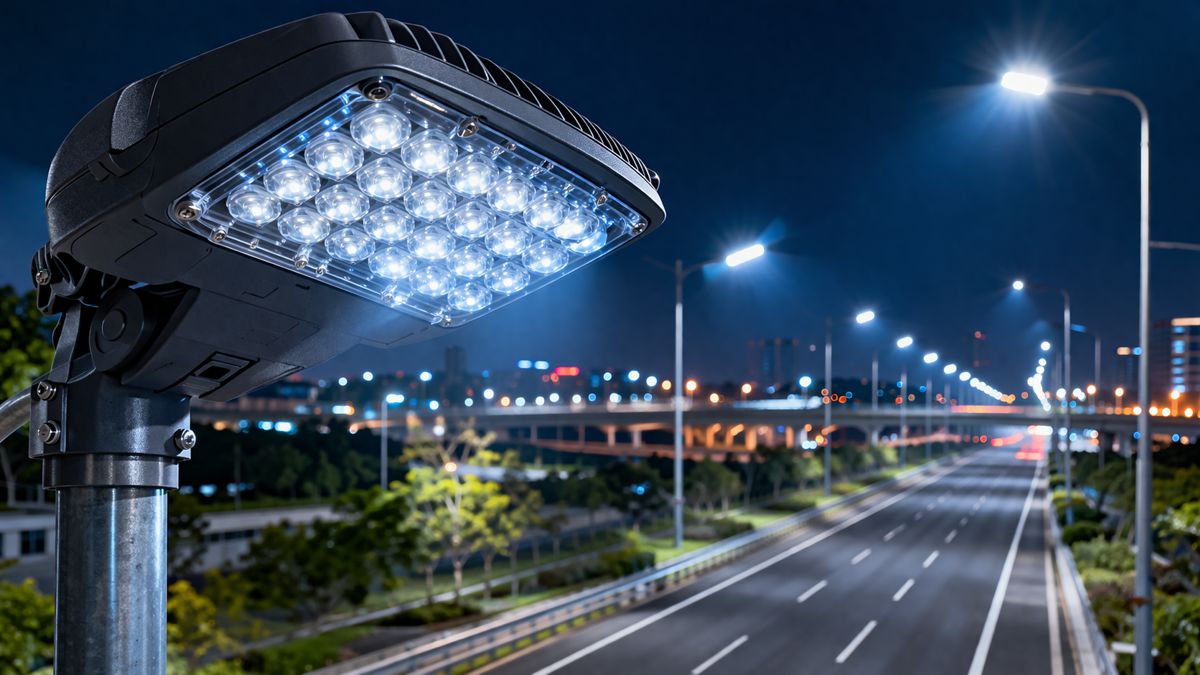
At the heart of the research lies a detailed evaluation of how lens clusters behave under sustained exposure to blue light and elevated temperatures. These conditions are not theoretical. They mirror the operational environment of luminaires used in demanding applications such as road networks, industrial sites and large-scale outdoor lighting systems. The findings suggest that commonly used thermoplastic optics may not always deliver the longevity that infrastructure owners and operators expect.
For an industry built on lifecycle performance and reliability, that’s more than a technical footnote. It’s a potential design constraint with implications for maintenance cycles, asset performance and long-term investment planning across global infrastructure portfolios.
Briefing
- Dow’s study assessed blue light photothermal aging in silicone and thermoplastic LED lens clusters
- Thermoplastics including polycarbonate and PMMA showed progressive discolouration under stress
- Some materials experienced unpredictable catastrophic failure after prolonged exposure
- Silicone optics demonstrated stronger resistance to degradation and performance loss
- Findings highlight material selection as a critical factor in long-term infrastructure reliability
The Hidden Weak Point in LED Infrastructure
LED technology has been widely adopted for its energy efficiency, longevity and adaptability. Governments and infrastructure developers have leaned heavily into LED upgrades, particularly in transport corridors where lighting performance directly impacts safety. However, the durability of the optical systems that shape and direct LED light has received far less scrutiny.
Lens clusters, which control light distribution and intensity, are often manufactured from thermoplastic materials such as polycarbonate and polymethyl methacrylate. These materials are popular due to their cost-effectiveness and ease of manufacturing. Yet, as the study reveals, their performance under real-world stress conditions may introduce long-term vulnerabilities.
Exposure to blue light, a dominant component in LED emissions, combined with elevated temperatures, creates a photothermal environment that accelerates material degradation. Over time, this leads to discolouration, reduced light transmission and, in some cases, structural failure. While gradual performance loss has been documented before, the emergence of sudden and catastrophic failure introduces a new level of uncertainty.
This unpredictability poses challenges for asset managers who rely on predictable maintenance schedules and performance benchmarks. In large-scale infrastructure systems, even a small percentage of failures can translate into significant operational disruption and cost.
Understanding Photothermal Aging in Optical Materials
Photothermal aging refers to the combined effects of light exposure and heat on material properties over time. In the context of LED lighting, the interaction between high-energy blue wavelengths and elevated operating temperatures creates conditions that can alter the chemical structure of certain polymers.
The study conducted by Dow subjected commercially available lens clusters to controlled stress conditions designed to replicate these environments. Materials tested included polycarbonate, standard PMMA and high-temperature resistant PMMA, alongside silicone-based optics.
The results were consistent across multiple thermoplastic samples. Gradual yellowing or clouding reduced light output efficiency, affecting both brightness and uniformity. More notably, some samples progressed beyond cosmetic degradation to structural compromise, ultimately leading to failure.
Silicone optics, by contrast, demonstrated a higher level of stability under identical conditions. Their resistance to both thermal stress and photochemical degradation suggests a longer operational lifespan in high-demand applications. While not immune to aging, their performance profile appeared more predictable and less prone to sudden failure.
Implications for Road and Infrastructure Lighting
For infrastructure sectors such as highways, tunnels and urban mobility networks, lighting systems are not merely functional components. They are integral to safety, compliance and user experience. Reduced light output or uneven illumination can compromise visibility, particularly in high-speed environments.
The findings carry particular weight for road authorities and engineering firms responsible for long-term asset management. When specifying lighting systems, the focus often centres on lumen output, energy consumption and initial cost. Material longevity, especially at the optical level, may not always receive equal attention.
Yet, over the lifecycle of a project, material degradation can erode the benefits of energy efficiency. Increased maintenance requirements, premature replacements and performance inconsistencies all contribute to higher total cost of ownership.
In regions investing heavily in smart infrastructure and connected transport systems, reliability becomes even more critical. Lighting assets are increasingly integrated into broader digital ecosystems, supporting sensors, cameras and communication networks. Any degradation in optical performance can ripple through these systems, affecting data quality and operational efficiency.
A Design Challenge for Luminaire Manufacturers
The study places a spotlight on design decisions made at the manufacturing stage. Material selection for optical components is often a balancing act between cost, performance and manufacturability. Thermoplastics have long been favoured for their flexibility and scalability, particularly in mass production.
However, as LED systems continue to evolve, operating at higher power levels and delivering more intense light output, the demands on optical materials are increasing. What worked for earlier generations of LED lighting may not be sufficient for current and future applications.
“Our study was conducted to bridge the knowledge gap on blue light photothermal aging of lens clusters commonly used by luminaire makers for applications such as street and sports lighting,” said Martijn Beukema, Technical Service & Development Scientist and Application Technology Leader for Lighting at Dow. “Luminaire manufacturers are encouraged to take this data into account when choosing optical materials during the design process, and to recognize silicone optics as a reliable alternative that can enhance product longevity and minimise the risk of major failures.”
The message is clear. Material selection is not just a technical detail. It is a strategic decision that influences product performance, brand reputation and long-term customer satisfaction.
Industry Context and Growing Demand for Reliability
The global LED lighting market continues to expand, driven by energy efficiency mandates, urbanisation and the transition towards smart cities. According to data from the International Energy Agency, LEDs now account for a significant share of global lighting installations, with continued growth expected over the coming decade.
As adoption increases, so does scrutiny around performance and durability. Infrastructure investors and public sector clients are placing greater emphasis on lifecycle value rather than upfront cost. This shift is pushing manufacturers to demonstrate not only efficiency but also long-term reliability.
Material science plays a central role in meeting these expectations. Advances in polymers, coatings and optical design are enabling new levels of performance, but they also introduce complexity. Understanding how materials behave over extended periods under real-world conditions is essential.
Dow’s research contributes to this understanding by providing empirical data on a previously underexplored aspect of LED performance. By highlighting both gradual degradation and the potential for sudden failure, it encourages a more nuanced approach to material selection and product design.
Toward More Resilient Lighting Systems
The implications of the study extend beyond individual products. They touch on broader themes of resilience, sustainability and asset optimisation within the infrastructure sector. Reliable lighting systems reduce maintenance interventions, lower operational costs and enhance safety outcomes.
For policymakers and infrastructure planners, these factors align with wider goals around sustainability and efficient resource use. Reducing the frequency of replacements not only cuts costs but also minimises material waste and environmental impact.
Silicone optics, as highlighted in the study, offer one pathway towards improved resilience. Their performance under photothermal stress suggests they may be better suited to high-demand applications where long-term reliability is paramount. However, adoption will depend on a range of factors, including cost considerations and manufacturing capabilities.
Ultimately, the study underscores the importance of taking a holistic view of LED system design. Efficiency gains at the electrical level must be matched by durability at the material level. Only then can the full benefits of LED technology be realised across the infrastructure landscape.
A Clear Signal for the Future of LED Design
As the lighting industry continues to evolve, the focus is shifting from simple efficiency metrics to comprehensive performance over time. Dow’s findings provide a timely reminder that even well-established materials can present challenges under changing operating conditions.
For engineers, designers and decision-makers, the message is straightforward. Long-term reliability starts with informed material choices. By integrating insights from studies such as this into the design process, the industry can move towards more robust and predictable lighting solutions.
In a sector where safety, performance and cost efficiency are closely intertwined, that’s not just good practice. It’s essential.