A Certified Path Opens for Robots That Inspect Inside Explosive Atmospheres
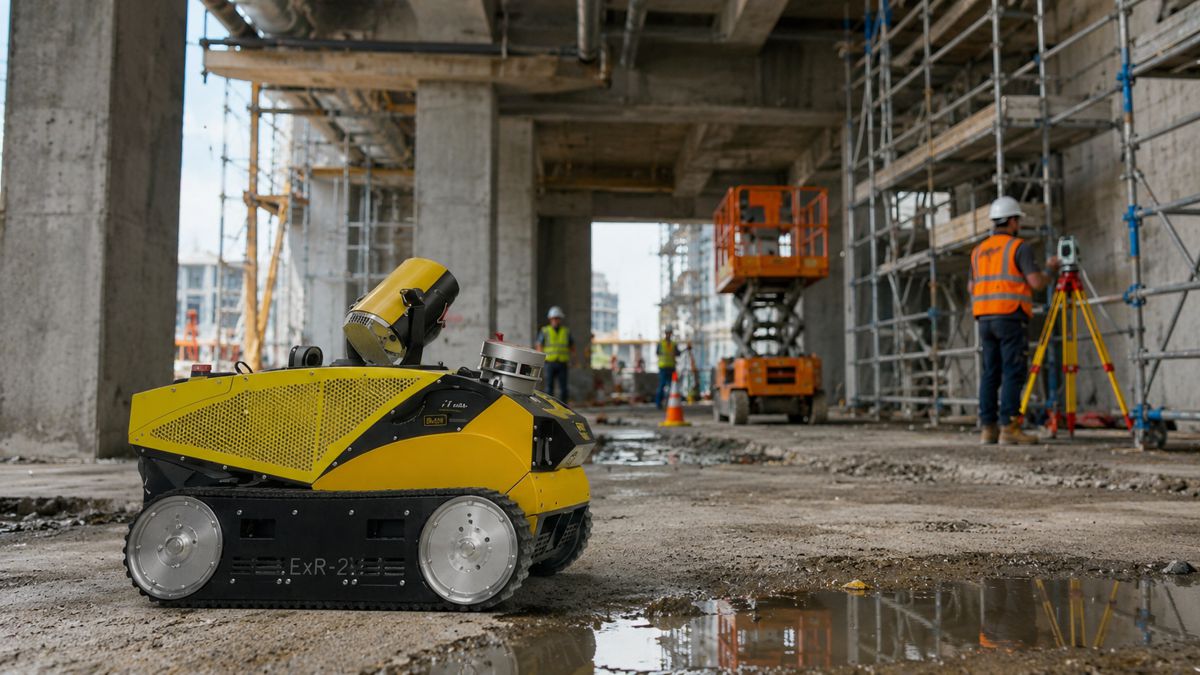
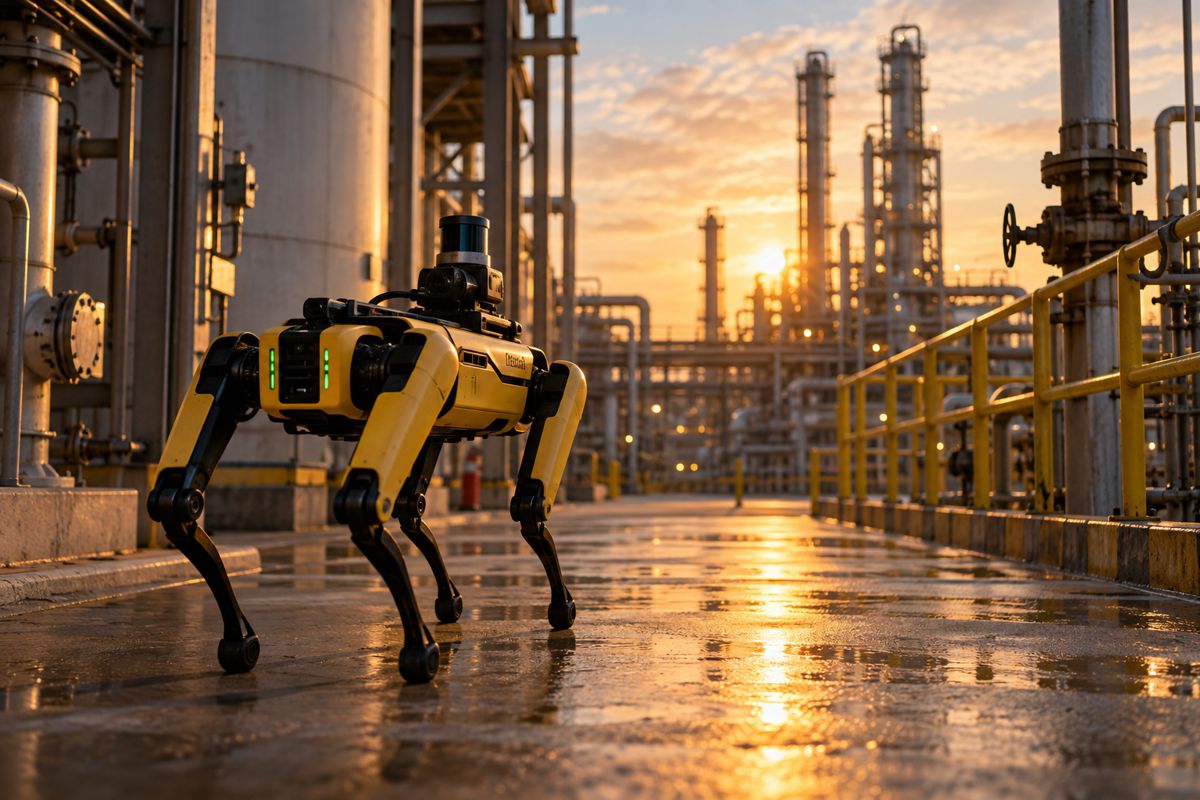
UL Solutions has issued the first certification under UL 6260, a framework written specifically for remotely operated robots that inspect and maintain industrial sites where explosive gases, vapours or dusts may be present. The recipient is ExRobotics, a Delft-based manufacturer whose tracked ExR-2.5 has now been evaluated against the risk that has always kept automation out of these environments, namely that the machine sent in to reduce danger might itself become the ignition source. The certification matters less as a product milestone than as the creation of a recognised compliance pathway.
Until now, operators wanting to send a robot into a Class I, Division 1 area in North America had no single, named standard against which to judge whether that robot was safe to deploy, which left procurement teams, insurers and safety engineers improvising around equipment certified for narrower purposes.
For the industries that run the most dangerous physical environments, including refineries, petrochemical plants, liquefied natural gas terminals, offshore platforms, mines, grain stores, wastewater works and the fast-expanding world of hydrogen and battery production, the question of who inspects the asset has become a commercial problem as much as a safety one. Skilled inspectors are increasingly hard to recruit, the installed base of industrial plant is ageing, and the cost of an unplanned shutdown now dwarfs the cost of the inspection itself.
A certified robot that can walk a fixed route, read gauges and listen for leaks without exposing a person to the hazard changes that calculation, and a named certification standard is what allows the calculation to be made with confidence rather than on trust.
Briefing
- UL Solutions has issued the first certification under UL 6260, its framework for remotely operated inspection and maintenance robots in hazardous classified locations, to ExRobotics for the tracked ExR-2.5.
- The evaluation tests whether a robot can work in atmospheres containing explosive gases, vapours or dusts without becoming an ignition source, assessing batteries, electrical systems and mechanical parts under both normal and fault conditions.
- ExRobotics, based in Delft, reports thousands of completed robotic missions for operators including Shell, Repsol and BP, and is bringing the certified ExR-2.5 to North America through its exclusive partner MicroWatt.
- The wider explosion-proof robot market is forecast to grow at close to ten per cent a year into the early 2030s, with oil and gas accounting for the largest single share of demand.
- Certification rather than capability has been the principal barrier to adoption, with hazardous-area machines costing several times their standard equivalents and approvals historically running to many months.
The Commercial Case for Taking People Out of the Hazard
The strongest argument for hazardous-area robotics has never been novelty, it has been arithmetic. Inspection rounds in classified zones depend on technicians who are expensive to train, slow to replace and exposed to genuine danger each time they enter, while the assets they monitor are getting older and more failure-prone.
Mark Mildon, chief executive of ExRobotics, has framed his company’s focus in deliberately narrow terms, describing certified inspection robotics as “not a side capability for us; it’s our sole focus.” That reflects a market in which buyers are no longer asking whether a robot can perform a patrol, but whether it can do so within a compliance regime their safety case and insurers will accept.
The numbers behind that shift are substantial. Independent market research puts the explosion-proof robot segment on a compound annual growth rate of roughly ten per cent through the early 2030s, with oil and gas alone responsible for close to two-fifths of current demand. The economics, however, remain demanding. A mobile robot that might cost between USD 50,000 and USD 80,000 in standard form can reach USD 150,000 to USD 200,000 or more once certified for explosive atmospheres, before integration, training and specialist maintenance are added.
Certification timelines have historically stretched across many months and testing costs can run well into six figures per model, which is precisely why a recognised, repeatable standard carries commercial weight. It compresses the most uncertain part of the buying decision into something procurement teams can plan around.
What the Certification Actually Tests
UL 6260 is the Outline of Investigation for Remotely-Operated Inspection and Maintenance Equipment for Hazardous Classified Locations, and the distinction in that title matters. An Outline of Investigation is the framework UL Solutions uses to certify equipment in advance of a fully ratified consensus standard, which means UL 6260 represents a working certification pathway rather than a finished, balloted code.
For a category as new as autonomous inspection in explosive atmospheres, that is the realistic starting point, and it gives manufacturers and operators a defined yardstick years before a formal standard could be completed. The framework draws its definitions of hazardous locations from the National Electrical Code, anchoring the certification in the classification system North American operators already use to govern their sites.
To certify the ExR-2.5, UL Solutions assessed it for fire, explosion, electric shock and mechanical hazards, examining its batteries, electrical systems and mechanical components under both normal operation and fault conditions, including scenarios where an explosive atmosphere may be present during routine work.
Alex Dadakis, executive vice president and president of Testing, Inspection and Certification at UL Solutions, placed the result within the company’s broader purpose, observing that “Robots are changing how tasks are performed in hazardous locations by helping move people out of harm’s way,” and adding that “This first UL 6260 certification helps advance our mission of working for a safer world and supports the adoption of robotics in dangerous environments.”
Colleagues at the company have been blunter about the engineering difficulty involved, with Wesley Kwok, who leads energy and industrial automation at UL Solutions, noting that “Hazardous locations present unique safety challenges for remotely operated systems.” The point that runs through all of it is that the robot is being judged not on what it can detect, but on whether it can be trusted not to cause the very event it is meant to help prevent.
One Robot, Several Rulebooks
The certification also exposes a structural feature of the hazardous-area market that often surprises newcomers, which is that there is no single global rulebook. Europe works to ATEX, the international community to IECEx, and North America to the National Electrical Code and its associated UL approvals, and a machine certified under one regime does not automatically clear the others.
ExRobotics is a European manufacturer whose robots have already accumulated thousands of missions on the continent and beyond, so the significance of UL 6260 is less that the ExR-2.5 can suddenly do something new and more that it now has a credible route into the North American installed base. For Mark Mildon, who described the achievement as “an important milestone for our customers and the industry,” the value lies in giving buyers in a heavily regulated market a recognised basis for trust.
That fragmentation shapes the competitive field as much as the technology does. ExRobotics sits alongside players such as ANYbotics, whose ANYmal X legged platform is certified to ATEX and IECEx for Zone 1, and established industrial robotics names including FANUC, which has brought ATEX-certified machines to market for tasks such as painting.
Each is competing not only on mobility, sensing and autonomy, but on how many of the world’s certification regimes it can satisfy, because every additional approval widens the addressable market and every gap closes a door. In a sector where a single missing certificate can disqualify an otherwise capable robot from an entire continent, compliance has become a core part of the product rather than a box ticked after the engineering is done.
From Trial Deployments to Routine Inspection
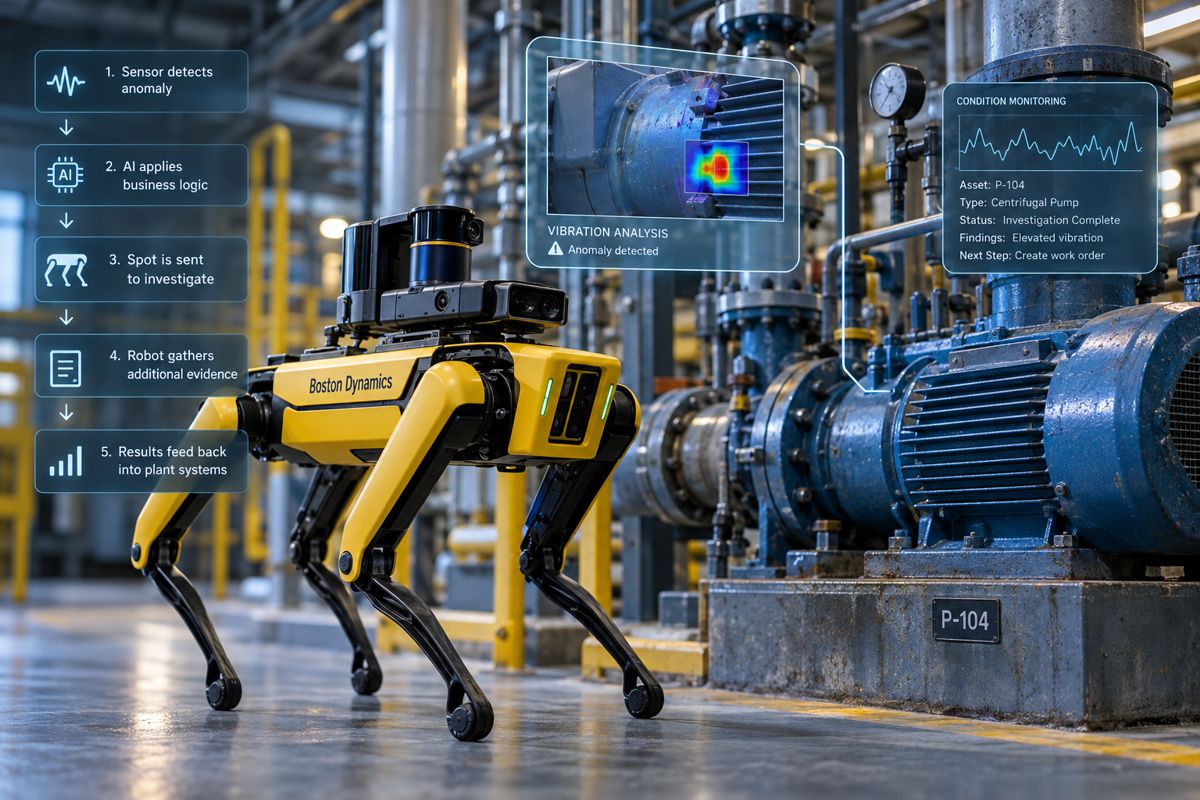
The deeper story is the migration of hazardous-area robotics from pilot project to standing infrastructure. ExRobotics reports completed missions for operators of the scale of Shell, Repsol and BP, which signals that the technology has moved past proof-of-concept and into repeated operational use. The ExR-2.5 is built to run inspection rounds either autonomously or under teleoperation, carrying a sensor suite that includes acoustic imaging able to pick up the high-frequency signatures of gas leaks and mechanical faults, often earlier than a visual or manual check would catch them.
Replacing a fatigued technician walking a fixed route with a machine that records the same readings the same way on every pass also addresses a quieter problem in asset integrity, which is the inconsistency of human inspection under pressure, poor light and time constraints.
The North American rollout makes the commercial intent explicit. ExRobotics is introducing the certified ExR-2.5 through MicroWatt as its exclusive distributor, manufacturer and service provider for the region, and chose the Energy Drone and Robotics Summit in Houston to stage the launch. For the construction and infrastructure sector, the relevance extends well beyond traditional oil and gas.
The build-out of hydrogen production, biomethane plants, battery gigafactories, LNG import terminals and modern wastewater treatment is steadily creating new classified hazardous zones, each of which will need inspection and maintenance under the same ignition-source logic. As that infrastructure multiplies, the inspection workforce required to keep it safe is not expanding at the same rate, which is the gap certified robotics is positioned to fill.
Where Compliance Becomes a Competitive Asset
For investors and operators alike, the most durable lesson of this certification is that the moat in hazardous-area robotics is increasingly regulatory rather than purely technical. The engineering of a rugged, sensor-laden inspection robot is difficult but no longer rare, whereas the ability to carry recognised approvals across ATEX, IECEx and now a North American framework is what determines which companies can actually sell at scale.
As the explosion-proof equipment market climbs toward an estimated USD 13.5 billion by the early 2030s, the firms best placed to capture that growth will be those treating certification as a strategic asset to be accumulated deliberately, rather than a cost to be minimised. First-mover status under a new framework such as UL 6260 is, in that light, a commercial position as much as a safety credential.
For policymakers and the standards community, the certification points to a familiar tension between the speed of industrial automation and the pace of formal rule-making. UL 6260 exists as an Outline of Investigation precisely because the technology has outrun the consensus-standard process, and the practical question now is how quickly that framework matures into a fully ratified standard, and whether the major regimes move toward greater harmonisation or leave manufacturers navigating parallel approvals indefinitely. What is no longer in serious doubt is the direction of travel.
The economics of ageing infrastructure, scarce specialist labour and unforgiving downtime costs all push the same way, toward a future in which the routine inspection of the most dangerous places people built is increasingly done by machines that have earned the right to be there.