CMAS 2026 Puts Transactions at the Centre of Africa’s Carbon Markets
Africa has no shortage of potential carbon projects. The more difficult task is turning forests, farms, waste streams, carbon removals and other climate interventions into credits that governments can authorise, investors will finance and buyers are prepared to purchase.
That practical challenge sits behind the 2026 Carbon Markets Africa Summit (CMAS), scheduled for 13 to 15 October in Kigali, Rwanda. Its newly released programme puts project pipelines, finance, Article 6 implementation, measurement and verification, buyer requirements and transaction structures at the centre of the three-day gathering.
Carbon markets have spent years developing standards, methodologies and regulatory architecture. Article 6 of the Paris Agreement now provides mechanisms through which countries can cooperate internationally, including bilateral transfers under Article 6.2 and the UN-supervised crediting mechanism established under Article 6.4. Those mechanisms are increasingly moving from rule-setting into implementation.
For Africa, potential supply is only one part of the equation. Projects also need credible measurement, reporting and verification, clear government authorisation, appropriate financing, robust registries and buyers willing to accept the resulting credits.
CMAS 2026 is being organised by VUKA Group and hosted by Rwanda’s Ministry of Environment, with UNDP and the African Development Bank as host organisations, the Development Bank of Southern Africa as host partner and AUDA-NEPAD as strategic institutional partner.
Briefing
- Carbon Markets Africa Summit 2026 will take place in Kigali, Rwanda, from 13 to 15 October.
- The programme covers Article 6 implementation, project development, finance, transactions, MRV and buyer demand.
- Project showcases will span nature-based solutions, regenerative agriculture, carbon removals, waste-to-value and blue carbon.
- Rwanda already has a national carbon market framework, Article 6 governance arrangements and a carbon registry.
- CORSIA provides a compliance-related source of demand, although credits must satisfy specific ICAO eligibility requirements.
From Carbon Potential to Bankable Projects
CMAS describes itself as a pan-African marketplace connecting policy, project pipelines, capital and buyers. Its 2026 programme has been structured around many of the obstacles between an apparently viable carbon project and a completed transaction.
The summit will include a keynote session on delivering projects, capital and transactions at scale, alongside discussions covering trust and market readiness, ministerial and technical roundtables, investor priorities, buyer demand and deal structuring.
A curated pipeline of projects will bring the underlying assets into that discussion. Nature-based solutions and regenerative agriculture sit alongside carbon removals, waste-to-value and blue carbon, with projects presented through showcases, case studies and investment-oriented deal rooms.
A technically plausible carbon project is not automatically an investable one. Developers may need early-stage capital long before credits can be issued, while investors and buyers need confidence in methodologies, monitoring, host-country rules, ownership, authorisation and the eventual status of the credits.
The African Development Bank has identified MRV infrastructure, risk-mitigation instruments and catalytic financing vehicles among the components required to build stronger African carbon markets. Its 2026-2030 Africa NDC Hub programme is also increasing support for investment pipelines, climate-finance readiness, Article 6 opportunities and transparency systems.
These issues run directly through the CMAS programme. Solution labs and technical workshops will cover early-stage finance, MRV, project bankability, Article 6 and CORSIA implementation, while digital carbon infrastructure will feature through live demonstrations.
Article 6 Moves Into Implementation
Article 6 creates formal routes for countries to cooperate on emissions reductions. Article 6.2 establishes accounting and reporting guidance for internationally transferred mitigation outcomes, commonly known as ITMOs, while Article 6.4 establishes a UNFCCC crediting mechanism through which eligible emissions reductions and removals can generate tradable credits. Article 6.8 covers non-market cooperation.
Participation requires considerably more than identifying emissions-reduction opportunities. National authorities need governance systems capable of approving projects, determining whether mitigation outcomes can leave the country, accounting for those transfers against national climate commitments and preventing the same reduction being claimed twice.
A developer can therefore build a technically sound carbon project yet still face uncertainty over whether the resulting units can be authorised for a particular international use. Buyers increasingly need to know what claims can legitimately be made against a credit and under which market or compliance system it can be used.
“Carbon markets are entering a more selective and operational phase. The question is no longer whether Africa has a role to play, but whether the continent can bring forward credible projects, enabling frameworks and market infrastructure to transact at scale,” said Emmanuelle Nicholls, Project Lead. “CMAS 2026 is designed as a response to that moment – connecting the actors, pipelines and capital needed to move from ambition to execution.”
International aviation provides a useful example of how those requirements reach the buyer. ICAO’s Carbon Offsetting and Reduction Scheme for International Aviation, CORSIA, requires aircraft operators with offsetting obligations to cancel eligible emissions units, but eligibility is controlled rather than automatic.
ICAO assesses carbon-crediting programmes against programme design and carbon-credit integrity criteria, with restrictions applying to the units that can be used. Developers hoping to reach compliance buyers therefore have to consider the intended destination of their credits when projects are structured rather than assuming that producing a verified carbon unit guarantees a market for it.
CMAS is bringing that buyer-side question into the programme alongside Article 6 implementation, project finance and bankability. The combination reflects the increasingly interconnected route between designing a project, obtaining national approval, generating credits and eventually selling them.
Rwanda Builds the Institutional Layer
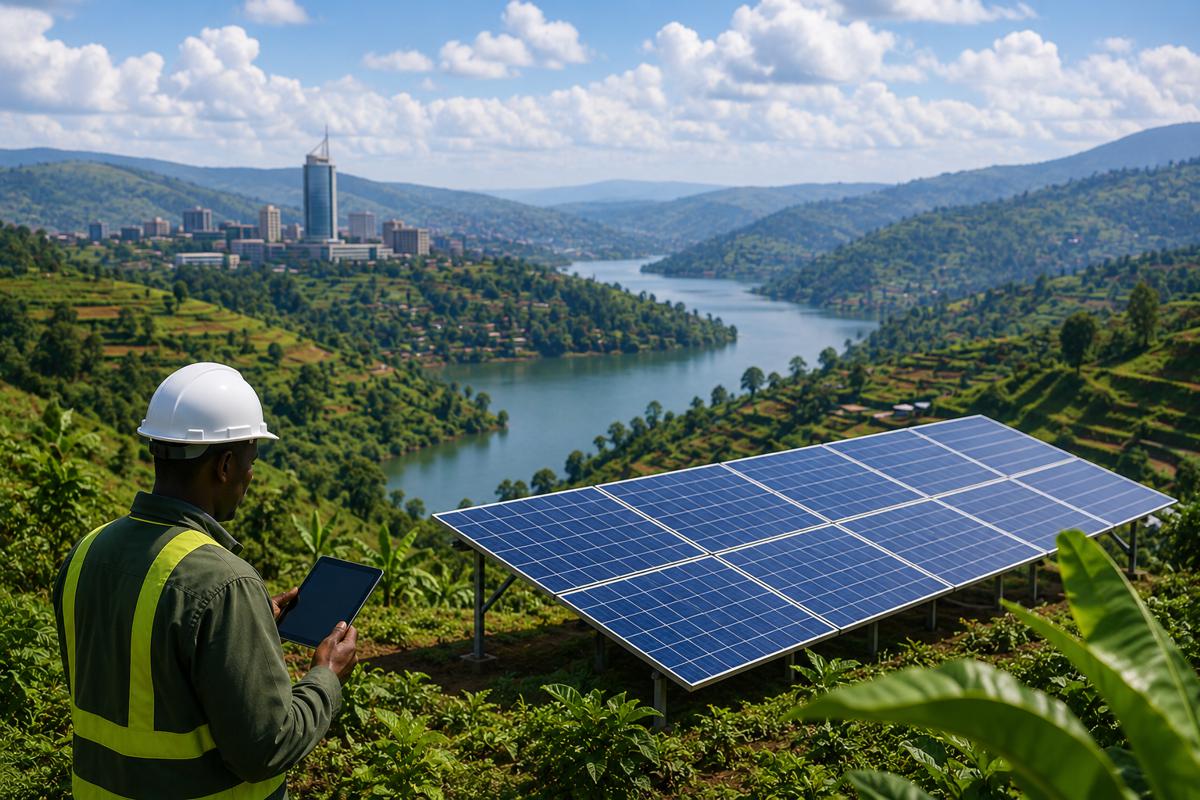
Kigali is an appropriate setting for the discussion because Rwanda has been developing much of the institutional machinery that international carbon transactions require.
The country approved its National Carbon Market Framework in September 2023 and launched it internationally during COP28 later that year. According to Rwanda’s initial Article 6 report to the UNFCCC, the framework establishes governance arrangements for participation under Articles 6.2 and 6.4.
The Rwanda Environment Management Authority serves as the designated national authority for the Article 6.4 mechanism and for consideration and approval of carbon-market projects. Rwanda has also established governing and technical committees, a manual of procedures for Article 6 activities and a carbon registry designed to track internationally transferred mitigation outcomes and help prevent double counting.
The country has pursued bilateral cooperation as well. At the launch of its carbon-market framework, Rwanda announced cooperation agreements with Singapore and Kuwait concerning implementation of Article 6.
Clearer national procedures can remove one category of uncertainty for developers, although individual projects still have to satisfy the requirements of their methodology, crediting programme, host country and intended buyer. Rwanda’s experience also demonstrates that Article 6 implementation is iterative. UNFCCC technical review of the country’s initial reporting identified issues requiring further information around authorisation arrangements, after which Rwanda submitted a revised report and additional documentation, including an implementation agreement with Singapore.
That is the less glamorous side of building carbon markets: procedures, registries, reporting, authorisations and accounting systems being tested and refined as countries move from policy frameworks towards transactions.
It also places the emphasis on how those markets are constructed. “Africa’s carbon markets must be built on integrity, equity, and continental coordination so that carbon finance delivers real value for communities, ecosystems, and sustainable development across the continent,” said Estherine Fotabong, Director at AUDA-NEPAD.
Carbon projects can involve land, forests, agricultural production, local communities, long-term monitoring commitments and revenue streams extending over many years. Contract structures and national policies can influence how that economic value is distributed between developers, investors, project owners, communities and host countries.
Governments have their own calculation. Transferring mitigation outcomes internationally can bring finance into domestic projects, but countries must also consider their Nationally Determined Contributions and the accounting implications of authorising reductions for international use.
Building a Market Around Transactions
The 2026 CMAS programme suggests that Africa’s carbon-market conversation is becoming more commercial without becoming simpler.
Policy remains fundamental, but it is increasingly being discussed alongside project pipelines. Methodologies sit beside finance. MRV sits beside buyer requirements. Registries and digital infrastructure provide the machinery behind transactions.
The summit’s deal rooms, project showcases, technical workshops and discussions around investment and buyer demand bring those elements together around projects that ultimately have to work commercially as well as technically.
Africa has extensive natural capital and numerous potential emissions-reduction and removal opportunities, but international carbon markets increasingly distinguish between theoretical supply and credits capable of satisfying particular rules and buyers.
The next stage will be determined project by project: whether developers can finance them, whether reductions can be measured credibly, whether governments can authorise them, whether accounting systems can track them and whether somebody ultimately buys the resulting units.
Key Industry Questions
- What is Article 6 of the Paris Agreement? Article 6 provides mechanisms for international cooperation on climate action. Article 6.2 covers transfers between countries, Article 6.4 establishes a UN-supervised carbon-crediting mechanism and Article 6.8 covers non-market approaches.
- What is an ITMO? An Internationally Transferred Mitigation Outcome is a mitigation outcome transferred between countries under Article 6.2 and accounted for under the Paris Agreement framework.
- Why does host-country authorisation matter? International transfers can affect how emissions reductions are counted towards national climate targets. Authorisation and corresponding accounting arrangements are intended to preserve environmental integrity and avoid double claiming.
- What is CORSIA? CORSIA is ICAO’s global carbon-offsetting scheme for international aviation. Aircraft operators subject to offsetting requirements must cancel eligible emissions units.
- Can any carbon credit be used for CORSIA? No. ICAO approves eligible programmes and applies eligibility criteria and programme-specific restrictions to the units that can be used.
- What makes a carbon project bankable? There is no single test. Investors generally need sufficient confidence in project economics, methodology, MRV, regulatory approval, credit ownership, potential buyers and the ability of the project to generate eligible credits.
- Why is MRV important? Measurement, reporting and verification provides the evidence needed to quantify emissions reductions or removals and is fundamental to the credibility of carbon credits.
- Why is Rwanda relevant to African carbon markets? Rwanda has established a national carbon-market framework, Article 6 governance arrangements, procedures for project consideration and a carbon registry, while also developing bilateral Article 6 cooperation.
- When and where is CMAS 2026? The Carbon Markets Africa Summit is scheduled for 13 to 15 October 2026 in Kigali, Rwanda.
Strategic Takeaways
- The development challenge is increasingly about converting potential carbon supply into projects capable of being financed and transacted.
- Developers need to understand the intended buyer and eligibility regime when structuring projects rather than treating market access as an issue for later.
- Article 6 brings national authorisation, accounting and carbon-market governance into the commercial development process.
- MRV, registries and national procedures form part of the infrastructure needed to support international carbon transactions.
- Africa’s carbon opportunity will ultimately be realised through individual projects that can satisfy technical, regulatory, financial and buyer requirements.