Molten Salt Electrolysis Targets America’s Heavy Rare Earth Processing Gap
A research team at Case Western Reserve University is preparing to use molten salt electrolysis to extract dysprosium and terbium, two of the difficult heavy rare earth elements required for high-performance permanent magnets.
Led by Rohan Akolkar, Professor of Energy Innovation in the university’s Department of Chemical and Biomolecular Engineering, the project is one of seven selected by the US Department of Energy’s Critical Materials Innovation Hub under a combined $10 million programme examining new approaches to critical-material production.
The Case Western Reserve work is relatively modest in funding terms and remains early-stage research. Its target, however, sits in one of the more stubborn parts of the rare earth supply chain. Mining an ore containing rare earth elements is only the beginning. Individual elements must be separated, purified and, for many applications, converted into metals and alloys before they can become part of a permanent magnet.
Dysprosium and terbium are particularly valuable because small additions can improve the ability of neodymium-iron-boron magnets to retain their magnetic properties at elevated temperatures. That makes them important where compact, powerful magnets must operate under demanding conditions, including electric drivetrains, aerospace systems and defence equipment. Case Western Reserve is investigating whether electrochemistry can provide a more efficient route to producing them.
Briefing
- Case Western Reserve University is leading one of seven projects selected under a $10 million US Department of Energy critical-materials research programme.
- The project will investigate chloride-based molten salt electrolysis for heavy rare earth metal production.
- Researchers are targeting dysprosium and terbium from domestically sourced mineral feedstocks containing relatively small concentrations of the elements.
- Partners include the University of Arizona, Lawrence Livermore National Laboratory, Ames National Laboratory, Energy Fuels, MP Materials, AML and Current Chemicals.
- The work remains early-stage research, with technical performance, energy consumption, product purity and scale-up economics still to be established.
Producing the Metal
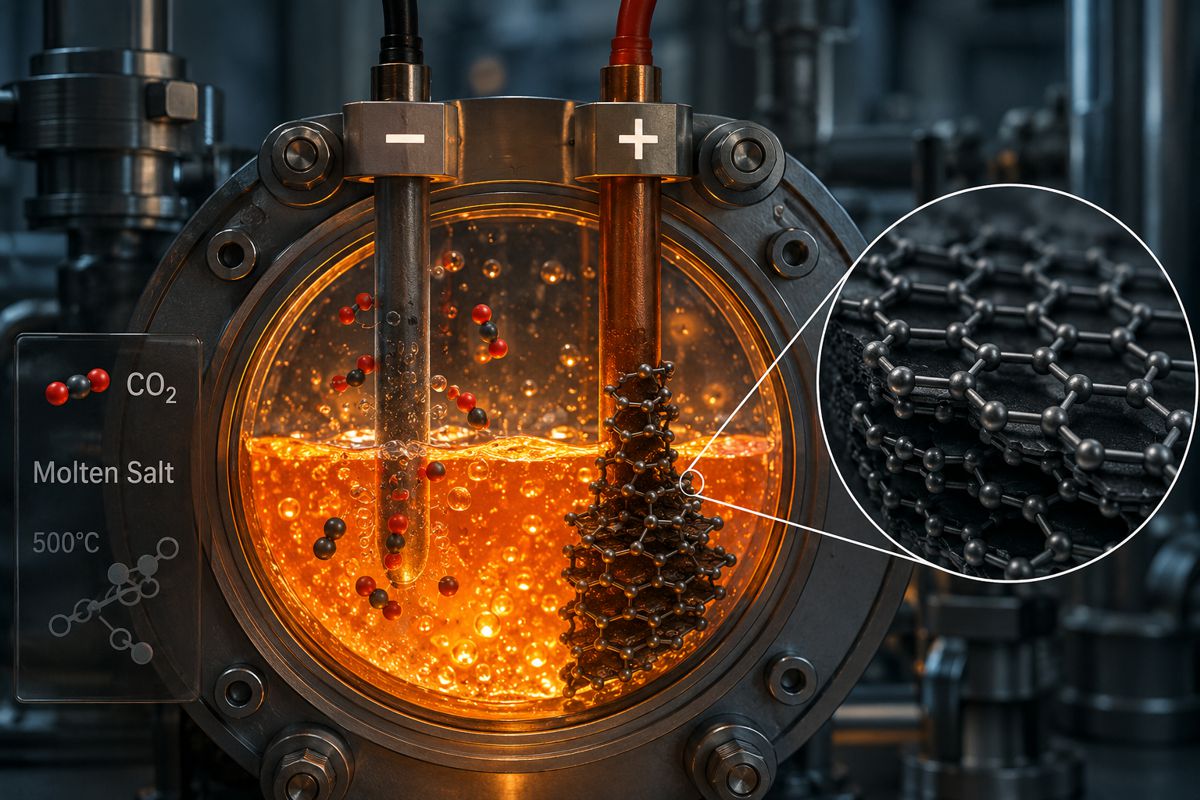
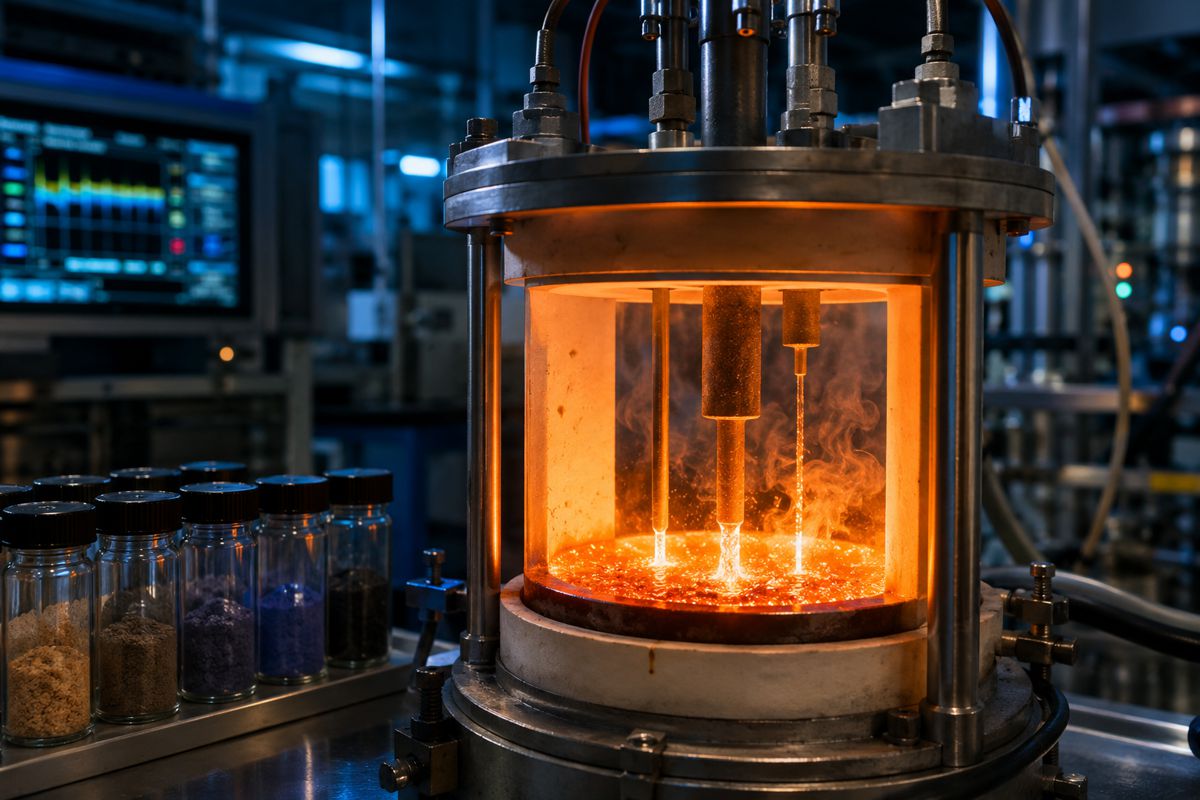
Molten salt electrolysis uses an electrically conductive molten salt as the medium in which electrochemical reactions take place. Case Western Reserve’s approach is based on patented technology developed by Akolkar and his students and will now be applied to heavy rare earth production.
The DOE describes the project more formally as process intensification enabled by chloride-based molten salt electrolysis for highly efficient heavy rare earth metal production. It forms part of a research portfolio covering rare earths as well as copper, gallium and other critical materials. The seven projects were announced by the department on 26 August 2026.
The objective is to take domestically available mineral material containing relatively small quantities of heavy rare earths and develop a practical route for recovering dysprosium and terbium. Akolkar contrasts the proposed electrochemical approach with conventional processing methods used elsewhere.
“This class of critical metals, called ‘heavy’ rare-earths, is presently produced overseas using rather antiquated chemical operations that are inefficient and hazardous,” he said. “We want to change that completely, and establish new domestic manufacturing paradigms by harnessing the power of electrochemistry.”
The challenge extends beyond proving that an electrochemical reaction works. A laboratory process intended eventually for industrial production must contend with feedstock composition, selectivity, impurity control, energy consumption, electrode behaviour, materials compatibility and the economics of operating at scale.
The project brings together Case Western Reserve with the University of Arizona, Lawrence Livermore National Laboratory and Ames National Laboratory, alongside industrial participation from AML, Energy Fuels, MP Materials and Current Chemicals. The combination provides access to organisations working at different points in the developing North American critical-materials chain, from mineral resources and processing through to downstream manufacturing.
Heavy Rare Earths
Rare earth supply is frequently discussed as though it were principally a mining problem. In practice, the industrial chain becomes progressively more specialised after material leaves the ground. Ore has to be concentrated before its constituent rare earths can be separated from one another, while the resulting compounds may then require conversion into metals and alloys with sufficiently controlled chemistry for magnet manufacture.
Dysprosium and terbium present an additional difficulty because they generally occur in much smaller quantities than the light rare earths neodymium and praseodymium that form the basis of NdFeB permanent magnets.
The United States is already moving beyond its previous dependence on exporting rare earth concentrate for overseas processing. MP Materials has been expanding separated NdPr production at Mountain Pass in California while developing downstream metal and magnet manufacturing in Texas.
Its Mountain Pass operation also produces a concentrate known as SEG+ containing samarium, europium and gadolinium alongside terbium, dysprosium and several other heavy rare earth elements. MP Materials says dysprosium and terbium account for approximately 4% of the material on a total rare earth oxide basis.
Having heavy rare earths in a concentrate is different from producing individual high-purity products. The elements still have to be separated and processed into forms that downstream manufacturers can use, which is where the Case Western Reserve research begins to intersect with the industrial supply chain taking shape around it.
MP Materials has also been developing a heavy rare earth separation facility at Mountain Pass designed to process approximately 3,000 tonnes of feedstock annually. Its initial dysprosium and terbium circuit has a stated nameplate capacity of 200 tonnes per year, providing another part of the processing chain between the mine and finished magnetic materials.
Building the Domestic Chain
Permanent magnet manufacturing is also moving downstream. MP Materials produced its first NdFeB magnets on commercial equipment at its Independence facility in Texas during 2025 and is developing the much larger 10X manufacturing campus at Northlake, extending its activities from mineral production and separation towards finished magnets.
The Case Western Reserve project remains research and development, and the DOE’s announcement states that project selections are subject to award negotiations and do not constitute an unconditional commitment to provide funding. Technical success would also be only one stage towards industrial deployment. Feedstock variability, recovery rates, product purity, waste, energy requirements and operating costs will determine whether the process can compete outside the laboratory.
The industrial partners could prove particularly useful at that stage. A process developed against real feedstocks and downstream material requirements can be evaluated against the practical specifications of companies that might eventually have to produce, refine or use the resulting metals.
The research also sits within a wider DOE effort to address gaps between domestic mineral resources and usable industrial materials. In May 2026, the department announced $45.7 million for 19 projects addressing critical mineral and material supply-chain gaps, including pilot-scale processing technologies for magnesium and rare earth minerals.
The latest $10 million Critical Materials Innovation Hub programme sits earlier in the development cycle. Other selected projects are investigating copper extraction, gallium recovery from industrial residues and bauxite processing, and electrochemical recovery from mining by-products and end-of-life waste.
For Case Western Reserve, the immediate task is narrower: demonstrate that molten salt electrolysis can provide a credible route through one particularly difficult stage of heavy rare earth production.
A country can possess the mineral resources, build separation capacity and manufacture permanent magnets while still relying on overseas capability for specialised intermediate processes. Heavy rare earths expose those dependencies particularly clearly because they occur in comparatively small quantities, are technically demanding to separate and process, and can influence magnet performance far beyond the amount of material used.
Case Western Reserve is trying to determine whether electrochemistry can make that intermediate step cleaner, more efficient and practical at industrial scale. The answer will come from the process rather than the laboratory principle: how much material can be recovered, at what purity, using how much energy and producing what waste. Those numbers will determine whether molten salt electrolysis remains an interesting piece of metallurgy or becomes part of America’s developing rare earth manufacturing chain.
Key Industry Questions
- What are dysprosium and terbium used for? Both are heavy rare earth elements used in specialised applications, particularly high-performance permanent magnets. They can help NdFeB magnets retain useful magnetic properties at elevated temperatures.
- What is Case Western Reserve developing? The university-led team is investigating chloride-based molten salt electrolysis as a method for producing heavy rare earth metals, initially concentrating on dysprosium and terbium.
- What is molten salt electrolysis? It is an electrochemical process in which molten salts provide an electrically conductive medium for reactions that can separate or produce metals. The Case Western Reserve project is examining whether the technique can be made efficient enough for heavy rare earth production.
- Is the United States already producing rare earth materials? Yes. Domestic production has expanded, particularly at MP Materials’ Mountain Pass operation. The more difficult task is establishing the complete chain of separation, metal and alloy production, and magnet manufacturing for the required range of rare earth elements.
- Why are heavy rare earths more difficult? Elements such as dysprosium and terbium typically occur at relatively low concentrations and require technically demanding separation and refining processes before they become useful industrial materials.
- Is this technology ready for commercial production? No. It is an early-stage research and development project. Technical performance, scale-up, energy consumption, product purity and economics will need to be established before commercial deployment could be considered.
- How does the project fit into US magnet manufacturing? Domestic investment is taking place across mining, rare earth separation and permanent magnet manufacturing. A successful heavy rare earth metallurgical process could address one of the specialised intermediate stages connecting those activities.
Strategic Takeaways
- Rare earth security depends on downstream processing capability as much as access to mineral resources.
- Dysprosium and terbium represent a specialised processing challenge within the broader NdFeB magnet supply chain.
- Molten salt electrolysis offers a different metallurgical route, but its industrial value will depend on recovery, purity, energy consumption, waste and scale-up economics.
- Industrial partners give the research access to real feedstocks, material specifications and downstream requirements that could help expose practical limitations earlier in development.
- Growing US separation and magnet manufacturing capacity provides a potential domestic destination for successful heavy rare earth processing technologies.