








Machinery Spotlight Month
Thanks to Road & Quarry for Sponsoring Machinery Spotlight Month
Machinery is where engineering becomes physical
Across construction, infrastructure, mining, quarrying, agriculture, logistics and industry, machines turn plans into action. They excavate, lift, crush, compact, grade, drill, transport and process the materials on which the modern world depends. Yet much of the engineering that makes this possible remains hidden beneath bodywork, inside hydraulic circuits, powertrains, control systems and increasingly sophisticated layers of electronics and software.
Throughout October, Machinery Spotlight Month on Highways.Today will take a closer look at the machines themselves. Rather than concentrating simply on specifications, launches and headline performance figures, the focus will be on how machinery works, why it is engineered the way it is, and how manufacturers are solving the practical problems faced by operators in the real world.
That means looking inside hydraulic systems and powertrains, examining attachments and undercarriages, exploring machine control and telematics, and understanding the sensors, electronics and software that are steadily changing the relationship between operator and machine. It also means looking beyond the factory gate at maintenance, reliability, productivity, ownership, rental, resale and the long working lives that make machinery valuable.
Some of the biggest changes are happening where traditional mechanical engineering meets digital technology. Machines can increasingly measure their own performance, communicate with fleets, assist operators, diagnose problems and automate parts of the working cycle. Electrification, alternative power systems, remote operation and autonomy are adding further possibilities, while the fundamental demands of durability, productivity and reliability remain as important as ever.
Machinery Spotlight Month is about looking beyond the specification sheet to understand how machines work, why they are built the way they are, and what comes next.
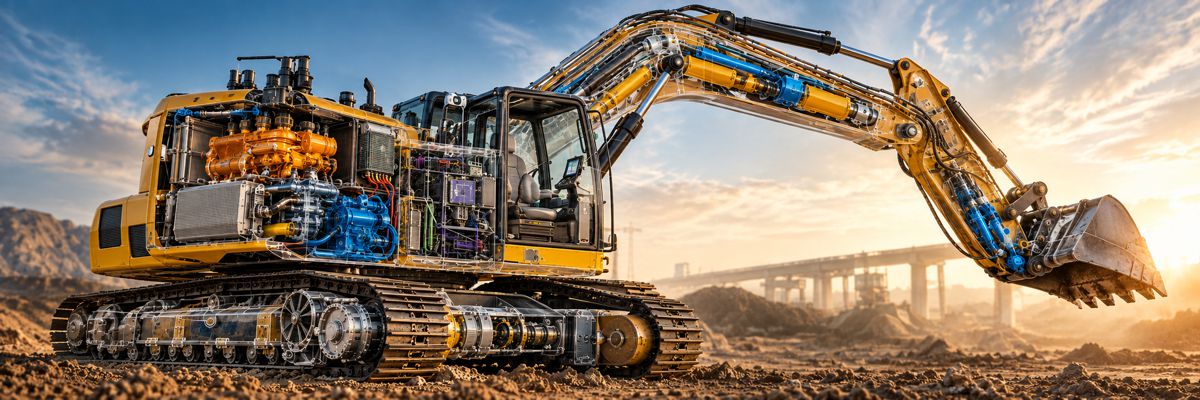
Inside the Machine
Modern machinery is far more than an engine connected to a set of tracks or wheels. Mechanical engineering, hydraulics, electronics and software now work together as a single system. Machinery Spotlight Month will look beneath the bodywork at the technologies that make modern machines work.
-
Hydraulics
Pumps, valves, cylinders, motors, pressure and flow. Hydraulic power remains fundamental to heavy machinery, delivering enormous force with increasingly precise and efficient control.
-
Powertrains
Diesel engines, transmissions, hydrostatic drives, hybrids and electric motors all turn stored energy into useful work. Different applications demand very different approaches to delivering power.
-
Undercarriages & Mobility
Tracks, tyres, axles, suspension and steering determine how machines interact with the ground, balancing traction, stability, speed, manoeuvrability and ground pressure.
-
Attachments & Work Tools
Buckets, breakers, grapples, compactors, cutters and other attachments increasingly define what a machine can do, while quick couplers allow a single carrier to perform multiple roles.
-
Machine Control
GNSS, total stations, sensors and digital designs are bringing centimetre-level guidance and increasingly automated movements to excavators, dozers, graders, pavers and other equipment.
-
Electronics & Software
ECUs, CAN networks, sensors and software connect the mechanical systems of modern machinery, controlling everything from engine performance to hydraulic response and automated functions.
-
Telematics & Diagnostics
Machines can report location, utilisation, fuel consumption, idle time, operating hours and fault codes, giving fleet managers a detailed picture of equipment performance and condition.
-
Operator Systems
Controls, cameras, displays, object detection, weighing systems and assistance technologies are changing the cab while helping operators work more accurately, efficiently and safely.
-
Autonomy & Robotics
Drive-by-wire systems, perception technology, remote operation and autonomous working cycles are gradually allowing machines to perform more tasks with less direct operator intervention.
-
Energy & Fuels
Diesel, batteries, hybrid systems, hydrogen and alternative fuels each bring different strengths and compromises. Machine size, duty cycle, infrastructure and operating environment will ultimately determine what works.
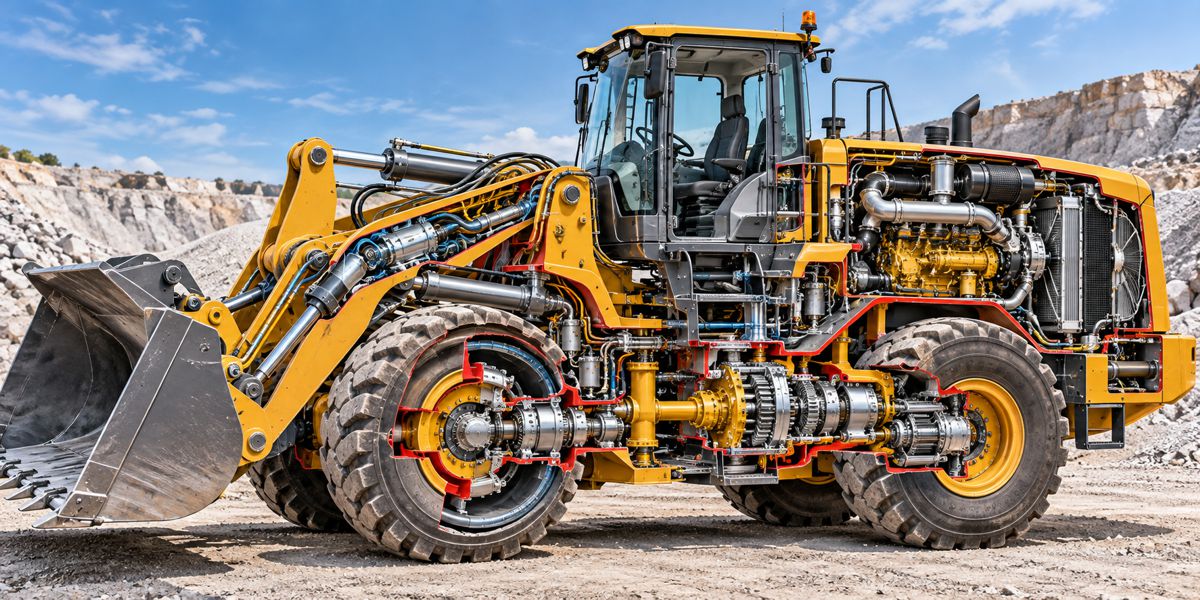
How Machinery Works
A machine may have a simple job description, but the engineering behind that job can be remarkably sophisticated. Machinery Spotlight Month will explore the principles behind familiar equipment and explain what is actually happening when a machine goes to work.
-
How Does an Excavator Hydraulic System Work?
Following the journey from engine and hydraulic pump through control valves, cylinders and motors to the bucket cutting into the ground.
-
How Does a Hydrostatic Transmission Work?
Exploring how hydraulic pumps and motors can provide smooth, continuously variable machine movement without a conventional stepped gearbox.
-
How Does a Vibratory Roller Compact Material?
Looking at amplitude, frequency, centrifugal force and the interaction between the drum and material beneath it.
-
How Does an Asphalt Paver Maintain Grade?
Understanding how conveyors, augers, screeds, sensors and levelling systems work together to create a consistent paved surface.
-
How Does a Quick Coupler Work?
Examining the mechanisms that allow excavators and other machines to change attachments rapidly while securely carrying substantial working loads.
-
How Does GNSS Machine Control Know Where the Bucket Is?
Connecting satellites, antennas, position sensors, digital terrain models and machine geometry to understand how an excavator can work against a digital design.
-
How Does an Articulated Dump Truck Steer?
Exploring articulated chassis design and why it gives these machines their distinctive combination of manoeuvrability, traction and stability on difficult terrain.
-
How Does a Crusher Break Rock?
Looking inside jaw, cone and impact crushers to understand how different machines apply force and control the size of the material they produce.
-
How Do Machines Diagnose Their Own Problems?
Sensors, electronic control units, fault codes and telematics increasingly allow equipment to identify problems before a technician even reaches the machine.
-
How Does a Machine Become Autonomous?
Following the progression from operator assistance and automated functions through remote operation to machines capable of completing entire working cycles independently.
These are only starting points. How Machinery Works can continue growing beyond Machinery Spotlight Month into an evergreen Highways.Today reference library explaining the engineering hidden inside the machines that build and maintain the modern world.
Machinery Companies Shaping the Industry
The global machinery industry stretches far beyond excavators and loaders. It encompasses roadbuilding, lifting, mining, crushing, compact equipment, attachments and an increasingly important digital technology layer connecting machines to the wider construction process.
The following 30 companies represent some of the manufacturers and technology specialists shaping that landscape, from century-old engineering groups to businesses pushing machinery towards electrification, automation and software-defined operation.
Global Heavy Equipment
-
Caterpillar
Few names are as closely associated with heavy machinery as Caterpillar. Its portfolio spans excavators, dozers, wheel loaders, motor graders, articulated trucks, mining equipment, engines and power systems, supported by a particularly extensive dealer and aftermarket network. The company is also increasingly integrating automation, connectivity and digital fleet management into the machinery ecosystem.
-
Komatsu
Japan’s Komatsu operates across construction, surface and underground mining, forestry and industrial machinery. Its equipment portfolio ranges from excavators, dozers and wheel loaders to some of the world’s largest mining machines, while Smart Construction, autonomous haulage and teleoperation demonstrate the growing importance of software alongside the iron.
-
Volvo Construction Equipment
Volvo CE manufactures excavators, wheel loaders, articulated and rigid haulers and other specialist machinery, alongside a growing range of electric equipment. The company is particularly closely associated with the articulated hauler, while electrification, operator assistance and connected services are increasingly prominent across its wider portfolio.
-
Hitachi Construction Machinery
Excavators sit at the heart of Hitachi Construction Machinery, extending from compact machines through conventional construction equipment to enormous mining excavators and rigid dump trucks. The company is also developing ICT-enabled machinery and increasingly sophisticated digital systems. Hitachi Construction Machinery has announced that it will change its corporate name and brand to LANDCROS in April 2027.
-
Liebherr
Liebherr occupies an unusually broad position in the machinery industry, with activities spanning earthmoving, material handling, mining, mobile and crawler cranes, tower cranes and specialist construction equipment. Its breadth also gives Liebherr considerable expertise in the components beneath the machines, including engines, hydraulic systems, transmissions and electronics.
-
John Deere
John Deere’s construction business covers earthmoving equipment including excavators, dozers, loaders, graders and articulated dump trucks. Ownership of the Wirtgen Group has also given Deere a major position across the complete road construction process, extending its machinery interests from earthmoving into milling, paving, compaction and materials processing.
-
SANY
SANY has developed into one of China’s most internationally visible machinery manufacturers. Its extensive portfolio includes excavators, cranes, concrete machinery, road machinery, mining equipment, piling machinery, port equipment and trucks, making it one of the industry’s broadest equipment producers.
-
JCB
The backhoe loader and Loadall telehandler remain closely associated with JCB, but the British manufacturer’s range now extends across excavators, wheel loaders, compact machinery, access equipment, site dumpers and compaction equipment. Powertrain development is another important part of the business, including diesel and hydrogen combustion technologies.
-
HD Hyundai Construction Equipment
HD Hyundai Construction Equipment is a major international producer of excavators and wheel loaders, with a strong presence across infrastructure, quarrying and general construction markets. Its development increasingly combines conventional hydraulic machinery with machine guidance, connectivity, automation and alternative power technologies.
-
DEVELON
DEVELON, the construction equipment brand that succeeded the former Doosan construction machinery identity, has a strong position in excavators, wheel loaders and articulated dump trucks. Its recent development has placed growing emphasis on machine assistance, digital fleet management, safety technology and increasingly automated operation.
Compact & Versatile Machinery
-
Bobcat
Bobcat helped establish the compact equipment category and remains closely associated with skid-steer and compact track loaders. Its range now includes excavators, wheel loaders, telehandlers, forklifts, compactors and a large attachment portfolio, while technologies including remote operation, connected fleet management and software-enabled features are changing what compact machines can do.
-
Kubota
Kubota has an especially strong position in mini excavators and increasingly competes across compact track loaders, wheel loaders and other compact machinery. Its machines illustrate how sophisticated hydraulic engineering, packaging and operator systems can be concentrated into equipment designed to work in extremely restricted spaces.
-
Takeuchi
Takeuchi is another important specialist in compact construction machinery, particularly mini and compact excavators and tracked loaders. Its focus makes the company particularly relevant to the continuing evolution of hydraulic systems, reduced-tail-swing designs, attachments and compact machinery capable of performing increasingly demanding work.
-
Yanmar Construction Equipment
Yanmar’s construction range centres on mini and midi excavators, wheel loaders and tracked carriers. Compact dimensions and zero-tail-swing designs are important parts of its engineering approach, while electric machines such as the SV17e show how battery power is beginning to enter smaller equipment categories.
-
CASE Construction Equipment
CASE has roots stretching back to the early development of mechanised construction and today produces excavators, wheel loaders, backhoe loaders, graders, skid steers and compact track loaders. Connected services and increasingly sophisticated machine systems now sit alongside the mechanical and hydraulic engineering traditionally associated with the brand.
Roadbuilding & Compaction
-
Wirtgen Group
Part of John Deere, the Wirtgen Group brings together Wirtgen, Vögele, Hamm, Kleemann, Benninghoven and Ciber. Collectively these brands cover milling, recycling, paving, compaction, crushing, screening and asphalt production, giving the group an unusually complete view of the road construction process from raw material to finished pavement.
-
BOMAG
BOMAG is particularly associated with compaction, producing soil compactors, asphalt rollers and light compaction equipment alongside pavers, cold planers and recyclers. Its work in compaction measurement and control also demonstrates how sensors and data are transforming a process once dependent heavily on operator judgement and prescribed pass counts.
-
Ammann
Swiss manufacturer Ammann specialises in road construction and materials equipment, including soil and asphalt compactors, light equipment and asphalt pavers. Its machinery provides an interesting window into both compaction technology and the gradual electrification of equipment with relatively predictable working cycles.
-
Dynapac
Dynapac specialises in roadbuilding equipment, particularly asphalt and soil rollers and paving machinery. Now part of the Fayat Group, the company is also developing digital levelling, telematics and autonomous paving technologies, illustrating how one of construction’s oldest processes is becoming increasingly data-driven.
Lifting & Access
-
Manitou
Manitou has built a major international position around material handling, particularly fixed and rotating telehandlers. The engineering challenge is an interesting one: combining reach, lifting capacity, stability and manoeuvrability in machines expected to work across construction sites, industrial facilities and difficult terrain.
-
JLG
JLG is one of the best-known manufacturers in powered access, producing boom lifts, scissor lifts, vertical access equipment and telehandlers. Electrification has become particularly important in this sector because many machines operate indoors or in environments where noise and local emissions are significant considerations.
-
Tadano
Tadano specialises in lifting machinery ranging from all-terrain and rough-terrain cranes to crawler cranes, aerial platforms and specialised lifting equipment. Modern cranes increasingly combine traditional structural and hydraulic engineering with load monitoring, electronic control, cameras and sophisticated safety systems.
-
Manitowoc
Manitowoc is a major crane specialist whose portfolio includes Manitowoc crawler cranes alongside Grove mobile cranes and Potain tower cranes. Crane engineering provides some of the machinery industry’s clearest examples of structures, hydraulics, stability calculations and electronic control having to operate as one integrated system.
Mining, Quarrying & Materials Processing
-
Epiroc
Epiroc concentrates on mining, quarrying, tunnelling and rock excavation. Its portfolio includes drill rigs, underground loaders and trucks, rock tools, attachments and automation technology, with battery-electric equipment and OEM-agnostic automation becoming increasingly important areas of development.
-
Sandvik
Sandvik operates across mining and rock processing, producing underground and surface drilling equipment, loaders, trucks, crushers, screens, breakers and associated digital technologies. Its underground machinery portfolio is particularly interesting because diesel, cable-electric and battery-electric machines can now work alongside increasingly automated fleet systems.
-
Metso
Metso occupies an important position where machinery meets the processing of raw materials. Crushers, screens and complete processing plants transform blasted rock into controlled aggregate products, making the company particularly relevant when looking at the engineering behind crushing, screening, wear management and material flow.
Machinery Technology
-
Trimble
Trimble does not manufacture the base machines, but its technology increasingly influences how they work. Positioning systems, sensors, machine control and digital construction platforms allow excavators, dozers, graders and other equipment to work directly from digital designs, connecting physical machinery with surveying and project data.
-
Topcon Positioning Systems
Topcon is another major force in positioning and machine control, bringing GNSS, sensors, grade-control technology and construction software into the cab. Technologies such as these are steadily changing the operator’s role from manually reproducing survey information towards supervising machinery working directly against a digital model.
-
Leica Geosystems
Part of Hexagon, Leica Geosystems combines surveying, positioning and reality-capture technologies with machine-control systems used across earthmoving and construction. Its presence highlights how increasingly blurred the boundary has become between surveying equipment, construction software and the machine itself.
-
MOBA Mobile Automation
Germany’s MOBA Mobile Automation specialises in control and sensing technologies used on construction machinery, with particular strength in paving, levelling, compaction and earthmoving applications. Companies such as MOBA are important because many of the capabilities now described as an intelligent machine originate not with the base machine itself, but with specialist sensors, controllers and software integrated into it.
From Heavy Iron to Intelligent Machinery
Together, these companies demonstrate just how broad the machinery industry has become. Mechanical design, diesel engines and hydraulic power remain fundamental, but they now operate alongside positioning technology, electronic control, connectivity, batteries, automation and increasingly sophisticated software.
The result is not the disappearance of traditional machinery engineering, but its expansion. The excavator, roller, crane or crusher remains a physical machine designed to move enormous forces through steel, hydraulics and the ground beneath it. What is changing is the amount of intelligence being wrapped around that mechanical core.
That intersection between heavy engineering and intelligent technology is where much of the next chapter of machinery development is likely to be written.
Resources and Associations
The machinery industry is supported by a global network of trade associations, technical organisations and professional bodies. They help develop standards, provide market information, represent manufacturers and equipment owners, support safety initiatives and give the industry a collective voice on technical and regulatory issues.
-
Association of Equipment Manufacturers (AEM) — North America
Represents manufacturers across construction and other equipment sectors, providing market statistics, technical resources, safety information and industry advocacy. AEM is also closely involved with major industry events including CONEXPO-CON/AGG.
-
Committee for European Construction Equipment (CECE) — Europe
The recognised European organisation representing national construction equipment manufacturer associations. CECE works across regulation, standards, safety, digital construction, sustainability and market intelligence.
-
Construction Equipment Association (CEA) — United Kingdom
The UK trade association for the construction equipment sector, representing manufacturers and suppliers while providing technical, regulatory and market information. The CEA is also an active member of CECE and supports international trade activity.
-
VDMA Construction Equipment — Germany & Europe
Part of Germany’s extensive mechanical engineering association, VDMA’s construction equipment activities cover manufacturers working across earthmoving, roadbuilding, tunnelling and other machinery categories, with a strong emphasis on technology, standards and industrial collaboration.
-
Japan Construction Equipment Manufacturers Association (CEMA) — Japan
Represents Japan’s construction machinery industry and provides industry statistics, technical information and research covering a sector responsible for many of the world’s best-known machinery manufacturers.
-
Indian Construction Equipment Manufacturers’ Association (ICEMA) — India
India’s principal construction equipment industry body represents OEMs, component manufacturers and other stakeholders across earthmoving, road construction, mining, material handling and processing equipment.
-
European Rental Association (ERA) — Europe
Represents the European equipment rental sector and provides resources covering rental economics, total cost of ownership, digitalisation, sustainability, energy transition and equipment management.
-
Associated Equipment Distributors (AED) — North America & International
Represents businesses involved in the distribution, rental and aftermarket support of machinery across construction, mining, forestry, agriculture, material handling and other industrial sectors. Its resources extend into workforce development, dealer education and market research.
-
International Powered Access Federation (IPAF) — International
Promotes the safe and effective use of powered access equipment worldwide. Its membership encompasses manufacturers, rental companies, distributors, contractors and users, while its work extends across technical guidance, standards, safety and training.
Together, organisations such as these provide a useful starting point for anyone looking for machinery statistics, technical guidance, standards, regulatory information, training resources or a deeper understanding of individual regional markets.

Events & Trade Shows
There is still no substitute for standing beside a machine, talking to the engineers who designed it and, where possible, watching it work. Machinery exhibitions range from enormous international shows covering almost every equipment category to specialist events dedicated to quarrying, asphalt, mining and particular regional markets.
-
bauma — Munich, Germany
Widely regarded as the flagship global exhibition for construction machinery, mining equipment, construction vehicles and building-material machinery. Held every three years in Munich, bauma brings together machinery manufacturers, component suppliers and technology developers from across the world. The next edition is scheduled for April 2028.
-
CONEXPO-CON/AGG — Las Vegas, USA
North America’s largest construction trade show covers earthmoving, aggregates, asphalt, concrete, lifting, mining, utilities and construction technology. Held every three years, it combines enormous equipment displays with technical and business education. The next show is scheduled for March 2029.
-
INTERMAT — Paris, France
One of Europe’s major construction exhibitions, bringing together machinery, equipment, technology and construction solutions with live demonstrations and a growing emphasis on lower-carbon construction. The next edition takes place in April 2027.
-
Hillhead — Buxton, United Kingdom
Held in a working quarry, Hillhead has a character all of its own. Quarrying, construction and recycling machinery can be demonstrated in realistic operating conditions rather than simply displayed on exhibition stands. The event returns in June 2028.
-
World of Asphalt — USA
A specialist event for asphalt production, paving, aggregates, pavement maintenance and traffic safety. Its focused nature makes it particularly useful for examining the machinery and technology behind road construction rather than the wider equipment market.
-
PlantWorx — United Kingdom
The UK’s live construction equipment event combines indoor exhibits with outdoor working demonstrations covering machinery, attachments, technology, safety and support services. PlantWorx returns to the NEC Birmingham in June 2027.
-
Excon — Bengaluru, India
One of South Asia’s major construction equipment exhibitions, bringing together manufacturers, component suppliers and technology companies serving India’s rapidly developing infrastructure and construction markets. Excon is held biennially, with the next edition scheduled for December 2027.
-
bauma China — Shanghai, China
Part of the international bauma network, bauma China provides a major showcase for construction and mining machinery in one of the world’s largest equipment markets. It is particularly valuable for following the rapid development of Chinese machinery manufacturers and component suppliers.
-
bauma CONEXPO INDIA — India
Another part of the international bauma network, this exhibition focuses on construction machinery, building-material equipment, mining machinery and construction vehicles serving India and neighbouring markets.
These large exhibitions are complemented by hundreds of regional and specialist shows covering cranes, access equipment, demolition, recycling, mining, quarrying, roadbuilding, agriculture and industrial machinery. For manufacturers and buyers alike, they remain one of the few places where competing technologies can be examined side by side.
Training, Education & Certification
Machinery continues to become more sophisticated, but technology does not eliminate the need for skilled people. Operators must understand increasingly capable machines, technicians need mechanical, hydraulic, electrical and software knowledge, and supervisors must understand how equipment can be deployed safely and productively.
Training and certification requirements vary considerably between countries, employers and machinery categories, so operators should always check the rules applying to their location and type of work. The following organisations and programmes provide useful starting points.
-
CPCS — Construction Plant Competence Scheme
Widely used within the UK construction industry, CPCS provides competence cards across more than 60 categories of construction plant and related occupations. Assessment combines knowledge with practical ability and is intended to demonstrate that operators possess the skills required for the machinery they use.
-
NPORS — National Plant Operators Registration Scheme
Provides accredited training and assessment across earthmoving machinery, cranes, lifting equipment, access equipment, transport and numerous other plant categories. Training is delivered through an accredited provider network, with operator cards available following successful assessment.
-
IPAF Training — Powered Access
IPAF’s internationally recognised training network concentrates on mobile elevating work platforms, mast-climbing work platforms and construction hoists. Courses cover operators as well as technicians, managers, supervisors, instructors and other personnel working around powered access equipment.
-
CCO Certification — Cranes and Lifting
In the United States, CCO certification provides credentials covering crane operators and other personnel working around lifting operations. Specialist certification reflects an important reality across machinery: competence requirements become increasingly specific as equipment becomes larger, more complex or more safety-critical.
-
The AED Foundation — Equipment Technicians and Dealership Skills
The education arm associated with AED addresses workforce development within the equipment distribution industry. Its work includes technical education alongside professional development for dealership roles in areas such as service, parts, rental and management.
-
Caterpillar ThinkBIG — Technician Development
An example of manufacturer-led technical education, ThinkBIG combines college study with paid practical experience through participating Cat dealers. Students can follow heavy-equipment or electric-power pathways while building extensive hands-on experience alongside their academic studies.
-
Manufacturer and Dealer Training
Major machinery manufacturers and their dealer networks increasingly operate their own technical academies, apprenticeships and product-specific programmes. These are particularly important for service technicians as machinery combines traditional diesel and hydraulic systems with high-voltage electrification, electronic control, telematics, machine guidance and increasingly complex diagnostic software.
-
Hydraulics, Electronics and Machine Control Training
Modern machinery careers increasingly cross traditional engineering boundaries. A technician may need to understand hydraulic pressure and flow, CAN networks, electronic sensors, GNSS positioning and software diagnostics on the same machine. Specialist technical training is therefore becoming as important as conventional mechanical knowledge.
-
Apprenticeships and Vocational Education
Machinery remains an industry in which practical learning matters. Apprenticeships, technical colleges and vocational programmes provide routes into plant maintenance, heavy-equipment repair, diesel engineering, hydraulics, electrical systems, welding, fabrication and machinery operation without requiring a conventional university pathway.
Learning Never Stops
Perhaps the biggest change in machinery training is that there is no longer a clear dividing line between the mechanic, electrician, electronics technician and software specialist.
A modern excavator may combine a diesel engine, electronically controlled hydraulics, dozens of sensors, CAN communications, GNSS positioning, cameras, telematics and automated digging functions within one machine. Electric equipment adds high-voltage systems and battery management, while autonomous machinery introduces perception systems, connectivity and software.
The machines are becoming more capable, but that makes human expertise more valuable rather than less. Understanding how the machine works remains the foundation for operating it well, maintaining it properly and recognising when something is going wrong.
The Machines Behind the Modern World
Machinery rarely receives much attention once the work is finished. Roads, bridges, buildings, mines, quarries, ports and infrastructure become the visible result, while the machines that made them possible move on to the next job.
Yet behind every bucket of material moved, every tonne of asphalt laid and every structure lifted into position sits an extraordinary concentration of engineering. Engines, hydraulics, transmissions, electronics, sensors and software must work together reliably in environments where dust, vibration, heat, cold, water and enormous physical forces are simply part of the working day.
That engineering is now entering another period of rapid change. Machines are becoming more connected, more aware of their surroundings and increasingly capable of assisting operators or performing parts of the working cycle themselves. Electric and alternative power systems are expanding the choices available to equipment designers, while positioning, automation and digital construction are steadily connecting individual machines to the wider project around them.
But the fundamental purpose of machinery has not changed. A machine ultimately has to do useful work, reliably and economically, often for thousands of hours and across several owners during its working life.
Throughout Machinery Spotlight Month, Highways.Today will be looking beyond the specification sheet and beneath the bodywork to explore the engineering, technology and people behind these remarkable machines.
Because sometimes the best way to understand where machinery is going is simply to ask: how does it work?
Spotlight Series Articles
Construction Marketing is an Asset that Compounds
Documenting the Expertise Your CV Cannot Show
Reputation is Infrastructure You Build in Advance
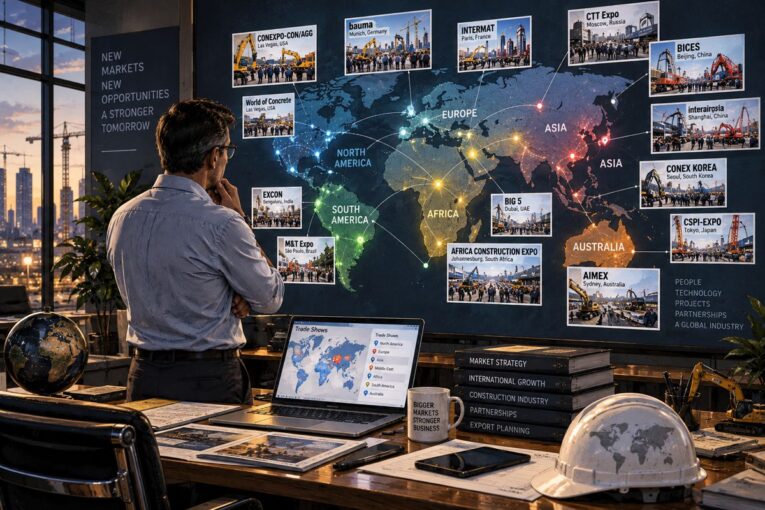
You Don’t Need to Market Like a Multinational Anymore
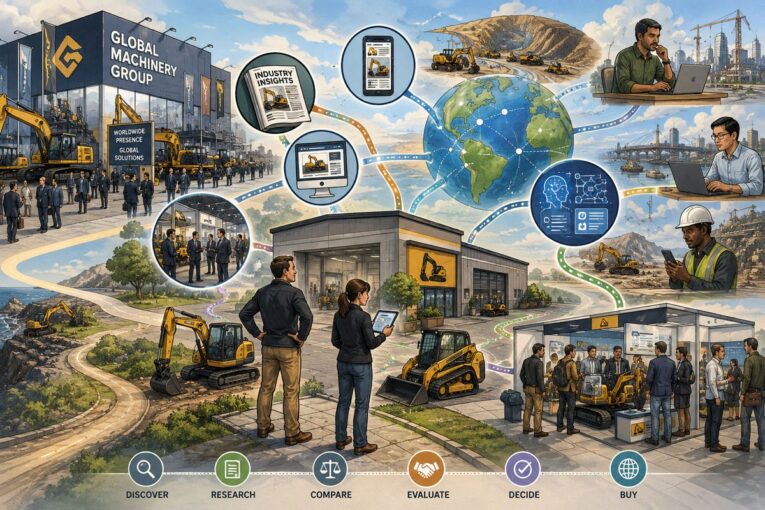
The Construction Marketing Playbook Has Changed
When Construction Starts Learning
Building the Invisible Jobsite
The Autonomous Construction Company

The Biggest Change in Construction is Not AI, It’s Recurring Revenue
Beyond Heavy Iron – The Next Century of Construction Equipment
The Hidden Economy Behind Every Construction Machine
The Intelligent Machine Has Arrived
The Next Frontier of Equipment Procurement
A Century of Earthmoving and Construction Machinery
The Economics of Bitumen
Decoding Bitumen Specifications Around the World

Freight Becomes The Real Price Of Bitumen

The Global Bitumen Supply Chain Explained

Civilisation 2.0 and the Infrastructure That Will Define It

The Hidden Smart Infrastructure Revolution
When Infrastructure Starts Listening

The Ten Trillion Bet on Intelligent Infrastructure

Building Megaprojects for Future Generations

Mapping the Future of Global Megaproject Spending
Megaproject Risk Under The Microscope
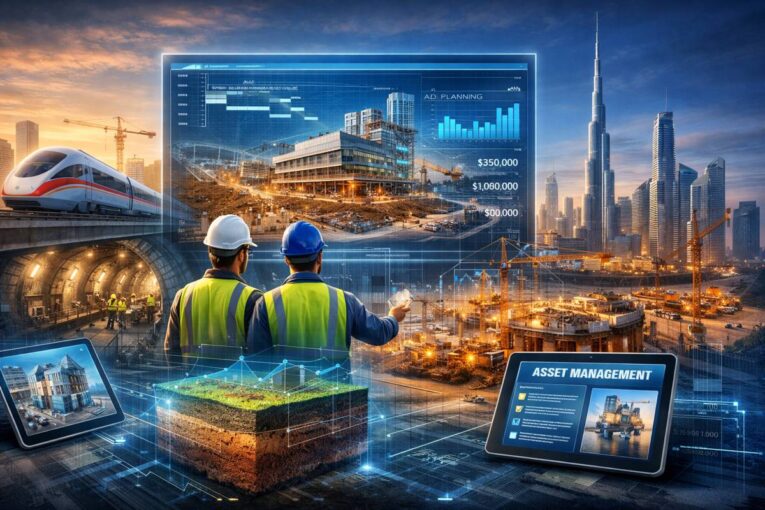
The Machine Behind the Megaproject

Financing the Impossible Megaproject

Risk Engineering and Performance Guarantees in Construction Finance
Financing Megaprojects in a High Interest Era

Public-Private Partnerships Reimagined

Financing the Future of Global Infrastructure

Who Owns the Intelligence in the Age of Digital Infrastructure

Leading Infrastructure Into The Predictive Era
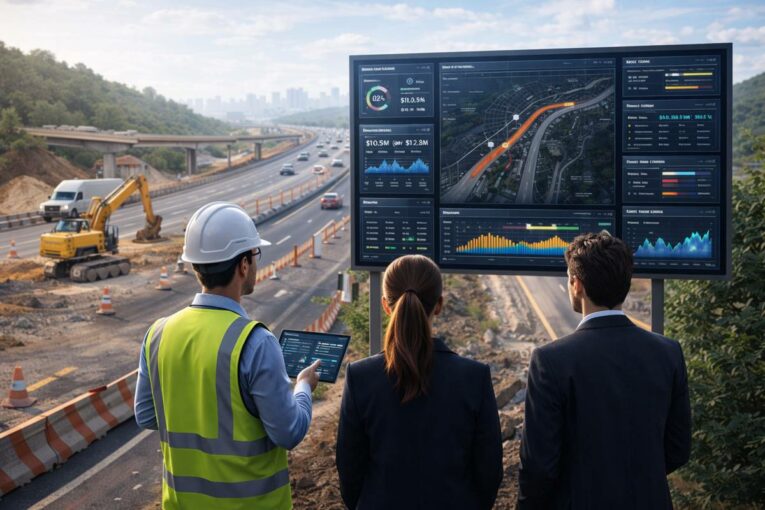
Building the Construction Control Tower

Construction Intelligence is Reshaping Global Infrastructure
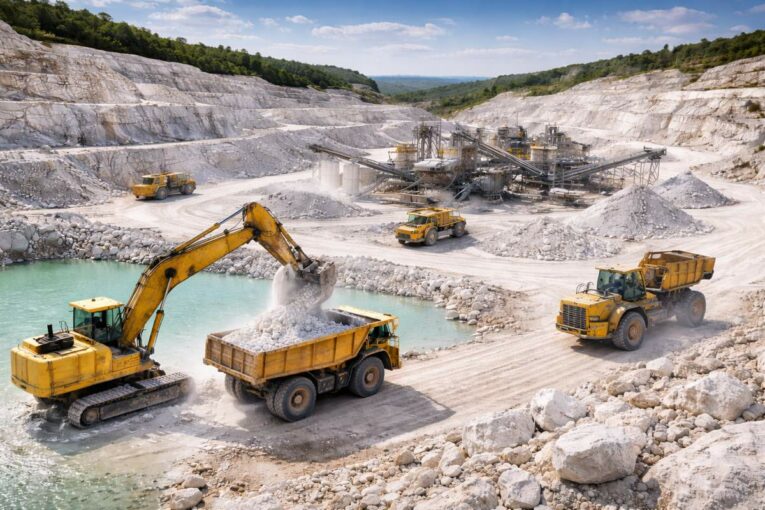
Mining and Quarrying Return to the Centre of Global Strategy
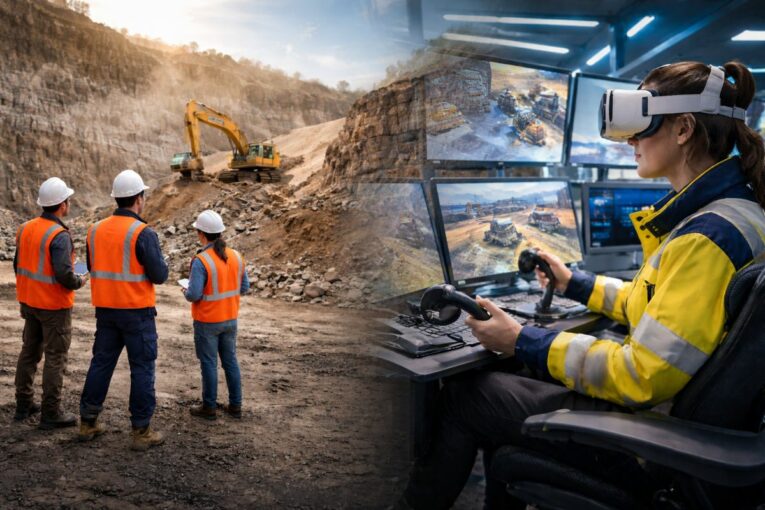
Evolving the Quarry and Mining Workforce From the Rockface to Cyberspace
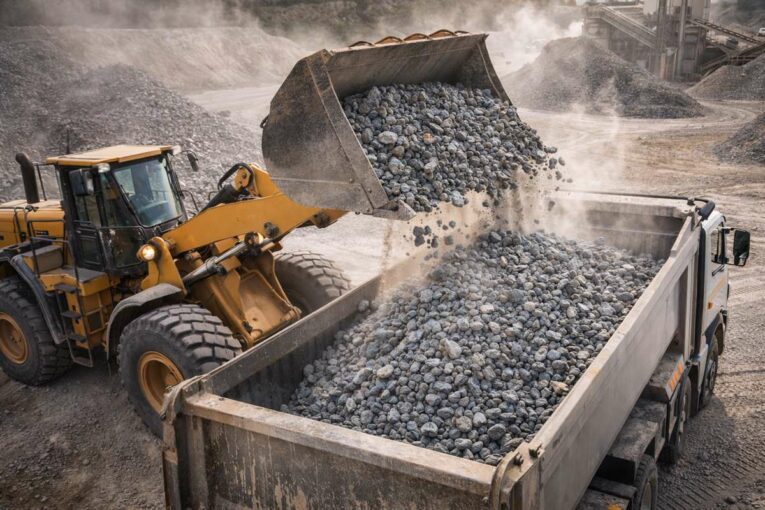
The New Blueprint for Sustainable Mining
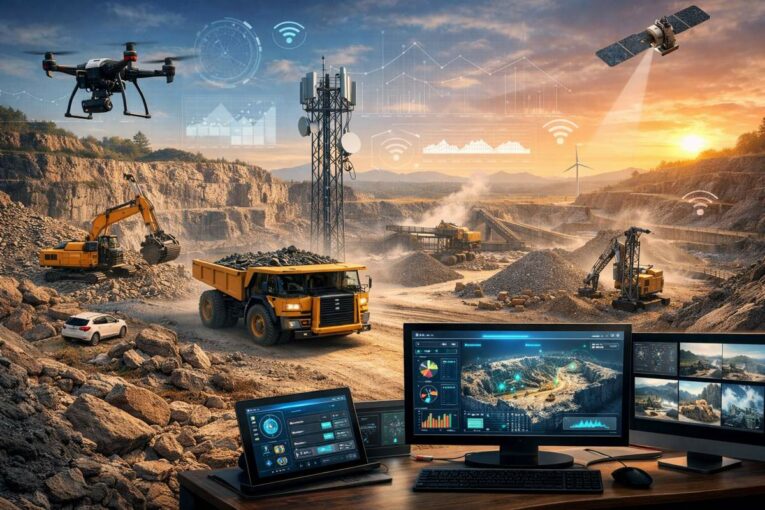
The Smart Quarry and the Age of Data Driven Extraction
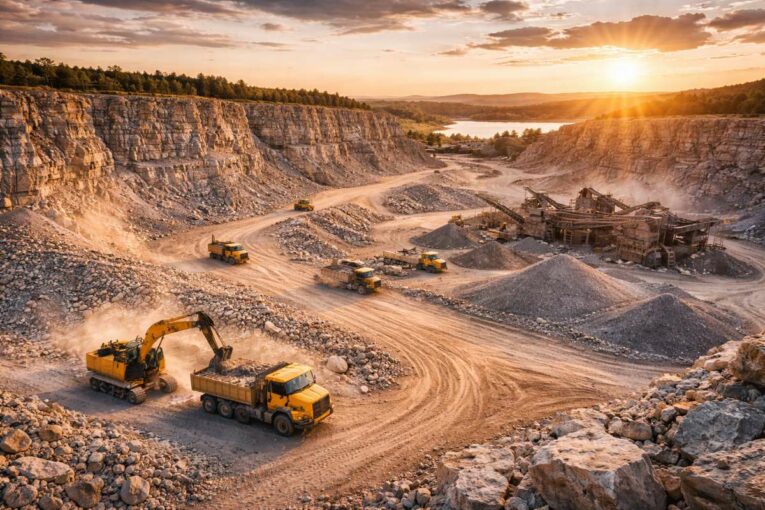
How Quarries and Aggregates Power Modern Infrastructure
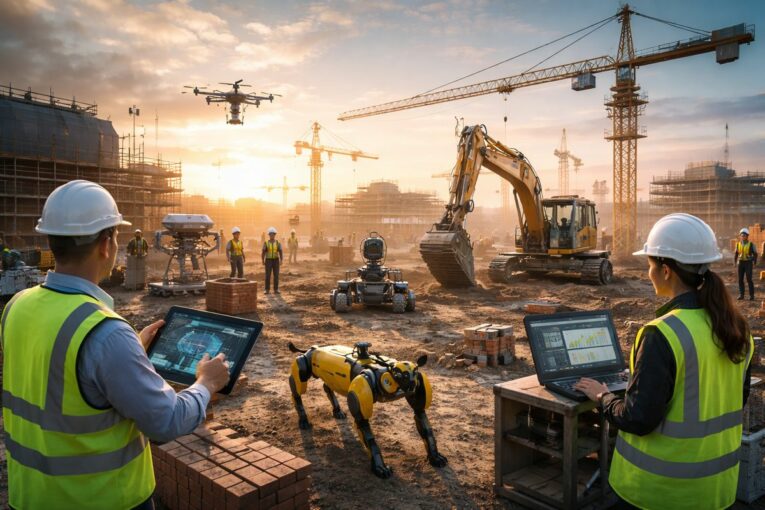
Humans and Machines Redefine Construction Careers

Constructing a Culture of Care

The High-Tech Construction Safety Revolution

The Urgent Skills Shift in Global Construction

Cultivating Curiosity and Cyber Confidence in Construction

Innovation Under Pressure to Protect Construction’s Digital Supply Chain
Automation, AI and Telematics Transforming Heavy Machinery Operations
Smart Technology Revolutionising the Foundations of Construction

The Rise of Smart Materials in Infrastructure









