Sensata Advances Diesel Particulate Monitoring with New ePM Sensor
Sensata Technologies has introduced an electrostatic particulate matter sensor designed to detect deterioration in diesel particulate filters through continuous exhaust monitoring. The new ePM sensor targets increasingly demanding onboard diagnostic requirements for light-, medium- and heavy-duty vehicles, with a manufacturer-claimed detection capability as low as 10 mg per mile.
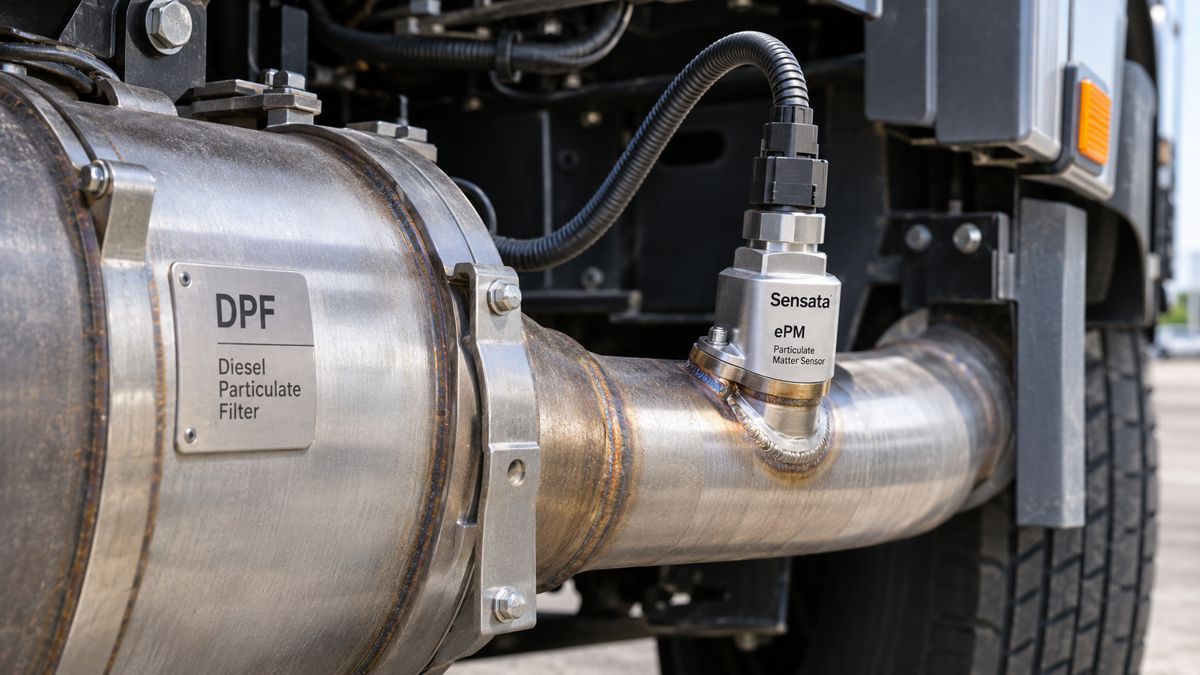
Positioned downstream of the diesel particulate filter (DPF), the sensor monitors particulate matter escaping through the exhaust system, helping vehicle manufacturers identify filtration failures and maintain emissions-control performance. Sensata says the technology combines electrostatic measurement with continuous monitoring and a tamper-resistant design.
The development comes as emissions regulations place greater demands on the ability of vehicle diagnostic systems to identify deteriorating aftertreatment performance, particularly in commercial diesel applications.
Briefing
- Sensata Technologies has introduced the ePM electrostatic particulate matter sensor for diesel exhaust monitoring.
- The sensor operates downstream of the diesel particulate filter to help identify filtration failures.
- Sensata claims detection capability as low as 10 mg per mile.
- Continuous monitoring and a tamper-resistant design support increasingly demanding onboard diagnostic requirements.
- Intended applications include light-, medium- and heavy-duty diesel vehicles.
Diesel Particulate Filter Monitoring
Diesel particulate filters capture soot particles produced during combustion, preventing much of this material from reaching the atmosphere. Their effectiveness depends on the integrity of the filter substrate and the operation of the associated exhaust aftertreatment system.
A damaged or deteriorating filter can allow particulate matter to pass through the exhaust even when other aspects of the engine appear to be operating normally. Detecting that deterioration reliably becomes more demanding as permitted emissions levels fall and diagnostic thresholds become more stringent.
Sensata’s ePM electrostatic particulate matter sensor is designed to monitor particulate matter continuously, allowing the vehicle’s diagnostic system to assess changes in exhaust particle levels as they occur. The sensor is installed downstream of the DPF, where an increase in measured particulate matter may indicate a reduction in filtration performance.
The company identifies sensitivity, response time and resistance to tampering as principal characteristics of the technology. Its stated detection capability of 10 mg/mi is a manufacturer specification rather than an independently established regulatory performance result.
Electrostatic sensing offers a means of detecting particles through their electrical interaction with a sensing element. The resulting signal can be incorporated into the vehicle’s onboard diagnostic system, where software evaluates measurements against operating conditions and applicable malfunction criteria.
Sensata has published a technical white paper, Electrostatic Particulate Matter Sensing Benefits for Diesel Vehicle Emission Measurement, examining the measurement approach and the regulatory challenges associated with detecting low particulate emissions.
Regulatory Requirements for Diesel Diagnostics
The introduction comes as emissions monitoring requirements continue to place considerable demands on engine manufacturers, particularly in North America.
The California Air Resources Board (CARB) requires onboard diagnostic systems to identify specified failures and deterioration in diesel particulate filter performance. The applicable thresholds depend on vehicle classification, engine model year and certification requirements.
Under California’s heavy-duty onboard diagnostic regulations, particulate filter monitoring requirements include detecting deterioration before emissions exceed specified malfunction thresholds. For applicable 2024 and subsequent model-year heavy-duty engines, these include particulate matter thresholds expressed in grams per brake horsepower-hour.
Those thresholds cannot be directly compared with Sensata’s stated 10 mg/mi detection capability because the measurements use different bases. Sensor sensitivity must be assessed as part of the complete diagnostic system and the certification requirements applicable to a particular engine.
Federal regulations also establish requirements for onboard diagnostic performance. Under 40 CFR 1036.110, new engines covered by the provision must meet specified diagnostic requirements beginning with the 2027 model year, subject to the regulation’s applicability rules. Existing heavy-duty onboard diagnostic requirements already apply to earlier engine generations.
The regulatory framework requires diagnostic systems to detect relevant emissions-control malfunctions, store diagnostic trouble codes and provide appropriate operator warnings. Reliable fault detection therefore depends on the combined performance of sensors, electronic controls and diagnostic software.
“As emissions monitoring requirements become more stringent, OEMs need sensing solutions that provide greater sensitivity, faster response and enhanced diagnostic confidence,” said Markus Schwabe, Executive Vice President and President, Automotive, Sensata Technologies.
The challenge for manufacturers is to identify genuine deterioration without generating unnecessary malfunction warnings during normal changes in engine load, exhaust temperature or operating conditions.
Commercial Vehicle Applications
Sensata is positioning the ePM sensor for light-, medium- and heavy-duty diesel vehicles, extending its existing portfolio of emissions-monitoring technologies.
Heavy commercial vehicles present a varied operating environment. Long-distance trucks may spend extended periods at relatively stable engine loads, while construction vehicles, distribution trucks and other vocational equipment frequently experience changing loads, low-speed operation and prolonged idling.
These differences influence exhaust temperatures, particulate production and aftertreatment behaviour. Sensor performance must therefore be considered across the operating conditions relevant to each engine and vehicle application.
Continuous downstream particulate monitoring can provide additional diagnostic information when assessing filter deterioration. However, the ability to translate measurements into reliable fault detection depends on calibration, software and the conditions under which diagnostic evaluations are performed.
The technology may also have relevance to diesel-powered construction machinery, where engines operate under demanding and frequently changing loads. Sensata’s announcement identifies automotive and commercial vehicle applications, although it does not confirm a specific off-highway equipment deployment.
For commercial vehicle manufacturers, the sensor represents another component available for developing and validating emissions-control systems as diagnostic requirements evolve.
Diagnostic Integration and Deployment
The ePM sensor is intended to operate within the vehicle’s existing emissions-control architecture rather than independently determine whether an engine complies with emissions regulations.
Its position downstream of the particulate filter allows it to detect particles that have passed through the filtration system. An increase in measured particulate matter may indicate deterioration or damage, but the diagnostic system must interpret that signal alongside relevant engine and exhaust operating conditions.
Sensata also describes the sensor as tamper-resistant, a characteristic relevant to maintaining the integrity of emissions monitoring throughout a vehicle’s operating life.
In-service emissions compliance is receiving increasing regulatory attention. California’s Clean Truck Check programme requires periodic emissions compliance testing for applicable heavy-duty vehicles, including assessments using onboard diagnostic information.
Although such programmes do not prescribe the use of Sensata’s sensor, they demonstrate the continuing role of reliable onboard diagnostics in maintaining emissions-control performance beyond initial vehicle certification.
Diesel engines remain widely used in commercial transport and heavy-duty applications where operational requirements can make alternative powertrains difficult to adopt across every duty cycle. For manufacturers continuing to develop diesel platforms, emissions compliance depends on the combined performance of combustion systems, exhaust aftertreatment and the diagnostics used to monitor them.
Sensata has not disclosed production customers or a deployment timetable for the ePM sensor. Its commercial prospects will depend on demonstrated performance across different engine configurations and the ability of manufacturers to incorporate the technology into certified diagnostic systems.
Key Industry Questions
- What is Sensata’s ePM sensor designed to measure? It is designed to detect particulate matter in diesel exhaust downstream of the diesel particulate filter, providing information for onboard diagnostics.
- How does electrostatic particulate matter sensing work? Electrostatic sensing uses electrical effects associated with exhaust particles to generate a measurement signal. The specific measurement method depends on the sensor design.
- What is the sensor’s stated detection capability? Sensata claims detection capability as low as 10 milligrams per mile. This is a manufacturer-reported specification rather than an independently verified regulatory result.
- Can the sensor identify a damaged diesel particulate filter? It is designed to help identify filter malfunctions by detecting increased particulate matter downstream. The vehicle’s diagnostic system determines how those measurements are interpreted.
- Does the sensor replace a diesel particulate filter? No. The filter captures particulate matter, while the sensor monitors emissions passing through the exhaust system.
- Is the sensor suitable for heavy-duty trucks? Sensata identifies heavy-duty commercial vehicles among its intended applications, alongside light- and medium-duty vehicles.
- Can the technology be used in construction machinery? The sensing approach may be relevant to diesel-powered off-highway equipment, but Sensata has not confirmed a specific construction machinery application.
- Is the sensor already being installed by vehicle manufacturers? Sensata has announced the product but has not identified production customers or confirmed deployment dates.
Strategic Takeaways
- Continuous downstream particulate monitoring provides manufacturers with additional information for detecting diesel particulate filter deterioration.
- Sensor sensitivity alone does not establish emissions compliance; complete diagnostic-system performance must satisfy applicable regulatory requirements.
- Commercial vehicles operating under variable loads require diagnostic strategies capable of distinguishing genuine filter failures from normal operating changes.
- Electrostatic particulate sensing may have applications beyond road vehicles, although off-highway deployments have not been confirmed.
- Commercial adoption will depend on validated performance, integration requirements and vehicle manufacturer development programmes.