






Southeast Asia Faces US$7.1 Trillion Infrastructure Challenge
Southeast Asia needs an estimated US$7.1 trillion in infrastructure investment by 2040, including nearly US$2 trillion for roads and US$3.6 trillion for electricity systems. Yet current government expenditure would cover less than half the requirement, leaving a financing shortfall that the Asian Development Bank (ADB) estimates at US$264 billion annually.
The figures, published in the ADB’s latest assessment of ASEAN infrastructure requirements, describe an enormous potential construction programme. They also expose a more immediate difficulty. Governments and developers must prepare technically credible, commercially viable projects before private investment can begin closing the gap, particularly where schemes involve long construction periods, uncertain revenues or agreements between neighbouring countries.
Published on 10 November 2026, the ADB’s The $7 Trillion Challenge: Building Tomorrow’s ASEAN estimates annual infrastructure requirements of approximately US$476 billion between 2026 and 2040, equivalent to 8.7% of projected regional GDP. The figures are expressed in constant 2015 US dollars, providing a common price basis for assessing long-term requirements rather than representing nominal future expenditure.
The assessment covers all 11 members of the Association of Southeast Asian Nations, including Timor-Leste, and considers the infrastructure needed to support economic expansion, urbanisation, industrial development and increasingly sophisticated public services. Electricity and transport together account for 85% of the requirement, although substantial investment will also be needed in communications, healthcare, water and sanitation.
Briefing
- ASEAN requires an estimated US$7.1 trillion in infrastructure investment during 2026–2040, averaging US$476 billion annually.
- Electricity accounts for approximately US$3.6 trillion, while transport requires US$2.5 trillion, including nearly US$2 trillion for roads.
- Existing government infrastructure expenditure would cover around 45% of requirements, leaving an estimated annual financing gap of US$264 billion.
- Digital infrastructure requires US$584 billion, with another US$471 billion needed for healthcare, water and sanitation.
- ADB identifies inadequate project preparation, regulatory uncertainty and investment risks as obstacles to attracting greater private financing.
Roads and Transport Dominate Infrastructure Requirements
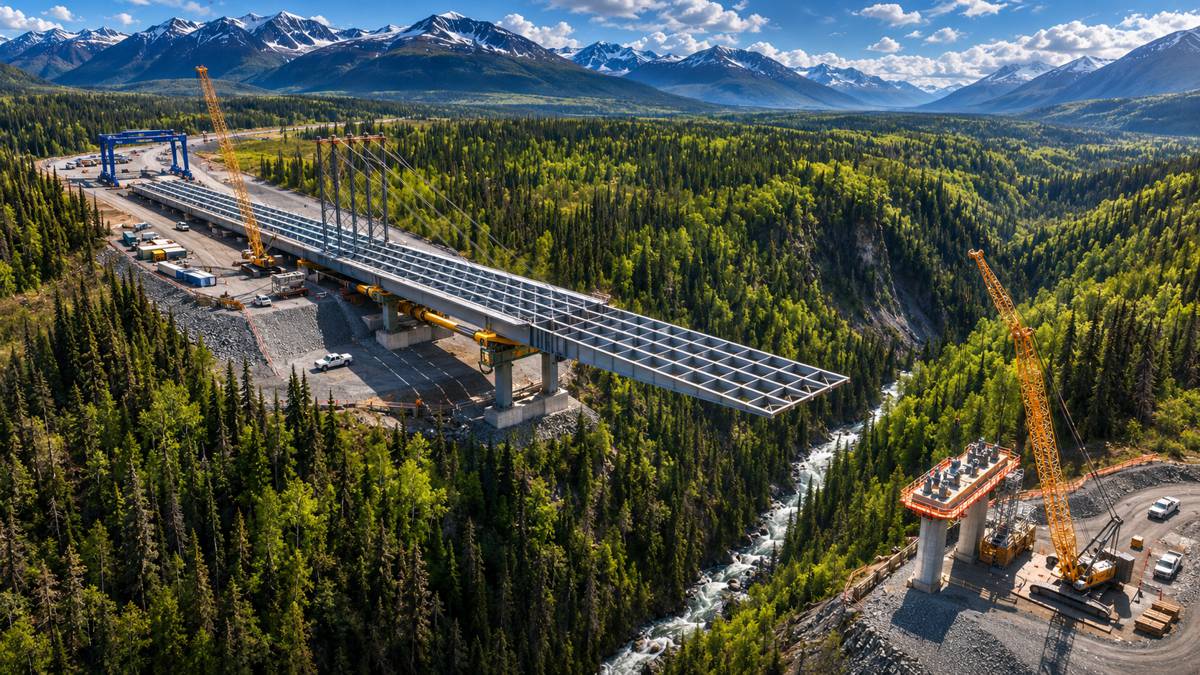
Transport infrastructure represents approximately 35% of Southeast Asia’s investment requirements through 2040, with the ADB estimating that US$2.5 trillion will be needed to develop and maintain networks supporting the region’s economic activity. Roads account for nearly US$2 trillion, making them the largest individual transport category.
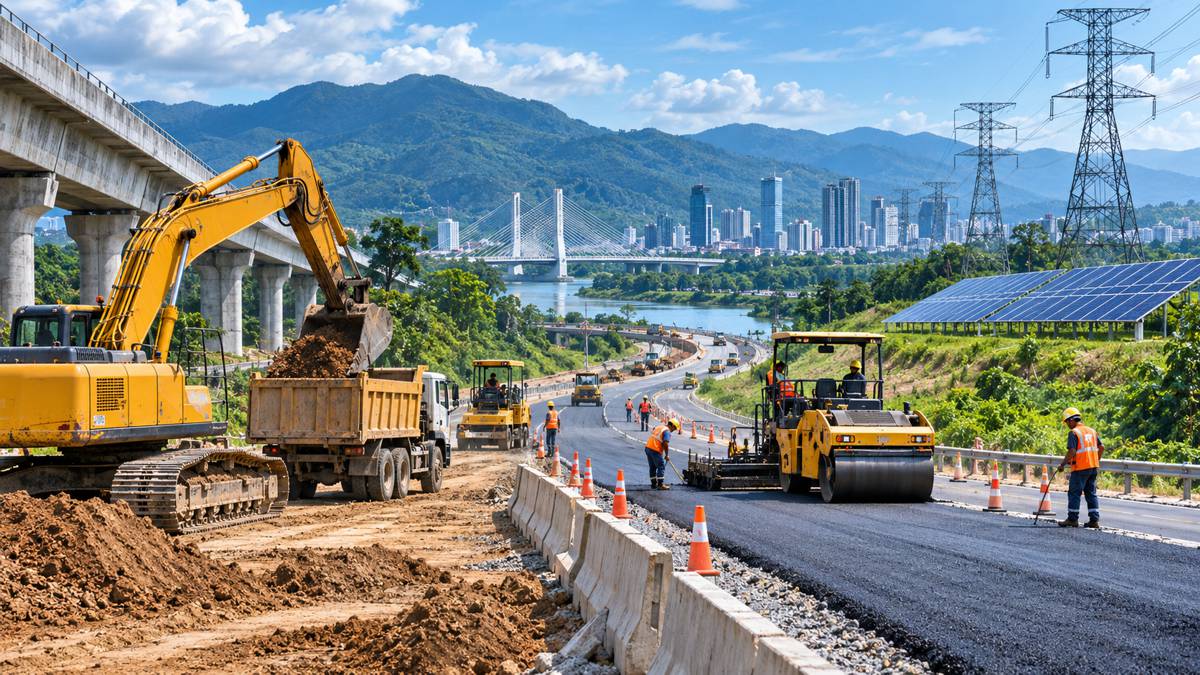
Southeast Asia’s manufacturing centres, expanding cities and agricultural regions depend on road connections to ports, logistics hubs and domestic markets. Across much of the region, highways provide essential links between industrial areas and international trading corridors, particularly where rail networks remain limited or incomplete. The demand extends beyond new expressways to the rehabilitation, upgrading and maintenance of existing roads, many of which must accommodate increasing freight traffic and heavier commercial vehicles.
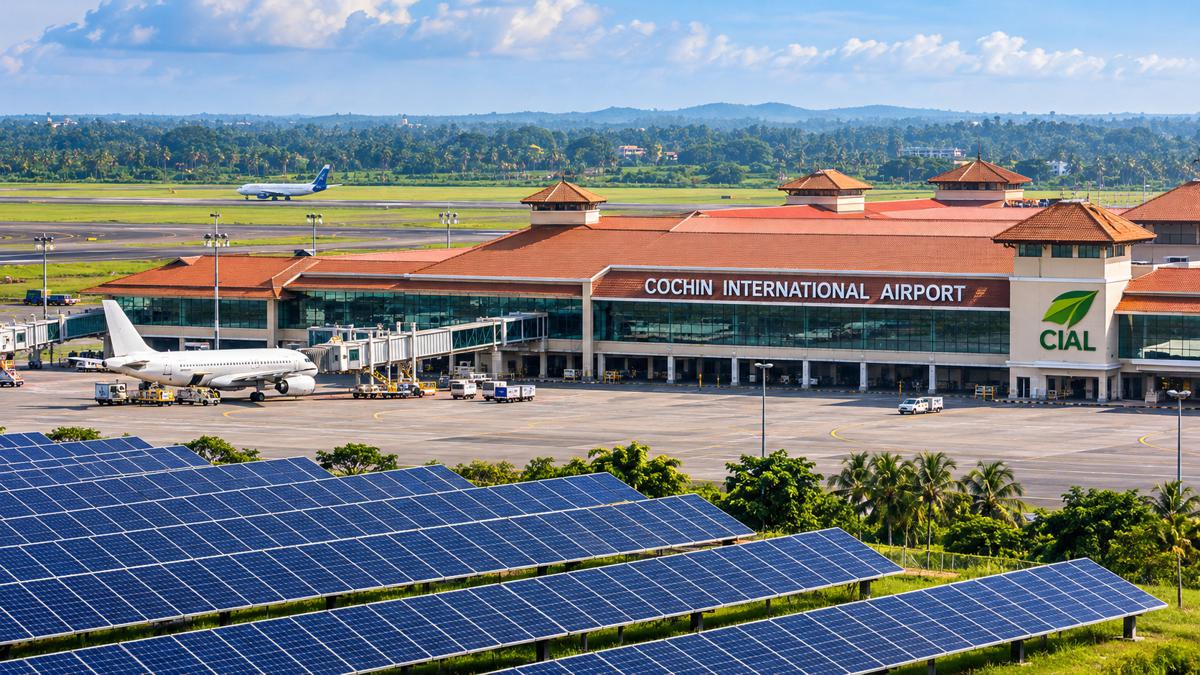
While highways account for most of the transport requirement, the ADB also identifies railways and airports among the categories experiencing particularly rapid growth in investment needs. Urban expansion, changing travel patterns and rising freight volumes are creating demand for better integration between transport modes, including connections between industrial areas, railway terminals, ports and airports.
Cross-border corridors introduce complications that cannot be resolved through civil engineering alone. A new highway or railway may depend on border procedures, customs arrangements, connecting infrastructure and compatible operating systems in neighbouring countries before its full economic benefits can be realised. The ADB consequently identifies multimodal economic corridors and international logistics connections as priorities for regional cooperation.
Improving existing infrastructure may also deliver substantial benefits without the capital requirements associated with entirely new routes. Rehabilitation, better maintenance and targeted capacity improvements can address deteriorating road conditions, recurring congestion and unreliable journey times, allowing governments to extract greater value from networks already in operation.
Electricity Investment Reaches US$3.6 Trillion
Electricity represents the largest component of ASEAN’s infrastructure requirement, accounting for approximately US$3.6 trillion, or half the total forecast.
The region’s expanding manufacturing base, rising urban consumption and growing demand from digital services are placing pressure on generation capacity and electricity networks. Additional investment will be required in transmission, distribution and energy storage, while the integration of renewable generation will create further demands on grid management and system flexibility.
Regional electricity trading forms part of this expansion. The ASEAN Power Grid aims to improve interconnection between national electricity systems, allowing participating countries to exchange power and make better use of generation resources across the region. Such connections could strengthen energy security and reduce exposure to supply disruptions, although their practical operation depends on more than installing transmission infrastructure.
Cross-border networks require agreements covering grid access, tariffs, technical standards, operating arrangements and the allocation of investment costs. Electricity transmission contractors may be familiar with the engineering involved, but projects spanning several jurisdictions must also accommodate different regulatory systems and commercial structures.
In April 2026, ADB launched the Regional Connectivity Fund for Energy in Southeast Asia, designed to support project preparation for cross-border energy infrastructure under the ASEAN Power Grid. The facility is intended to help projects advance through the feasibility, technical and financial development stages needed before construction financing can be arranged.
The bank subsequently announced its Pan-Asia Power Grid Initiative in May, extending its efforts to improve electricity connectivity across Asia and the Pacific. Together, these programmes address the long development periods associated with major transmission schemes, where investment commitments frequently depend on technical assessments, regulatory approvals and agreements between multiple electricity authorities.
Digital Networks and Healthcare Construction
Beyond electricity and transport, the ADB identifies US$584 billion in digital infrastructure requirements through 2040. The assessment includes broadband connectivity, fibre-optic networks, data centres and internet exchange points, reflecting the increasing dependence of manufacturing, logistics and public services on reliable telecommunications.
Industrial production and international trade increasingly rely on connected systems for inventory management, equipment monitoring, customs processing and supply-chain coordination. Improving telecommunications infrastructure can support these activities, particularly where industrial development is extending into areas with limited digital connectivity.
The ADB’s Asia-Pacific Digital Highway initiative, announced in May 2026, is intended to support regional fibre networks, submarine cables, data centres and related infrastructure through 2035. Such investments create construction requirements ranging from underground ducting and cable installation to specialist buildings, electrical infrastructure and cooling systems.
Healthcare represents another substantial programme, with the report estimating US$227 billion in investment requirements through 2040. The assessment envisages approximately 49,000 new healthcare facilities, most of them primary care centres, alongside extensive spending on medical equipment, refurbishment and maintenance.
Of the healthcare total, an estimated US$68 billion would be required for new construction, with a further US$71 billion allocated to medical equipment. Unlike major transport corridors or electricity networks, many smaller healthcare facilities can be delivered individually and brought into operation once staffing and equipment are available, creating opportunities for regional and local construction businesses.
Water and sanitation infrastructure requires another US$244 billion, including investment to improve the reliability and quality of services. Although these sectors attract less attention than highways and power networks, their combined requirements represent substantial programmes of civil engineering, building construction, mechanical installation and specialist infrastructure development.
A US$264 Billion Annual Financing Gap
Current government infrastructure spending across ASEAN amounts to approximately 3.9% of regional GDP, equivalent to around 45% of the investment requirement identified by the ADB. On that basis, the bank estimates an annual financing shortfall of US$264 billion, or more than 4.8% of GDP.
Recorded private participation in infrastructure currently contributes less than 0.4% of GDP, equivalent to only about 4% of estimated investment requirements. This relatively limited contribution illustrates the scale of the challenge facing governments seeking to attract private capital into transport, energy, telecommunications and other long-lived assets.
Closing the shortfall entirely through public expenditure would require governments to approximately double their existing infrastructure investment, placing additional pressure on budgets already supporting healthcare, education and other public services. Private investment therefore has a potentially substantial role, particularly in infrastructure capable of generating predictable revenues over extended operating periods.
Electricity generation and transmission, telecommunications assets, toll roads and certain transport facilities can offer opportunities for private financing, although the commercial viability of each project depends on its particular circumstances. Infrastructure developments commonly require substantial initial expenditure followed by years of operation before investors recover their capital, making revenue forecasts, construction costs, regulatory conditions and contractual commitments central to financing decisions.
Some projects also provide significant economic and social benefits without producing revenues sufficient to support conventional commercial financing. Rural roads, essential healthcare facilities and certain public transport services may require government funding, subsidies or concessional support even where their contribution to regional development is considerable.
The ADB identifies a shortage of properly prepared projects as a major obstacle to expanding private participation. Public-private partnerships and other financing arrangements depend on credible feasibility studies, realistic demand forecasts, transparent procurement and contracts that allocate risks to the organisations best equipped to manage them.
Guarantees, concessional finance and blended financing structures can help address particular risks or funding constraints. They are most effective when supporting projects with sound technical and economic foundations rather than attempting to compensate for weak preparation or unrealistic commercial assumptions.
Project Preparation and Procurement
A regional requirement of US$7.1 trillion does not represent a funded construction pipeline or a collection of projects ready for tender. Governments must still determine which schemes should proceed, establish their feasibility, secure land and environmental approvals, arrange financing and prepare suitable procurement documentation.
For major transport and electricity projects, these preparatory activities can involve extensive engineering and institutional coordination. Highway developments may require route studies, geotechnical investigations, land acquisition and the relocation of utilities, while transmission projects must address grid connections, rights of way, technical compatibility and operating agreements.
The work creates demand for engineering consultants, project developers, environmental specialists and financial advisers long before construction contracts are advertised. Detailed feasibility assessments, engineering design, environmental studies, financial modelling and procurement support are all necessary to advance projects towards investment decisions.
Preparation alone, however, cannot overcome weaknesses in the institutions responsible for delivery. Contractors and investors need confidence that procurement procedures will be consistent, contractual obligations can be enforced and regulatory conditions will remain sufficiently predictable throughout construction and operation.
The ADB recommends stronger public-sector capabilities in project selection, procurement, environmental and social safeguards, land acquisition and contract management. It also advocates better information about existing infrastructure assets, including their condition, utilisation and service performance, so that investment priorities can be based on identifiable network needs.
For governments managing extensive infrastructure programmes, the quality of these early decisions can determine whether projects proceed efficiently or encounter delays and additional costs once construction begins. Inadequate site information, unresolved land issues or unrealistic schedules are considerably harder to manage after contractors have mobilised.
Climate Resilience and Infrastructure Design
The latest assessment incorporates additional costs associated with making infrastructure more resistant to climate-related hazards, including flooding, severe storms and coastal exposure.
Across Southeast Asia, extreme weather can interrupt transport corridors, damage electricity installations and disrupt essential public services. Existing infrastructure may require reinforcement or modification, while new assets must be designed to remain reliable under conditions that could differ substantially from those experienced during the development of older networks.
For highways and civil engineering projects, resilience requirements can influence drainage capacity, pavement specifications, bridge design, earthworks protection and the location of critical assets. Electricity and telecommunications infrastructure face comparable challenges, particularly where damage to a single installation could interrupt services across a wider network.
These considerations affect both construction costs and long-term maintenance liabilities. Greater drainage capacity, stronger protective works or alternative route alignments may increase initial expenditure, but repeated repairs and operational interruptions can impose considerably higher costs over an asset’s service life.
The ADB includes adjustments for structural resilience while acknowledging that its estimates do not capture every cost associated with adapting infrastructure systems and institutions to climate-related risks. The US$7.1 trillion total should consequently be understood as an assessment of defined infrastructure requirements rather than a comprehensive calculation of every possible adaptation expense.
A Revised Baseline for ASEAN Development
The latest figures substantially exceed the ADB’s previous assessment, published in 2017, which estimated approximately US$3.15 trillion in ASEAN infrastructure requirements for 2016–2030.
The new study covers 2026–2040 and incorporates updated assumptions about economic development, infrastructure stocks, construction costs and the assets required by modern economies. Its scope also includes additional categories, such as urban rail, data centres and healthcare facilities, alongside revised climate resilience provisions.
Although both assessments are expressed in constant 2015 US dollars, they cannot be compared directly as measures of growth in infrastructure demand. Their investment periods overlap, and differences in methodology and sector coverage account for part of the increase. The latest study nevertheless places ASEAN’s estimated annual infrastructure requirement at 8.7% of GDP, compared with 5.7% in the earlier assessment and 7.3% for Asia and the Pacific overall.
The revised figures also reflect the development of economies that are becoming more urbanised, digitally connected and service-oriented while retaining extensive manufacturing and agricultural industries. Electricity reliability, logistics performance, healthcare provision and communications infrastructure are increasingly interconnected requirements, with weaknesses in one system capable of limiting the performance of others.
Turning Regional Ambitions into Construction Programmes
Southeast Asia’s infrastructure markets differ considerably in their existing assets, institutional capabilities and access to finance. Singapore’s mature networks and investment environment present different requirements from those of developing economies where basic transport connections, electricity supplies and public services remain major priorities.
For international contractors, equipment manufacturers and infrastructure suppliers, the projected demand is substantial, particularly across highways, electricity transmission, railway construction and digital facilities. The timing and accessibility of individual opportunities will nevertheless depend on national investment priorities, procurement arrangements and the readiness of projects to proceed.
ADB President Masato Kanda described the challenge in terms of the infrastructure needed to sustain economic activity:
“Southeast Asia’s growth depends on what it builds next,” he said. “Its factories need dependable electricity, and its businesses need faster, safer ways to reach markets. These investments must also be built to deliver long-term benefits. ADB will help governments bring forward projects that investors can trust and people can depend on.”
The bank’s recommendations place considerable emphasis on maintaining existing infrastructure, improving network performance and expanding capacity where additional investment can be justified. Such an approach requires governments to assess the condition and utilisation of current assets alongside proposals for new construction, particularly where limited budgets must accommodate competing priorities.
Across Southeast Asia, the investment requirement is substantial, but infrastructure demand does not automatically translate into construction contracts. Projects must still pass through feasibility studies, regulatory approvals, financial structuring and procurement before contractors can begin work.
The ADB’s assessment provides a measure of the region’s long-term ambitions. How much of that US$7.1 trillion becomes roads, power networks, transport connections and public facilities will depend on the projects governments can prepare, the financing they can secure and the infrastructure they choose to build.
Key Industry Questions
- How much infrastructure investment does Southeast Asia need by 2040? The Asian Development Bank estimates that ASEAN requires US$7.1 trillion during 2026–2040, averaging approximately US$476 billion annually in constant 2015 US dollars.
- Which infrastructure sector requires the largest investment? Electricity accounts for approximately US$3.6 trillion, or 50% of total requirements. Transport follows at around US$2.5 trillion, representing 35%.
- How much investment is required for roads in ASEAN? Road infrastructure accounts for nearly US$2 trillion of the region’s forecast transport investment requirements through 2040, including development, upgrading and maintenance.
- What is ASEAN’s infrastructure financing gap? The ADB estimates an annual shortfall of US$264 billion, based on projected infrastructure requirements and current government investment levels.
- Why is private infrastructure investment relatively limited? Major obstacles include uncertain project revenues, regulatory risks, inadequate preparation, complex procurement and difficulties allocating construction and operating risks.
- What is the ASEAN Power Grid? The ASEAN Power Grid is a regional initiative to improve cross-border electricity connectivity, strengthen energy security and facilitate electricity trading between participating countries.
- How much digital infrastructure investment is needed? ADB estimates requirements of US$584 billion for broadband, telecommunications networks, data centres and related digital infrastructure through 2040.
- Does the US$7.1 trillion estimate represent confirmed construction projects? No. It is an assessment of long-term infrastructure requirements, rather than a funded construction pipeline or a forecast of contracts that will necessarily be awarded.
- How does climate resilience affect infrastructure investment? Additional structural measures may be required to protect roads, bridges, electricity networks and other assets against flooding, severe weather and related hazards. ADB incorporates certain resilience costs, although its estimate does not cover all adaptation requirements.
Strategic Takeaways
- Road construction remains a major investment category. Nearly US$2 trillion in estimated requirements provides a substantial long-term market for contractors and equipment suppliers, subject to national funding and procurement decisions.
- Project preparation will influence the pace of construction. Feasibility studies, engineering design, land acquisition and financial structuring are necessary to turn regional investment requirements into deliverable projects.
- Cross-border infrastructure depends on regional cooperation. Electricity and transport connections require compatible technical standards, commercial arrangements and regulatory frameworks.
- Existing assets remain central to infrastructure planning. Maintenance, rehabilitation and targeted improvements can increase network performance while limiting the need for entirely new construction.
- Private capital requires credible project economics. Predictable revenues, realistic risk allocation and enforceable contracts remain essential to attracting sustained investment.