Crankcase Ventilation on Diesel Work Trucks
The Overlooked Maintenance Issue Killing Your Engine From the Inside
If you run a diesel pickup in a fleet, you’ve probably heard plenty about DPF clogs and EGR failures. Those get all the attention. But there’s a quieter system on your diesel engine that causes just as much damage when it’s neglected, and most fleet managers don’t find out about it until the repair bill lands on the desk.
That system is crankcase ventilation. On modern diesel pickups like the 6.7L Powerstroke, 6.7L Cummins, and 6.6L Duramax, the factory Closed Crankcase Ventilation (CCV) design is a known weak point under heavy-duty working conditions.
What Is a CCV System and Why Does It Matter?
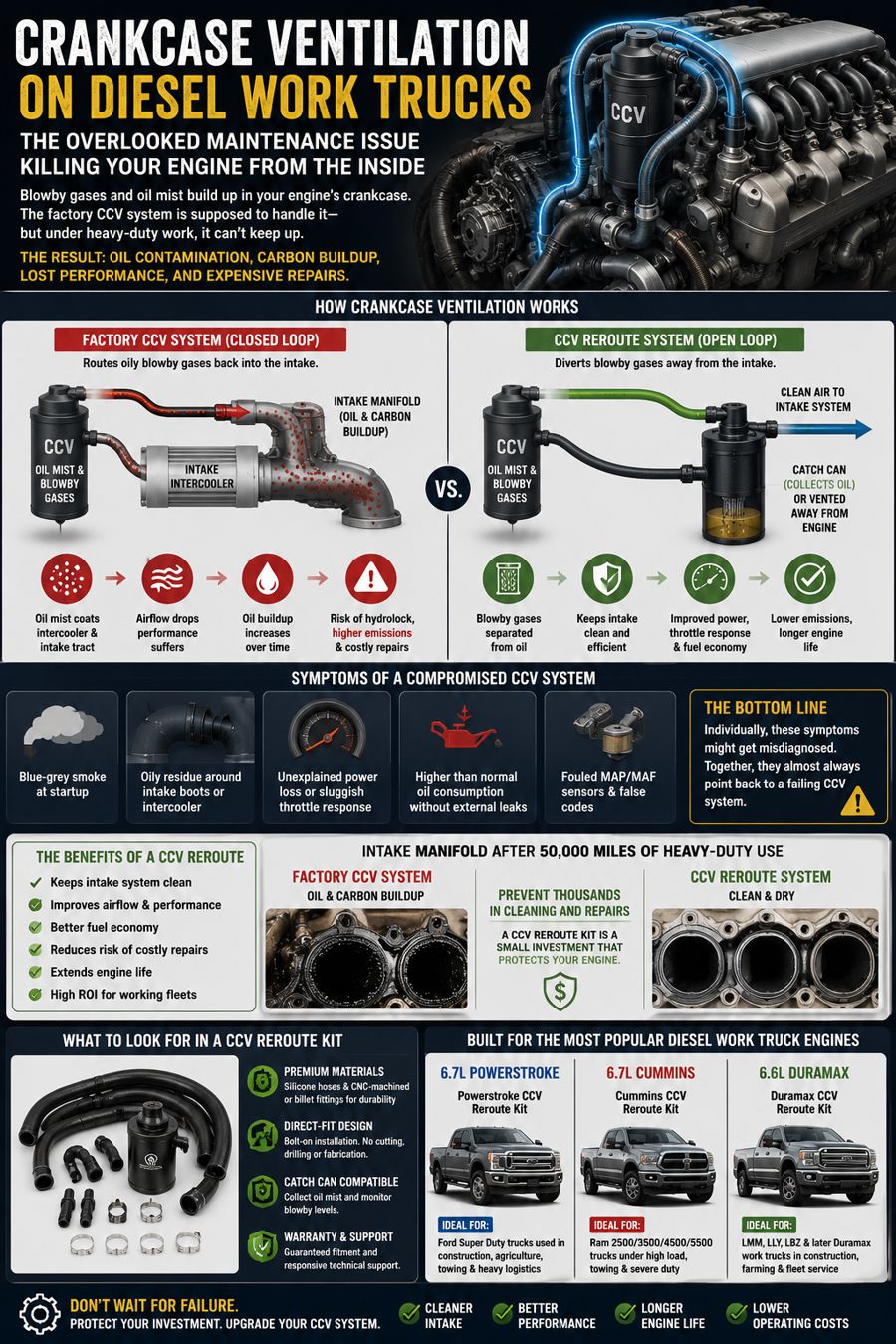
Every internal combustion engine produces blowby — combustion gases and oil mist that slip past the piston rings and enter the crankcase. If that pressure isn’t vented, it builds up and can blow out seals, contaminate your oil, and accelerate engine wear. The CCV system is designed to capture that blowby, route it back through the intake tract, and re-burn it.
On paper, it’s a clean, closed-loop solution. In practice, it creates a cascade of problems.
The oil mist entrained in those blowby gases doesn’t fully separate before it hits the intake manifold. Over time, it coats the intercooler, intake piping, and intake ports in a thick layer of oily carbon. Airflow drops. Fuel economy suffers. In worst-case scenarios, the engine hydrolock risk increases if enough oil accumulates.
Why Heavy-Duty Work Conditions Make It Worse
Here’s what a lot of general maintenance guides miss: CCV problems scale directly with how hard you work your truck.
A diesel pickup used for light commuting might go years without a noticeable CCV issue. But put that same truck into a construction logistics role with constant towing near GVWR, extended idling on job sites, mountain grades, and temperature extremes, and you’ll start seeing CCV-related symptoms in far fewer miles.
High blowby rates are the root cause. Under sustained load, more combustion gases push past the rings, more oil mist enters the crankcase, and the factory CCV separator simply can’t keep up with the volume. On the 6.7L Powerstroke in particular, intake manifold oil fouling is one of the most commonly reported issues among fleet operators who regularly tow or haul at capacity.
The symptoms fleet managers should watch for include:
- Blue-grey smoke at startup that doesn’t clear quickly.
- Oily residue around the intake boots or intercooler connections.
- Unexplained power loss or sluggish throttle response under load.
- Engine oil consumption that’s higher than spec without an obvious external leak.
- Fouled MAP sensors and MAF readings throwing false codes.
Individually, each of these symptoms might get misdiagnosed. Together, they almost always point back to a compromised crankcase ventilation system.
The Fix That Professional Fleets Are Using
The most reliable long-term solution for work trucks operating in demanding conditions is a CCV reroute kit, sometimes called a CCV delete or crankcase vent reroute. Rather than feeding oily blowby gases back into the intake, the reroute diverts them away from the intake tract entirely, typically routing them through a catch can or venting to atmosphere away from critical engine components.
- 6.7L Powerstroke: The Powerstroke CCV reroute kit is a direct-fit solution that eliminates the intake contamination problem at the source. Fleet operators running Ford Super Duty units in construction, agriculture, or heavy logistics report significantly cleaner intake manifolds at their next service interval after installing a reroute kit. In many cases, there are measurable improvements in throttle response and fuel economy as airflow restriction is reduced.
- 6.7L Cummins: Ram operators running the 6.7L Cummins have a similar issue. The factory CCV on the Cummins is notorious for routing oily mist directly into the intake under high-load conditions. A quality Cummins CCV reroute kit solves this by separating the crankcase ventilation circuit from the clean side of the intake system, protecting the turbo, intercooler, and intake valves from oil-laden blowby.
- 6.6L Duramax: For GM fleet operators running 6.6L Duramax engines, particularly the LMM, LLY, and LBZ generations that are still widely used in construction and agricultural fleets, the CCV issue is compounded by the engine’s age and accumulated hours. An engineered solution such as the EngineGo Duramax CCV reroute kit is one of the highest-ROI modifications available for aging work trucks that still have significant life left in the drivetrain. It’s far cheaper than an intake manifold cleaning service and far more preventive than waiting for a failure.
What to Look for When Spec’ing a CCV Reroute Kit
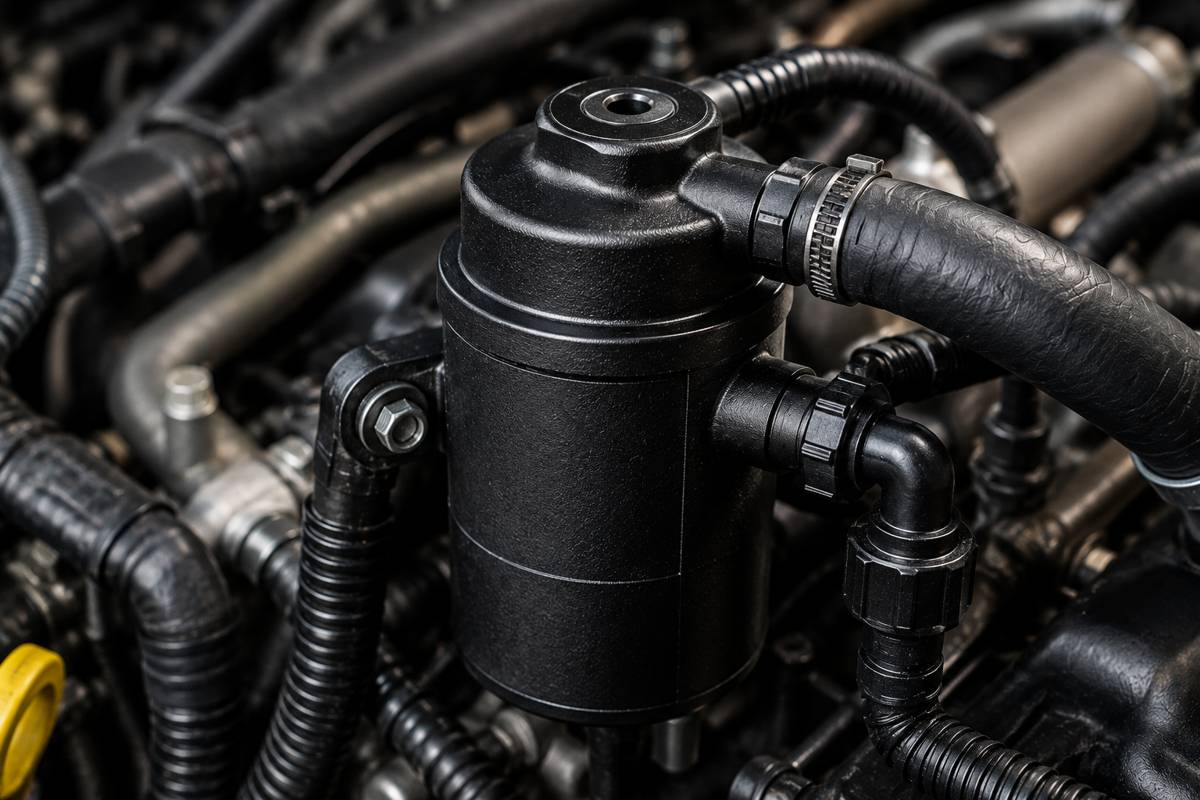
Not all reroute kits are built the same. For work trucks pulling duty on job sites and haul roads, the components that matter most are:
- Material quality: Silicone hoses hold up to heat and oil exposure far better than cheap rubber alternatives. Look for reinforced silicone construction and CNC-machined or billet fittings that won’t crack under sustained the`rmal cycling.
- Direct-fit compatibility: A proper diesel engine ventilation upgrade should be a bolt-on installation without cutting, drilling, or fabrication. If a kit requires significant modification to install, it’s either the wrong application fitment or a low-quality design.
- Catch can provisions: If you’re running in a regulated environment or prefer to collect rather than vent blowby, look for kits that accommodate a catch can in the circuit. This gives you the best of both worlds — clean intake air and a visual indicator of how much blowby your engine is actually producing.
- Warranty and support: For fleet procurement, buying from a supplier that offers guaranteed fitment and responsive technical support is worth a small price premium over sourcing cheap offshore hardware with no application engineering behind it.
The Business Case for Getting Ahead of This
Fleet maintenance is ultimately a cost-per-mile calculation. An unaddressed CCV issue doesn’t generate an immediate breakdown — it generates gradual degradation. Power drops slowly. Fuel economy erodes a fraction of a percent at a time. Intake cleaning intervals come up earlier. And when a sensor fails or an intake manifold finally needs professional cleaning, the labor cost alone is typically several times the cost of a reroute kit installed proactively.
For owner-operators or fleet managers trying to extend the service life of diesel pickups already running north of 150,000 miles, CCV reroute is one of the few modifications with a clear, measurable payback. You’re protecting a major investment. Engine rebuilds or replacement powertrains on these platforms cost anywhere from $8,000 to $20,000 depending on the engine family.
The maintenance decision isn’t complicated. The trucks that last 300,000 miles in working fleets are almost always the ones where someone stayed ahead of the small, unglamorous issues before they became catastrophic ones. Crankcase ventilation is exactly that kind of issue.
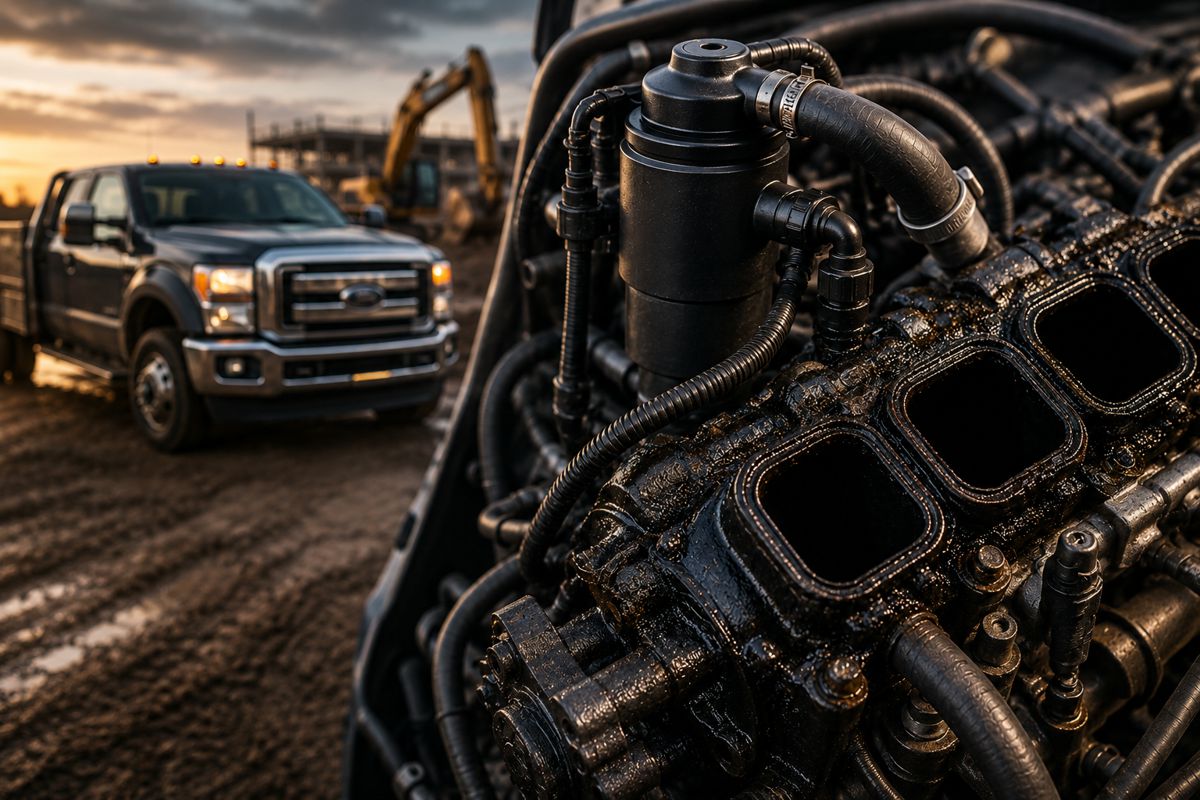
Ready to bulletproof your fleet? For owner-operators and fleet managers looking for proven, direct-fit diesel ventilation solutions, EngineGo carries premium CCV reroute kits for Powerstroke, Cummins, and Duramax platforms. Visit EngineGo today for guaranteed fitment, free shipping, and expert support to keep your work trucks on the road.