Kia PV7 Takes the Platform Approach to Electric Commercial Vehicles
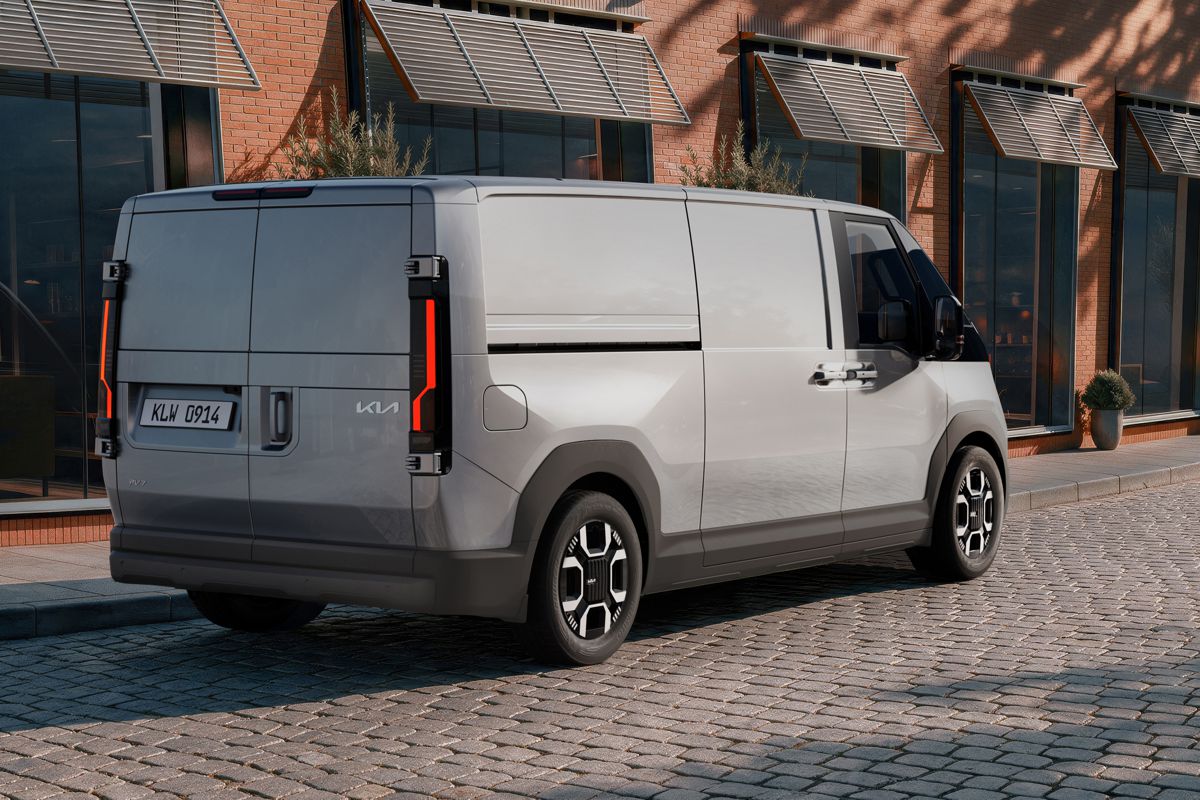
Kia is moving deeper into the commercial vehicle market with a 5.35-metre electric van capable of carrying up to 1,200kg, accommodating as many as three Euro pallets and, in long-range Cargo form, travelling more than 460km on the WLTP cycle.
The new PV7, unveiled at IAA Transportation 2026 in Hanover, is the second vehicle in Kia’s dedicated Platform Beyond Vehicle programme after the smaller PV5. Passenger and Cargo versions are scheduled to reach Korea and Europe during the second half of 2027, followed by an unusually broad collection of derivatives and conversions.
The numbers put the PV7 firmly into serious commercial vehicle territory. The Cargo Long provides 6.1m³ of load space, while a High Roof version increases that to 8.0m³. The Long has a maximum payload of 1,165kg and a 550mm loading height, while the Compact is rated for as much as 1,200kg.
Yet the more interesting part of the PV7 is not its size. Kia is attempting to build a commercial vehicle around a different business model, treating the van as configurable hardware connected to fleet software, data services, maintenance systems and a conversion ecosystem. If the approach works at scale, the PV7 will compete as much on what happens around the vehicle as on the vehicle itself.
Briefing
- Kia will launch PV7 Passenger and Cargo models in Korea and Europe in the second half of 2027.
- The PV7 uses Kia’s dedicated E-GMP.S electric commercial vehicle architecture with 800V charging.
- Long Range Cargo models are expected to offer more than 460km WLTP range.
- Cargo capacity reaches 8.0m³, with payload ratings of up to 1,200kg depending on configuration.
- Kia plans 23 PV7 variants spanning Cargo, Passenger, Chassis Cab and specialist conversion applications.
Moving Up From the PV5
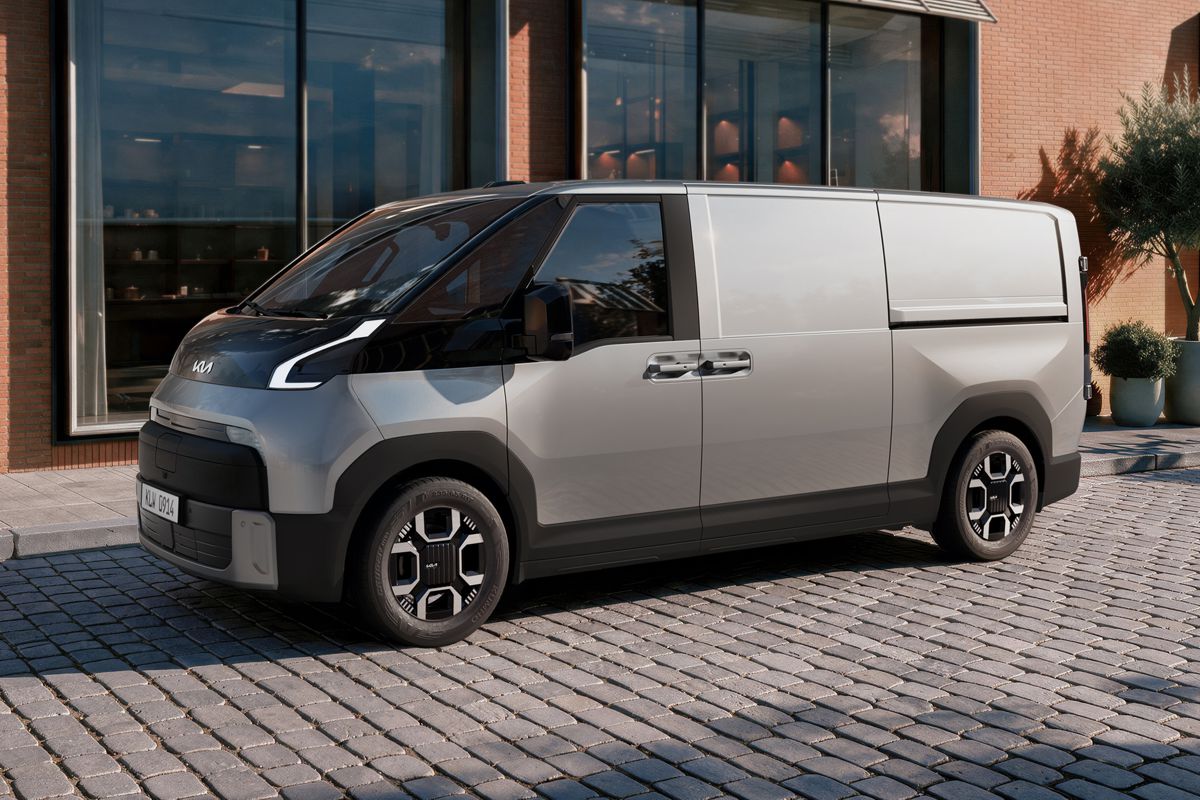
The PV7 follows the PV5, Kia’s first dedicated PBV and the winner of the 2026 International Van of the Year award. The PV5’s arrival established that Kia was serious about entering a commercial vehicle sector dominated by manufacturers with decades of fleet, dealer and body-conversion experience. The PV7 increases the scale of that proposition.
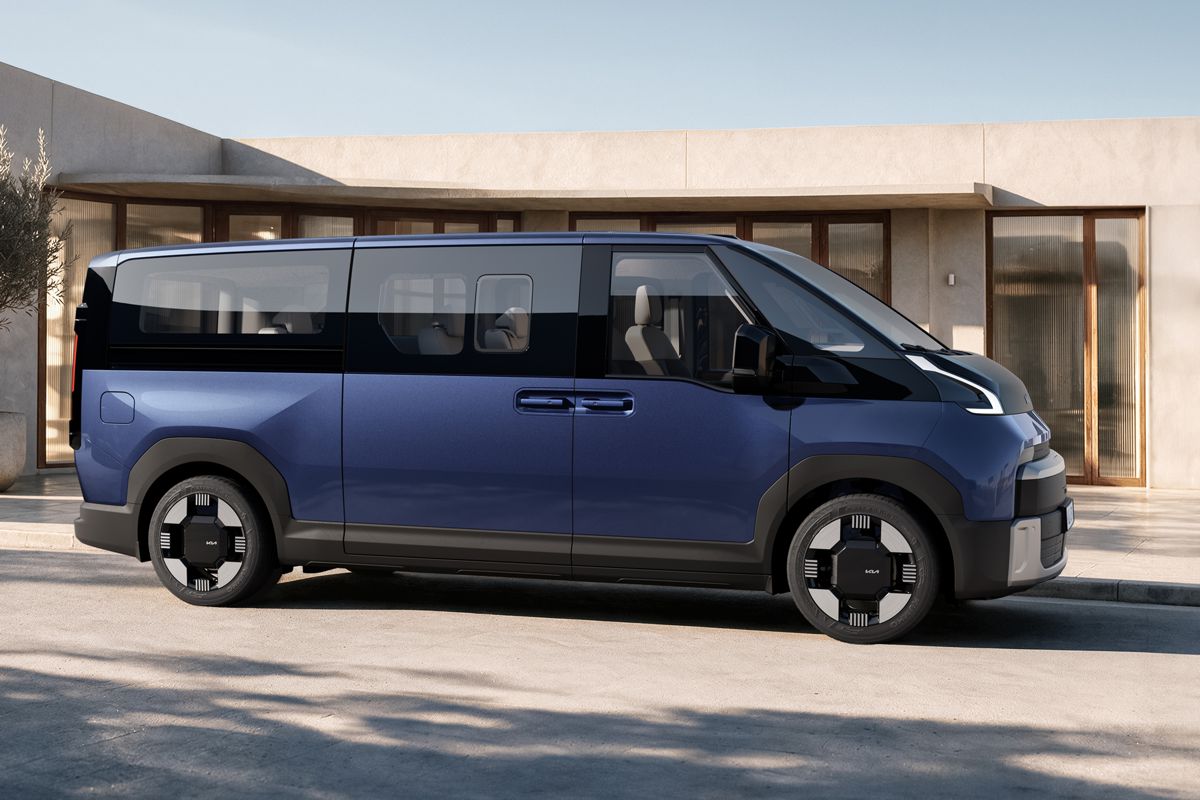
At 5,350mm long, 1,995mm wide and with a 3,500mm wheelbase, it has been developed for operations requiring more payload, cargo volume or passenger capacity than the PV5 can provide. Cargo models will be offered in Compact, Long and High Roof forms, alongside Passenger versions and a Chassis Cab intended to provide the foundation for specialist bodies.
Kia describes its development philosophy for the vehicle as a “Tool Box”. Behind the terminology is a familiar commercial vehicle principle: the base vehicle needs to accommodate very different jobs without requiring Kia to engineer an entirely different platform for each one. That includes logistics fleets, trades and service businesses, passenger shuttles, rental operators and specialist conversions.
Kia intends eventually to offer 23 PV7 variants, supported by its Hwaseong EVO West PBV Plant, a dedicated conversion centre and regional conversion partners. A common connector interface is intended to allow conversion equipment to communicate with and be controlled through the vehicle.
For an established van manufacturer, multiple bodies and conversions would hardly be unusual. For Kia, which is effectively building an LCV operation alongside the vehicles themselves, creating that ecosystem is one of the more difficult parts of entering the market.
Electric Drivetrain and Charging
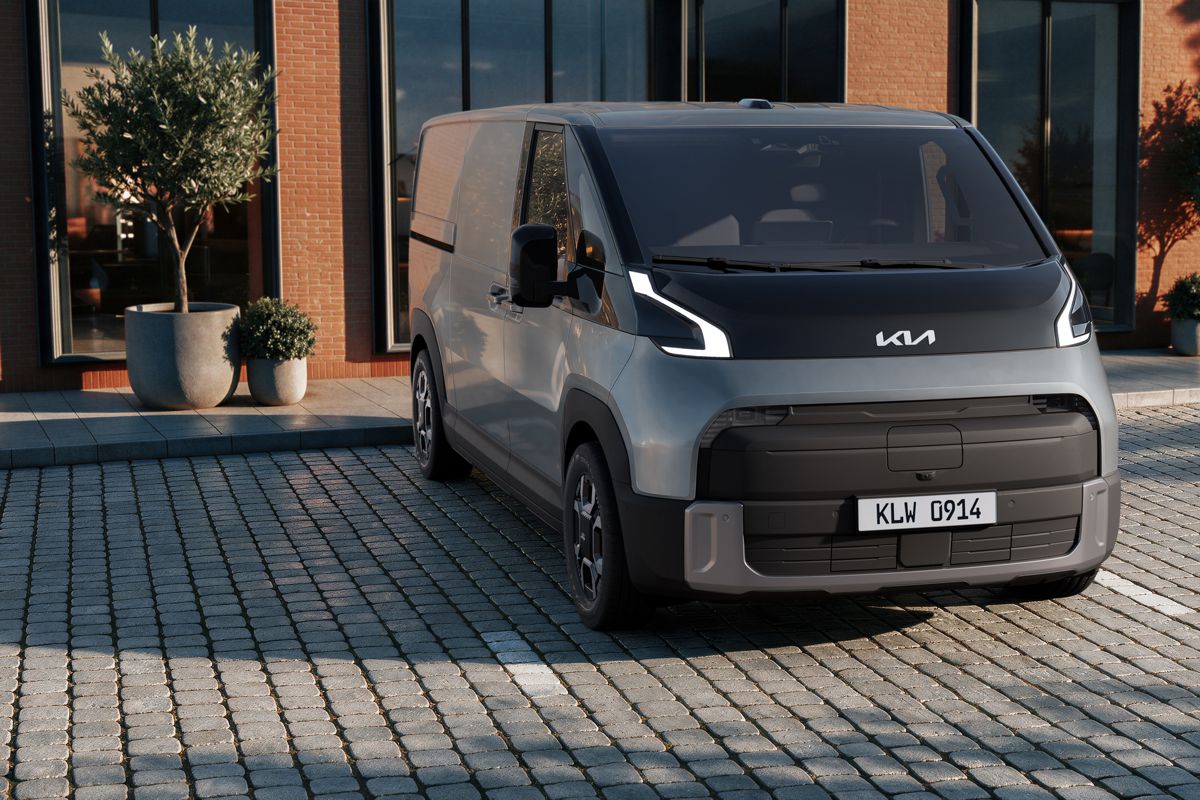
The PV7 uses Kia’s PBV-specific E-GMP.S architecture and will be offered with 71.5kWh and 96.2kWh nickel cobalt manganese battery packs. Depending on market and configuration, the front-mounted electric drivetrain produces up to 200kW and 420Nm. Front-wheel drive will initially be standard, with Kia planning an all-wheel-drive version later.
The headline range figure is more than 460km WLTP for the Long Range Cargo model. Actual operating range will inevitably vary with payload, temperature, route, speed and auxiliary consumption, making the eventual homologated figures for individual configurations particularly relevant to fleet operators.
The architecture operates at 800V, allowing Kia to target a 10-to-80% charging time in the mid-20-minute range when using a 350kW DC charger. Kia currently identifies that figure as subject to confirmation, so it remains preliminary until final production specifications are released.
An unusual addition is the provision for two charging locations. The vehicle has a front AC/DC charging port and can be equipped with an additional AC connection towards the rear, potentially useful for commercial vehicles parked against loading bays, walls, kerbs or other vehicles where charger positioning can restrict access.
Vehicle-to-Load capability allows the traction battery to supply tools and equipment from internal and external outlets, giving trades and mobile service operators another use for the stored energy.
Cargo and Payload
Electric vans present an awkward engineering compromise. Battery capacity improves range but adds mass, while commercial operators need as much remaining payload as possible.
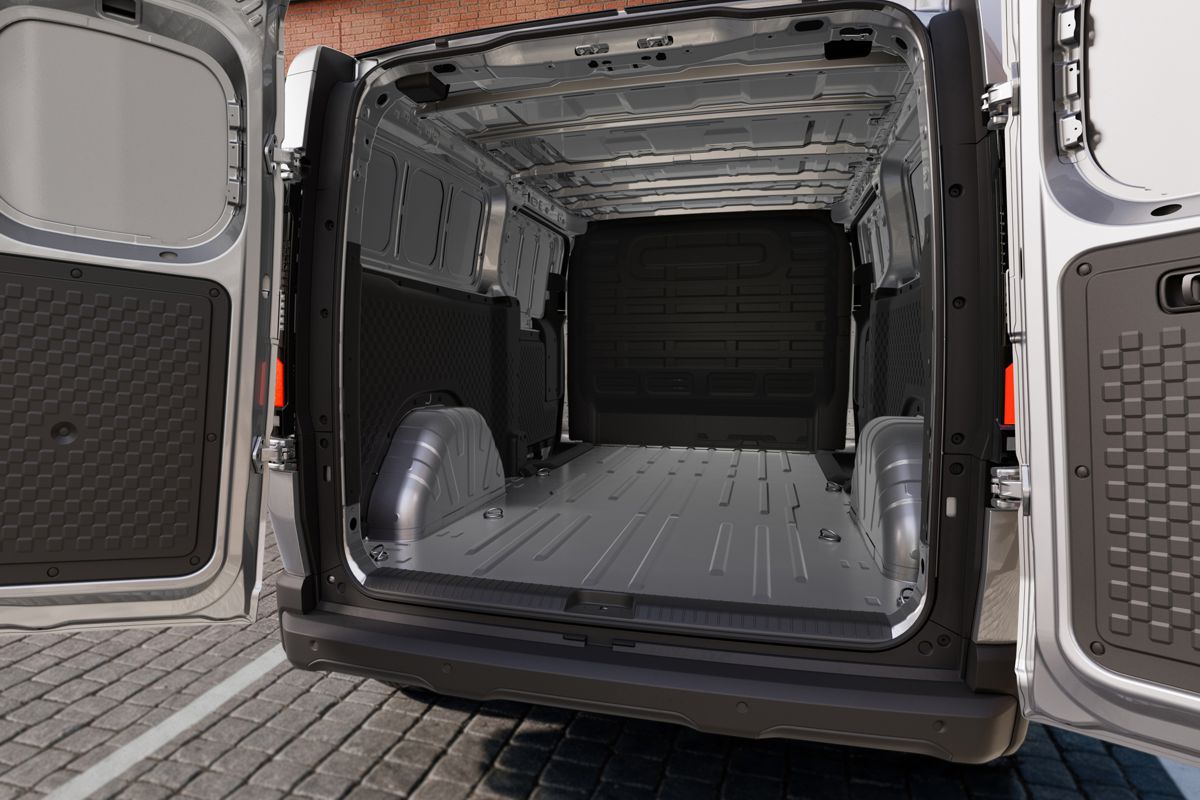
Kia’s answer varies across the range. The Cargo Long offers up to 1,165kg of payload and space for three 800 x 1,200mm Euro pallets, while the Compact reaches a claimed maximum payload of 1,200kg. The Cargo High Roof expands carrying volume from the Long’s 6.1m³ to 8.0m³.
A dedicated heavy-load driving mode changes vehicle behaviour according to payload conditions, intended to maintain predictable performance when the van is carrying substantial loads. The practical value will become clearer once operators can compare loaded energy consumption, braking behaviour and range against conventional and electric rivals.
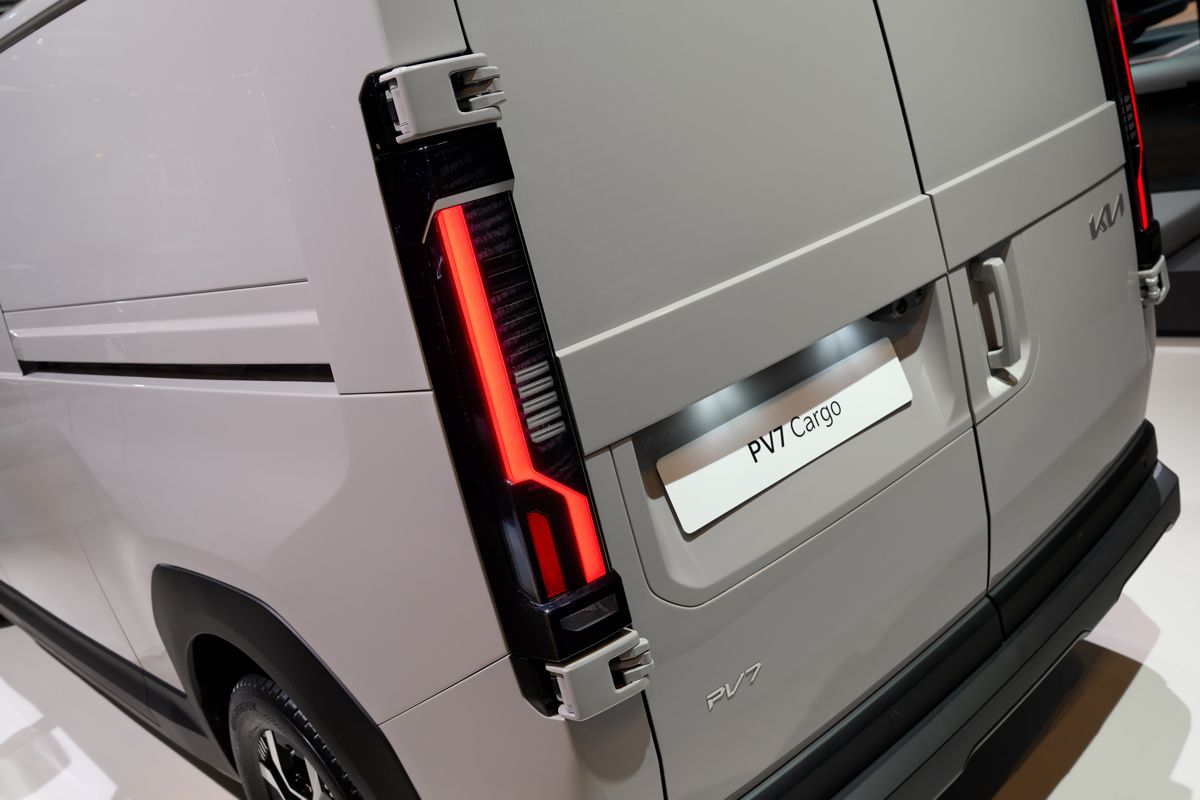
Kia has also concentrated on details that become important when a vehicle is used repeatedly throughout a working day. The Cargo Long’s 550mm loading height reduces the vertical movement required when loading goods manually, while buyers can specify twin-swing rear doors for confined loading areas or a conventional lift-up tailgate. Selected configurations also include a load-through bulkhead.
The power sliding door can close automatically when the driver walks away with the smart key, operators can remotely monitor cargo-door status, and individual cargo doors can be locked and unlocked independently. Small reductions in repeated manual operations can accumulate across hundreds of stops and several years of fleet use.
Driver and Passenger Practicality
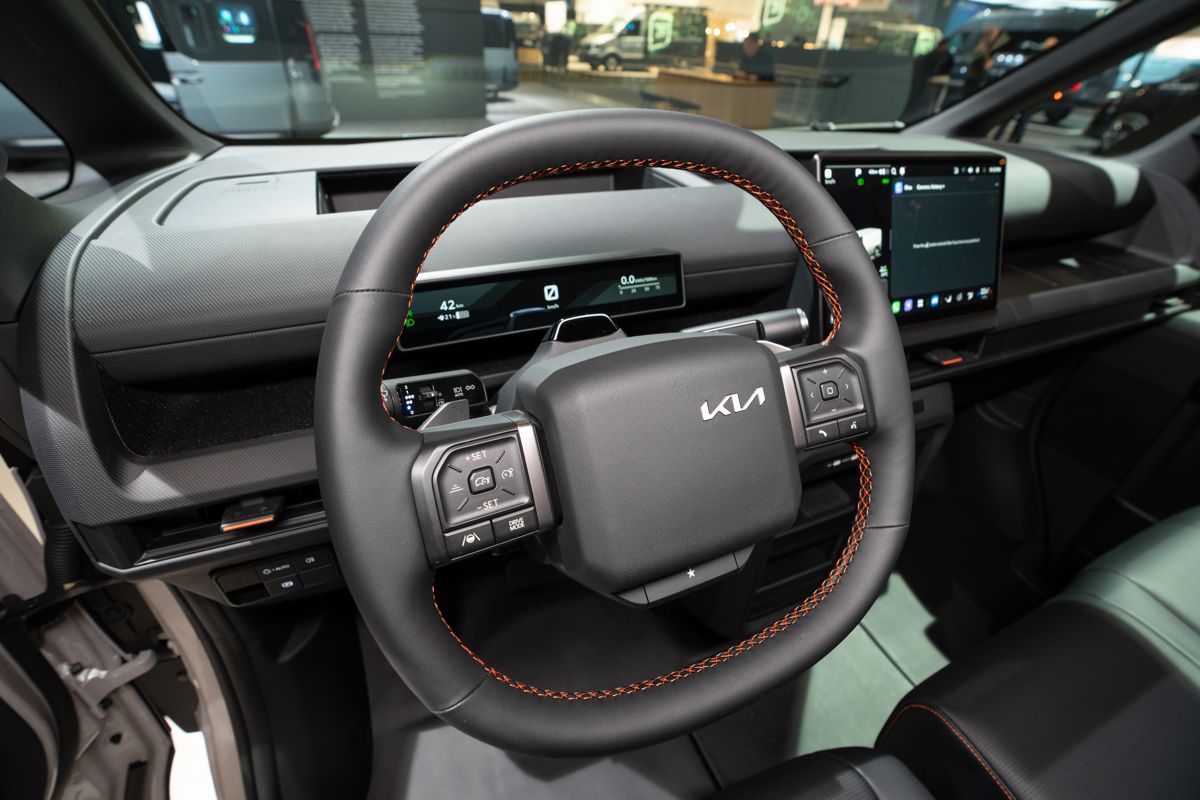
Kia says the driver’s environment was developed around operators who may climb into and out of a vehicle dozens of times during a shift. An A-pillar grab handle, step geometry and seating position have therefore been designed around repeated access, while frequently used functions retain physical controls alongside the digital interface.
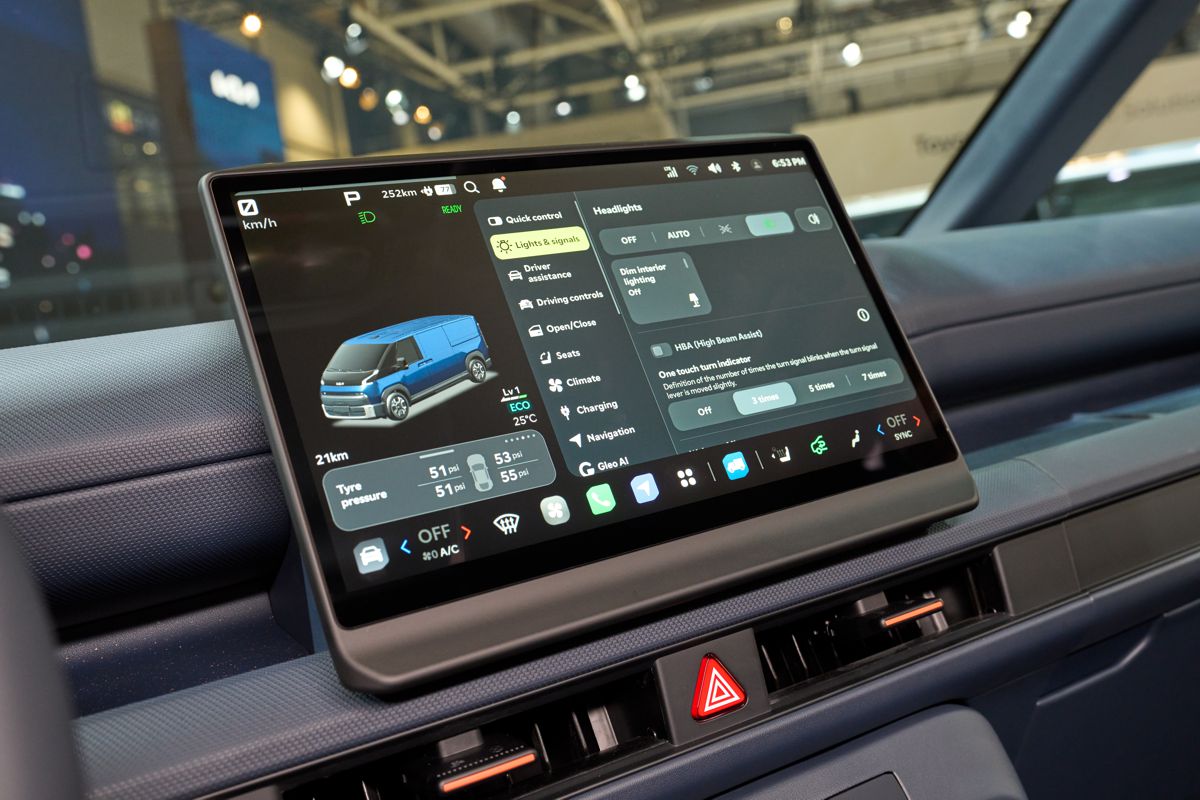
Cargo models use what Kia calls a Mobile Workspace, incorporating open dashboard storage and, on three-seat versions, a centre seatback that folds into a work surface. The cabin includes 12.9-inch and 14.6-inch displays for vehicle functions and connected services.
Passenger versions take a different approach. Depending on market, the PV7 can carry up to nine people globally and 11 in Korea, with removable and configurable seating, rear climate control and power sliding doors available for shuttle, rental and crew transport applications.
The separation between the two interiors reflects distinctly different working environments. A delivery driver repeatedly entering the van, handling paperwork and retrieving equipment has different requirements from passengers travelling between an airport and hotel.
Fleet Software and Uptime Services
Pleos Connect, based on Android Automotive OS, provides navigation, configurable displays, over-the-air updates and access to first- and third-party applications. Kia also plans Gleo AI, a natural-language voice system for vehicle, navigation and messaging functions.
Above that sits the Kia Business Solutions Portal, intended to bring fleet management, charging, maintenance and operational functions together. Standardised fleet-management and vehicle-data APIs provide another route for businesses that already operate their own management platforms.
Kia’s Uptime services add real-time vehicle monitoring, predictive diagnostics and proactive maintenance management. For a delivery company, detecting a developing fault before it removes a vehicle from service can have a straightforward operational value.
These systems also create a continuing flow of vehicle data, maintenance, charging, software and fleet services after the initial vehicle sale, extending Kia’s involvement throughout the working life of the asset.
Manufacturing for Variety
Offering 23 variants creates its own manufacturing problem. Traditional high-volume automotive production works particularly well when factories repeatedly build relatively standardised products, while commercial vehicles introduce body heights, seating layouts, specialist equipment and conversion requirements that produce much greater variation.
Kia has been preparing its manufacturing system accordingly. Its Hwaseong EVO production operation in Korea combines conventional conveyor manufacturing with cell-based processes intended to accommodate higher product variety. The strategy forms part of Kia’s wider PBV programme, designed around lower-volume production of multiple configurations.
Conversions extend that model beyond the factory. Kia’s own conversion facilities will be supplemented by regional partners, allowing specialist bodies and equipment to be produced closer to individual markets.
That network will have to support vehicles ranging from refrigerated bodies and mobile workshops to accessibility vehicles, food trucks and crew carriers. A flexible platform depends on those derivatives being economical to build, maintain and support after delivery.
Building a Commercial Vehicle Business
Kia’s entry into vans is taking place at considerable scale. The company has previously set a target of 250,000 annual PBV sales by 2030, including 100,000 PV7s. Its dedicated PBV manufacturing strategy, conversion partnerships and software services suggest an operation being constructed around the vehicles rather than an electric van simply being added to the passenger-car range.
The PV5 provided the first test. Its unanimous selection as International Van of the Year 2026 gave Kia early credibility among specialist commercial vehicle journalists, an unusual achievement for a manufacturer making its first serious move into the sector.
The larger PV7 will operate in a market where purchasing decisions are heavily influenced by acquisition price, payload, charging access, residual values, body conversions, maintenance response, parts availability, driver acceptance and vehicle uptime. Kia is addressing many of those operational questions before the vehicle reaches customers in 2027.
Its 800V architecture, substantial range, configurable body programme and connected services provide the technical foundations. The next stage will be proving that the surrounding commercial vehicle organisation can deliver the same breadth of support.
Key Industry Questions
- When will the Kia PV7 go on sale? Kia plans to launch PV7 Passenger and Cargo models in Korea and Europe during the second half of 2027. Other markets and derivatives will follow.
- What is the maximum range of the Kia PV7? Kia says the Long Range Cargo version will offer more than 460km of WLTP electric range. Final figures will vary by configuration.
- How much can the Kia PV7 carry? Maximum payload reaches 1,200kg on the Compact Cargo model and 1,165kg on the Cargo Long. The Long can accommodate three standard Euro pallets.
- What is the cargo capacity? The PV7 Cargo Long provides up to 6.1m³ under the VDA measurement standard, increasing to 8.0m³ with the High Roof version.
- How quickly can the PV7 charge? Its 800V electrical architecture is designed to support 10-to-80% charging in the mid-20-minute range from a 350kW DC charger. Kia currently describes this figure as provisional.
- What battery sizes will be available? Kia has announced 71.5kWh and 96.2kWh NCM battery packs.
- Will the Kia PV7 have all-wheel drive? Front-wheel drive is standard at launch. Kia says an all-wheel-drive version is planned subsequently.
- How many PV7 versions are planned? Kia intends to expand the range to 23 variants, including Cargo, Passenger, Chassis Cab and specialist conversions.
- What is Kia’s PBV strategy? The company is combining dedicated electric commercial vehicle hardware with fleet software, vehicle data, charging, maintenance, uptime services and specialist conversion capabilities.
- Where will the PV7 be manufactured? Production will be supported by Kia’s dedicated PBV manufacturing facilities at Hwaseong in South Korea, alongside its conversion centre and regional conversion partners.
Strategic Takeaways
- The PV7 moves Kia from its first PBV into a larger and more demanding part of the commercial vehicle market.
- Payload, load height, charging position and conversion flexibility show considerable attention to day-to-day commercial operation.
- A planned 23-variant range makes flexible manufacturing and the conversion network central to the proposition.
- Connected diagnostics, fleet data and maintenance services extend Kia’s involvement beyond the initial vehicle sale.
- Establishing the support, conversion and fleet infrastructure expected by commercial operators may prove as important as the vehicle engineering itself.