






South Korea Opens Humanoid Data Factory to Train Next Gen Industrial Robots
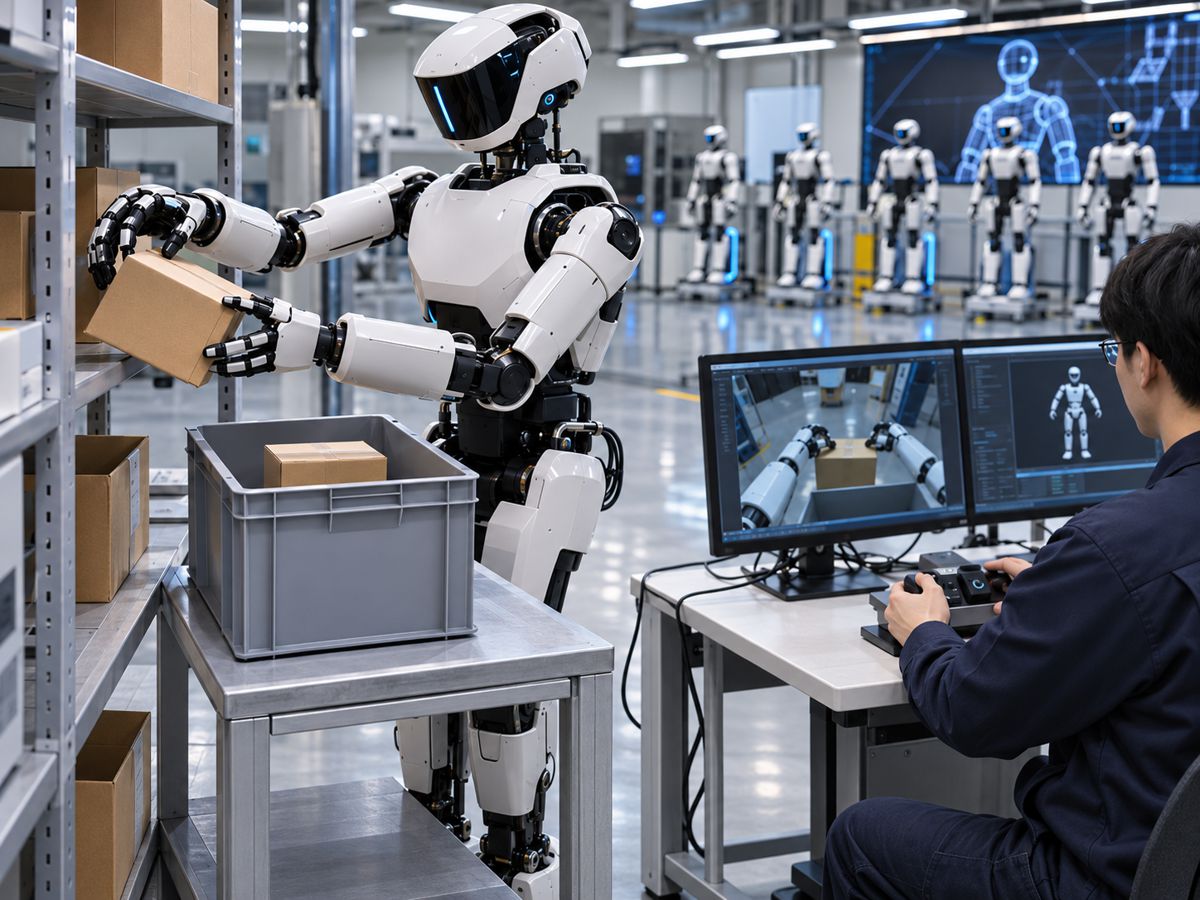
South Korea has opened a dedicated facility for producing the training data humanoid robots need to perform practical tasks, bringing together 12 robots, human operators and artificial intelligence researchers in a programme intended to develop more capable autonomous machines.
Established at the Korea Institute of Machinery and Materials (KIMM) in Daejeon, the AI Humanoid Data Factory was officially unveiled on 3 November 2026. Developed in collaboration with the Electronics and Telecommunications Research Institute (ETRI), it is described by its operators as the country’s first dedicated data production facility for bipedal humanoid robots.
The facility addresses a persistent difficulty in developing general-purpose robotics. Machines can be engineered to walk, balance and manipulate objects, but teaching them to perform unfamiliar tasks reliably requires large quantities of suitable training data. KIMM intends to produce that data domestically, using human-controlled robots to demonstrate physical operations before transferring the resulting skills into artificial intelligence models.
For industries exploring how humanoid robots might eventually fit into their operations, the project offers an insight into the considerable training infrastructure required before machines can move beyond controlled demonstrations and undertake dependable work.
Briefing
- South Korea opened its AI Humanoid Data Factory on 3 November 2026.
- The KIMM and ETRI facility initially operates 12 humanoid robots.
- Human operators remotely control robots to generate physical task-training data.
- Training covers object handling, full-body movement and industrial controls.
- KIMM plans to begin opening the facility to domestic researchers and industry in late 2027.
Teaching Robots Through Physical Demonstration
The facility uses a process known as teleoperation, in which a human operator remotely controls a robot while its movements and interactions with the surrounding environment are recorded. These demonstrations provide examples from which artificial intelligence models can learn how physical tasks are performed, forming part of an approach intended to give robots greater independence when carrying out similar operations.
Conventional industrial robots typically execute programmed movements within relatively predictable operating conditions, making them highly effective for repetitive tasks. General-purpose humanoids are being developed to respond to instructions and handle a greater variety of situations, requiring systems capable of connecting visual information, language, movement and the physical properties of objects.
At the Data Factory, operators guide humanoid robots through activities involving their arms, legs and entire bodies. The resulting information is used to train models intended to interpret instructions, recognise their surroundings and generate appropriate movements without continuous human intervention.
Once trained, the AI models are deployed onto physical robots for testing, with their subsequent performance producing additional data that can be incorporated into later training cycles. Researchers can use this feedback to refine the models, identify weaknesses and assess whether improved capabilities can be reproduced across different tasks and robotic platforms.
A robot successfully performing a task under remote human control has demonstrated its mechanical capabilities and generated useful training material. Whether it can repeat that operation independently, particularly when objects, locations or operating conditions change, remains a separate question that the training and evaluation process must address.
From Household Tasks to Industrial Operations
The opening ceremony provided examples of the activities being recorded, with humanoid robots retrieving items from a refrigerator, handling laundry and arranging a sofa. More industrially relevant demonstrations involved operating buttons and levers inside a vehicle, while KAIROS, a Korean-developed humanoid robot, performed precise object manipulation and full-body motion imitation.
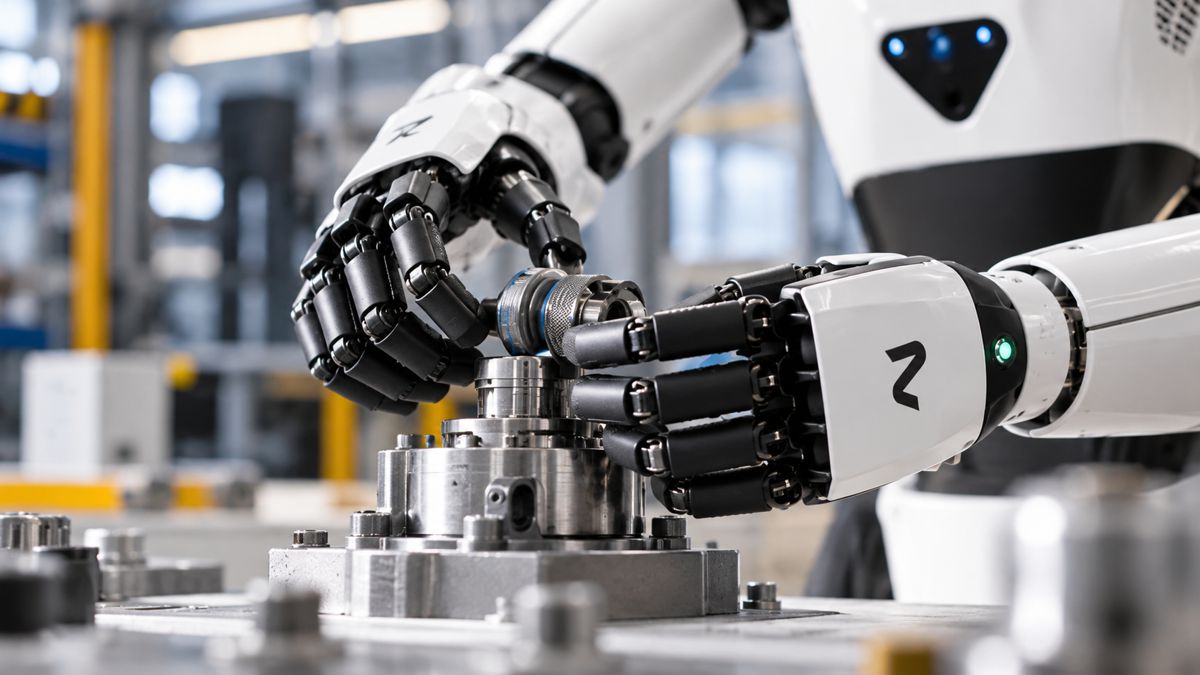
These activities may appear relatively straightforward, but they involve combinations of perception, positioning, force control and coordinated movement. Picking up an object requires a robot to locate it, position its hand, establish a suitable grip and move it without dropping or damaging it. Repeating the operation with an unfamiliar object, or one placed at a different angle, introduces additional demands on the machine’s ability to adapt.
Vehicle controls present another set of challenges because buttons and levers have different physical resistance, movement ranges and operating sequences. A robot must position itself accurately enough to interact with those controls while maintaining its balance, making even simple operations dependent on several coordinated mechanical and computational processes.
The programme is also intended to support the wider K-Humanoid standard platform, with researchers working towards AI models that can be adapted to different robots rather than restricted to a single machine design. The development of transferable skills could eventually reduce the amount of task-specific training required when introducing new robotic hardware, although differences between machines remain a substantial engineering consideration.
KIMM has not published comparative autonomous task success rates, operating durations or dataset production volumes in its opening announcement. Such measurements will provide a more useful basis for assessing progress as the programme develops, particularly when trained robots begin tackling unfamiliar tasks without direct human control.
South Korea’s Physical AI Programme
The Data Factory forms part of South Korea’s wider investment in physical AI, the application of artificial intelligence to machines that interact directly with their surroundings. It is being developed by the Global TOP Strategic Research Group for Self-Growing AI Humanoids, led by KIMM under Dr Chan Hun Park, with support from the Ministry of Science and ICT.
The initiative is connected to the government’s K-Moonshot AI Humanoid Mission, which aims to strengthen domestic humanoid technologies and reduce reliance on capabilities developed overseas. Producing training data within Korea gives researchers greater control over the physical demonstrations used to develop their models, while allowing the programme to accumulate technical expertise and research assets that can be shared across domestic institutions.
Internationally, the development of humanoid robotics increasingly involves the training systems and datasets that underpin intelligent behaviour, alongside advances in actuators, sensors and mechanical design.
NVIDIA’s Isaac GR00T platform, for example, combines physical robot demonstrations, simulated movements and other training sources to develop foundation models for humanoid reasoning and movement. Its development environment supports a workflow extending from data collection and model training to evaluation and deployment, allowing researchers to test robotic behaviours before introducing them into physical operating environments.
Google DeepMind is pursuing related research through its Gemini Robotics programme. The Gemini Robotics 2.5 models, introduced in November 2026, extend the company’s work on vision-language-action systems capable of interpreting instructions and generating physical movements. Google has demonstrated capabilities across different robotic configurations, including Apptronik’s Apollo 2 humanoid and the Franka Duo platform, although the degree of adaptation and performance remains dependent on the task and hardware involved.
These organisations are pursuing different approaches and commercial objectives, but their research shares a demanding requirement: training models on information that adequately represents the physical situations robots are expected to encounter.
Large quantities of demonstration data can improve the opportunities for learning, yet the diversity and relevance of those demonstrations remain critical. A robot trained repeatedly on a narrow selection of successful operations may perform well in familiar conditions while struggling with objects or situations outside its training experience.
Korea’s dedicated physical data production facility provides researchers with direct access to the machines generating that information and the opportunity to refine demonstrations through repeated testing. Its domestic focus also reflects the strategic value increasingly attached to AI training resources, particularly where those resources depend on specialised hardware and physical experimentation.
Construction and Industrial Applications
Many industrial activities still depend on equipment designed around human movements, from vehicle controls and machinery interfaces to inspection stations and maintenance procedures. Humanoid robots capable of manipulating these existing systems could eventually undertake selected operations without requiring every workstation or machine to be redesigned around conventional automation equipment.
The vehicle control demonstrations at KIMM provide an early example of the physical interactions involved. Pressing switches, moving levers or carrying out repetitive inspection procedures might become suitable applications in industrial facilities where operating conditions are sufficiently consistent and the equipment can be accessed safely.
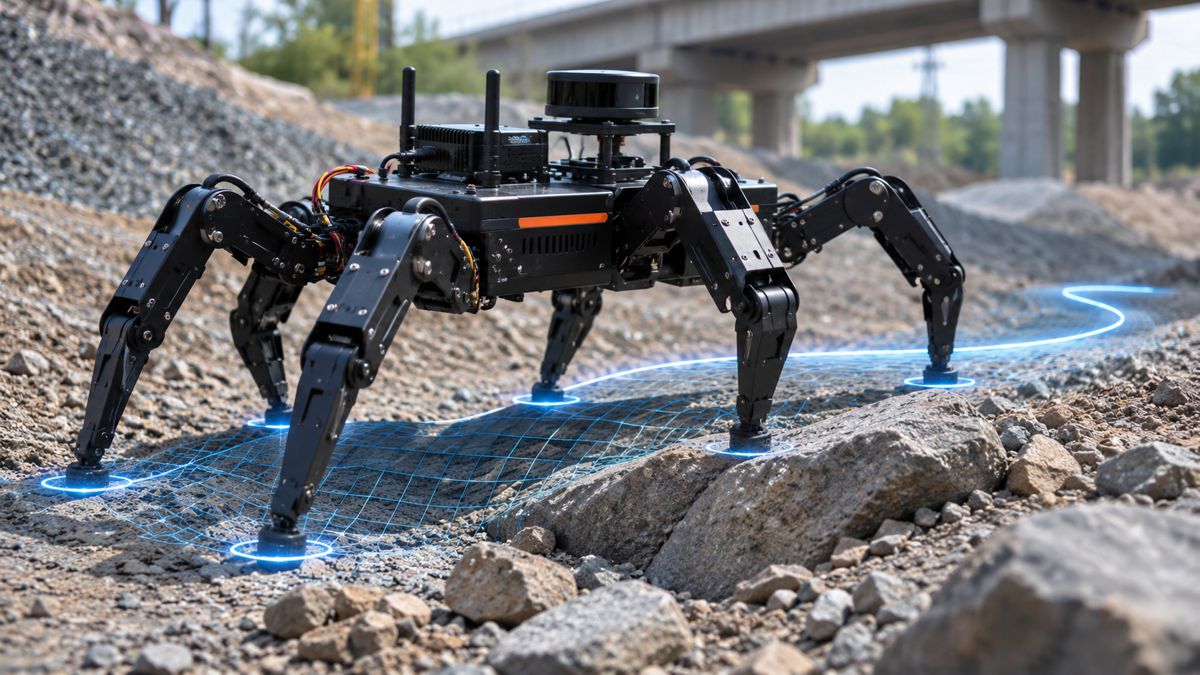
Construction sites present a considerably more demanding environment. Uneven surfaces, mud, dust, weather exposure, changing layouts and the movement of workers and heavy machinery create conditions in which a robot must continually adapt its positioning and movements. Manipulating construction materials introduces further complications involving weight, friction, stability and the consequences of an unsuccessful lift or unexpected movement.
Even relatively routine activities can change significantly between locations. A component that is easy to handle on a clean workbench may be awkward to manipulate when surrounded by other materials or positioned inside an incomplete structure. Tools may require different gripping forces, while work surfaces can be unstable or inaccessible without considerable repositioning.
These challenges extend beyond the capabilities of the AI model itself. The robot must possess sufficient mechanical strength, dexterity and balance to perform the required operation, supported by sensors and control systems that can respond quickly enough to changes in its environment.
Safety would also require extensive evaluation before humanoid robots could routinely work alongside construction personnel or operate equipment under load. A machine trained to manipulate vehicle controls in a laboratory has not necessarily demonstrated that it can operate construction machinery safely, particularly where a mistaken movement could endanger workers or damage equipment.
There are practical questions about battery endurance, energy consumption, supervision, maintenance and the cost of deploying humanoid machines compared with existing methods. For many repetitive construction and manufacturing processes, specialised robots or purpose-built machinery may continue to offer a simpler engineering solution.
Humanoid designs may prove more useful where tasks change frequently, physical access is restricted or equipment has already been designed for human operation. Industrial maintenance, inspection and selected materials-handling activities could offer opportunities to develop these capabilities under more controlled conditions before attempting deployment in the unpredictable environment of an active construction site.
Scaling Data Collection and Robot Training
The initial fleet of 12 humanoid robots gives KIMM a starting point for expanding its research programme, with plans to increase the number of machines and broaden the range of tasks represented in its training datasets.
Expanding the facility will require consistent data collection methods and reliable testing procedures to establish whether improvements in robot performance can be reproduced across different machines and operating conditions. The usefulness of the resulting data will depend on the quality of the demonstrations and the extent to which they cover variations in objects, movements and working environments.
Transferring physical skills between robots presents another challenge. Humanoid machines may share a broadly similar body arrangement, but differences in joint geometry, actuators, sensors, balance systems and hand designs can change how they execute the same task. An action learned on one platform may require further adaptation before another machine can reproduce it successfully.
Developing models that can operate across different humanoid platforms is one of the programme’s stated objectives, potentially allowing research institutions and manufacturers to build on shared training resources while accommodating their own mechanical designs.
KIMM plans to begin gradually opening the Data Factory to domestic industry, universities and research institutions towards the end of 2027. That timetable gives the programme an opportunity to establish its initial training and evaluation methods before expanding participation, while collaboration with external organisations could introduce additional tasks, equipment configurations and application requirements.
Seog-Hyeon Ryu, President of KIMM, described the value of establishing domestic training capabilities: “Securing large volumes of high-quality robot task data is essential to national technological competitiveness, and the establishment of this Data Factory marks an important starting point for building Korea’s own robot AI training data and technological assets.”
Ryu also confirmed that collaboration between industry, academia and research organisations would support the continued development of KAIROS and the planned opening of the facility to external participants.
Testing and Industrial Deployment
As the Korean programme expands, its researchers will have an opportunity to assess how effectively robot-learning models transfer between machines and cope with increasingly unfamiliar operating conditions. The planned involvement of industrial and academic partners could also broaden the range of physical activities represented in its training data, particularly where organisations identify tasks that might eventually benefit from more flexible automation.
The development of humanoid robots will continue to depend on advances in mechanical engineering, sensing, control systems and artificial intelligence, but generating reliable examples of physical work has become a substantial research activity in its own right.
KIMM has established a facility dedicated to producing and evaluating those examples, with its first 12 robots providing the foundation for a larger programme. The next measure of progress will be the extent to which machines trained on those demonstrations can carry out practical tasks independently, repeatedly and safely.
For construction and infrastructure, where physical working conditions are rarely as predictable as a laboratory, that will be a more demanding test than learning to operate a switch or pick up an object.
Key Industry Questions
- What is South Korea’s AI Humanoid Data Factory? It is a dedicated research facility at KIMM in Daejeon that produces physical task data for training humanoid robot AI models. Developed with ETRI, it opened on 3 November 2026.
- How many robots does the facility operate? The facility initially operates 12 humanoid robots, with plans to increase the fleet and expand the range of tasks used for training.
- How do humanoid robots learn from human operators? Human operators remotely guide robots through physical tasks while movement and interaction data is recorded. AI models are trained using this information and subsequently tested on physical robots to evaluate their performance.
- What is the KAIROS humanoid robot? KAIROS is a Korean-developed humanoid robot being advanced through KIMM’s research programme. Its demonstrations have included precise object manipulation and imitation of full-body human movements.
- Can these robots currently work independently on construction sites? The announcement does not establish that capability. The programme focuses on producing training data and developing autonomous behaviour, with no published evidence of routine independent construction-site operations.
- Why is physical robot training data important? Robots require examples of physical interactions to learn movements, object handling and task execution. Diverse and reliable training information can help models develop capabilities that are difficult to establish through conventional programming alone.
- Can the same AI model control different humanoid robots? Cross-platform transfer is an active research objective, although mechanical differences between robots can require additional training and adaptation. KIMM intends to develop models applicable across multiple humanoid platforms.
- When will external organisations be able to use the facility? KIMM plans to begin gradually opening the Data Factory to domestic industry, academic institutions and research organisations from the end of 2027.
Strategic Takeaways
- Dedicated training facilities are becoming an important part of humanoid robotics development, requiring investment in physical machines, data collection and model evaluation.
- The quality and diversity of recorded physical demonstrations can influence how effectively robots learn to operate beyond familiar laboratory conditions.
- Cross-platform AI models could reduce duplicated development work, although differences in robotic hardware will continue to require adaptation and testing.
- Construction applications face demanding requirements for reliability, physical capability and safety, with specialised automation remaining preferable for many established tasks.
- Domestic control over robot-training data provides South Korea with a strategic research asset and a foundation for collaboration between manufacturers, universities and public institutions.