Honda Backs Research into Trust Between Humans and Industrial Robots
A robot may perform a manufacturing task accurately, but that does not necessarily mean the people working alongside it understand what it will do next. As artificial intelligence gives industrial machinery greater autonomy, engineers face the challenge of assessing when automated systems can be relied upon and when human intervention is necessary.
California State University, Fullerton is investigating that relationship through a one-year research and education project supported by a nearly $100,000 contribution from Honda. Led by mechanical engineering assistant professor Bingling Huang, the initiative examines how trust between humans and AI-enabled robots can be understood, measured and incorporated into engineering education.
The Building Trust in Human–AI Robotics Teaming for the Future Manufacturing Workforce project involves 20 selected students, while more than 200 students are expected to encounter trustworthy AI concepts through existing engineering courses, demonstrations and practical activities.
Briefing
- Honda has contributed nearly $100,000 to a one-year human–AI robotics project at California State University, Fullerton.
- Mechanical engineering assistant professor Bingling Huang is leading the research.
- Twenty students were selected to participate, with more than 200 expected to receive exposure to trustworthy AI concepts.
- Students will develop a virtual manufacturing environment to examine robot behaviour and human interaction.
- The programme focuses on helping future engineers evaluate the reliability, transparency and suitability of autonomous systems for human collaboration.
Understanding Trust in Industrial Automation
Industrial robots have traditionally performed structured tasks within controlled workspaces, following programmed sequences and operating under established safety arrangements. AI-enabled systems can introduce greater flexibility, allowing machinery to recognise components, respond to changing conditions and support decisions that previously required direct human supervision.
Such capabilities create new demands on the people responsible for operating and managing automated equipment. A system may perform consistently under familiar conditions yet respond differently when confronted with unexpected objects, incomplete information or unfamiliar operating circumstances.
Huang’s research treats trust as an engineering consideration that can be investigated and designed for, rather than simply a question of whether workers feel comfortable around machinery.
“Trust is a key factor in successful human-AI teaming for the future of manufacturing, just as it is in human teams. Engineering education must help students understand how to build trust in these interactions,” Huang said.
Excessive confidence in automation can encourage operators to rely on systems beyond their demonstrated capabilities. Insufficient confidence, meanwhile, may discourage the adoption of equipment that has been properly assessed. Neither situation is resolved simply by making robots more sophisticated.
The programme aims to help engineers understand how machine behaviour influences human expectations, and how autonomous systems can be evaluated for appropriate collaboration.
Industrial Experience Reveals the Human Challenge
For mechanical engineering graduate student Rahul Pravinbhai Lunagariya, one of the project’s 20 selected participants, the questions being investigated are familiar from his previous industrial experience.
Before beginning graduate studies at Cal State Fullerton, Lunagariya worked with large-scale conveyor and automation systems at a major salt producer in India, where equipment was used for coal transportation and handling heavy industrial components. He subsequently worked as a production engineer at an automotive parts manufacturer.
Across those environments, he encountered uncertainty about automation that affected how workers and businesses approached the technology.
“Across these experiences, I noticed the same pattern: Workers either didn’t fully trust the automation systems around them or the company avoided automation altogether,” Lunagariya said.
“The reason was a lack of understanding and transparency around how these systems behaved. Workers couldn’t predict what the machines would do next, and that uncertainty made them hesitant or resistant.”
His observations provide a practical starting point for research into human–robot collaboration. Even where machinery can perform a task successfully, uncertainty about its behaviour may influence whether people are willing to work with it.
Lunagariya, who also serves as president of the university’s Society of Manufacturing Engineers student chapter, will gain experience in simulation-based research, human factors, data analysis and experimental design through the project.
Developing a Virtual Manufacturing Environment
Students will develop a simulated manufacturing environment in which they can assign tasks to virtual robots and observe their responses.
The virtual factory will provide a controlled setting for exploring interactions between people and autonomous systems. Students can examine robot behaviour under different scenarios, investigate how tasks are allocated and consider the factors that influence human confidence in automated decisions.
Simulation allows these questions to be explored without requiring every experiment to involve physical production machinery. It also provides opportunities to compare responses and investigate how human–robot trust might be defined and measured.
The project will integrate trustworthy AI concepts into existing engineering courses through demonstrations, simulation-based activities and student assignments, extending the educational programme beyond the initial research group.
“The purpose of the project is to give students in-depth knowledge on how people and AI-driven robots can work together safely and effectively in manufacturing environments,” Huang said.
The university has not yet reported experimental findings or demonstrated improvements in human–robot trust. The initiative remains a research and educational programme, with its methods and outcomes still to be developed.
Preparing Engineers for AI-Enabled Manufacturing
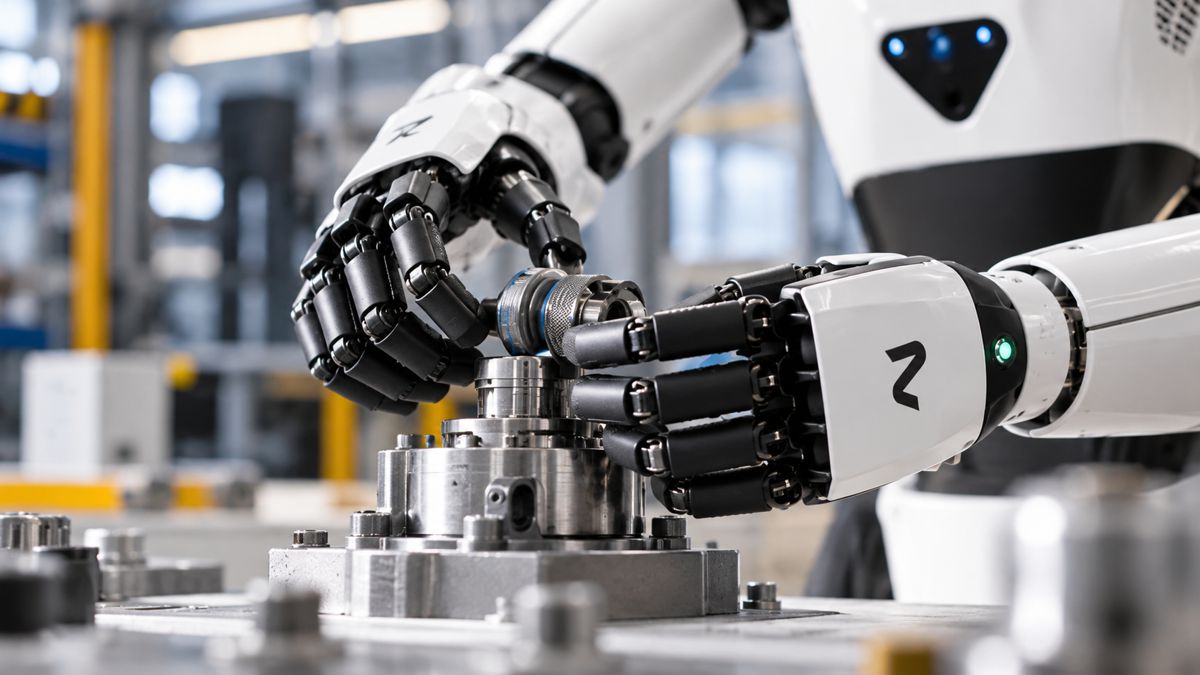
Artificial intelligence can support a growing range of manufacturing operations, including component recognition, robotic assembly, product inspection, predictive maintenance and production scheduling.
The human interaction requirements differ between applications. An automated inspection system identifying defective components presents different challenges from a robotic arm working near personnel or a production system recommending changes to manufacturing sequences.
Engineers responsible for these technologies need to understand how systems make decisions, recognise their operating limitations and evaluate their performance under different conditions. Operator confidence must also be distinguished from demonstrated safety, which depends on appropriate risk assessment, safeguards and technical validation.
Huang wants students to develop these capabilities alongside their conventional engineering knowledge.
“This project will help our students become AI-ready engineers,” Huang said. “They will know how to use AI and robotics tools and also how to evaluate whether an autonomous system is understandable, reliable and appropriate for human collaboration.”
The programme introduces human factors into the study of intelligent machinery, giving future engineers opportunities to examine how people interpret and respond to automated behaviour.
Applications Beyond the Factory
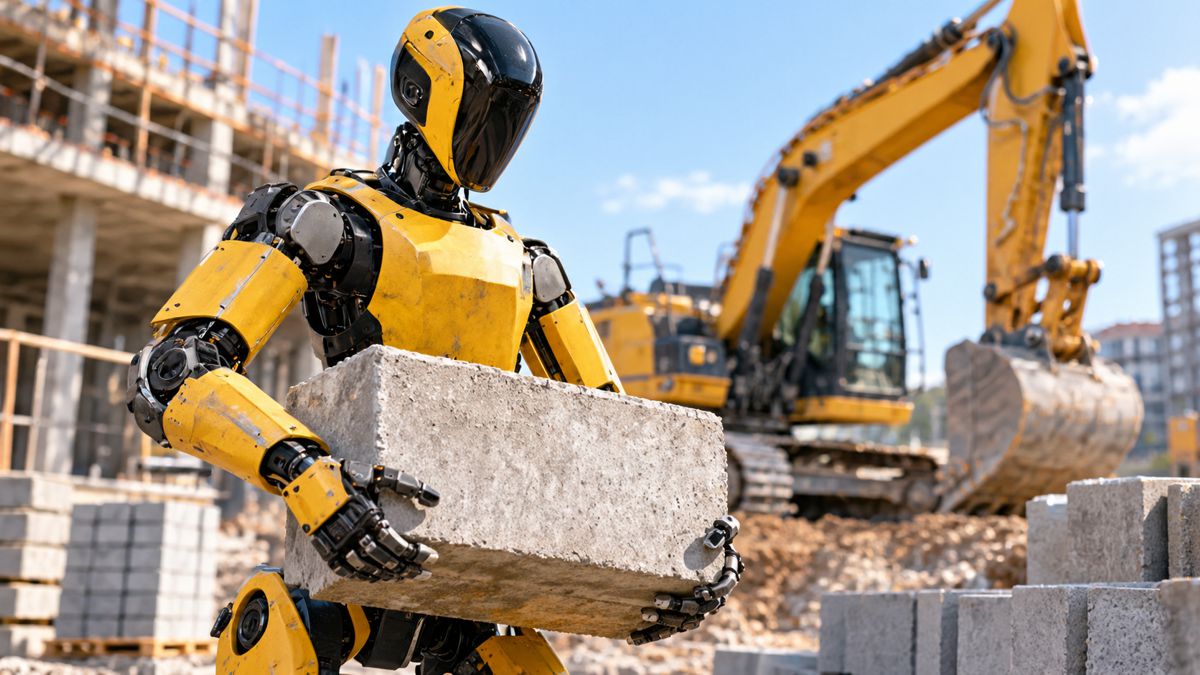
The questions being explored at Fullerton also arise in construction, where autonomous machinery increasingly operates in environments shared with people and other equipment.
An automated excavator, for example, may be capable of following a planned digging sequence, but the supervising operator must understand what the machine can recognise, which decisions it can make independently and when direct intervention is required.
Construction sites introduce complications rarely encountered in controlled manufacturing environments. Ground conditions vary, work areas change and personnel and equipment frequently move through the operating space. These conditions place additional demands on perception systems, operational safeguards and human supervision.
Research conducted using simulated manufacturing robots cannot establish how autonomous construction machinery will perform in such environments. Application-specific testing, safety engineering and validation remain essential.
Nevertheless, the underlying questions of predictability, transparency and appropriate human reliance are closely related. Engineers developing autonomous construction systems must consider how operators understand machine behaviour as well as how effectively the equipment performs its assigned tasks.
The Honda-supported initiative is not developing a commercial robotic product. It is examining how the next generation of engineers can be prepared to work with intelligent machines and evaluate their behaviour.
For an industrial workforce increasingly expected to work with autonomous equipment, the ability to assess machine behaviour may become as useful as the ability to programme it.
Key Industry Questions
- What is the Honda-supported robotics project at Cal State Fullerton? It is a one-year research and engineering education initiative investigating trust between humans and AI-enabled manufacturing robots, led by mechanical engineering assistant professor Bingling Huang.
- How much funding has Honda provided? Honda has contributed nearly $100,000 to support the project. The university’s announcement does not specify the exact amount or detailed funding arrangements.
- How many students are involved? Twenty students were selected to participate in the project, while more than 200 students are expected to encounter trustworthy AI concepts through associated engineering courses and activities.
- How will the research investigate human–robot trust? Students will develop a virtual manufacturing environment, assign tasks to simulated robots and observe their responses. The programme also includes human-factors research, data analysis and experimental design.
- Why can workers be reluctant to trust industrial automation? Uncertainty about how automated systems behave can make workers hesitant to rely on them. The project is examining how engineers can better understand and address these concerns.
- Does trusting an autonomous robot mean it is safe? No. Human confidence does not establish technical safety. Robotic systems require appropriate risk assessment, safeguards and validation regardless of operator perceptions.
- What manufacturing applications can benefit from AI-enabled robotics? Applications include robotic assembly, component recognition, automated inspection, predictive maintenance and production scheduling. The degree of autonomy and human supervision required varies by application.
- Could the research apply to autonomous construction equipment? The human-factors principles may be relevant to autonomous excavators and other construction machinery, although findings from manufacturing simulations would require further validation in construction environments.
Strategic Takeaways
- Engineering education: Human–robot collaboration is becoming a subject for formal engineering investigation alongside mechanical design, automation and control systems.
- Workforce adoption: Uncertainty about automated machine behaviour can discourage workers and businesses from using otherwise capable technology.
- Simulation: Virtual manufacturing environments provide opportunities to study human responses and autonomous behaviour before conducting experiments with physical equipment.
- Operational assurance: Appropriate reliance on automation requires an understanding of machine capabilities, supported by independent safety assessment and technical validation.
- Construction applications: Human supervision and predictable machine behaviour remain important considerations as autonomous equipment moves into more variable operating environments.