Engineering Better Performance Into Industrial Workwear
A workwear garment can satisfy its basic protective purpose and still make a difficult shift harder. Heat builds inside it, sweat remains against the body, movement becomes restrictive, fit deteriorates after repeated laundering, and fabrics intended for demanding industrial environments gradually lose the characteristics that made them suitable in the first place.
That has pushed workwear development beyond the traditional question of whether a garment provides the required protection. Fibre engineering, fabric construction and garment design are increasingly being used to manage comfort, movement, moisture, visibility, electrostatic behaviour and durability alongside established safety requirements.
The LYCRA Company is taking that argument directly into the occupational safety market with the North American debut of its FIBERS THAT WORK portfolio at the NSC Safety Congress & Expo in Indianapolis. It will be the company’s first time exhibiting at the event, bringing textile technologies intended to address some of the practical problems encountered when industrial clothing has to perform through long shifts and repeated use.
The portfolio includes LYCRA ANTISTATIC fibre and LYCRA T400 fibre, alongside technologies addressing moisture management and visibility. The company is positioning comfort and wearability as functional characteristics of workwear rather than considerations that begin once protection has been addressed.
“Comfort is fundamental to workwear performance,” said Tara Maurer-Mackay, product category director, branded specialty products at The LYCRA Company. “Our innovations help workers adapt to changing conditions throughout the day with fibers that move moisture to keep them dry if they sweat, stretch that allows them to move freely, and solutions that enhance visibility for safety. Leveraging our decades of innovation in comfort technologies, we are uniquely positioned to help our customers create garments that workers can trust in demanding environments.”
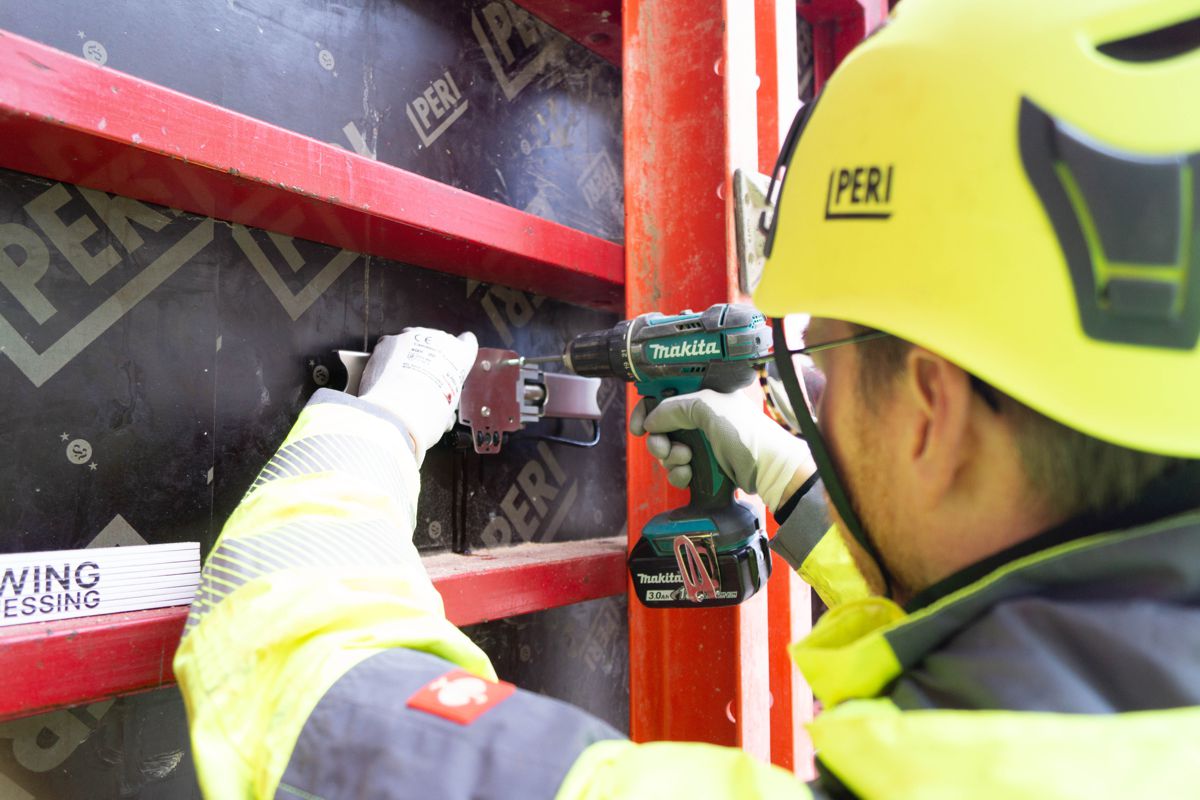
For construction and infrastructure employers, that approach intersects with a familiar problem. Workwear has to perform during real shifts, often through repeated cycles of bending, climbing, kneeling, driving, lifting and moving between different temperatures and working conditions. The textile itself becomes part of the worker’s operating environment.
Briefing
- The LYCRA Company will make its first appearance at the NSC Safety Congress & Expo in Indianapolis from 14 to 16 September 2026.
- Its FIBERS THAT WORK portfolio addresses moisture management, stretch, visibility, anti-static performance and durability in workwear.
- LYCRA ANTISTATIC fibre is designed to provide inherent anti-static performance while retaining the comfort and fit associated with the LYCRA brand.
- LYCRA T400 fibre is being promoted for durable comfort stretch, moisture management and consistent fit, with the company stating that suitable fabrics can withstand up to 100 industrial washes.
- The company’s move into the NSC event places textile engineering in front of occupational safety professionals and workwear decision-makers.
Workwear as an Engineered System
The demands placed on industrial clothing are unusually contradictory. Garments may need to be robust without becoming excessively heavy, protective without unnecessarily restricting movement, and capable of surviving repeated washing without losing their shape or performance.
Construction adds another layer of complexity. A worker can move from a vehicle cab to an exposed site, perform physically demanding work and then return to relatively sedentary duties within the same shift. Weather, temperature and exertion can change rapidly while the clothing remains the same.
Moisture management therefore has a practical role beyond simple comfort. Fabrics that help move moisture away from the body can make prolonged physical work more tolerable, particularly when garments must be worn for an entire shift. Stretch becomes similarly useful when workers are repeatedly climbing into machinery, kneeling, working at ground level or moving through confined areas.
Durability is equally important because industrial workwear lives a harder life than ordinary clothing. Washing is frequent, and some garments pass through commercial or industrial laundry systems rather than domestic machines. LYCRA T400 fibre is intended for fabrics requiring comfort stretch, moisture management and shape retention while maintaining performance through repeated use, with The LYCRA Company stating that fabrics using the technology can withstand up to 100 industrial washes.
That figure is a manufacturer performance claim rather than a universal service-life guarantee. The longevity of a finished garment will depend on its complete fabric construction, other materials, manufacturing quality, laundering process and operating conditions. It nevertheless introduces a legitimate procurement consideration where clothing is issued across large workforces and repeatedly cleaned and replaced.
A garment that maintains its fit and functional characteristics for longer may alter replacement cycles and whole-life clothing costs, although any such advantage has to be demonstrated in the finished garment and the conditions in which it will actually be used.
Managing Electrostatic Risk
Static electricity introduces another requirement in working environments where electrostatic behaviour forms part of the clothing specification. LYCRA ANTISTATIC fibre is designed to provide inherent anti-static performance while retaining the stretch and fit associated with LYCRA materials.
The technology is one component of the finished garment rather than a substitute for application-specific protective equipment. Fabric construction, garment design, working conditions and the standards applicable to the particular hazard remain part of the specification. As workwear incorporates more functions, fibre technologies give manufacturers additional ways to combine those requirements within the finished material.
Comfort and Procurement
Comfort can be difficult to quantify in procurement because it sits beside specifications that are easier to measure. Garments can be checked against standards, material weights compared, washing requirements documented and unit prices placed into a spreadsheet. How the clothing feels after eight or ten hours of bending, climbing, driving or working outdoors is harder to express as a purchasing metric.
Yet wearability has practical consequences. Workers still have to use the clothing while operating equipment, carrying out maintenance, directing traffic, working around utilities or spending long periods outside. Protection and compliance remain fundamental where hazards demand them, but the finished garment also has to accommodate movement, temperature, exertion and repeated use.
The LYCRA Company’s move into the occupational safety exhibition market puts the fibre manufacturer closer to the people specifying and purchasing that clothing. The NSC Safety Congress & Expo at the Indiana Convention Center brings together safety professionals and suppliers across personal protection, workplace technology and occupational risk.
For a fibre producer, that audience sits considerably further downstream than the traditional textile supply chain. Safety managers and industrial employers may never specify an individual fibre, but their requirements ultimately influence the garments that brands, mills and manufacturers are asked to produce.
“Today’s workwear market requires solutions that go beyond protection,” said Melissa McGlynn, senior strategic account manager. “Brands and manufacturers seek to enhance comfort, durability, and performance while differentiating their products in the market. The NSC Safety Congress & Expo is the ideal venue to demonstrate how our fiber technologies address these evolving needs.”
Designing for the Working Day
Construction equipment has undergone decades of ergonomic development for much the same reason. Cab suspension, seating, climate control, visibility and control placement do not replace the fundamental performance of an excavator, loader or truck, but they influence how effectively an operator can use it over a working day. Workwear is increasingly being engineered around the same practical reality: the human being still has to function inside it.
Protection remains the starting point where hazards require it, but manufacturers now have considerably greater scope to engineer what happens while a garment is being worn. Moisture can be managed, stretch incorporated into fabric structures, electrostatic behaviour controlled and materials selected for repeated industrial laundering.
The FIBERS THAT WORK portfolio also includes products made with recycled and renewable materials, according to The LYCRA Company. Those options still have to satisfy the characteristics that determine whether industrial clothing succeeds in practice, including performance, durability, cost and suitability for its intended environment.
The result is a more technical product than the apparently simple pair of work trousers, high-visibility garment or uniform might suggest. Construction has long looked for engineering in machines, structures, materials and digital systems. Increasingly, there is engineering in the clothing worn by the people using them too.

Key Industry Questions
- What is the FIBERS THAT WORK portfolio? It is The LYCRA Company’s collection of fibre technologies for workwear, uniforms and protective apparel, addressing characteristics including moisture management, stretch, visibility, anti-static performance and durability.
- What is LYCRA T400 fibre intended to provide? The company positions LYCRA T400 fibre for durable fabrics requiring comfort stretch, consistent fit and moisture management. It states that suitable fabrics can withstand up to 100 industrial washes.
- Does the 100-wash claim apply to every finished garment? No. It is a manufacturer performance claim associated with the fibre technology and fabrics using it, not a guarantee that every finished garment will survive 100 industrial washes. Garment construction, other materials, laundering conditions and use will affect service life.
- What does LYCRA ANTISTATIC fibre do? It is designed to provide inherent anti-static performance while allowing manufacturers to retain stretch, comfort and fit in suitable workwear fabrics.
- Does anti-static fibre replace certified protective clothing? No. Protective clothing must be selected for the hazards and standards applicable to the workplace. Fibre technology is one component of the finished garment.
- Why is stretch relevant to construction workwear? Construction workers routinely bend, climb, kneel, enter and leave machinery and work in restricted positions. Appropriately designed stretch fabrics can provide greater freedom of movement without relying solely on looser garment construction.
- Why does industrial washing matter when specifying workwear? Frequently issued workwear may undergo repeated commercial or industrial laundering. Maintaining fit and functional performance through those cycles can affect garment life, replacement frequency and whole-life cost.
- Where is The LYCRA Company exhibiting? The company will exhibit at Booth 1855 in the New Exhibitor Pavilion at the NSC Safety Congress & Expo at the Indiana Convention Center in Indianapolis.
Strategic Takeaways
- Workwear specification increasingly extends beyond basic protection to consider how garments perform through long shifts and repeated use.
- Durability through industrial laundering can affect replacement cycles where employers maintain large workwear programmes.
- Fibre technology can address movement, moisture and electrostatic behaviour, while finished-garment design and appropriate safety standards remain essential.
- Wearability becomes particularly relevant in construction, where workers regularly move between machinery, physical tasks and changing environmental conditions.
- Bringing fibre producers closer to occupational safety professionals gives manufacturers a clearer view of the requirements ultimately shaping industrial clothing.